Skip the ibuprofen and reach for heat instead: applying targeted warmth to your lower abdomen or lower back can cut period pain as effectively as over-the-counter medication, and it works within minutes.
- Continuous heat at roughly 40C relieves period pain without medication as well as ibuprofen in published research.
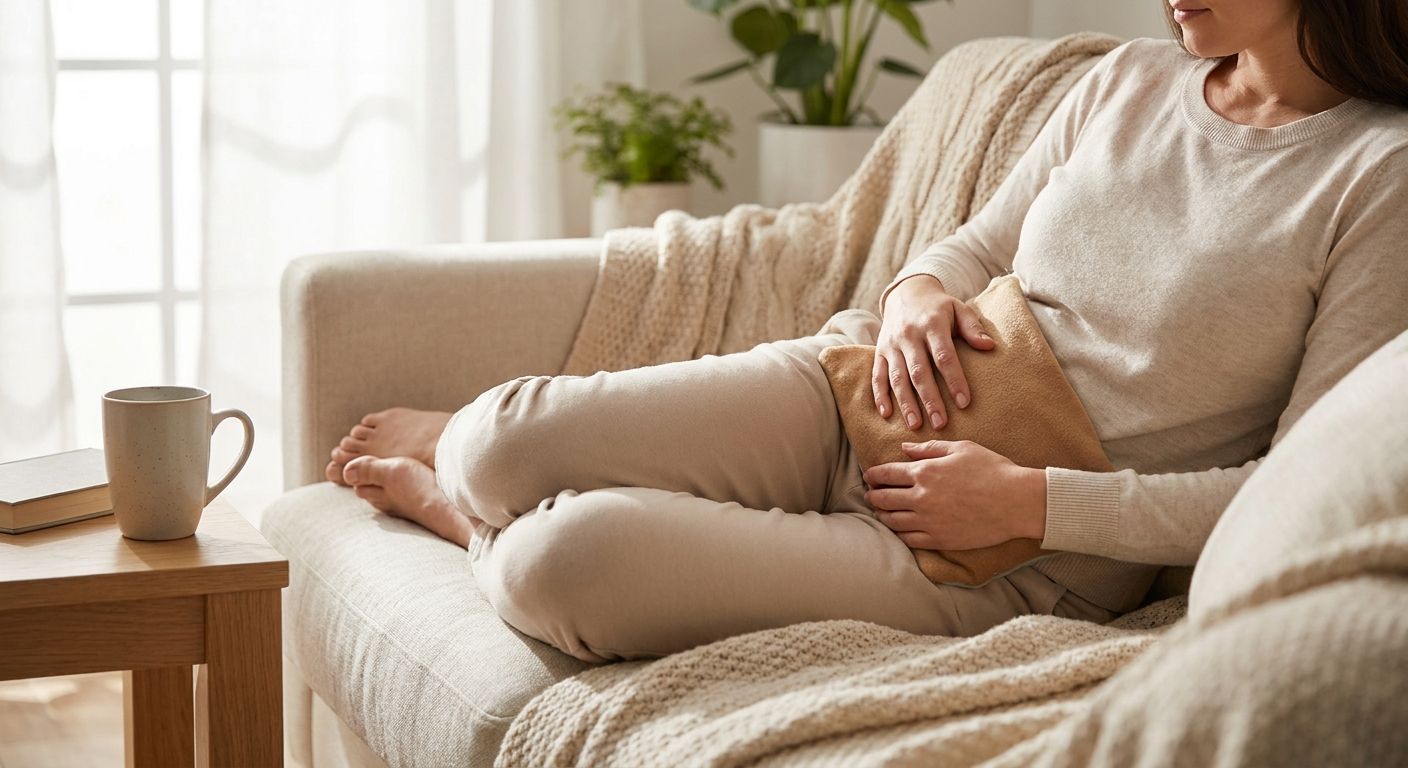
- Apply heat to the lower abdomen or lower back for 15-20 minutes at a time, several times a day.
- A portable heat therapy belt for period pain at work keeps relief going through a full shift in 2026.
- Skip anything running above 45C directly on skin - burns undo any pain relief you gained.
Why this matters
Most women reach for painkillers the moment cramps start. A 2001 study published in Obstetrics & Gynecology found continuous low-level heat therapy at around 39-40C worked as well as ibuprofen for primary dysmenorrhea, with faster onset in some participants.
Heat relaxes the uterine muscle and improves blood flow to the area, which is what actually calms the cramping. Pain relievers block the pain signal; they don't touch the muscle contraction causing it. If you're avoiding medication because of side effects, sensitivity, or preference, heat works on the cause rather than the symptom.
The catch: most people apply heat wrong. Too hot, too short, or in the wrong spot, and you get 10 minutes of comfort instead of hours of relief.
What you'll need
- A heat source you can hold or wear against your lower abdomen or lower back for 15-20 minutes at a stretch
- Temperature control - anything with one blast-furnace setting will burn skin before it relieves pain
- 20-30 minutes of uninterrupted time for the first application, so you can gauge how your body responds
- A layer of clothing between skin and heat source
- A portable heat therapy belt for period pain at work if you need relief that doesn't stop when you leave the house
The steps
1. Identify your pain location, not just "cramps"
Period pain sits in one of two places: the lower abdomen (uterine cramping) or the lower back (referred pain). Heat works best applied directly over the source, so figure out which one is dominant before you start.
Press gently on your lower abdomen just above the pubic bone, then on your lower back at hip height. Whichever spot is more tender gets the heat first. Common mistake: warming the whole torso instead of the specific area that's actually cramping, which dilutes the effect.
2. Set the temperature to 40-45C, not higher
This is the range heat therapy research on dysmenorrhea uses. It's warm enough to relax muscle without risking a burn. Anything that feels genuinely uncomfortable on contact is too hot - this should feel like a warm bath, not a hot iron.
Start on a medium setting and only increase if you feel nothing after 5 minutes. Common mistake: jumping straight to the highest setting because more heat sounds like more relief. It isn't, and it raises burn risk on skin that's already sensitive during your cycle.
3. Apply for 15-20 minutes, then reassess
Continuous heat needs sustained contact to relax muscle. Five minutes won't do it. Set a timer for 15-20 minutes and keep the heat source in place rather than shifting it around.
After the first cycle, check in. Pain down by half or more means the routine is working - keep it identical. Minimal change means either a slightly higher temperature within the safe range or a different placement. Expected outcome: noticeable easing inside the first 15-minute session.
4. Repeat every 2-3 hours through the worst days
Cramping driven by prostaglandin release doesn't resolve in one application. It peaks across roughly 24-48 hours, usually day one and day two. Reapply every 2-3 hours instead of trying to make one long session carry the day.
Common mistake: heating once in the morning and expecting it to hold through an 8-hour workday. The muscle relaxation heat gives you is temporary and needs topping up.
5. Switch to a belt-style heat source when you leave the house
A hand-held pad is fine on the couch and useless at a desk, in a meeting, or on a commute. A wearable option changes the routine entirely - a menstrual heat belt sits against the lower abdomen under clothing and runs hands-free.
For pain linked to a diagnosed condition, a heated belt for endometriosis pain applies the same continuous-heat principle over longer stretches, which matters when cramping doesn't clear in a day or two.
6. Pair heat with movement, not bed rest
Gentle movement - walking, light stretching - improves blood flow further and speeds relief compared with heat alone while lying still. Curling up motionless feels right, but it lets stiffness build in the lower back that heat then has to undo.
Ten minutes of walking with a heat belt still on beats 30 minutes flat on the couch with a hot water bottle that went cold after 15.
7. Track what works over 2-3 cycles
Pain intensity, ideal temperature and how long relief lasts vary person to person, so one cycle isn't enough data. Note the settings and timing that gave the best result and repeat that exact routine next month instead of experimenting from scratch.
By your third cycle in 2026 you should have a repeatable protocol: same temperature, same duration, same reapplication schedule.
Troubleshooting
- Heat isn't reducing pain at all - you're likely on the wrong spot. Recheck whether the pain is abdominal or lower back and move the heat source.
- Skin gets red or irritated - temperature is too high or the source is sitting on bare skin too long. Add a thin layer of clothing and drop a setting.
- Relief fades faster than expected - you're under-timing sessions. Run the full 15-20 minutes rather than stopping the moment pain eases.
- Belt won't last a shift - charge it fully before leaving the house. A portable heat therapy belt for period pain at work needs a complete charge cycle to cover a full day.
- Pain worsens despite consistent heat - that can signal something beyond typical dysmenorrhea. Book a GP appointment rather than escalating the heat.
- You keep forgetting to reapply - set a recurring phone reminder every 2-3 hours on your first two cycle days.
Tools and resources
- A wearable heat source built for sustained, hands-free use through a working day
- A phone timer to keep sessions at a consistent 15-20 minutes instead of guessed
- A thin cotton layer to sit between skin and heat source on the highest settings
- Napio stocks wearable heat therapy options alongside its wider wellness range
What to do next
The next thing worth nailing down is timing heat against your cycle rather than reacting once pain has peaked. Starting at the first twinge instead of an hour into full cramping gets far more out of every session. Compare the wearable heat options on Napio before your next cycle starts in 2026.
FAQ
What is the best way to relieve period pain without medication?
Applying continuous heat at 40-45C to the lower abdomen or lower back for 15-20 minutes at a time is the best-documented non-medication option, matching ibuprofen's effect in published research. Reapply every 2-3 hours through the first two days of your cycle.
Is heat therapy better than ibuprofen for period pain?
A 2001 study in Obstetrics & Gynecology found continuous low-level heat worked as well as ibuprofen for primary dysmenorrhea. Heat also avoids the stomach irritation that comes with repeated NSAID use.
How hot should a heat pad be for period cramps?
Keep it between 40C and 45C - warm enough to relax uterine muscle without risking a skin burn. Anything uncomfortable on first contact is set too high.
How long does it take for heat to relieve period pain?
Most people notice reduced cramping inside the first 15-minute application. Getting through a heavy cramping day usually needs reapplication every 2-3 hours.
Can I wear a heat belt at work for period pain?
Yes. A portable heat therapy belt for period pain at work sits under clothing and runs hands-free through a shift. It solves what a hot water bottle cannot: staying discreet and mobile.
Does heat help endometriosis pain the same way it helps period cramps?
Heat helps endometriosis-related pain through the same muscle-relaxation and blood-flow mechanism, though it usually needs longer or more frequent sessions than typical cramping. A heated belt designed for endometriosis pain is built for that extended use.
Is heat therapy safe for teens with period pain?
Yes, heat therapy is one of the lowest-risk options for period pain at any age, including teens managing cramps for the first time. Stick to the 40-45C guideline and never sit a heat source directly on bare skin for long stretches.
Can I use heat and painkillers together for severe period pain?
Yes, heat and medication are not mutually exclusive and many people use both on the worst days. If pain stays severe despite both, raise it with a GP rather than increasing either on your own.
One last thing
The detail most people miss: heat works better started before pain peaks, not after. If cramping hits hardest on day one, apply heat the evening before or first thing that morning. Pre-empting the prostaglandin surge beats chasing pain that has already set in - and it's the single change that makes the biggest difference to how the rest of 2026's cycles feel.