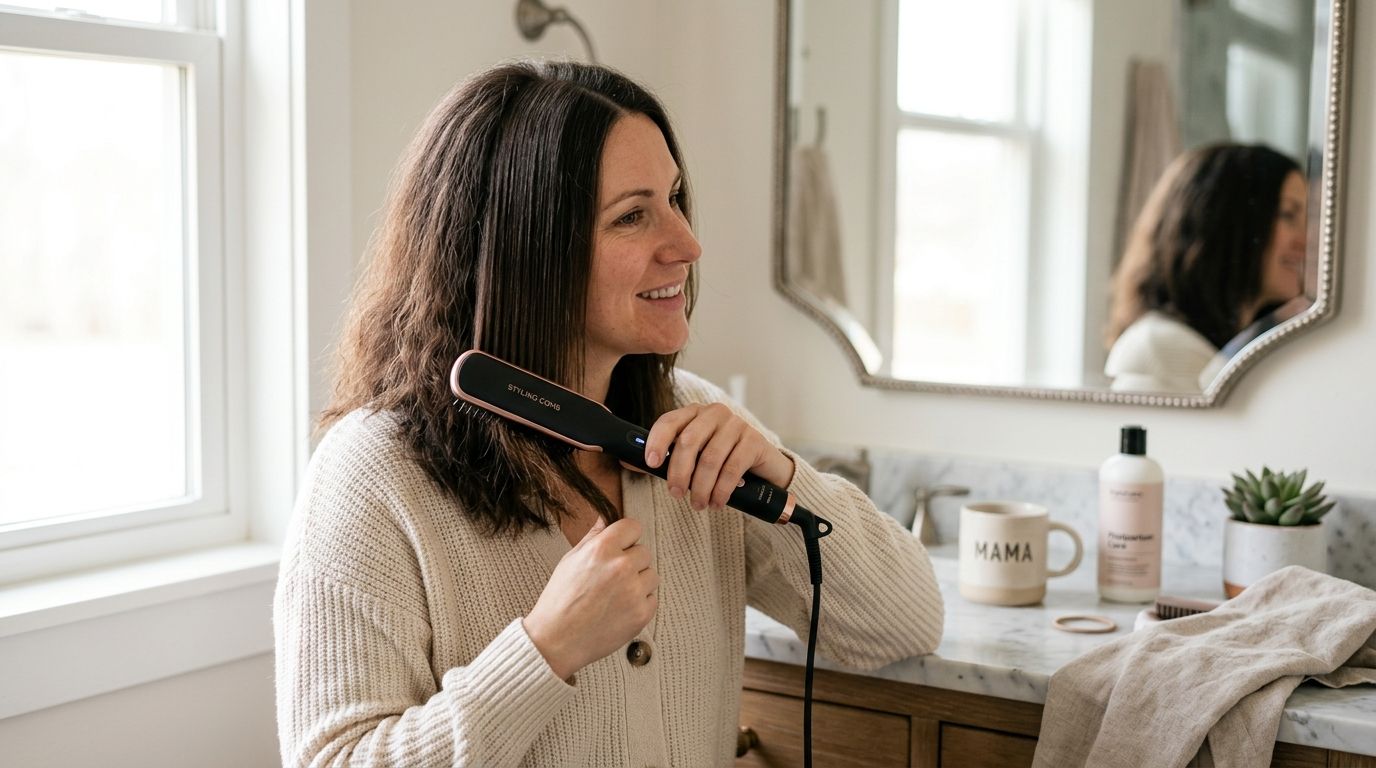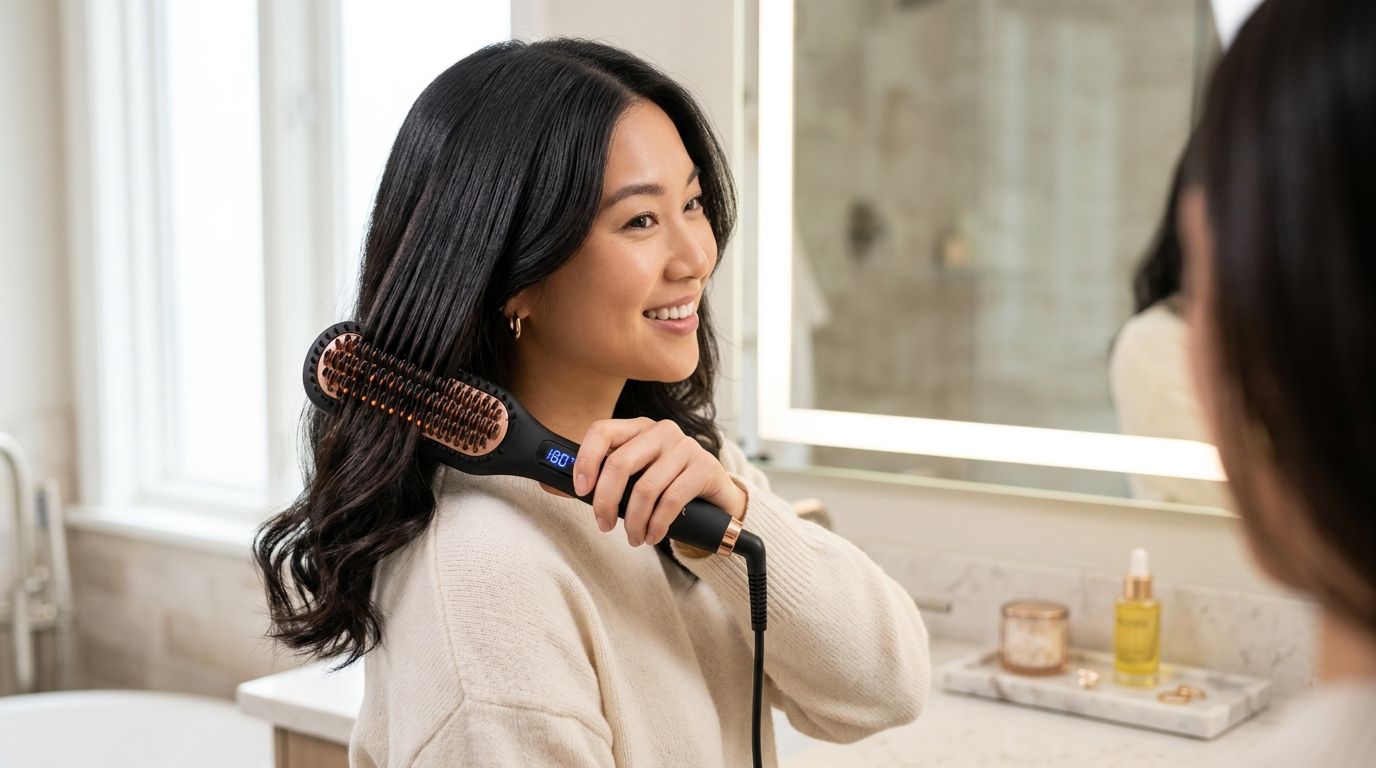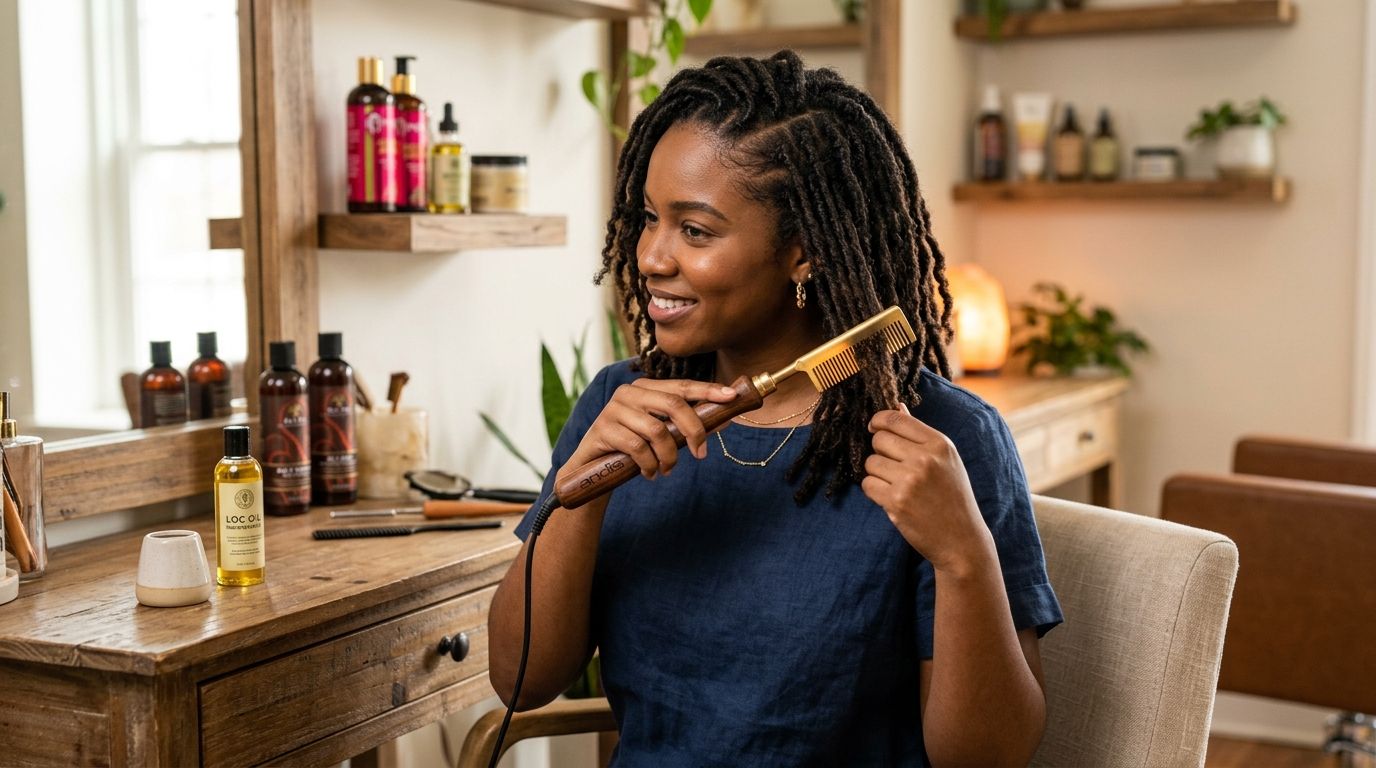
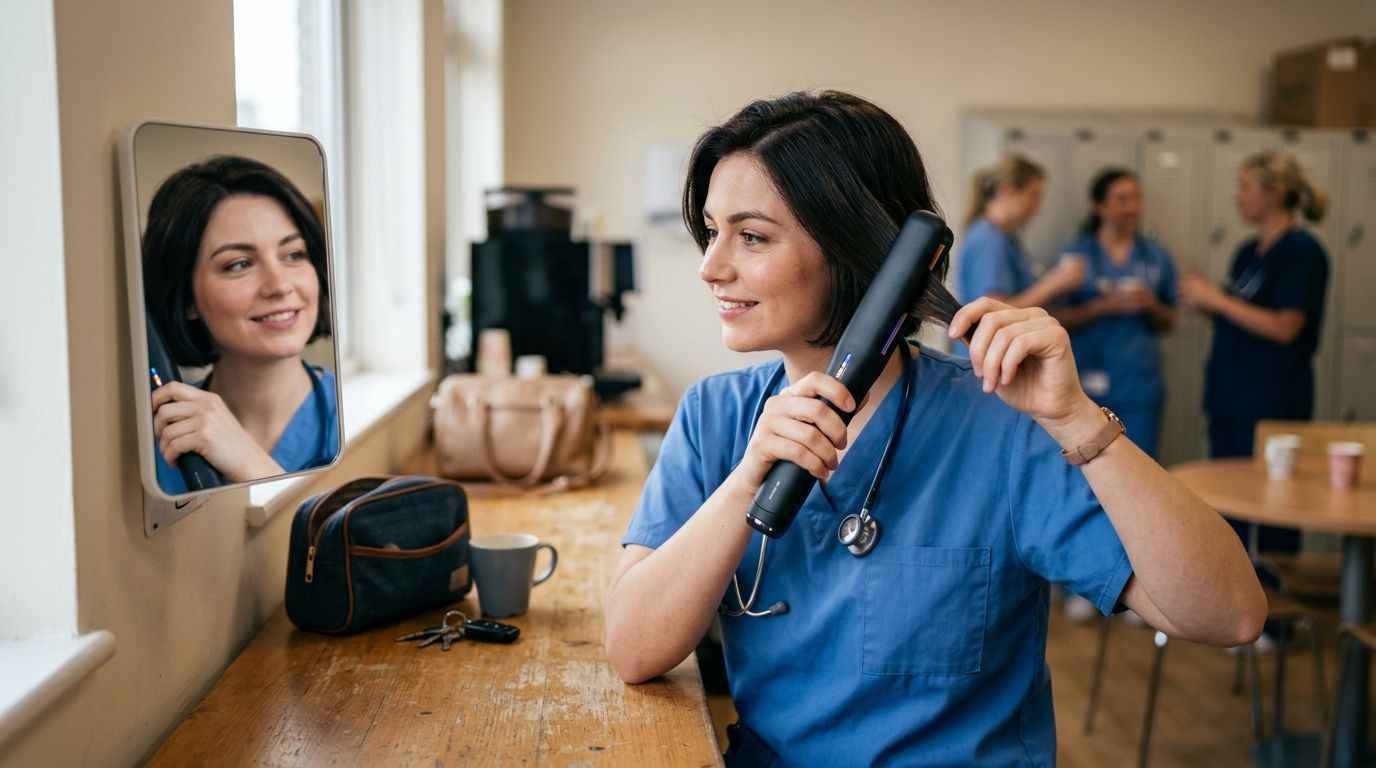
A cordless hair straightener for nurses is a battery-powered flat iron built to style hair without a wall outlet, made for locker rooms, night shifts, and the ten minutes you get between handover and clocking in. Nurses and other shift workers need something different from a salon-grade corded iron: no cord to trip over in a supply closet, no dead spot fifteen feet from an outlet, and a heat-up time short enough to fit before a 12-hour rotation starts.
- A cordless hair straightener for nurses needs fast heat-up and reliable dock charging to survive rotating shifts in 2026.
- Napio's cordless straightening comb works without an outlet, which matters most for night-shift staff without locker power.
- Corded irons still win on sustained high heat for thick or coarse hair over long styling sessions.
- Battery reliability, not plate temperature, is the real bottleneck for 12-hour shift workers.
Why a cordless straightener matters for nurses
Hospital locker rooms rarely have enough power points, and the ones that exist are shared by a dozen people getting ready at the same time. A cordless hair straightener for nurses solves the outlet problem outright: it charges at home or in the car and holds enough charge to style hair once you're already at work.
Shift patterns compound the problem. A nurse coming off a night shift at 7am has different hair needs than one prepping for a 12-hour day shift at 6am — humidity from a hot shower, flattened roots from twelve hours under a surgical cap, or frizz from a long drive home. A cordless straightener that goes cold-to-hot in under a minute is the difference between styling your hair in 2026 and skipping it entirely.
Shift workers outside health care hit the same constraint: warehouse staff, flight crew, and hospitality workers all deal with shared power boards and unpredictable breaks. The gear that works for a nurse works for anyone whose schedule doesn't run on a 9-to-5 outlet. Napio builds its cordless hair straightening comb around exactly that use case.
How to build a shift-proof styling routine
Update your charging routine first
Most cordless straighteners lose charge sitting unused, and a flat battery at 5:45am before a shift is a real problem.
- Charge the unit the night before every shift, not the morning of
- Store it on the charging dock in the same spot as your ID badge or keys
- Check the battery indicator before you leave the house, not after you arrive
- Carry a USB-C power bank in your bag for a top-up during a break
- Avoid leaving it plugged in for days — lithium batteries degrade faster under constant trickle charging
Time your styling to the shift, not the clock
A 12-hour shift means your hair has to survive far longer than a standard 8-hour day, so plan the style around durability rather than speed alone.
- Section hair before you start rather than freehanding it
- Style only once the unit hits full temperature — cordless tools run cooler than corded ones, and rushing this step causes frizz, not sleekness
- Do the crown and part line last, since that's the section a surgical cap or hairnet flattens
- Cap total styling at roughly two minutes to preserve battery for touch-ups later in the shift
- Finish with a low-heat pass on the ends instead of a second full-heat pass
Protect hair from double-styling days
Nurses on rotating shifts often style twice in a day — once before the shift, once after a shower before sleep — which doubles heat exposure compared with a single daily style.
- Use the lowest heat setting that still gets the result; fine or damaged hair rarely needs the top setting
- Apply heat protectant before every session, not just on days hair looks dry
- Skip a straightening pass entirely on days hair is freshly coloured or chemically treated
- Schedule a natural-texture day between rostered blocks when the roster allows it
The prevent heat damage with a straightening brush guide covers the technique side in more detail.
Choose a unit that survives a hospital bag
A straightener that lives in a backpack or locker takes more physical abuse than one sitting on a bathroom counter.
- Use a heat-resistant pouch, not a bare plate exposed to keys and badges
- Confirm auto-shutoff works — a straightener left on inside a closed bag is a genuine fire risk
- Pick a size that fits a bag pocket without bulking it out
- Let it cool fully before it goes back in the bag
Match the tool to your hair type and your fatigue level
A straightener that needs two hands and full concentration is a bad match for someone running on four hours of sleep after a night shift.
- Thick or coarse hair needs sustained high temperature and may still do better on a corded iron for full sessions
- Fine or thin hair styles fastest on a cordless comb at a lower setting
- Curly or coily hair benefits from a comb or brush that detangles while it smooths, cutting total time
- At 5am, a wider-plate single-pass tool beats a narrow flat iron needing four passes per section
Plan around light exposure after night shifts
Styling after a night shift usually overlaps with trying to sleep during daylight. Better daytime sleep means less rushed mornings and less dependence on a panic styling fix. The blackout eye mask for shift workers guide is the companion piece if daytime sleep is part of your 2026 roster.
Comparison: straightening options for nurses and shift workers
| Option | Best for | Key limitation |
|---|---|---|
| Corded flat iron | Thick, coarse hair needing sustained high heat | Needs a free outlet and a longer session — poor fit for locker rooms |
| Cordless straightening comb | Fine to medium hair, quick touch-ups between shifts | Battery life caps total session length versus corded |
| Heated straightening brush | Wavy or frizz-prone hair wanting smooth, not pin-straight | Slower for fully straight results on very curly textures |
| Hot comb | Natural and coily textures needing root-to-tip smoothing | Requires steadier technique than a flat iron |
Napio's cordless hair straightening comb is the best pick for nurses and shift workers who style their hair somewhere without a reliable power point. It is not the right pick if you have very thick, resistant hair and a bathroom outlet — a corded iron holds temperature better across a long session, and that trade-off is real.
“Battery reliability beats plate temperature for anyone styling their hair in a locker room.”
Common mistakes nurses and shift workers make
- Charging only when it's already dead. That guarantees a flat battery on the one morning you're running late.
- Skipping heat protectant on double-styling days. Two sessions in 24 hours compounds damage faster than daily single use.
- Storing the unit hot. A warm straightener dropped straight into a bag shortens plate life and scorches fabric.
- Copying a colleague's heat setting. A setting built for thick hair is wrong for fine hair, and the damage shows up months later.
- Forcing short sessions on low battery. A unit cutting out mid-style is telling you to recharge, not to push through.
FAQ
What's the best cordless hair straightener for nurses in 2026?
A cordless straightening comb with fast heat-up and dock charging, like Napio's, suits nurses best because it doesn't depend on a locker-room outlet. Prioritise auto-shutoff and a size that fits a bag pocket.
Is a cordless straightener better than a corded one for shift work?
For most shift workers, yes, because power access is the bigger obstacle than heat output. Corded irons still edge out cordless units on very thick or coarse hair over a long session.
How long does a cordless hair straightener battery last?
Run time varies by model and heat setting, so check the listed figure before relying on it for a full session. Charging the night before every shift removes the guesswork.
Can I use a cordless straightener on wet hair after a shower before a shift?
No. Straightening damp hair on any iron causes steam damage and breakage. Dry to at least 90 percent before styling.
Is it safe to leave a cordless straightener charging overnight?
Overnight charging is generally fine on lithium-battery units, but permanent trickle charging shortens battery lifespan over months. Charge the night before a shift rather than leaving it plugged in constantly.
What heat setting should shift workers use for fine hair?
Fine or thin hair styles well on the lowest or second-lowest setting on most cordless straighteners. Higher settings exist for thick or coarse textures and cause avoidable damage on finer hair.
Do cordless straighteners work on natural or coily hair?
They work, but often need more passes than a hot comb designed for natural texture. A hot comb built for coily hair usually gets a smoother result in fewer passes.
How much does a cordless hair straightener cost?
Pricing varies by model and retailer, so check the current listing on the store. Napio ships to Australia and the US and lists a 30-day money-back guarantee.
One last thing
The bottleneck for shift workers isn't plate temperature — it's whether the battery has charge at the exact minute you need it. Fix the charging habit first and the styling technique sorts itself out, because nobody gets a good result rushing a half-charged unit at 5:40am.