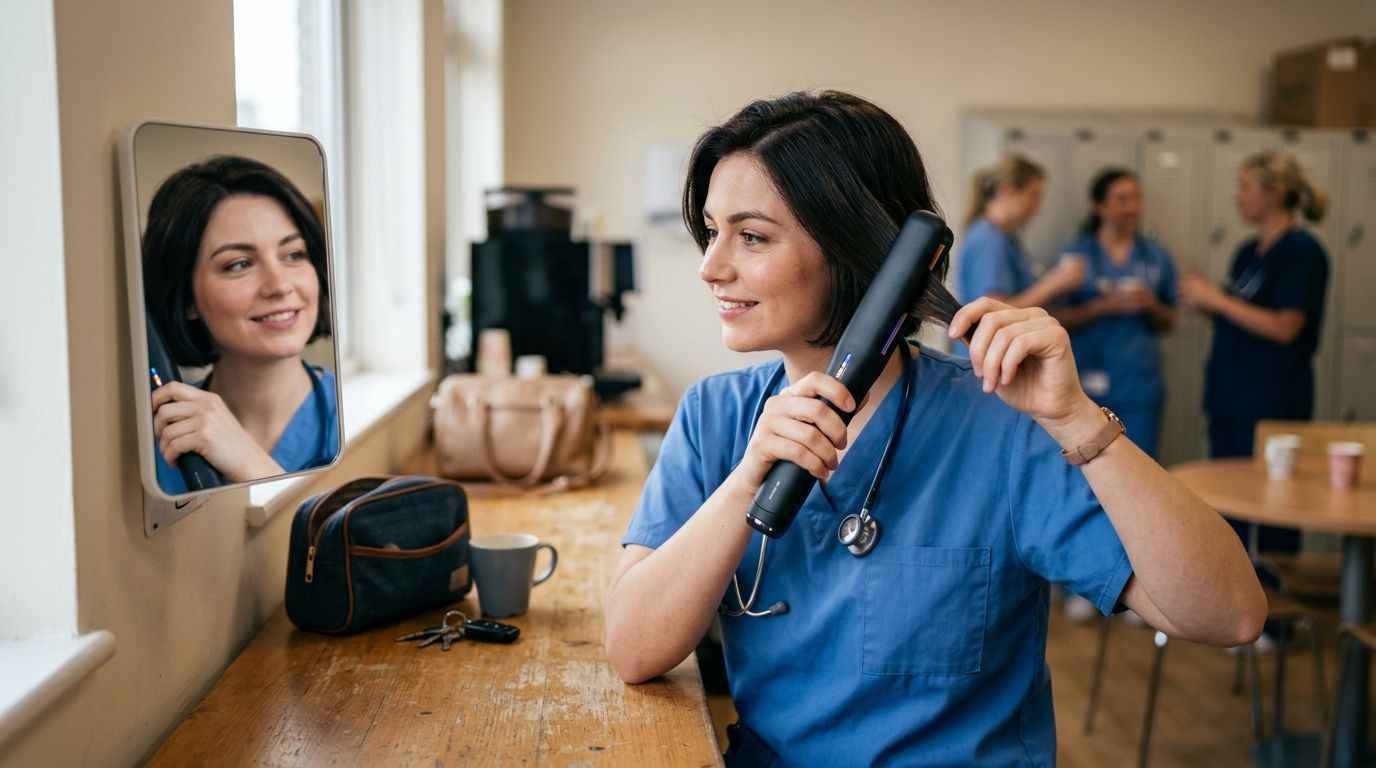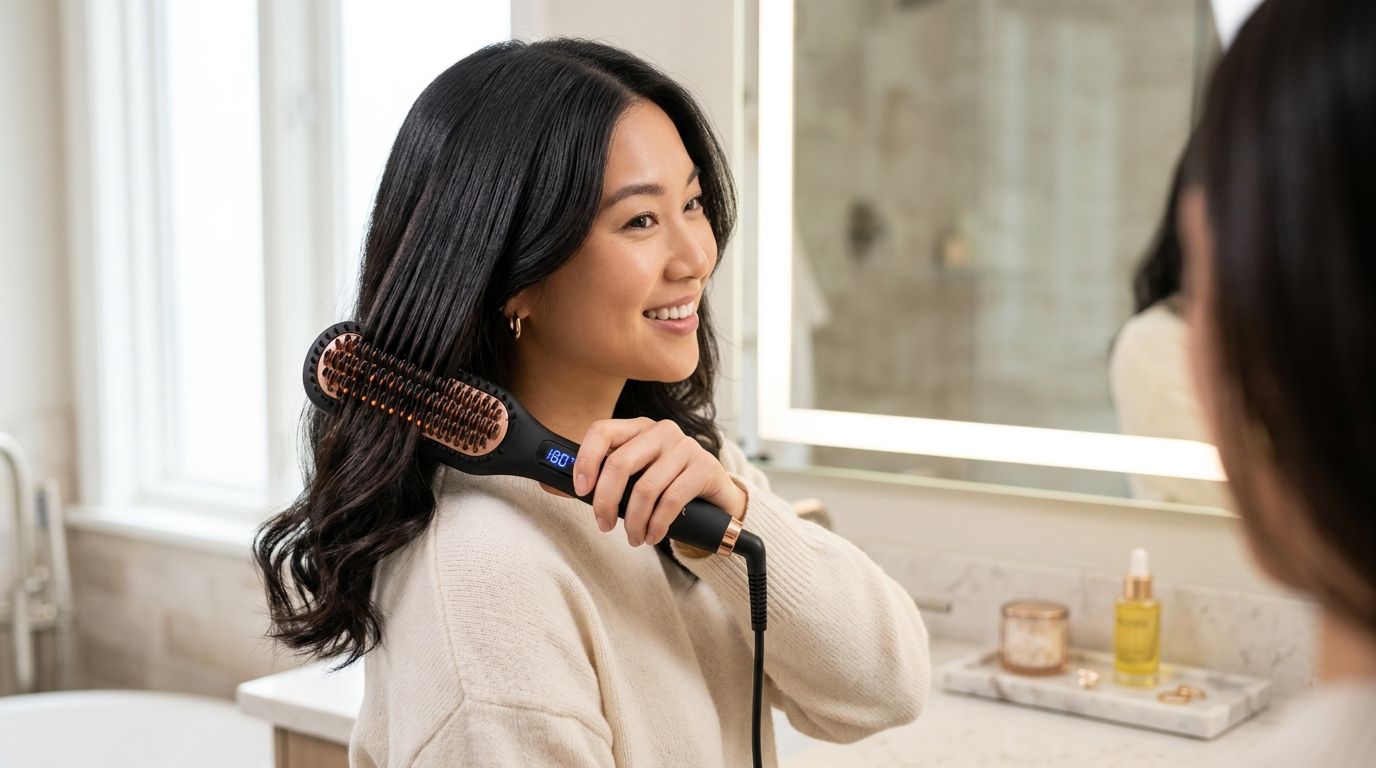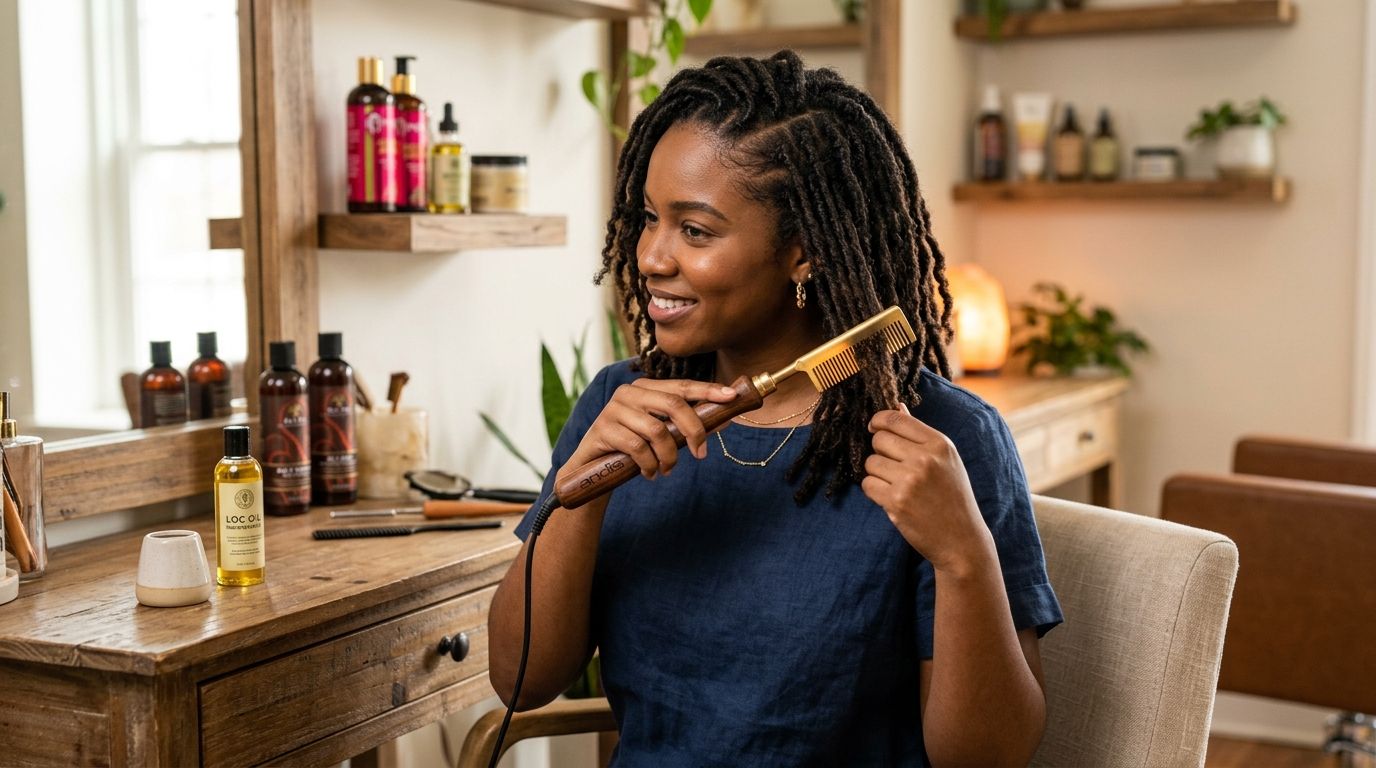
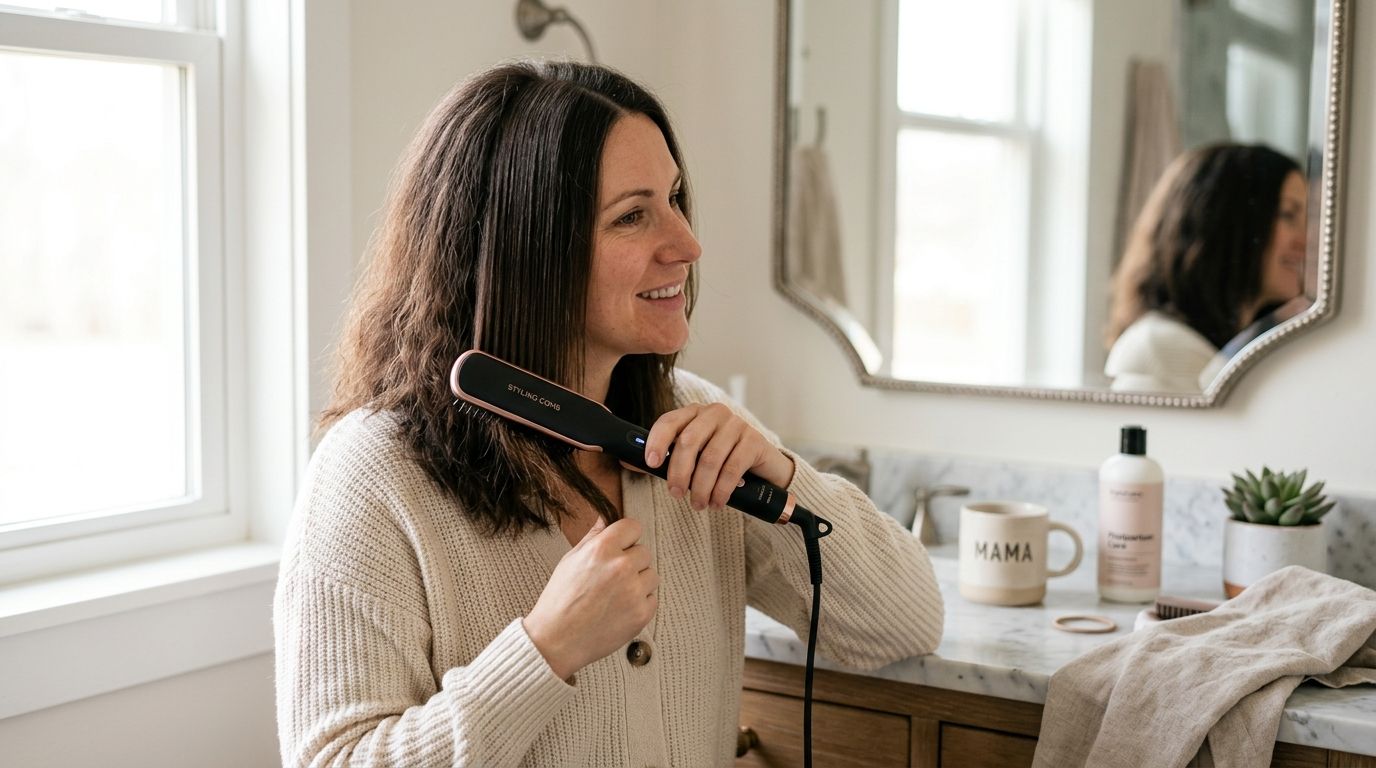
Postpartum hair loss hair straightening comb use means picking a heated styling tool gentle enough for hair that's shedding faster than it's growing back, with the goal of styling without stripping strands that are already stressed. New mothers dealing with postpartum shedding need lower heat, fewer passes, and a comb that won't snag hair that's thinner and more fragile than it was before pregnancy.
- A hair straightening comb for postpartum hair loss works best at low-to-medium heat (150-180C) with slow single passes, not repeated strokes.
- Postpartum shedding (telogen effluvium) is hormone-driven and temporary, but heat styling during this window adds breakage on top of natural loss.
- Napio's electric hair straightening comb uses a comb-style plate that detangles as it smooths, which matters when hair is already coming out in the brush.
- Skip daily high-heat styling until shedding slows around 6-12 months postpartum, when regrowth catches up.
Why this matters
Postpartum shedding isn't damage in the traditional sense. Estrogen drops after birth, and hair that stayed in the growth phase longer than normal during pregnancy cycles into the shedding phase all at once. That's why a mother with thick hair at 32 weeks pregnant can be pulling out clumps at 3-4 months postpartum.
A flat iron built for thick, healthy hair ignores all of that. It clamps hard, needs multiple passes to catch flyaways, and adds mechanical stress right when strands are weakest. A hair straightening comb for postpartum hair does the opposite: it detangles gently, smooths in one pass, and runs cool enough not to cook hair that's already thin at the shaft.
If you're also seeing patchy regrowth or short baby hairs along the hairline, the comb has to handle both textures in the same session without swapping tools.
Why a straightening comb suits postpartum hair
Comb-style plates sit between a brush and a flat iron. The teeth separate strands as the heated plate passes over them, so tangles get resolved during styling instead of being forced through a clamp. Fewer passes means less cumulative heat exposure per strand — the whole ballgame when hair is shedding.
The other reason is time. Postpartum styling happens in 10-minute windows between feeds, and rushed flat-iron sessions are where people crank heat to 210C to finish faster. The Napio range is built around gadgets that shorten the routine rather than demand more of it.
Detangle before heat ever touches your hair
This step costs nothing and matters more with postpartum hair, because loose shed strands wrap around anchored ones and pull both out together.
- Work from ends to roots with a wide-tooth comb, never roots to ends
- Section hair into 3-4 parts so the heated comb never fights a full head at once
- Apply a leave-in or detangling spray to dry hair before styling
- Clear shed hair out of your brush between sessions so you aren't re-dragging it through healthy sections
- If a knot won't release with fingers, leave it — don't force it through with heat
Set your temperature before your first pass
Temperature is the biggest lever you control. Fine, thinning hair straightens at a lower point than thick hair, and turning the dial up to beat frizz just adds breakage on top of natural shedding.
- Start on the lowest setting and step up only if hair resists after two passes
- Keep postpartum sessions in the 150-180C band instead of defaulting to maximum
- Never re-run the same section more than twice in one session
- Style on fully dry hair; damp postpartum hair snaps more readily under heat
- Pick a comb with genuine adjustable heat, not a single fixed high setting
Choose a comb built for thin strands, not thick hair
Most straightening combs are designed around average-to-thick hair. Postpartum hair is thinner at the shaft with shorter regrowth at the hairline, so plate gap and tooth spacing matter more than wattage.
- Look for a narrow plate gap that catches fine strands instead of letting them slip through untouched
- Rounded, ceramic-coated teeth snag less than bare metal
- Compare a hair straightening comb for thinning hair built for this problem rather than a thick-hair tool adapted down
- Cordless models stop you rushing a one-handed session while holding a baby
- Auto shut-off matters more than any other feature in year one, when you will walk away mid-style


Protect the scalp, not just the strands
Postpartum scalps are often more sensitive than usual — itching, tenderness, mild irritation alongside the shedding. Running a hot plate tight to the scalp compounds it.
- Hold the comb 1-2cm off the scalp on the first pass near the roots
- Drop the heat further for the crown and hairline, where regrowth is shortest
- Compare a comb for sensitive scalps if tenderness is a regular issue
- Skip styling entirely on days the scalp feels sore or inflamed
- Wipe the plates weekly if you use leave-in products, since buildup transfers heat unevenly
Build a low-frequency routine and hold it
Daily heat styling accelerates visible thinning even with a gentle comb. Frequency matters as much as the tool.
- Cap heat styling at 2-3 sessions a week through the peak shedding months
- Air-dry or use a cool blow-dry on off days
- Rotate low buns and loose braids on non-styling days to cut tension on the hairline
- Get the technique right the first time — read how to use an electric hair straightening comb before your first session
- Check shedding weekly, not daily; daily hair loss fluctuates and daily checking only adds stress
Clean the comb so it keeps working in one pass
Product buildup on the plates transfers heat unevenly, which forces extra passes to get a smooth result — the exact thing postpartum hair can't take.
- Wipe the plates after every use, unplugged and still warm, with a dry microfibre cloth
- Deep clean weekly with a barely damp cloth to lift product residue
- Follow how to clean a heated straightening comb so you don't strip the plate coating
- Store it in a sleeve rather than loose in a drawer where the plate gets scratched
- Replace the comb once the coating shows visible wear; a scratched plate snags regardless of heat setting
Comparing your options for postpartum hair in 2026
| Option | Best for | Key limitation |
|---|---|---|
| Air-dry and finger-style | Days with heavy shedding or scalp tenderness | No smoothing, frizz returns within hours |
| Round-brush blow-dry | Root volume without direct plate contact | Time-intensive with a newborn in the house |
| Standard ceramic flat iron | Thick, healthy sections only | Too hot and too heavy-handed for thinning strands |
| Heated straightening comb | Fine, thinning or postpartum hair needing fast smoothing | Still heat exposure — use 2-3 times a week, not daily |
| Salon smoothing treatment | Long stretches without home styling | Chemical load many mothers avoid while breastfeeding |
Napio's electric hair straightening comb is the best pick for postpartum hair that needs a fast, smooth finish without a full flat-iron session — adjustable low heat, comb teeth that detangle as they smooth, and a 30-day money-back guarantee if it doesn't suit your hair. Verdict: Buy if you're styling 2-3 times a week. Wait if shedding is at its heaviest and you can go tool-free for a month.
“Postpartum shedding is temporary. Heat damage layered on top of it isn't.”
Common mistakes postpartum mothers make with heat styling
- Cranking the heat to fight frizz that's actually new regrowth. Those short baby hairs aren't damage, and high heat just snaps them.
- Skipping heat protectant because there's no time. Fragile strands need it most in exactly the weeks you have least time.
- Brushing hard to hide thin patches. That pulls out hair that was still anchored.
- Running a pre-pregnancy daily routine unchanged. The hair is different in 2026 than it was pre-birth; the routine has to be too.
- Styling through scalp tenderness. Tenderness is the signal to drop heat or skip the session, not to push through.
FAQ
What's the best hair straightening comb for postpartum hair loss?
A comb with adjustable low heat, a narrow plate gap for fine strands, and auto shut-off suits postpartum hair best. Napio's electric hair straightening comb is built around adjustable settings rather than a single fixed high-heat mode.
Is a straightening comb better than a flat iron for thinning hair?
Yes, for most postpartum hair. A comb detangles and smooths in the same pass, so you need fewer strokes than a flat iron on thin or tangled sections, which cuts total heat exposure per strand.
How often should I heat style postpartum hair?
Limit heat styling to 2-3 times a week during peak shedding, roughly 3-4 months to 6-12 months postpartum. Daily heat styling on shedding hair makes thinning look worse than it is.
Does postpartum hair loss grow back?
Yes. Postpartum shedding is temporary and most mothers see it resolve within 6-12 months as hormone levels stabilise. Gentle styling in that window stops breakage stacking on top of natural shedding.
What temperature should a straightening comb be for thin hair?
150-180C is a sensible starting band for thin or postpartum hair, stepping up only if hair resists after two passes. Thick, coarse hair tolerates more heat; thin hair doesn't need it.
Can I use a heated comb on a sensitive postpartum scalp?
Use the lowest setting and keep the plates 1-2cm off the scalp on the first pass. If irritation is constant, skip styling that day rather than working around it.
Should I detangle before or after using a heated comb?
Always before, with a wide-tooth comb worked from ends to roots. Pulling a heated comb through knots removes loose and anchored strands together, which is the fastest way to make shedding look severe.
How much does a hair straightening comb cost in Australia?
Prices vary by model and change often, so check the current listing on the Napio store. Fast Australian shipping and a 30-day money-back guarantee apply to Napio orders.
One last thing
Styling tools don't cause postpartum shedding — they decide how much of it turns into visible breakage. The mothers who see the smallest gap between pre- and post-birth hair volume in 2026 aren't the ones who stopped styling. They're the ones who dropped their heat setting by 20-30 degrees and halved their styling frequency until the shedding phase passed.