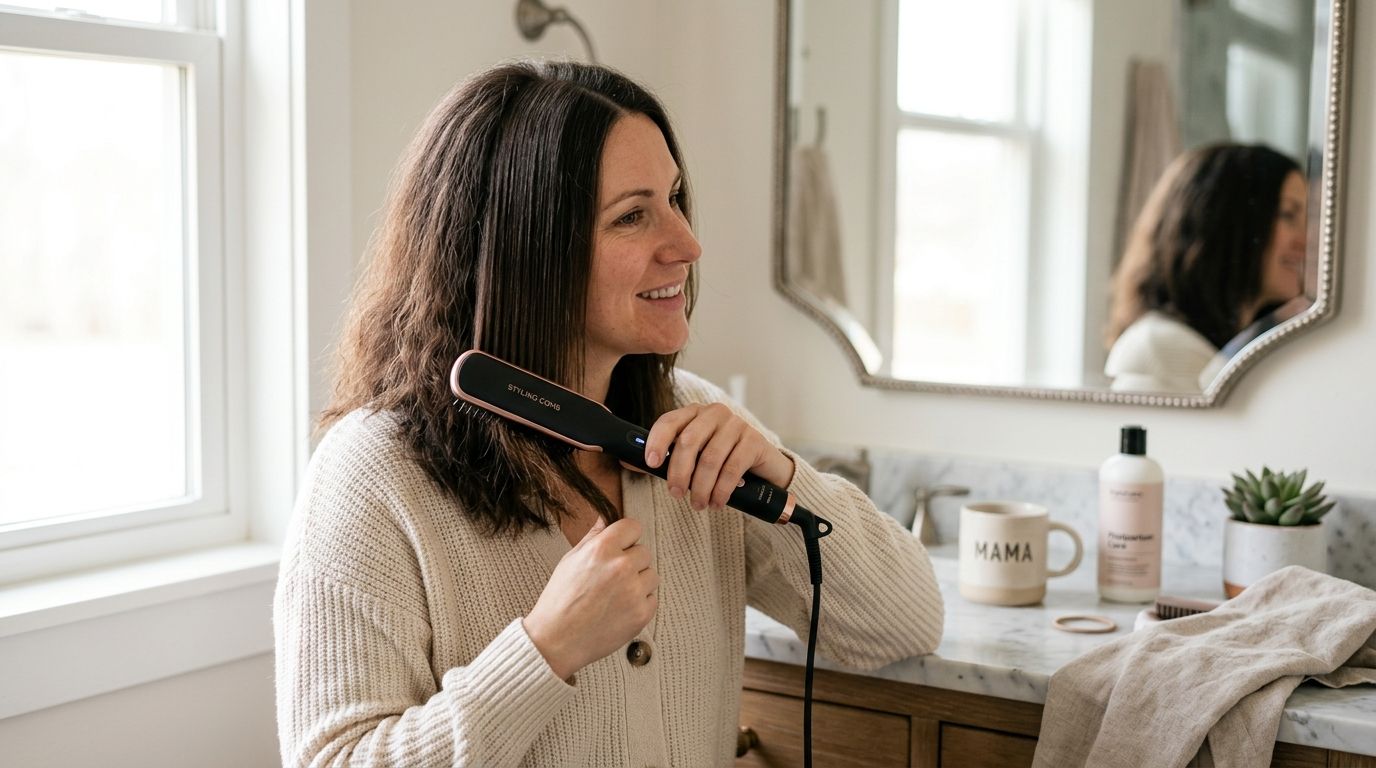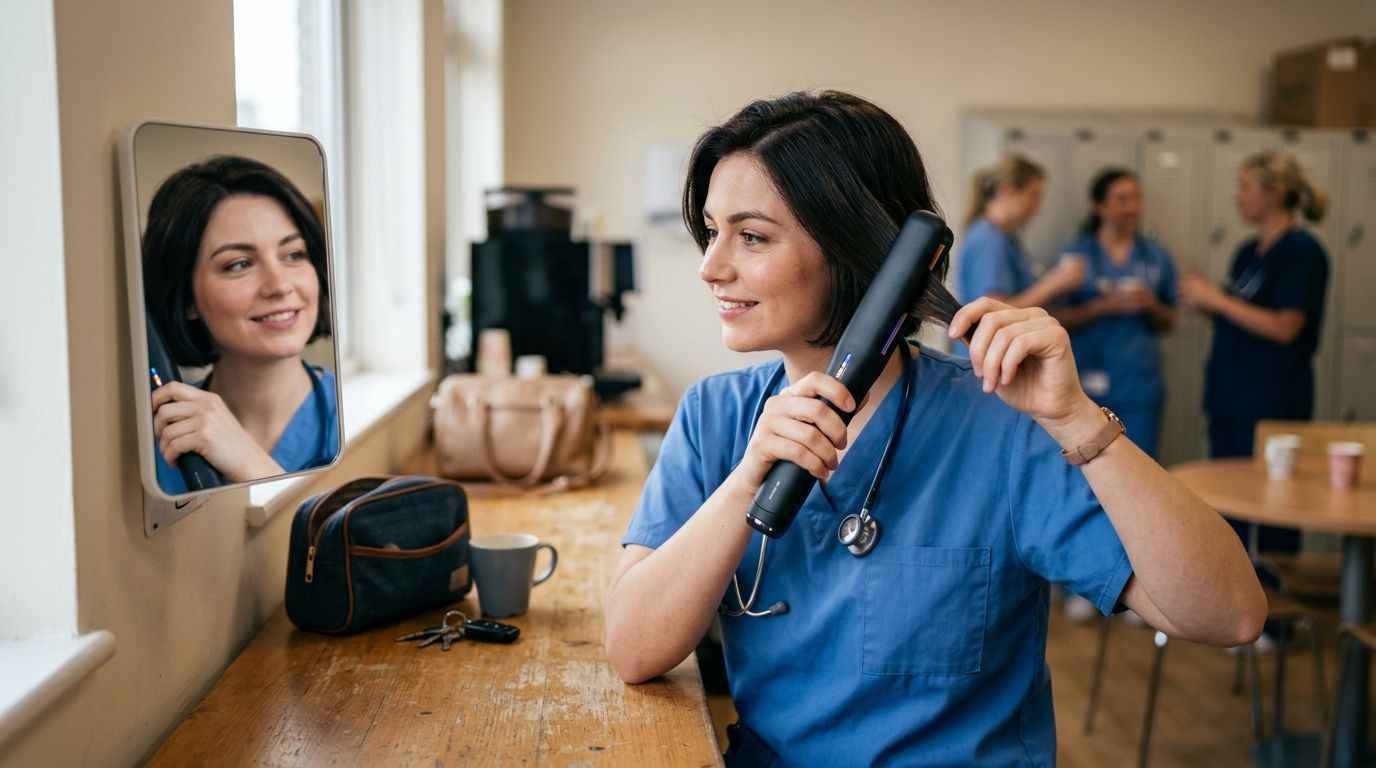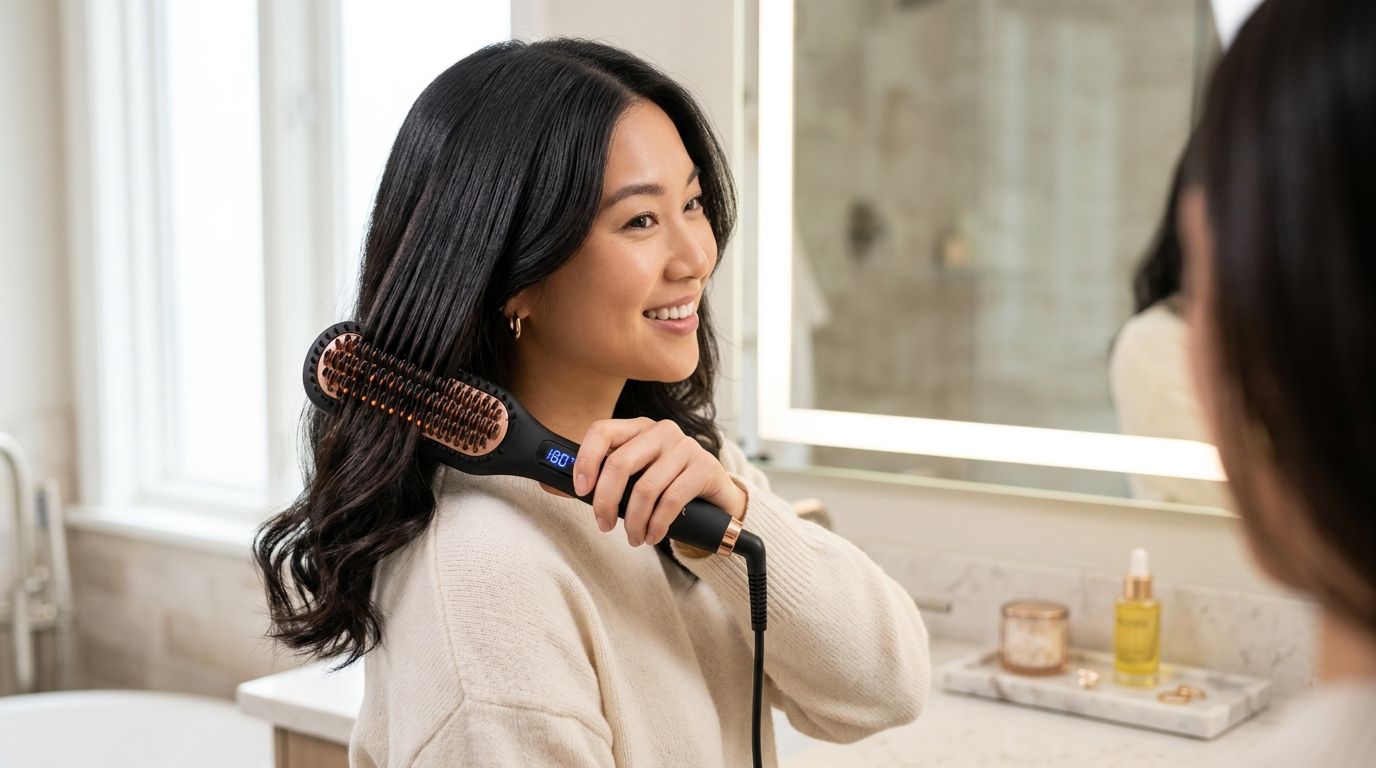
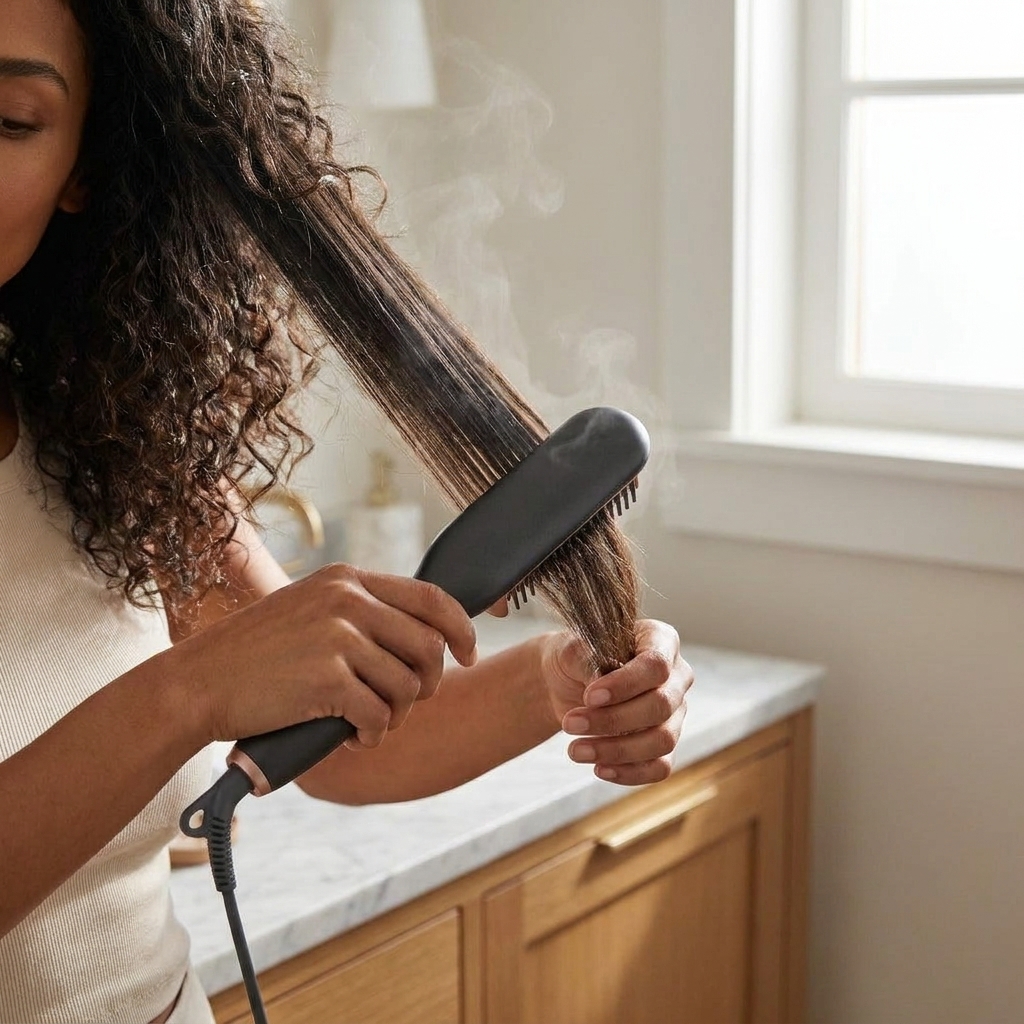
An electric hair straightening comb heats in under a minute and flattens frizz strand by strand instead of blasting your whole head with a flat iron — here's the exact process for using one without frying your hair in 2026.
- Section damp-to-dry hair into 4 parts before you touch the electric comb — this is the single biggest mistake beginners skip.
- Set the electric comb to its lowest heat setting for fine or colour-treated hair; medium works for most other textures in 2026.
- One pass per section at 3-5 seconds contact time beats three rushed passes — the Electric Hair Straightening Comb from Vital by Napio heats fast enough to make this practical.
- Never run an electric comb over wet hair — heat damage risk jumps sharply on soaked strands.
- Finish with a lightweight oil, not more heat, to lock in shine and reduce flyaways.
Why this matters
Most frizz and heat-damage complaints trace back to technique, not the tool. An electric comb concentrates heat into a narrow line of teeth, so the margin for error is smaller than with a flat iron — too slow a pass and you scorch a section, too fast and nothing straightens.
Getting the sequence right (prep, section, heat, cool, style) is what separates a five-minute touch-up from a frizzy mess by lunchtime. Vital by Napio built its Electric Hair Straightening Comb around fast heat-up for exactly this reason — but the tool only does half the work.
What you'll need
- An Electric Hair Straightening Comb with adjustable heat settings
- A wide-tooth comb or detangling brush for pre-styling
- Sectioning clips (4 to 6, depending on hair thickness)
- A heat-protectant spray or lightweight serum
- 10 to 15 minutes, uninterrupted
- A heatproof mat if you're working on a wooden or laminate surface
Hair should be fully dry, not damp — running any electric comb over wet strands is the fastest way to damage the cuticle in 2026 or any other year.
The steps
1. Wash and dry hair completely
Start from clean, fully dry hair. Any residual moisture turns to steam under heat, which weakens the hair shaft and causes frizz rather than preventing it.
Air-dry or blow-dry on a cool setting until hair is bone dry to the touch. Skipping this step is the single most common reason people think their electric comb "doesn't work."
2. Apply a heat protectant
Spray or work a small amount of heat-protectant serum through mid-lengths and ends. This creates a barrier between the ceramic teeth and your hair's cuticle layer.
Use a light hand — over-applying leaves hair greasy and can cause the comb to drag instead of glide. A dime-sized amount covers shoulder-length hair.
3. Section hair into 4 parts
Clip hair into four sections: two at the crown, two at the back. Working in sections keeps each pass thin enough for the heat to reach every strand evenly.
Trying to straighten a full head in one sweep is the second-biggest mistake after skipping heat protectant — thick sections mean the outer hair straightens while the inner layer stays wavy.
4. Set the right heat level
Start on the lowest setting for fine, thin, or colour-treated hair. Medium heat suits normal to thick hair; only coarse or very thick textures need the highest setting.
Most electric combs, including the model from Vital by Napio, reach working temperature in under 60 seconds. Test on an inner section first before running it through visible layers.
5. Comb through each section slowly
Starting close to the root, pull the comb through each section in one smooth, slow motion — roughly 3 to 5 seconds of contact per pass. Rushing the pass is what leaves kinks near the roots.
Hold the section taut with your free hand as you pull the comb through. Tension is what actually straightens the strand; the heat just makes it possible.
6. Repeat only if needed
If a section isn't fully straight after the first pass, run the comb through once more — but never more than twice per section. Repeated passes at the same spot are the main cause of split ends and heat damage.
If two passes aren't enough, the section is too thick. Split it in half and redo it, rather than adding a third pass.
7. Let hair cool before touching it
Hair sets its new shape as it cools, not while it's hot. Avoid running your fingers or a brush through freshly straightened sections for at least 60 seconds.
Touching hair too soon undoes the straightening and is why some people think the effect "doesn't last."
8. Finish with a lightweight oil
Once fully cool, smooth a few drops of a lightweight hair oil over the surface to seal the cuticle and add shine. This is a finishing step, not a heat-protection step — skip more product than a light coat.
An oil like the Rosemary Hair Growth Oil works well here since it's light enough not to weigh hair down after straightening.


Troubleshooting
- Hair frizzes back up within an hour — you're touching it before it cools, or humidity is high; let each section sit untouched for a full minute and consider a finishing serum.
- Comb drags instead of gliding — too much product buildup or hair isn't fully dry; rinse product-heavy hair and re-dry before trying again.
- Roots stay wavy while ends straighten — sections are too thick near the crown; split crown sections into smaller pieces than the back.
- Hair feels crispy or brittle after use — heat setting is too high for your hair type; drop one level and add a heat protectant if you skipped it.
- Comb takes too long to heat up — check it's fully charged or plugged in correctly; most electric combs reach temperature in under a minute when working properly.
- Straightened style doesn't last past a few hours — you may be over-brushing afterward; style with fingers only once cool, and avoid rebrushing through the day.
Tools and resources
- Electric Hair Straightening Comb — the core tool this whole routine is built around
- A heat-protectant spray, applied before every session
- Sectioning clips, ideally 4 to 6 for even coverage
- Rosemary Hair Growth Oil for a lightweight finishing step
- Cyperus Rotundus Hair Removal Oil if you're pairing straightening with a smoother regrowth routine between grooming sessions
What to do next
Once the basic technique feels automatic, the next variable to dial in is heat setting by hair type — fine hair rarely needs more than the lowest setting on an electric comb, while coarse or very thick hair benefits from the top setting paired with smaller sections. Keep a small log for the first few sessions of which setting and section size gave the smoothest result with the least effort, then repeat that combination every time in 2026.
FAQ
How long does an electric comb take to heat up?
Most electric hair straightening combs reach working temperature in under 60 seconds. Cheaper models can take longer, so check the specs before assuming a fault.
Is an electric comb better than a flat iron?
An electric comb is easier to control for touch-ups and shorter styling sessions, while a flat iron covers wider sections faster. For daily quick smoothing, the comb wins on speed and simplicity.
Can you use an electric comb on wet hair?
No — running an electric comb over wet or damp hair increases heat damage risk because trapped moisture turns to steam under the ceramic teeth. Always dry hair fully first.
How often can you use an electric hair straightening comb?
Two to three times a week is a reasonable limit for most hair types in 2026. Daily use without a heat protectant accelerates dryness and split ends.
Does an electric comb work on thick hair?
Yes, but thick hair needs smaller sections and a higher heat setting than fine hair. Splitting hair into 6 sections instead of 4 gives more even results on thicker textures.
How much does an electric hair straightening comb cost?
Entry-level electric combs typically sit in the $15-$30 range, with the Electric Hair Straightening Comb from Vital by Napio priced at $22. Higher-end salon models cost more but aren't necessary for home use.
Why does my hair go frizzy again after using an electric comb?
Frizz returning quickly usually means you touched the hair before it cooled or skipped the sealing oil step. Let each section sit untouched for a minute and finish with a light oil.
What heat setting should I use on fine hair?
Fine or colour-treated hair should start on the lowest heat setting available. Test on one inner section before running the comb through visible layers.
One last thing
The detail most people skip isn't the heat setting — it's the cooling window. Hair fibers set their new shape as they drop back to room temperature, so brushing or tying hair up within that first 60 seconds after a pass undoes most of the work an electric comb just did, no matter how good the tool is.