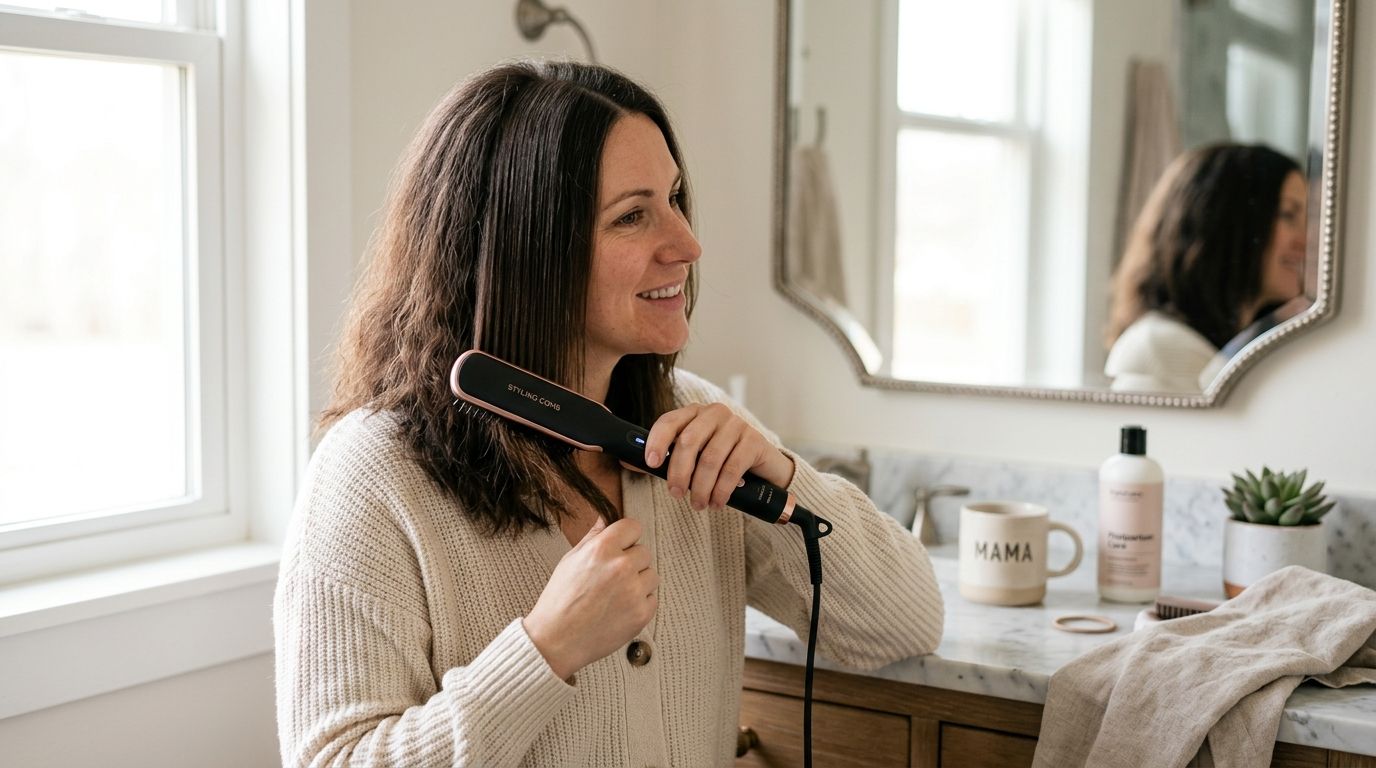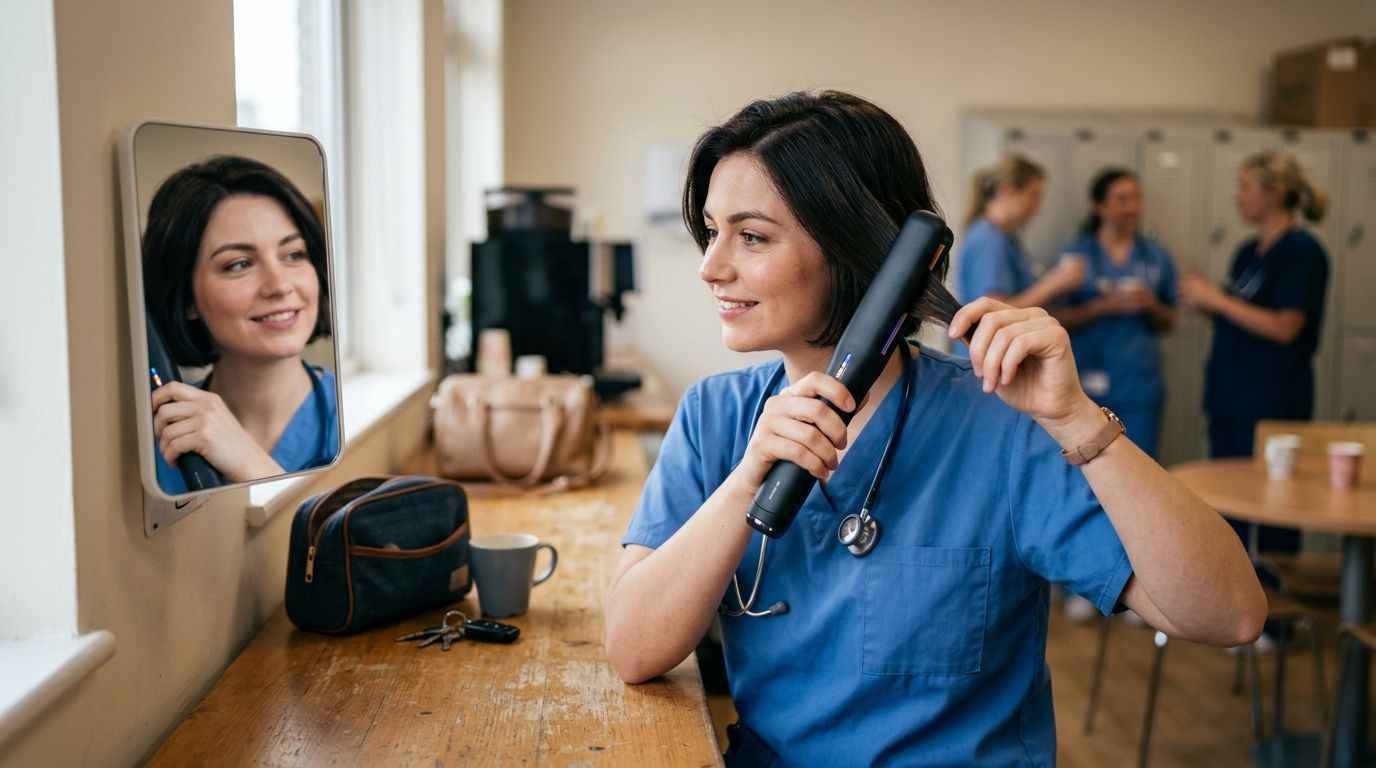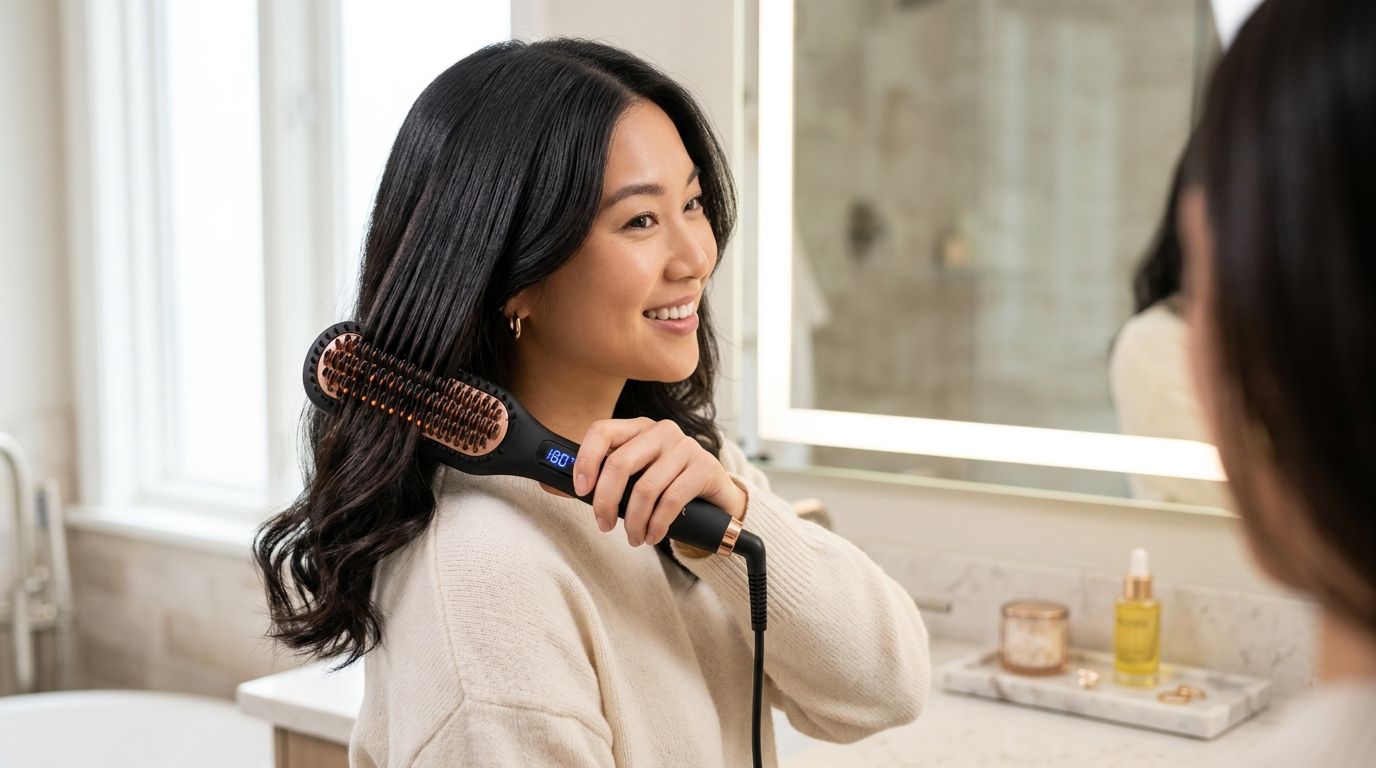
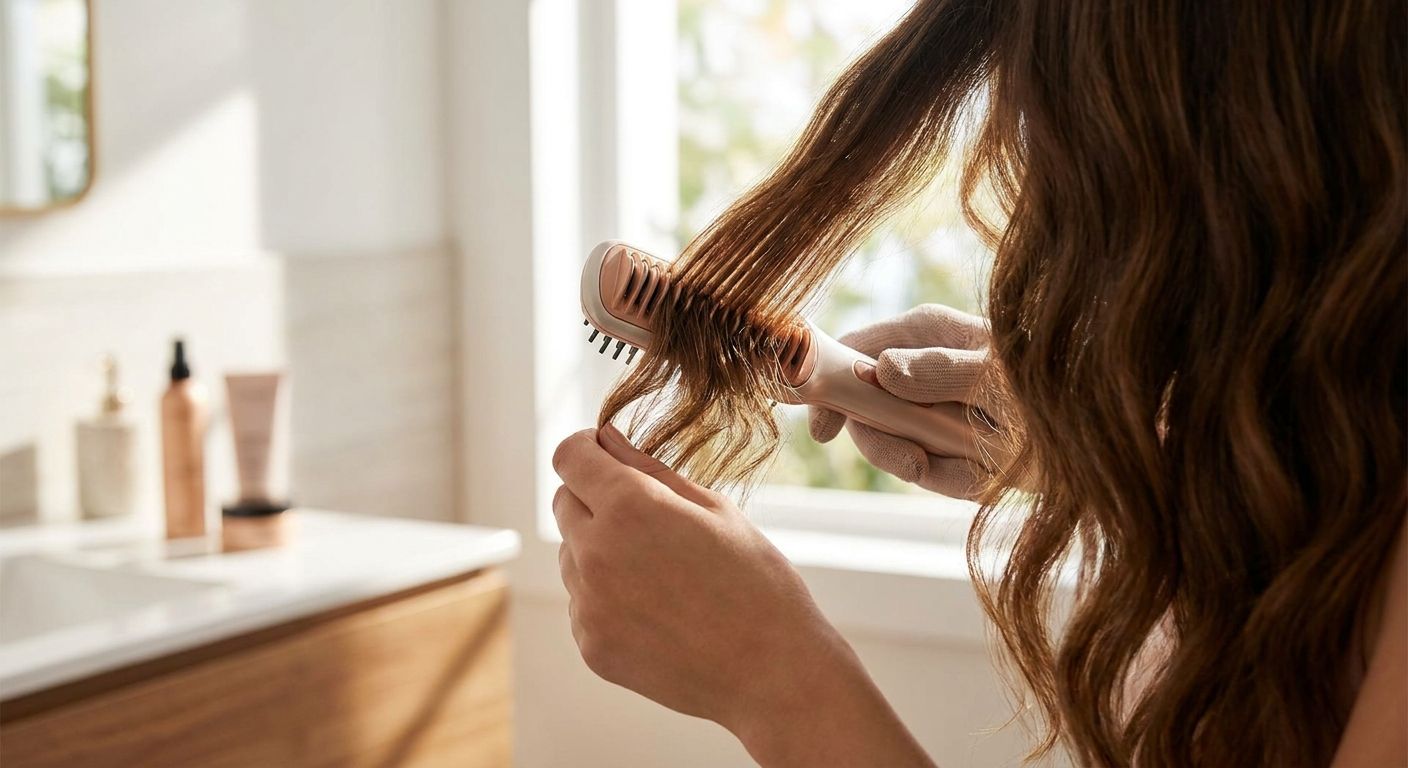
Choosing a hair straightening comb as a first heat tool beats jumping straight to a flat iron — the comb shape does the sectioning work for you, which is exactly what a beginner needs in 2026.
- Vital by Napio's Electric Hair Straightening Comb is the best hair straightening comb for beginners overall in 2026 — buy it.
- A straightening brush suits fine or thin hair; a hot comb suits natural and afro textures; pick by hair type, not by hype.
- Cordless straighteners trade sustained heat for portability — good for travel, weaker for all-day thick-hair sessions.
- Heated hair brushes run gentler and steadier, which matters most for damaged or color-treated strands.
- Cool-touch bristles and adjustable heat settings matter more for beginners than any single brand claim.
Why this matters
Most first-time heat tool buyers grab whatever's cheapest and end up with a device that scares them into using it wrong. A flat iron demands clamp pressure and even sectioning from the first use; a Vital by Napio hair straightening comb guides itself through the hair with bristles instead of plates, which forgives shaky technique while you're still learning.
The difference matters because heat damage from bad technique compounds. A beginner who fights a tool for six months does more damage than one who picks the right shape on day one. That's the whole case for matching the tool to the hair type before matching it to the price tag.
What makes the best hair straightening comb for beginners
- Adjustable heat settings — beginners need lower temperatures while they learn section size and pass speed
- Cool-touch bristles or housing — reduces scalp burns and finger contact injuries during the learning curve
- Comb or brush shape over flat plates — self-guiding through sections, less technique-dependent
- Fast, consistent heat-up — a tool that takes forever to warm up gets used impatiently, which causes uneven results
- Hair-type match — fine hair, coarse hair, and tightly coiled hair all need different heat delivery, not the same default setting
- Simple controls — one or two buttons beats a digital menu on a first device
Hair straightening combs at a glance
| Item | Best for | Standout feature | Key limitation |
|---|---|---|---|
| Vital by Napio Electric Hair Straightening Comb | Total beginners, all-round use | Self-guiding bristle design, works upright at roots | Multiple passes needed on very coarse hair |
| Napio Straightening Brush | Fine or thin hair | Gentle heat spread, doubles as detangler | Struggles with thick or very curly hair |
| Napio Hot Comb | Natural and afro-textured hair | Close-to-scalp teeth for a silk-press finish | Needs a steady hand near the roots |
| Napio Cordless Hair Straightener | Travel and thick hair on the go | No outlet needed, works anywhere | Battery runs down faster on long sessions |
| Napio Heated Hair Brush | Damaged or color-treated hair | Steady, lower heat across bristles | Slower for full-length straightening |
1. Vital by Napio Electric Hair Straightening Comb: best hair straightening comb for beginners overall
This is the comb Vital by Napio built its beauty tech line around, and it earns the top spot because the bristle shape does most of the technique work a flat iron demands from the user. You run it through a section once, the bristles distribute heat evenly, and the hair falls straight without a clamping motion to master.
Vital by Napio Electric Hair Straightening Comb pros:
- Simpler learning curve than a flat iron — no clamp pressure to get right
- Works upright at odd angles, including roots and fringe
- Cool-touch outer bristles cut down on scalp burn risk
- Straightens and smooths frizz in the same pass
Vital by Napio Electric Hair Straightening Comb cons:
- Coarse or very thick hair needs two or three passes per section
- Long, dense hair takes longer than a flat iron would
- Even results still require practicing consistent section size
Best for: anyone who has never used a heat styling tool before. Verdict: Buy.
2. Napio Straightening Brush: best hair straightening comb alternative for fine or thin hair
A straightening brush hides its heating plates between brush bristles instead of exposing flat plates, which spreads heat more gently across fine strands. It brushes hair straight while smoothing flyaways at the same time, which is useful for hair that damages easily.
Napio Straightening Brush pros:
- Gentler heat delivery for fine or thin strands
- Doubles as a daily detangling brush
- Adds a little root lift while it straightens
Napio Straightening Brush cons:
- Less effective on thick or tightly curled hair
- Stubborn sections need repeat passes
Best for: beginners with fine or thin hair who are wary of heat damage. Verdict: Buy for fine hair specifically.
3. Napio Hot Comb: best hair straightening comb for natural and afro hair
A traditional hot comb keeps its teeth close to the scalp and presses hair straight from root to tip, which is what tighter curl patterns need that a bristle comb or brush can't always deliver. It's built for a silk-press result you'd otherwise pay a salon for.
Napio Hot Comb pros:
- Handles tight coils and afro textures other tools skip over
- Gets close enough to the roots for a full silk-press finish
- Familiar shape for anyone who grew up around hot combs
Napio Hot Comb cons:
- Needs a steadier hand near the scalp than a bristle tool
- Can over-straighten already-fine sections if overused
Best for: beginners with natural or afro-textured hair chasing a salon-style finish at home. Verdict: Buy. See the full hot comb guide for natural hair.
4. Napio Cordless Hair Straightener: best hair straightening comb for thick hair and travel
A cordless straightener trades the wall outlet for a battery, which matters more than it sounds like once you're styling in a hotel bathroom with one power point. It holds enough sustained heat to work through thick sections without cord drag getting in the way.
Napio Cordless Hair Straightener pros:
- Works anywhere — travel bag, gym locker, dorm room
- No cord drag while working through thick sections
- Good for quick touch-ups between full styling sessions
Napio Cordless Hair Straightener cons:
- Battery runs down faster than a corded tool over a long session
- Thick or long hair may need a mid-style recharge
Best for: beginners who travel often or have thick hair and want to skip the cord. Verdict: Buy for on-the-go styling; Hold if you only style at home. Full details in the cordless straightener guide for thick hair.
5. Napio Heated Hair Brush: best hair straightening comb for damaged or color-treated hair
A heated hair brush spreads lower, steadier heat across its bristles instead of concentrating it on flat plates, which is gentler on strands that are already chemically treated or damaged. It functions as a daily brush that happens to straighten as you go.
Napio Heated Hair Brush pros:
- Gentler on chemically treated or damaged hair
- Doubles as a regular daily brush
- Fewer hot spots than a flat-plate tool
Napio Heated Hair Brush cons:
- Not built for stubborn curls or coarse texture
- Slower for full-length straightening than a comb or plate tool
Best for: beginners with damaged or color-treated hair who need steadier, lower heat. Verdict: Buy for damaged hair; Skip if your hair is thick or coarse. More in the heated hair brush guide for damaged hair.
“A hair straightening comb that scares you with its buttons is the wrong first straightener.”
How we ranked these
Each pick is scored against the same six criteria from the section above: adjustable heat, cool-touch design, self-guiding shape, heat-up speed, hair-type match, and control simplicity. The Vital by Napio Electric Hair Straightening Comb ranks first because it scores well across every criterion for a first-time user rather than excelling at one and failing at the rest. The other four picks rank by how well they solve one specific hair-type problem — fine hair, natural texture, thick hair on the move, or damage — rather than trying to be universal.
Which hair straightening comb should you choose in 2026?
If you've never touched a heat styling tool, start with the Vital by Napio Electric Hair Straightening Comb — it's the most forgiving shape for a first-timer in 2026 and covers the widest range of hair types without specialized settings. Switch to the straightening brush if your hair is fine and burns easily, the hot comb if you're working with natural or afro texture, the cordless straightener if you travel constantly, or the heated brush if your hair is already damaged or color-treated. Don't buy based on the lowest price alone — buy based on which hair-type column you actually fall into.
FAQ
What's the best hair straightening comb for beginners in 2026?
The Vital by Napio Electric Hair Straightening Comb is the best overall pick for beginners in 2026 because its bristle shape guides itself through sections without clamp technique. Specialized picks exist for fine hair, natural texture, thick hair, and damaged hair.
Is a hair straightening comb better than a flat iron for beginners?
Yes, for beginners a straightening comb is easier to control than a flat iron because the bristles distribute heat automatically instead of relying on clamp pressure. Flat irons require more practice to avoid uneven pressure and heat lines.
What temperature should beginners use on a straightening comb?
Beginners should start on the lowest heat setting their tool offers and increase only if the hair resists straightening after two passes. Fine hair generally needs less heat than thick or coarse hair.
Can beginners use a hair straightening comb on wet hair?
No, heat styling tools including straightening combs are designed for dry or towel-dried hair, not wet hair. Applying heat to wet hair causes more damage and can scorch the hair shaft.
What's the difference between a hot comb and a straightening comb for beginners?
A hot comb keeps its teeth close to the scalp for a silk-press finish on tighter curl patterns, while a bristle straightening comb works further from the roots and suits a wider range of hair types. Beginners with natural or afro-textured hair typically get better results from a hot comb.
Is a cordless hair straightener good for a first-time buyer?
A cordless hair straightener works well for beginners who travel or style on the go, but its battery runs down faster than a corded tool during long, thick-hair sessions. First-time buyers who only style at home may prefer a corded option.
How often should beginners use a heated hair straightening comb?
Limiting heat styling to two or three times a week gives hair time to recover between sessions, especially while you're still learning correct pass speed and section size. Damaged or color-treated hair benefits from even less frequent use.
Does a straightening brush work on thick or curly hair?
A straightening brush is built for fine to medium hair and struggles with thick or tightly curled sections, which need repeat passes and still may not fully straighten. A hot comb or a straightening comb generally handles thicker textures better.
One last thing
Most beginners crank the heat to the highest setting on day one because they assume more heat means faster results — it doesn't, it just means faster damage. Heat styling tools across the category typically range from lower settings suited to fine hair up to higher settings for coarse or very curly textures, and starting low and moving up only if needed is the single habit that separates a comb that lasts years from one that fries hair by month three.