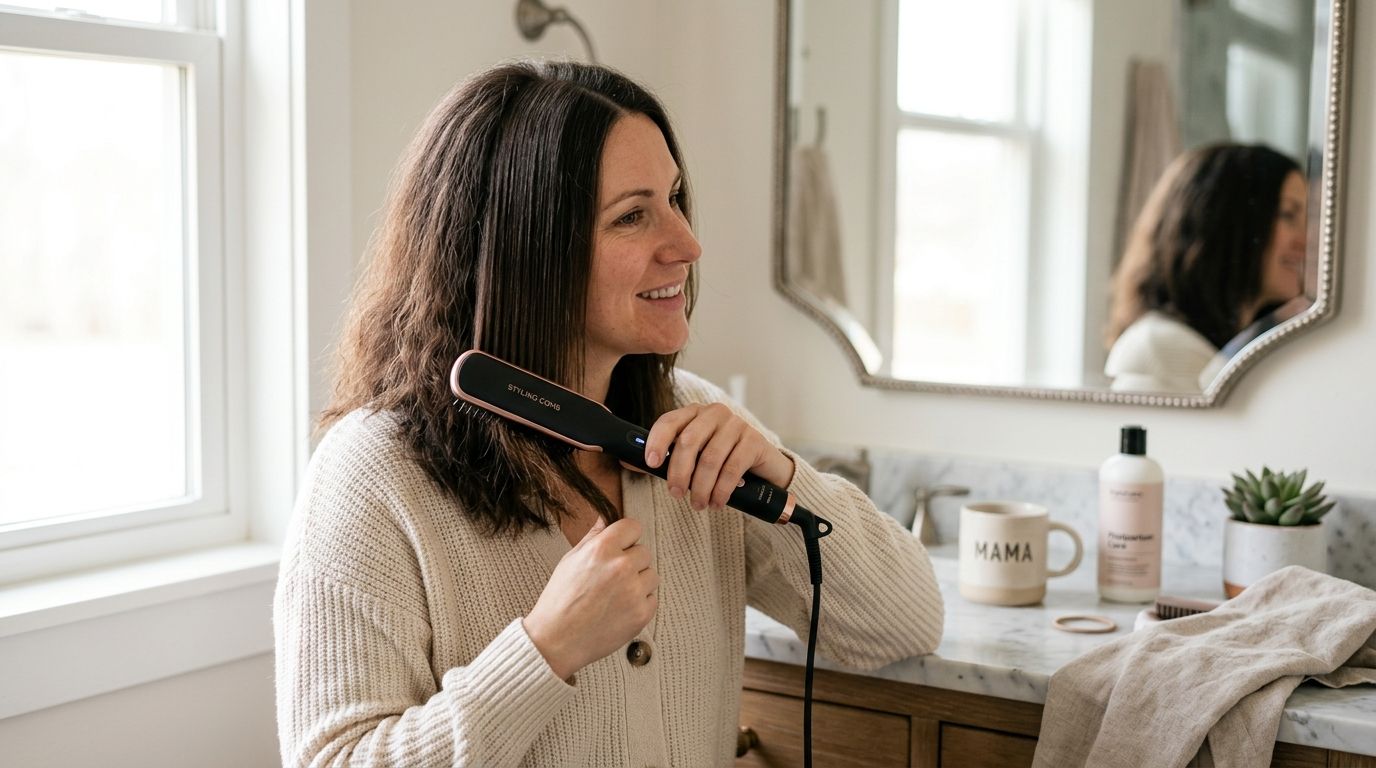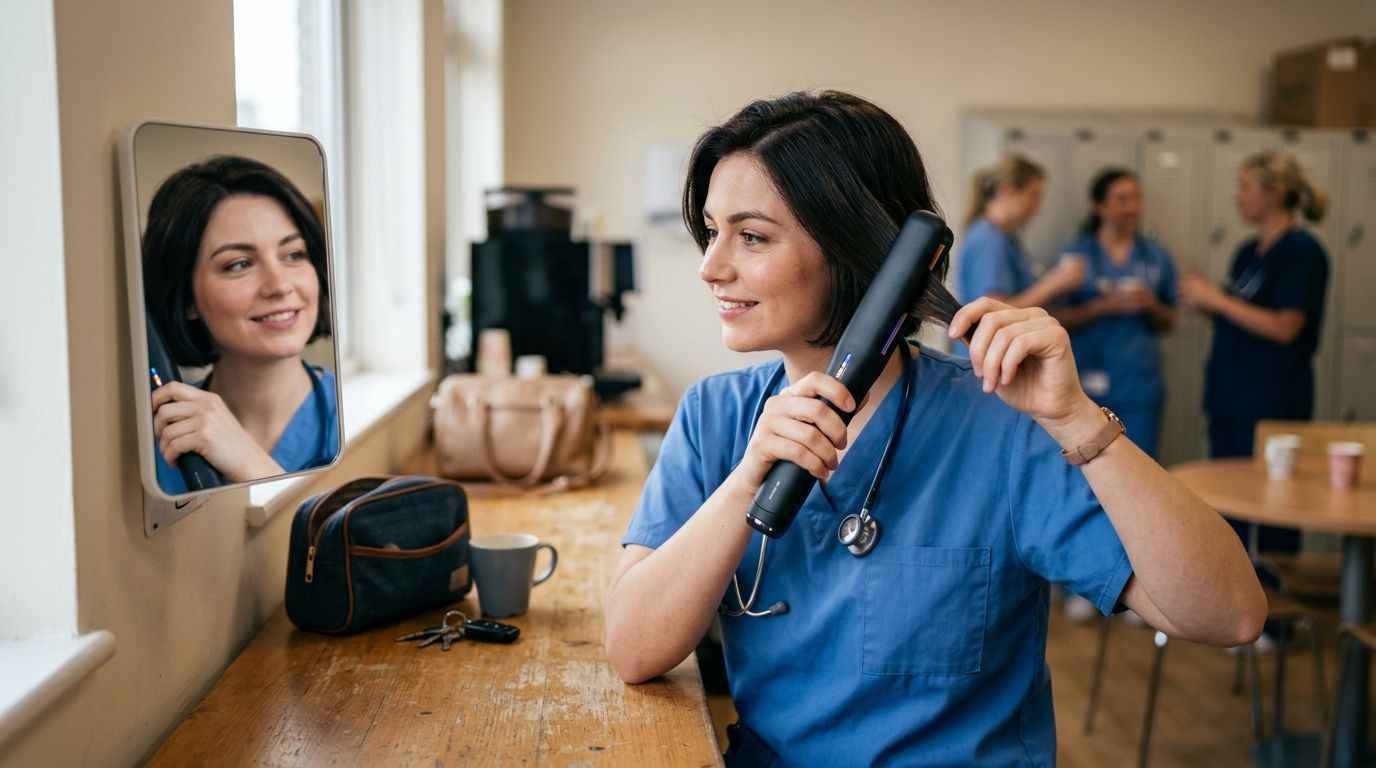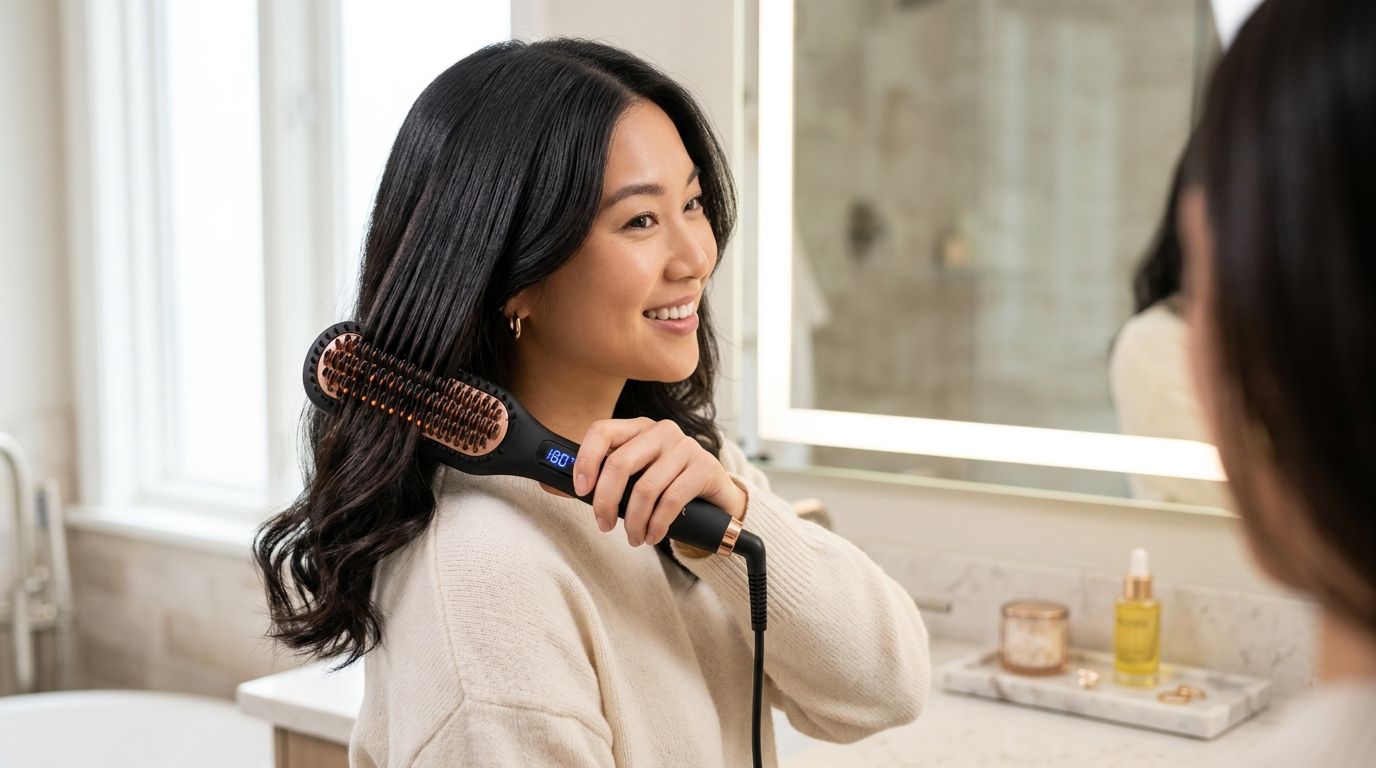
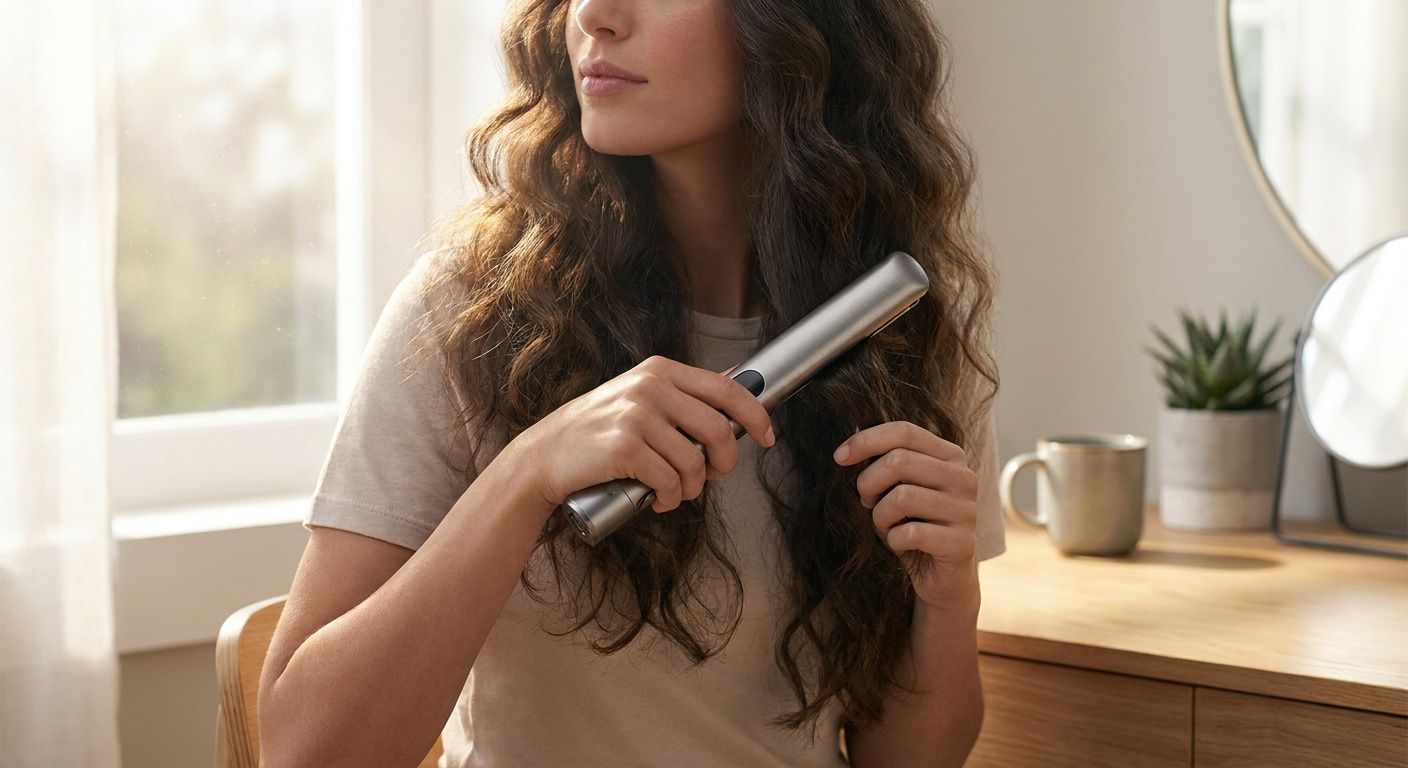
Cordless hair straightener for thick hair is a battery-powered flat iron built to hit higher heat settings and clamp harder on coarse, dense strands without a cord getting in the way. Thick hair needs more heat retention per pass than fine hair, so the segment cares less about styling gimmicks and more about plate material, wattage, and how fast the iron recovers heat between sections.
- A cordless hair straightener for thick hair needs 200-230°C (400-450°F) range and titanium or tourmaline-ceramic plates to cut through coarse strands.
- Vital by Napio's electric straightening comb is built for dense, coarse sections and works as the faster path once you've nailed sectioning and heat protectant.
- Corded irons still beat cordless on sustained high-volume sessions in 2026 because battery drain shows up mid-style on thick hair.
- Heated brushes smooth frizz but don't fully flatten thick roots — pair them with a flat iron for full-length control.
- Clean plates every 3-4 uses; product buildup is the main reason thick-hair irons lose heat transfer over time.
Why cordless straighteners matter for thick, coarse hair
Thick hair has more cuticle layers and a wider shaft diameter, so it absorbs and loses heat differently than fine or medium hair. A cordless iron with weak heat recovery forces you into 3-4 passes on the same section, and that's where damage compounds — not from one high-heat pass, but from repeated exposure at a lower, less effective setting.
Cordless models solve a real problem for thick-haired users: less pulling on the cord mid-section, more control at the nape and crown where hair is usually densest. But the same battery that gives freedom also caps run-time, and thick hair sessions run longer than fine-hair sessions by nature. That trade-off is the entire decision here.
Check the Vital by Napio range if you're comparing cordless against corded before you commit — the plate spec and heat range matter more for this segment than brand names ever will.
How to choose and use a cordless straightener for thick hair
Check the plate material and heat range first
Thick hair needs plates that hold heat evenly across the full pass, not just at the point of contact. Titanium plates heat faster and stay hotter longer than pure ceramic, which matters when you're working through dense sections.
- Look for titanium or tourmaline-ceramic plates, not painted aluminum
- Confirm the top heat setting reaches at least 200°C (400°F)
- Wider plates (over 1 inch) cover more surface per pass on thick hair
- Floating plates reduce snagging on coarse, textured strands
- Avoid single-temperature irons with no adjustment dial
Match wattage and heat-up time to hair density
A cordless iron that takes 90 seconds to reach working temperature will lose that heat fast once it starts touching thick hair. Higher wattage generally means faster recovery between clamps, which is the real bottleneck on dense hair, not top temperature.
- Prioritize irons that heat up in under 60 seconds
- Check for a heat-recovery or "reheat" indicator if the model has one
- Test the iron on the back sections first — they're usually the coarsest
- Skip irons marketed mainly for fine or fragile hair types
Test the temperature on a small section before a full pass
Run one clamp on an inner, hidden section before committing to a full head. This tells you whether the iron actually flattens thick hair in one pass or whether you'll need multiple passes, which changes how you budget battery life.
- Start at 190°C and increase only if hair resists on the first pass
- Watch for steam or a burning smell — both signal the setting is too high
- Note how many seconds the clamp needs to hold before hair straightens
- Adjust section size down if one pass isn't enough
Once you've confirmed heat and plate fit, an electric hair straightening comb like the one from Vital by Napio becomes the faster path for thick roots and edges — it's built to comb through density in one motion rather than clamp section by section.
Time your cordless charge around your styling routine
Thick hair sessions run longer, so battery management is part of the technique, not an afterthought. Full-head styles on dense hair regularly run past 20 minutes, and that's where weaker cordless batteries show their limits.
- Charge fully before any full-head session, not a top-up
- Style the densest sections (crown, nape) first while battery is strongest
- Keep the charging dock nearby for a mid-style top-up on longer styles
- Check the heated hair brush for thick, frizzy hair guide if battery drain is a recurring problem — brush-style tools often draw less power per pass
Section thick hair before you straighten
Sectioning is the single biggest factor in whether a cordless iron performs well on thick hair. Skipping this step is why most people think their iron "isn't hot enough" when the real issue is section size.
- Split hair into 4-6 sections minimum, more for waist-length thick hair
- Keep each section under an inch thick for full contact
- Clip unused sections away from the working area to avoid re-touching hot strands
- Work from the nape upward — the densest hair gets styled while the iron is hottest
Protect strands with heat protectant and slower passes
A slower, single clean pass at the right temperature causes less damage than three fast passes at a lower setting. Heat protectant spray adds a buffer layer that matters more on thick hair because it typically needs a higher, longer-held temperature.
- Apply heat protectant to damp or fully dry hair before styling
- Hold each clamp for 2-3 seconds, moving in one smooth glide
- Never re-pass the same section more than twice
- Let hair cool before running fingers through — thick hair holds heat longer post-styling
Clean plates after every few uses
Product buildup on plates reduces heat transfer over time, and thick hair uses more styling product per session than fine hair, so buildup happens faster.
- Wipe plates with a damp cloth after each use once cool
- Deep-clean with isopropyl alcohol every 3-4 uses
- Check the how to clean a heated hair straightening comb guide for a step-by-step routine
- Inspect for residue buildup near the plate edges, where product collects most
Comparing your options for thick hair
| Option | Best for | Key limitation |
|---|---|---|
| Cordless flat iron | Full-length straightening on dense hair, freedom of movement | Battery drains faster on long, thick-hair sessions |
| Corded flat iron | Sustained high-heat sessions without recharge breaks | Cord tangles and limits reach at the back of the head |
| Electric straightening comb | Roots, edges, and quick touch-ups on coarse hair | Doesn't fully replace a flat iron for full-length pin-straight styles |
| Heated straightening brush | Smoothing frizz and reducing pass count on thick, wavy sections | Less effective at pin-straight results on very coarse hair |
A cordless hair straightener for thick hair wins when the plates run titanium, the heat range clears 200°C, and you've sectioned hair properly before the first clamp — skip any iron that can't confirm all three.
Common mistakes people with thick hair make
- Buying an iron rated for fine hair. Most budget cordless irons top out around 180°C, which isn't enough for coarse strands and forces repeat passes.
- Skipping sections larger than an inch. Thick hair needs smaller sections for full plate contact; oversized sections leave the core of the strand unstraightened.
- Running the battery flat mid-style. Starting with the densest sections first protects you from losing charge before the hardest part is done.
- Multiple low-heat passes instead of one hot pass. Three passes at 170°C damages more than one clean pass at 210°C held for a couple of seconds.
- Ignoring plate buildup. Thick hair users apply more product, so plates need cleaning more often — a buildup-coated plate loses heat transfer fast.
FAQ
What's the best cordless hair straightener for thick hair in 2026?
The best option for thick hair in 2026 is a cordless iron with titanium plates and a heat range that clears 200°C (400°F), since coarse strands need sustained heat, not just a high top setting. Pair it with proper sectioning for full-length results.
Is a cordless straightener as good as a corded one for thick hair?
Cordless models match corded irons for shorter sessions but lose ground on full-head thick-hair styles that run past 20 minutes because battery drain slows heat recovery. Corded irons still win on sustained, high-volume sessions.
How hot should a straightener be for thick hair?
Thick hair generally needs 200-230°C (400-450°F) to flatten in a single pass without repeated exposure. Fine or damaged hair should stay well below that range.
Can an electric straightening comb replace a flat iron for thick hair?
An electric straightening comb works well for roots, edges, and touch-ups on coarse hair but doesn't fully replace a flat iron for pin-straight, full-length results. Most people use both depending on the section.
Why does my cordless straightener lose heat halfway through my style?
Battery drain reduces heat recovery speed as the charge drops, which shows up most on thick hair because each section demands more sustained heat. Charging fully before a full-head session and styling the densest sections first reduces this.
How often should I clean a straightener used on thick hair?
Wipe plates after every use once cool, and deep-clean every 3-4 uses since thick hair sessions use more styling product that builds up on the plate surface. Buildup is the main reason plates lose heat transfer over time.
Does plate material matter more than heat setting for thick hair?
Both matter, but plate material determines how evenly and how long that heat holds during a pass, which is often the bigger factor for thick hair. Titanium plates outperform basic ceramic on heat retention across a full section.
One last thing
The detail most people skip: heat recovery speed matters more than top temperature for thick hair. An iron that hits 230°C but takes 10 seconds to recover between clamps will underperform one that holds a steady 210°C section after section — check for a reheat indicator before you check the max-heat number on the box in 2026.