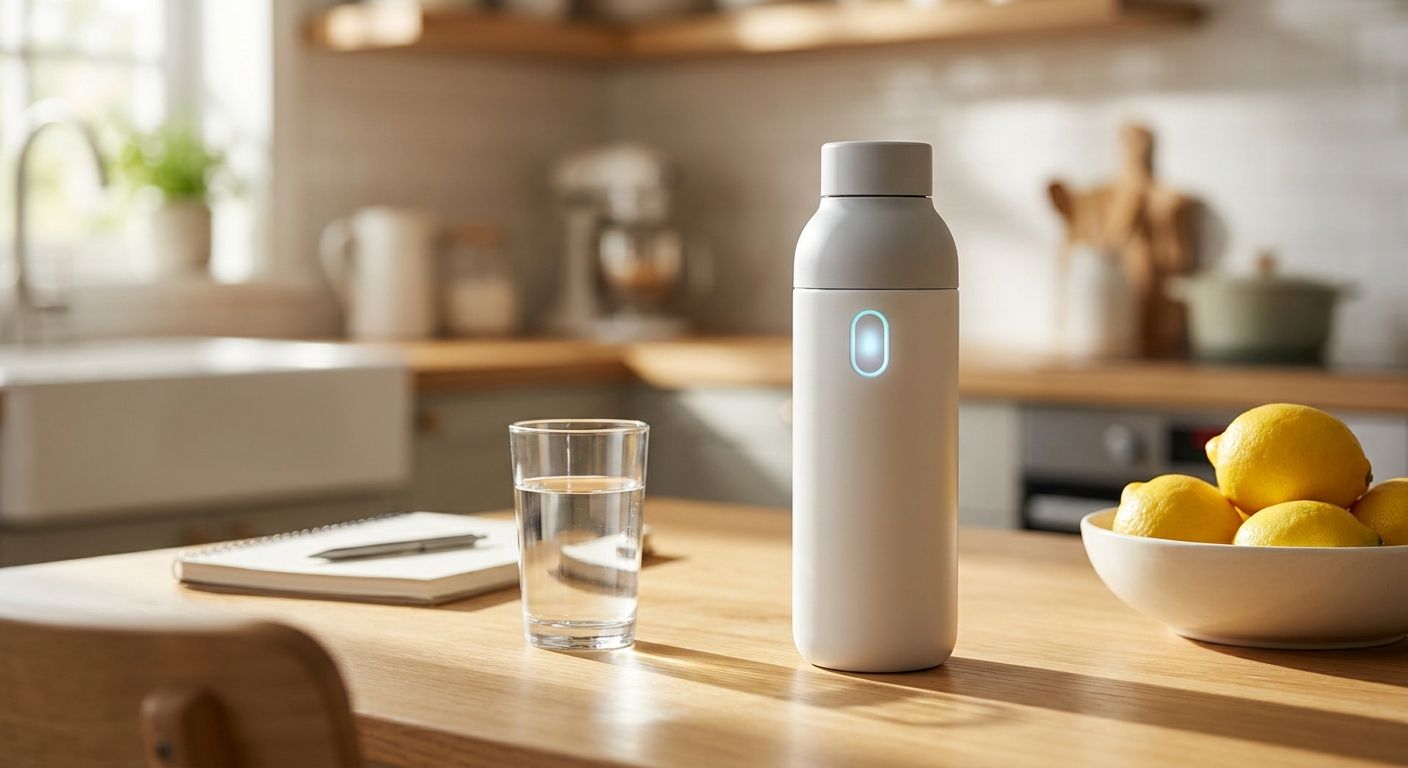
A self-cleaning water bottle uses UV-C light or an active filtration cycle to sanitize the inside of the bottle without soap, brushes or a dishwasher cycle — and the best models for daily use finish that cycle in under a minute. This guide ranks the technology by cycle time, upkeep and real-world durability so you know which bottle earns a spot on your desk in 2026.
- LARQ Bottle PureVis remains the reference point for the best self cleaning water bottle category in 2026 — Buy if you want a proven UV-C cycle.
- CrazyCap 3 Pro suits people who already own a favorite bottle and just want a sanitizing cap — Consider.
- Philips GoZero Self-Cleaning bundles filtration with UV-C, which matters more for tap water quality than bottle hygiene alone — Consider.
- Skip any bottle claiming 'self-cleaning' with no stated wavelength or cycle time — that's a marketing label, not UV-C tech.
- Pair any self-cleaning bottle with a weekly hand wash of the cap threads — UV-C doesn't reach every seal.
Why this matters
A reusable bottle left half-full on a desk for a full workday builds a biofilm you can't see, and rinsing with tap water doesn't touch it. UV-C light in the 270-280 nanometer range is an established germicidal wavelength — it damages the DNA of bacteria and mold on contact, which is why hospitals and water treatment plants have used it for decades before it showed up in a bottle cap.
The daily-use test isn't whether the tech works in a lab. It's whether the cycle is fast enough that you actually run it, and whether the battery survives a normal week without a nightly charge. That's where most of the ranking below splits winners from skips.
How this list was ranked
Entries are ranked on three things: cycle time, what the self-cleaning method actually sanitizes (cap only vs. full interior), and how much daily upkeep the bottle demands beyond the automated cycle. Bottles that rely on vague "antimicrobial coating" language instead of a named UV-C wavelength or documented cycle time were excluded — that phrasing usually means the surface resists bacterial growth on the plastic itself, not that the bottle actively sanitizes standing water.
The ranked list
1. LARQ Bottle PureVis — the category benchmark
LARQ's PureVis line uses a built-in UV-C LED that runs a self-cleaning cycle roughly every two hours in auto mode and completes a full manual sanitizing cycle in about 60 seconds. It's the bottle most other self-cleaning models get compared against, and for daily desk-and-gym use the interval matches how often you'd realistically refill anyway.
The catch is charging discipline — the UV-C LED draws down the battery over repeated cycles, so heavy daily use means a charge every few days rather than weekly. Verdict: Buy if you want the most tested self-cleaning mechanism on the market and don't mind a charging cable in your bag.
2. CrazyCap 3 Pro — the cap-only fix
CrazyCap sells the sanitizing mechanism as a standalone cap that clips onto a wide range of bottle mouths, using the same UV-C principle but housed above the water line rather than submerged. That makes it a fit for someone who already owns a bottle they like and doesn't want to replace it.
The tradeoff is coverage — a cap-mounted UV source sanitizes the neck and lid threads more directly than the full body of water sitting below it. Verdict: Consider if your priority is cap hygiene specifically, since that's where most bottle contamination actually starts.
3. Philips GoZero Self-Cleaning — the filtration bundle
Philips pairs a UV-C self-clean cycle with an activated carbon filter, which addresses tap water taste and particulates in addition to bacterial growth inside the bottle. That's a different problem than "my bottle smells after two days" — it's aimed at people whose tap water itself needs treating.
If your water quality is already fine, you're paying for filtration you don't need. Verdict: Consider only if filtering tap water is part of what you're solving for, otherwise it's overbuilt for the daily-use case.
4. Generic UV-C cap adapters (unbranded) — the budget risk
A wave of unbranded UV-C caps sell on marketplaces at a fraction of named-brand pricing, and some genuinely use a low-power UV-C LED. The problem is verification — without a stated wavelength, cycle time, or any documentation, you can't confirm the light is in the germicidal range at all.
Some of these are legitimate stripped-down versions of the same tech; plenty are a light-up cap with no real sanitizing output. Verdict: Skip unless the listing states an actual UV-C wavelength and cycle duration — if it doesn't, you're buying a cap with a light in it.
5. The manual-clean baseline — the honest comparison
A well-designed wide-mouth bottle hand-washed daily with hot soapy water and a bottle brush remains the actual floor every self-cleaning bottle is measured against. It costs nothing extra and works every time, but it depends entirely on you doing it, which is the whole reason self-cleaning bottles exist.
For anyone deciding whether the upgrade is worth it, the full breakdown on self-cleaning water bottles for the gym walks through where the UV-C cycle actually saves time versus a sink and a brush. Verdict: Hold on upgrading if you already wash daily without fail — the tech buys you consistency, not a cleaner bottle than a diligent hand-wash.
Comparison table
| Bottle | Self-clean method | Cycle time | Best for | Verdict |
|---|---|---|---|---|
| LARQ Bottle PureVis | Submerged UV-C LED | ~60 sec | Daily desk + gym use | Buy |
| CrazyCap 3 Pro | Cap-mounted UV-C | ~60-80 sec | Existing bottle owners | Consider |
| Philips GoZero Self-Cleaning | UV-C + carbon filter | ~60 sec | Poor tap water quality | Consider |
| Unbranded UV-C caps | Varies, unverified | Unlisted | Nobody, until verified | Skip |
| Manual hand-wash | Soap + brush | N/A | Anyone with consistent habits | Hold |
Where to buy
- Buy UV-C bottles direct from the manufacturer's own site or an authorized retailer listed on that brand's site — third-party marketplace listings for UV-C tech are where the unverified knockoffs concentrate.
- Check the listing for a stated wavelength (look for the 200-280nm germicidal range) and a stated cycle time before paying a premium price — if neither appears, treat it as a standard bottle with a light.
- If you're buying for travel rather than daily desk use, read the UV water bottle for travel guide first — battery life and cycle frequency matter differently on the road than they do sitting on a desk all day.
What to avoid
- "Antimicrobial coating" bottles marketed as self-cleaning — a coating that resists bacterial growth on plastic is not the same as an active UV-C sanitizing cycle. Read the spec sheet, not the front-of-box label.
- Bottles with no stated battery life for the UV-C cycle — if the listing doesn't say how many cycles per charge, assume it's low and budget for daily charging.
- Skipping the manual wash entirely — UV-C reaches the water column and interior walls, not always the threading around the cap where most mold actually starts. A weekly hand wash of the lid stays non-negotiable even with the best self-cleaning water bottle.
FAQ
What is the best self-cleaning water bottle for daily use in 2026?
LARQ Bottle PureVis is the best self-cleaning water bottle for daily use in 2026, based on its 60-second UV-C cycle and two-hour auto-clean interval. CrazyCap 3 Pro is a strong alternative if you want to keep an existing bottle and just add a UV-C cap.
How does a self-cleaning water bottle actually work?
Most self-cleaning bottles use a UV-C LED in the 270-280 nanometer range, which damages bacterial and mold DNA on contact. The light runs a timed cycle, typically around 60 seconds, either automatically on a schedule or when you press a button.
Is a UV-C self-cleaning bottle better than washing by hand?
A UV-C cycle sanitizes water and interior surfaces faster than most people wash by hand daily, but it doesn't always reach cap threads and seals. The best routine combines the UV-C cycle with a weekly manual wash of the lid.
How much does a self-cleaning water bottle cost in 2026?
Pricing varies by brand and whether the bottle includes filtration alongside UV-C sanitizing, so check current listings directly on the manufacturer's site rather than relying on outdated figures. Unbranded UV-C caps sell cheaper but often lack verified wavelength specs.
Do self-cleaning water bottles need to be charged?
Yes — the UV-C LED draws battery power with every cycle, so daily use typically means charging every few days rather than weekly. Battery life claims vary by brand and cycle frequency.
Can a self-cleaning water bottle remove all bacteria?
UV-C light in the germicidal range is established to inactivate a large share of bacteria and mold on contact, but no bottle claims 100% elimination without independent lab verification. Treat self-cleaning as a major hygiene upgrade over a standard bottle, not a sterile guarantee.
Is a UV-C cap or a full bottle system better?
A cap-mounted UV-C system is easier to add to a bottle you already like, but it sanitizes closer to the neck and lid than the full water column below. A full-bottle system like LARQ's submerged LED covers more of the interior surface.
How often should I hand-wash a self-cleaning water bottle?
Wash the cap, threading and any silicone seals by hand at least once a week even if the UV-C cycle runs daily. Those areas sit above the water line where UV-C coverage is weakest.
One last thing
The detail most buyers miss: a self-cleaning cycle only sanitizes what's already in the bottle when it runs — it doesn't retroactively clean residue from three days ago. Run the cycle right after you rinse and refill, not as an afterthought at the end of the day, and the 60-second UV-C window actually does what it's built for.