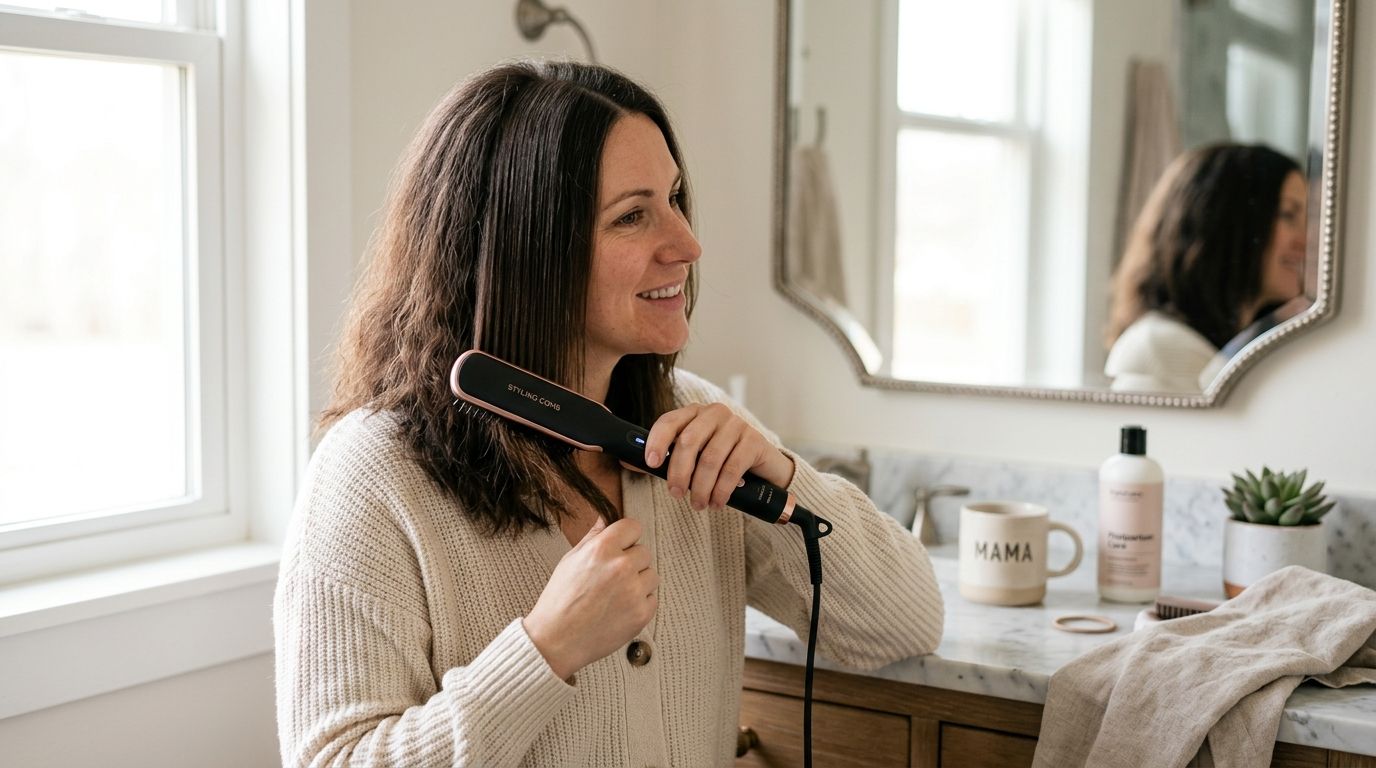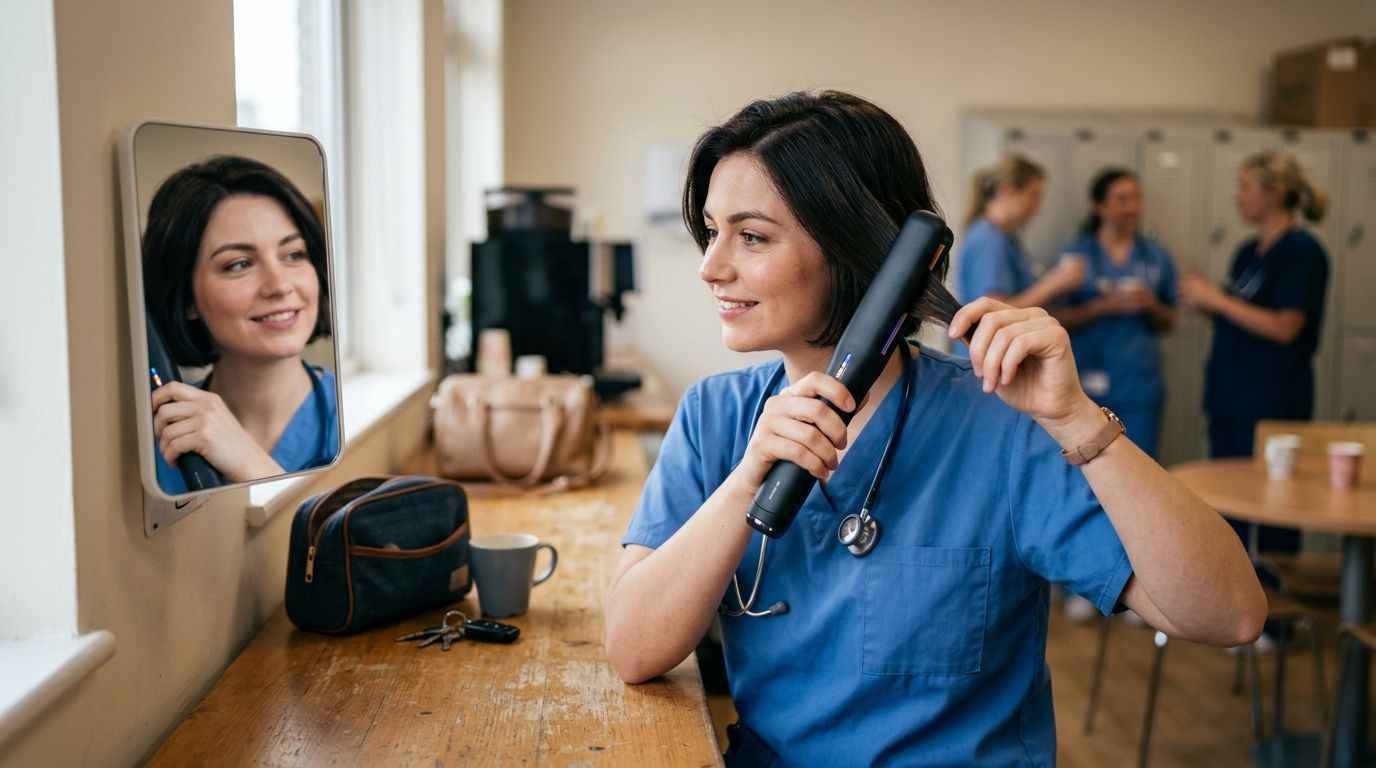
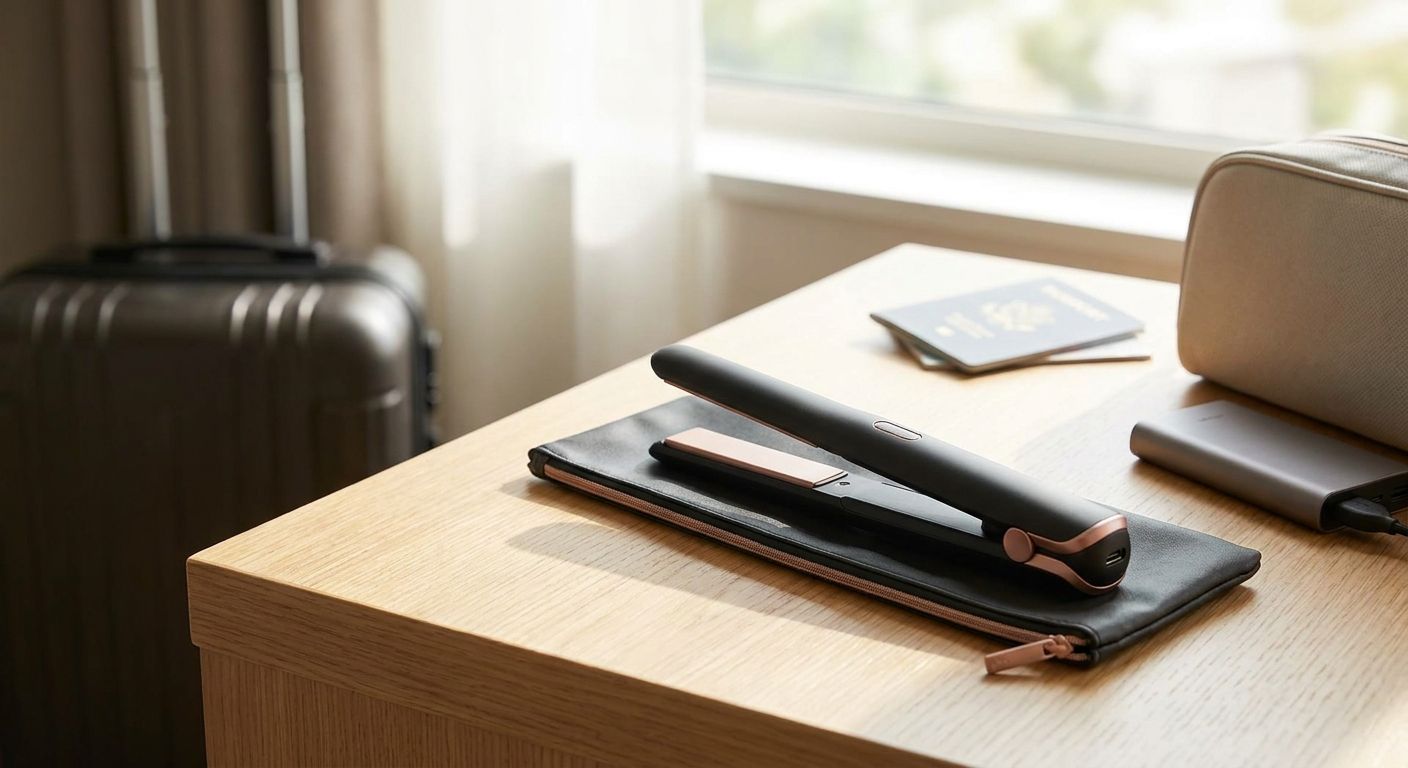
Packing a full-size flat iron for a four-day trip is how you end up with a dead battery, a fried adapter, or a $40 excess-baggage fee for one appliance. A cordless hair straightener for travel has to run on battery or fast-charge, work on any voltage you land in, and still finish a full head of hair before it cools off.
This guide breaks down what separates a genuinely portable straightener from one that just claims to be, which type wins for which kind of traveller, and what to skip entirely in 2026.
- A cordless hair straightener for travel needs 60-90+ minutes of heat retention per charge or it strands you mid-style.
- Dual-voltage models (100-240V) skip the plug-adapter gamble that fries single-voltage irons abroad.
- Comb-style tools, like the Napio electric hair straightening comb, pack flatter than clamp irons for carry-on-only trips.
- Ceramic or tourmaline plates beat bare metal for frizz control in humid destinations - metal plates snag and pull.
- Batteries over 100Wh can get an appliance pulled at security - check the rating before you pack it.
Why this matters
Hotel bathrooms are where cordless straighteners either earn their keep or get left in the drawer. Half of them have one outlet, and it's already taken by a hairdryer bolted to the wall.
Airlines also treat straighteners with a battery as a checked-in-question, not a given. Lithium batteries over 100 watt-hours draw extra scrutiny at security in 2026, and a straightener that runs hot for 60 seconds after you switch it off is a liability in a packed carry-on. Get the spec wrong and the tool you bought for convenience becomes the thing that holds up your bag check.
Who this is for
This guide is for someone who flies more than twice a year and refuses to check a bag just to bring a hairdryer's needy cousin. Think: the frequent flyer doing a 3-day work trip with one carry-on, the backpacker who needs 10 minutes of styling between hostel showers, and anyone who's had a straightener die on them in a hotel room with no outlet in sight.
If you're outfitting a permanent bathroom setup at home, a corded straightener with more wattage is still the better buy - a plug-in tool has no runtime ceiling. This is specifically about what survives a suitcase, and Vital by Napio sells into exactly that gap: beauty tools built for people who move.
What to look for in a cordless hair straightener for travel
Battery runtime and recharge speed
A straightener that gives you 20 minutes of usable heat is a straightener you'll be recharging mid-routine. Look for at least 60-90 minutes of continuous run time per full charge, and check how long a full charge actually takes - some units need 3+ hours plugged in before they're usable again.
Dual voltage or battery-only heating
Single-voltage irons (typically 120V, built for North America) either won't heat properly on 240V power or need a step-down converter that adds bulk and risk. A dual-voltage rating of 100-240V, or a design that heats entirely off an internal battery, sidesteps the problem completely - no adapter, no guesswork on arrival.
Plate material and temperature control
Ceramic and tourmaline plates distribute heat evenly and glide without snagging; bare metal plates heat unevenly and drag on hair, which means more passes and more damage. Adjustable temperature settings matter more in humid climates - fine hair rarely needs above 180°C, but coarse or coily hair may need closer to 210°C to hold a style through a day of sightseeing.
Size, weight, and TSA compliance
Carry-on space is finite. A straightener under 300 grams with a fold-flat or comb-style body takes up a fraction of the room a full clamp iron does. On the battery side, keep an eye on watt-hour rating - most airlines cap spare lithium batteries at 100Wh without prior approval, and a built-in battery over that threshold can flag your bag at security.
Heat-up time
A tool that takes two minutes to reach temperature eats into a routine you're already rushing. Anything under 60 seconds to reach working heat is the standard worth holding a cordless straightener for travel to in 2026.
Top picks by traveller type
The safe pick - ceramic-plate cordless clamp iron. Ceramic plates with a 60-90 minute battery life cover most short trips without a recharge mid-routine. If the plates are rated to at least 200°C and heat up in under 60 seconds, this is the default choice for someone who wants zero surprises. Buy.
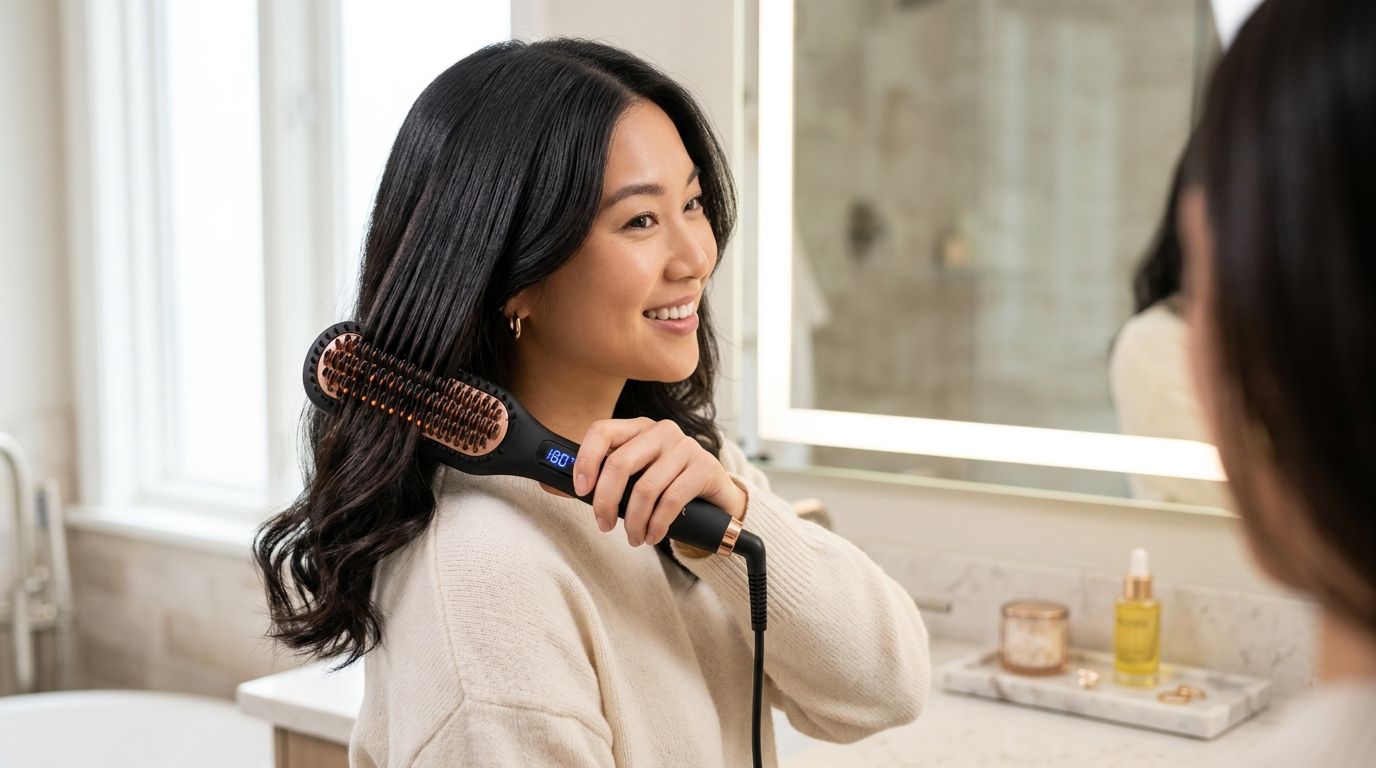
The minimalist's pick - comb-style straighteners. A comb-style tool flattens as you pull it through, which means no separate brushing step and a flatter profile in your bag than any clamp iron. The Napio electric hair straightening comb fits this category - it's built for exactly the pack-light, style-fast use case this guide is written for. Buy if your priority is packing space over max heat settings; Consider if you have very thick or coarse hair, since comb-style tools generally work best on fine-to-medium textures.
The frequent-flyer pick - fast-recharge units. Look for anything advertising a recharge time under 90 minutes for a full battery. If you're doing city-hopping trips with hotel stops most nights, a fast recharge matters more than raw runtime. Buy for multi-city itineraries.
The international pick - dual-voltage irons. A straightener rated 100-240V removes the adapter question entirely, whether you land in Bangkok or Berlin. If you travel to three or more countries a year, this spec alone should decide the purchase. Buy.
The budget trap - unbranded metal-plate cordless irons. Sub-$20 cordless straighteners on marketplace sites often skip both dual voltage and consistent plate coating, meaning uneven heat and snagging within a few uses. They also rarely disclose watt-hour ratings, which is its own red flag for air travel. Skip.
"A cordless hair straightener for travel that can't clear 60 minutes of heat isn't a travel tool - it's a bathroom counter tool that happens to be small."
What to avoid
- Single-voltage irons marketed as "universal." A tool built for 120V that ships with a plug adapter but no voltage conversion will either underheat or trip a hotel breaker on 240V power.
- Straighteners with no stated watt-hour rating. If the listing doesn't mention battery capacity, you can't check it against airline limits before you fly.
- Metal plates with no ceramic or tourmaline coating. These look identical to coated plates in photos but drag on hair and heat unevenly within weeks of daily use.
Verdict comparison
| Type | Runtime | Best for | Verdict |
|---|---|---|---|
| Ceramic clamp iron | 60-90 min | General short trips | Buy |
| Comb-style (e.g. Napio) | 60-90 min | Carry-on-only, fine-medium hair | Buy |
| Fast-recharge iron | 45-60 min, <90 min recharge | Multi-city trips | Buy |
| Dual-voltage iron | Varies | International travel, 3+ countries/year | Buy |
| Unbranded metal-plate iron | Unlisted | Nobody | Skip |
How to actually run a comb-style tool through your routine, section by section, is covered step by step in the guide on using an electric hair straightening comb - worth a read before your first trip with one.
FAQ
What's the best cordless hair straightener for travel in 2026?
For most travellers, a ceramic-plate cordless straightener with 60-90 minutes of runtime and dual-voltage support (100-240V) covers the widest range of trips. Comb-style tools like the Napio electric hair straightening comb are the better pick if carry-on space is the priority.
Is a cordless straightener as good as a corded one?
For quick touch-ups and short trips, yes - a good cordless model holds enough heat to finish a full head of hair. For daily heavy use at home, a corded iron still wins because it never runs out of charge mid-style.
How much does a cordless hair straightener for travel cost?
Prices vary widely by brand, plate material and battery capacity, so check current listings on the retailer's site rather than relying on a fixed range.
Can I bring a cordless hair straightener in carry-on luggage?
Generally yes, as long as the built-in lithium battery stays under the 100 watt-hour threshold most airlines apply to spare and built-in batteries. Check your airline's specific policy before you fly in 2026.
Do cordless straighteners work on international voltage?
Only if they're rated dual-voltage, typically listed as 100-240V. A single-voltage 120V unit will underheat or malfunction on 240V power without a proper converter, not just a plug adapter.
How long does a cordless straightener battery last per charge?
Most travel-focused models run 60-90 minutes per full charge, enough for one full styling session. Anything under 45 minutes is worth skipping for regular travel use.
Are comb-style straighteners good for travel?
Yes - comb-style tools like the Napio electric hair straightening comb pack flatter than clamp irons and combine detangling with straightening in one pass, which suits fine to medium hair textures best.
What temperature should a travel straightener reach?
Fine hair styles well at around 180°C, while coarse or coily hair often needs closer to 210°C to hold. A travel straightener with adjustable heat settings covers both without needing two tools.
One last thing
The spec nobody checks before buying is recharge time, not runtime. A straightener with a 90-minute battery but a 4-hour recharge is useless on a two-night trip where you're out the door before the outlet's done its job - look for both numbers, not just the flashier one.