Curly hair fights back against straighteners built for straight or wavy strands — the wrong tool leaves you with frizz, flat patches, or heat damage that shows up weeks later. Picking the right hair straightening comb for curly hair in 2026 means matching heat control and plate spacing to your curl pattern, not just grabbing whatever's cheapest on the shelf.
- A hair straightening comb for curly hair works best on 2A-3B patterns with adjustable heat below 200°C.
- The Vital by Napio electric hair straightening comb suits loose-to-medium curls looking for daily smoothing: Buy.
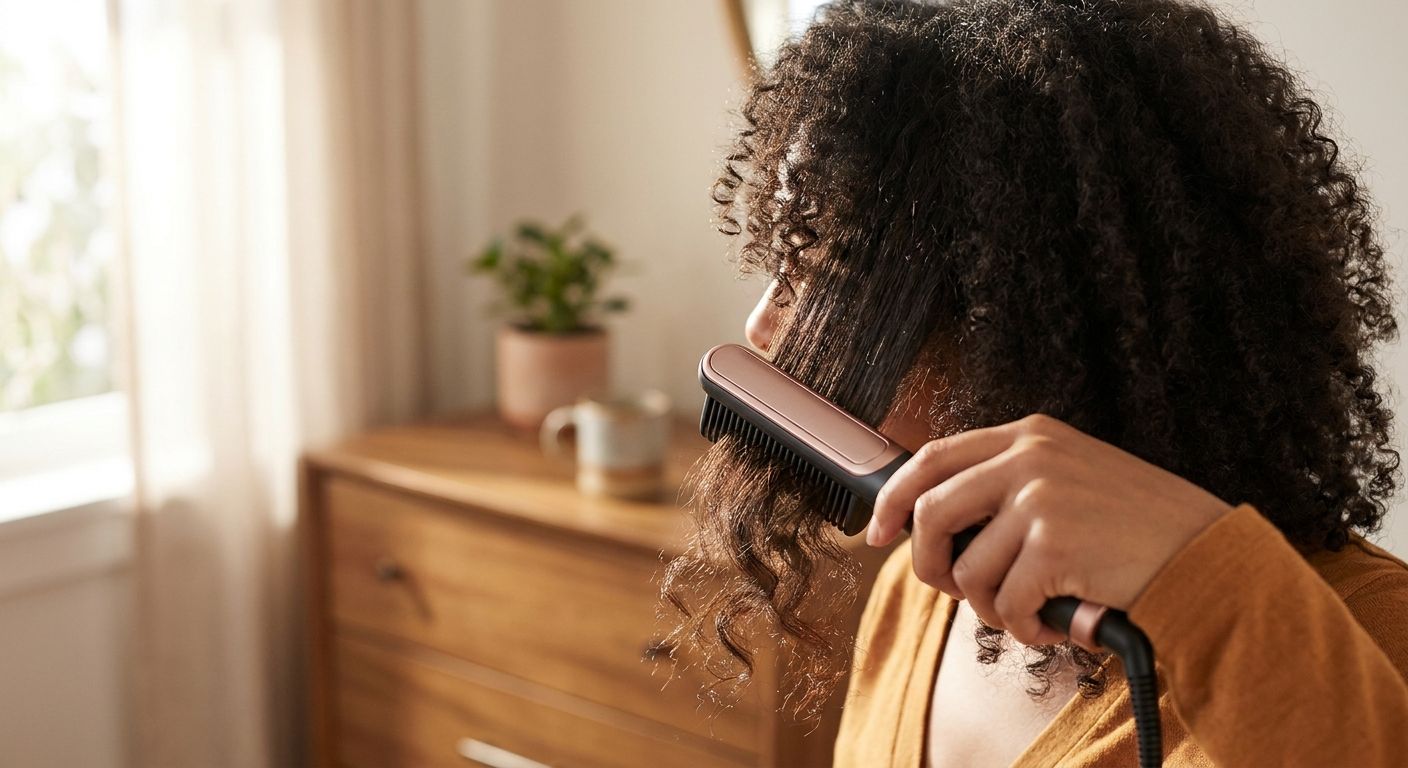
- Tight 4A-4C coils need slower pass speed than most heated combs allow — a ceramic flat iron wins there.
- Metal-only plates snag curly strands and cause more breakage than ceramic or tourmaline-coated combs.
- Skip any comb with a single fixed heat setting — curly hair needs range, not one temperature.
Why this matters
Curly hair is more porous and more heat-sensitive than straight hair, which means the margin for error with any styling tool is smaller. A hair straightening comb built with adjustable heat and rounded teeth reduces the number of passes you need, and fewer passes means less cumulative heat damage across a week of styling.
The market in 2026 is full of electric combs marketed as "one size fits all," but curl pattern changes what actually works. A comb that glides through 2B waves in two passes can take ten passes on 4B coils, and by pass six you're not straightening — you're cooking the cuticle.
Who this is for
This guide is for women with curl patterns from loose 2A waves through tighter 3C ringlets who want a smoother, straighter finish without committing to a daily flat iron session. It's also for anyone transitioning between curly and straight styles who needs one tool that handles both without frying strands by Thursday.
If your curl pattern sits in the 4A-4C range with very tight coils, read the section below on what to avoid before you buy — the calculus changes.
What to look for in a hair straightening comb for curly hair
Heat range and control granularity
A single fixed heat setting is the fastest way to damage curly hair. Look for a comb with at least three distinct heat levels so you can start low on fine or color-treated curls and step up only if needed. Curly hair holds heat longer than straight hair because of its structure, so a 20-degree difference between settings matters more than it sounds.
Plate material and ionic technology
Ceramic and tourmaline plates distribute heat evenly and reduce the static that makes curly hair frizz mid-style. Metal-only plates create hot spots that scorch one section while barely warming the next, which is exactly the unevenness curly hair can't afford. Ionic technology, when present, helps close the cuticle faster and cuts frizz on humid Australian mornings.
Pass speed and tooth spacing
Wider-spaced teeth grab more hair per pass, which sounds efficient but often means the heat doesn't fully penetrate thicker curl clusters. Tighter tooth spacing with a slower glide speed gets more consistent contact on coily and curly textures, even if it takes a few extra seconds per section.
Cool-touch housing and edges
Curly hair styling often means working close to the scalp and near the face. A cool-touch barrel and rounded edge guard matter more here than on straight-hair tools because you're maneuvering around more volume and more angles.
Weight and cordless design
A comb you have to fight to hold steady for fifteen minutes leads to rushed, uneven passes. Lighter designs under 400 grams make it easier to hold consistent pressure through longer curly-hair sessions.
Warranty and return terms
Heat tools fail, and curly hair testing takes longer than a quick five-minute trial on straight hair. A 30-day money-back guarantee gives you enough time to run it through a full wash-and-style cycle before deciding it's not right for your texture.
The options worth comparing
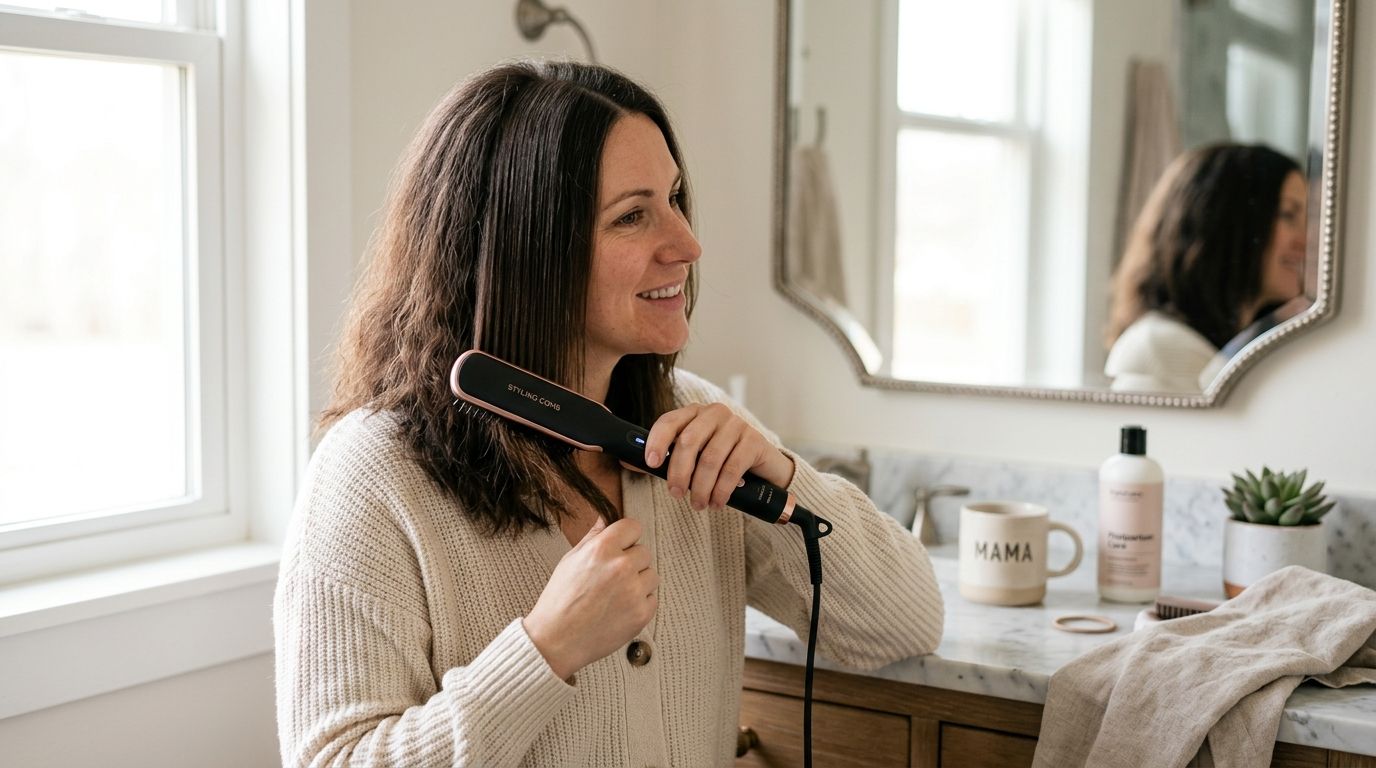
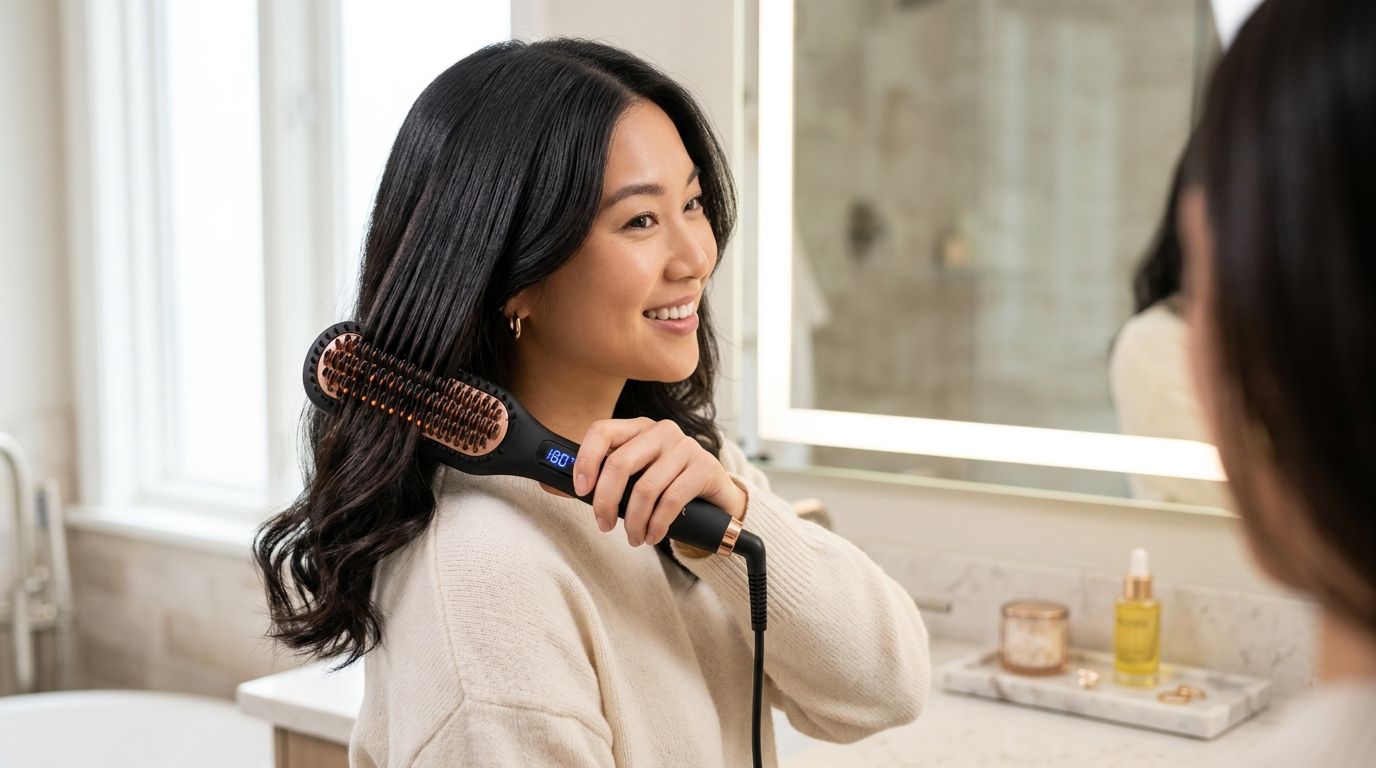
The daily-use pick — electric heated combs. The Vital by Napio electric hair straightening comb is built for loose-to-medium curl patterns wanting a smoother finish in one pass, with adjustable heat rather than a single fixed setting. For 2A-3B curls looking to cut down on separate blow-dry and flat-iron steps, this is a Buy.
The heavy-duty pick — traditional ceramic flat irons. Flat irons still apply more direct, concentrated heat than most combs, which matters on 4A-4C coils that resist smoothing at lower temperatures. They take longer per session and demand more technique to avoid crease lines, but for very tight coils this is a reasonable Consider.
The occasional-style pick — thermal round brushes. These give volume and a soft bend rather than a flat, straight result, which makes them a poor daily straightening substitute for curly hair. Reserve them for blowout days rather than everyday smoothing — call this a Skip if straight, sleek hair is the actual goal.
The shortcut that isn't — chemical keratin smoothing combs. Combs marketed with built-in keratin or smoothing serums add a chemical layer on top of heat exposure, which compounds damage risk on already porous curly strands. Without clear ingredient transparency, this category is a Skip for regular use.
“If your curls need more than ten passes to lie flat, the comb doesn't match your texture.”
What to avoid
- Single fixed-heat combs — curly hair needs a range, not one number
- Metal-only plates with no ceramic or tourmaline coating — they create hot spots that scorch coily sections unevenly
- Wide-tooth combs with no cool-tip guard — fine near the scalp on thicker curl clusters, risky everywhere else
Before your first full styling session, run through how to use an electric hair straightening comb so you're sectioning and pacing passes correctly from the start rather than troubleshooting frizz after the fact.
Verdict comparison
| Option | Best curl pattern | Heat control | 2026 Verdict | |---|---|---| | Electric heated comb (Vital by Napio) | 2A-3B loose to medium curls | Adjustable, multi-level | Buy | | Ceramic flat iron | 4A-4C tight coils | High, less granular | Consider | | Thermal round brush | Any, for volume not straightening | Fixed, low-moderate | Skip for daily straightening | | Keratin smoothing comb | Not texture-specific | Variable, chemical-assisted | Skip |
FAQ
What's the best hair straightening comb for curly hair in 2026?
For 2A-3B loose-to-medium curls, an electric comb with adjustable heat and ceramic plates, like the Vital by Napio electric hair straightening comb, gives a smoother finish in fewer passes than a fixed-heat model. Tighter 4A-4C coils generally need a ceramic flat iron for full straightening.
Is a straightening comb better than a flat iron for curly hair?
A straightening comb is better for daily use on looser curl patterns because it applies less concentrated heat per pass. Flat irons apply more direct heat, which suits tighter coils but raises damage risk with frequent use.
How much heat does curly hair need to straighten properly?
Most curly hair straightens between 160°C and 200°C, with finer or color-treated curls needing the lower end of that range. Coarser, tighter coils tolerate the higher end but shouldn't need it every single day.
Can an electric comb damage curly hair?
Yes, if it lacks adjustable heat or requires repeated passes to smooth coarse sections. Ceramic plates and multiple heat levels reduce that risk by cutting down how many passes each section needs.
How often can you use a straightening comb on curly hair without damage?
Two to three times a week is a reasonable ceiling for most curl patterns when heat stays under 190°C. Daily use at high heat is where cumulative damage shows up fastest, usually as dryness or split ends within a few weeks.
Do ceramic plates matter for curly hair straightening tools?
Ceramic and tourmaline plates distribute heat more evenly than metal-only plates, which matters most on curly hair because uneven heat scorches some sections while barely touching others. This is one of the biggest differences between a cheap comb and one built for curl patterns.
What curl pattern works best with an electric straightening comb versus a flat iron?
Loose 2A through medium 3B curls generally respond well to an electric comb's lower, more even heat. Tighter 3C through 4C coils usually need the higher, more concentrated heat a flat iron provides to fully smooth.
How do you prevent frizz when using a straightening comb on curly hair?
Start on clean, fully dry hair and use the lowest effective heat setting rather than the highest available. Ionic or ceramic plates also close the hair cuticle faster, which cuts down on frizz caused by ambient humidity right after styling.
One last thing
The detail most people skip: curl pattern isn't fixed across your whole head. Most curly heads run tighter at the crown and looser at the nape, which means a single heat setting rarely suits the entire head in one pass. Set the comb lower for the crown section and only bump the heat for the tightest coils underneath — that alone cuts the number of repeat passes most curly-hair users end up doing in 2026.