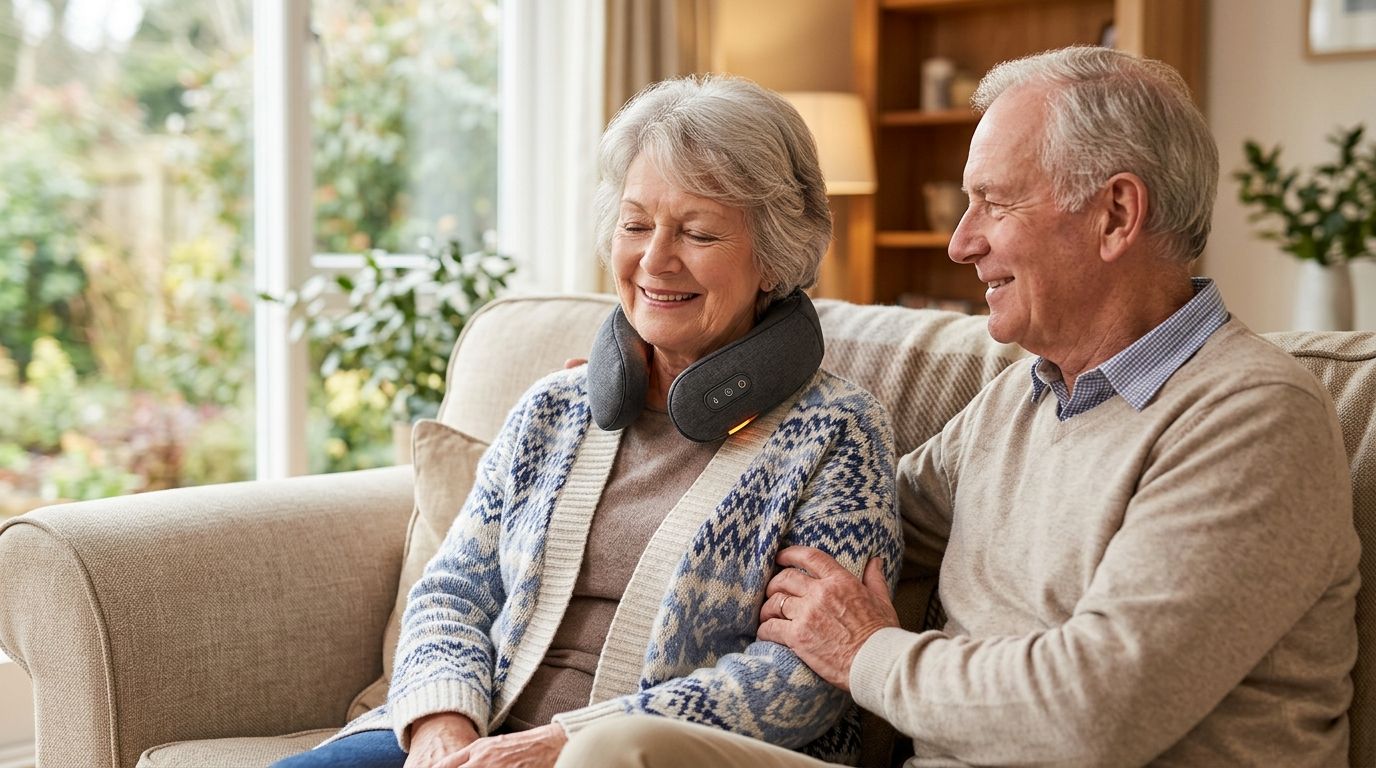
A heated neck massager for elderly parents is a wearable heat-and-vibration device built to ease chronic neck stiffness, arthritis-related tension and rounded-shoulder tightness without needing another person to help apply it. Older adults deal with reduced grip strength, slower reflexes around hot surfaces and often live alone, so the same wrap that works fine for a 35-year-old desk worker can be unsafe or unusable for a parent in their 70s or 80s.
- A heated neck massager for elderly parents needs auto shut-off, large controls and low starting heat, not extra massage modes.
- Napio's best-heated-neck-massager-for-neck-pain guide breaks down which heat settings suit arthritic hands versus general stiffness.
- Test any device on low heat for 5 minutes before a full session in 2026 to rule out skin sensitivity.
- Warm towels and rice socks work as a free trial before spending on a wearable unit.
- Verdict: buy a cordless, auto-shutoff wrap with one-button controls for parents over 70; skip multi-mode units with small dials.
Why heat therapy matters for elderly parents
Neck and shoulder tension in older adults usually comes from a different source than it does in younger users. It's less "sat at a laptop too long" and more decades of reduced mobility, arthritis in the cervical spine, or compensating posture from a hip or knee that doesn't move like it used to. Heat therapy relaxes the muscle guarding around those joints without needing a chiropractor visit every week.
The buying pattern is different too. Adult children are usually the ones researching and purchasing in 2026, not the parent themselves, which means the product has to work the first time with zero setup help. A gadget that needs a manual read-through or a companion app is a return waiting to happen.
The real requirement isn't more features — it's fewer decisions for the person wearing it. One button, one obvious heat level, and a strap that goes on without help.
How to choose a heated neck massager for elderly parents
Step 1: Pinpoint the exact tension pattern first
Don't buy blind. Ask where it hurts and when, because the answer changes what shape of device actually helps.
- Base-of-skull tension headaches respond better to a wrap that covers the upper neck, not just shoulders
- Rounded-shoulder tightness from sitting needs wider coverage across the trapezius
- Arthritic stiffness in the cervical spine benefits from sustained, even heat rather than pulsing vibration
- Pain that's worse in the morning usually points to sleep position, not a gadget problem
- One-sided pain warrants a doctor visit before any device, heat included
Step 2: Start with manual heat before you spend a cent
Before buying anything in 2026, try the free version for a week and see if heat alone actually helps.
- A warm, damp towel microwaved for 30-45 seconds and wrapped in a pillowcase
- A rice-filled sock heated for 60-90 seconds, reusable dozens of times
- A hot shower directed at the neck and shoulders for 5-10 minutes
- A hot water bottle wrapped in a thin towel to avoid direct-skin burns
If heat alone brings noticeable relief, a dedicated wearable is worth the money. If it does nothing, the issue may be structural and heat won't fix it regardless of the device.
Step 3: Check the safety features that are non-negotiable for older hands
This is where most gift-buyers get it wrong — they shop for features they'd want themselves, not features an aging parent actually needs.
- Auto shut-off, since heating elements left running for hours are a real burn and fire risk
- One large, tactile control button instead of a small multi-function dial
- A cordless design so there's no cable to trip over getting up from a chair
- Washable or wipeable strap material, since spills and skin oils build up fast with daily use
- No app pairing requirement — if it needs Bluetooth setup, most parents won't use it past week one
Napio's best heated neck massager for neck pain guide covers which models keep these controls simple without stripping out the heat performance that actually matters.
Step 4: Match the heat range to their comfort tolerance
Most heated wraps run somewhere between roughly 104°F and 140°F (40°C to 60°C) across low, medium and high settings. Older skin is thinner and burns at lower temperatures than younger skin, so starting low isn't optional caution — it's the correct default.
- Start every new user on the lowest setting for the first two sessions, no exceptions
- Cap single sessions at 15-20 minutes even if the device runs longer
- Never let the device sit against bare skin with no barrier layer for the first few uses
- Check skin color and sensation immediately after each session, not just during it
Step 5: Test the fit and weight before wrapping season starts
A wrap that's too heavy or too tight becomes something a parent avoids after the first use, no matter how well it heats.
- Confirm the strap adjusts small enough for a narrower or thinner neck
- Weigh the unit against what they'd tolerate wearing for 15+ minutes seated
- Check it doesn't restrict head movement if they plan to watch TV or read while wearing it
- Have them try it on in the store or return-window period before committing long-term
Step 6: Set a safe, repeatable use routine
A device without a routine gets used twice and then forgotten in a drawer. Build the habit in from day one.
- Same time each day — after dinner or before bed tends to stick best
- One session per tension flare-up, not continuous all-day wear
- A visible reminder note near the charger for the first two weeks
- Full guidance lives in Napio's how often to safely use a heated neck massager guide, worth reading before gifting one in 2026
Step 7: Watch for the warning signs that mean stop immediately
Heat therapy is safe for most people, but not everyone, and older adults with certain conditions need a doctor's input first.
- Numbness, tingling or skin discoloration during or after use
- Existing diabetic neuropathy, which reduces the ability to feel a burn forming
- Blood thinners or clotting conditions, which change how skin reacts to sustained heat
- Pain that gets worse rather than better after three or four sessions
Napio's how to use a heated neck massager for tension headaches page walks through the session length and positioning that keeps this safe for headache-prone users specifically.
Comparison: heat therapy options for elderly parents
| Option | Best for | Key limitation |
|---|---|---|
| Wearable heated neck wrap | Daily tension, arthritis-related stiffness | Needs charging; not ideal for very limited hand dexterity if controls are small |
| Warm towel or rice sock | Testing whether heat helps at all, zero cost | Cools within 10-15 minutes, needs reheating every session |
| Standard electric heating pad | Broader back and shoulder coverage | Corded, harder to position on the neck specifically, higher trip-hazard risk |
| Professional massage | Deep chronic tension, diagnosed conditions | Recurring cost and travel, not a daily-use solution |
Verdict: a cordless heated neck wrap with one-button controls is the right daily option for most elderly parents; save professional massage for flare-ups the wrap doesn't touch.
Common mistakes families make buying for elderly parents
- Buying the most feature-loaded model on the page. Extra vibration modes and app controls add friction, not relief, for a first-time user in their 70s or 80s.
- Skipping the low-heat test period. Starting straight on high setting risks skin burns on thinner, more sensitive skin.
- Ignoring grip and dexterity. A tiny recessed power button is unusable for hands with arthritis, no matter how good the heating element is.
- Assuming one size fits every neck. A wrap that's too loose won't hold heat against the skin; too tight and it gets abandoned after one wear.
- Treating it as a one-time gift with no follow-up. A device with no habit built around it ends up in a drawer within a month, regardless of quality.
FAQ
What's the best heated neck massager for elderly parents in 2026?
The best option for most elderly parents in 2026 is a cordless wrap with one large control button, low starting heat, and auto shut-off. Skip multi-mode units with small dials or app pairing, since those add friction an older first-time user doesn't need.
Is a heated neck massager safe for someone with arthritis?
Yes, heat therapy is generally safe for arthritis-related neck stiffness and is a common first-line recommendation. Start on the lowest heat setting and keep sessions to 15-20 minutes, and check in with a doctor first if there's also nerve damage or reduced skin sensation.
How long should an elderly parent use a heated neck massager per session?
Most sessions should run 15-20 minutes, even if the device is rated for longer continuous use. Longer sessions on thinner, older skin raise the risk of burns without adding extra relief.
Is a heated neck massager better than a warm towel for elderly parents?
A warm towel is the free way to test whether heat actually helps before buying anything, and it works fine for occasional use. A wearable wrap wins on convenience and consistent temperature for daily use, which matters more for chronic tension than occasional flare-ups.
What safety features matter most for older users?
Auto shut-off, one large tactile control button, and a cordless design top the list. These reduce burn risk, trip hazards, and the chance the device gets abandoned because it's too fiddly to operate.
Can a heated neck massager help with tension headaches in elderly parents?
Yes, heat applied to the base of the skull and upper neck is a common approach for tension-type headaches. Session length and positioning matter more than the device's feature count for this use case.
Should I buy a heated neck massager as a gift without them trying it first?
It's better to have them test the fit and weight before committing, since a wrap that's too heavy or tight often ends up unused. If gifting sight-unseen, choose a simple one-button model with an easy return window.
One last thing
The single biggest predictor of whether a heated neck massager gets used past week one isn't the heat range or the price — it's whether the strap goes on without asking for help. Test that before anything else in 2026, and the rest of the buying decision gets a lot simpler.