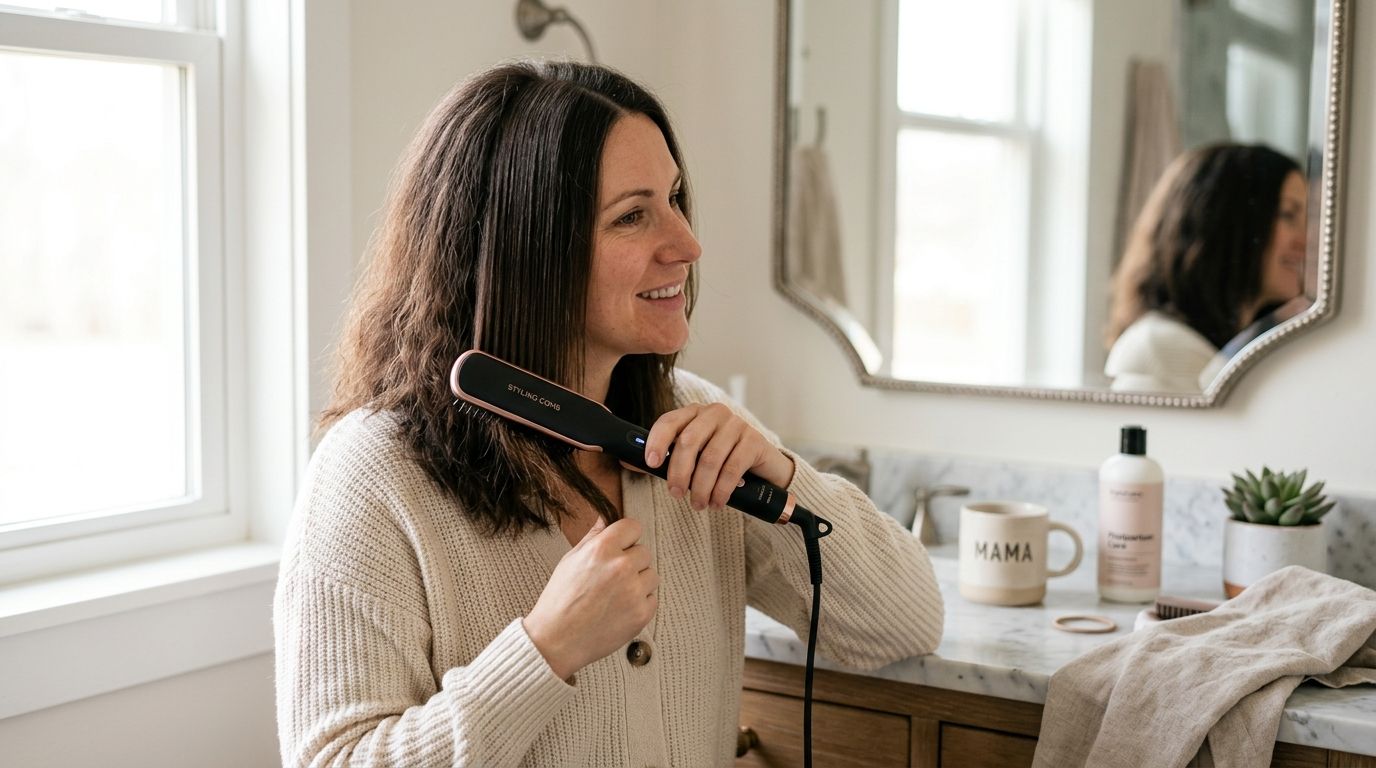
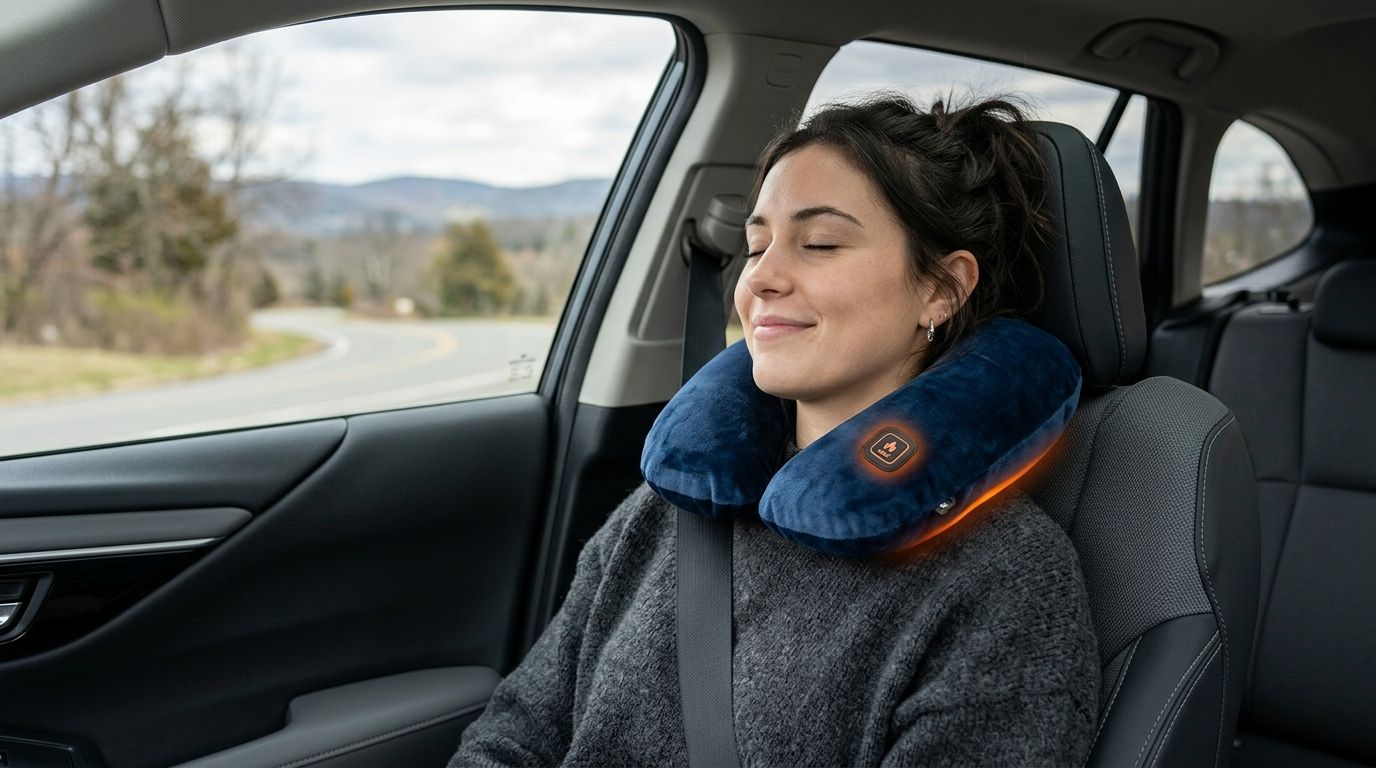
A heated neck pillow for car trips is a rechargeable heat-and-vibration cushion designed to ease neck and shoulder tension during long drives, whether you're behind the wheel on rest stops or riding shotgun for six hours straight. Unlike a bedroom neck wrap, it needs to survive glovebox heat, run off a 12V socket or USB-C power bank, and stay put against a headrest without sliding when the car brakes. The segment that gets the most out of one is passengers and road-trip drivers who stop every couple of hours — not people trying to use it mid-drive.
- A heated neck pillow for car trips works best as a passenger-only tool or a rest-stop tool, never a while-driving accessory.
- Cordless, USB-C rechargeable models beat 12V-only ones because they don't tie you to the car's power outlet.
- Keep heat sessions to 15-20 minutes at a time to avoid skin irritation on long hauls.
- Napio's guide library covers heated neck massagers for travel, shoulder tension, and safe usage frequency for 2026 buyers.
Why heated neck pillows matter for car trips
A static seated position for four, six, or ten hours locks up the same muscles every time — upper trapezius, base of skull, upper back. That's exactly where a heated neck pillow applies pressure and warmth. Napio covers this same tension pattern across its desk-worker and travel guides because the mechanism doesn't change whether you're sitting at a desk or in a passenger seat.
The car-trip version of this problem has one extra wrinkle: power. A bedroom unit plugs into a wall outlet and stays there. A car-trip unit has to survive being unplugged mid-trip, tossed in a door pocket, and picked back up two states later still holding a charge.
Choose cordless power built for the car, not the couch
A plug-in-only heated pillow is dead weight the second you're not near a 12V socket. Cordless, rechargeable models solve this, and it's worth comparing options like a heated neck massager built for travel before buying anything tethered to a cable.
- Pick USB-C charging over micro-USB — faster top-ups at a servo stop
- Confirm the unit runs cordless for at least one full session, not just while charging
- Check it fits in a door pocket or centre console, not just a bag
- Avoid units that need a constant 12V draw — they drain with the engine off
Match the heat setting to the length of the drive
Most heated neck pillows ship with three heat settings — low, medium, high. Longer drives call for lower settings run longer, not high heat run briefly.
- Use low or medium for anything over two hours
- Reserve high heat for short 15-20 minute rest-stop sessions
- Stop and reassess if the pillow feels hot rather than warm within five minutes
- Never fall asleep with it on high heat against bare skin
Position it against the headrest correctly
A heated neck pillow that slides off the headrest every time the car turns is useless. Fit matters as much as heat output.
- Loop or clip straps around the headrest posts, not just draped over the top
- Sit the pillow so it contacts the base of the skull and upper traps, not the mid-back
- Adjust strap tension so it doesn't shift under braking
- For shoulder-specific soreness rather than neck, a heated neck pillow for shoulder tension is built with a wider contact patch than a narrow neck-only wrap
Time your sessions around actual driving
This is the safety step that gets skipped. A heated neck pillow is a passenger or rest-stop tool — it is not a driving accessory.
- Run it only when you're the passenger or the car is parked
- Time sessions during fuel stops, not while merging onto a highway
- If you're the only one in the car, use it only at rest breaks
- Pair it with the general driving guidance of stopping roughly every 2 hours to stretch
Charge before you leave, not after you're already tired
A flat battery three hours into a trip defeats the purpose.
- Charge to full the night before departure
- Carry a USB-C cable and a power bank as backup, not just the car's own port
- Check the charge indicator before packing it, not after you're on the road
- Avoid leaving it plugged in and unattended in a parked, locked car on hot days
Clean and store it properly between trips
Heat and sweat build up on the same fabric contact points every drive.
- Wipe the neck-contact panel down after each trip
- Let it air out before folding it into a bag — trapped moisture breaks down the foam
- Store it somewhere that isn't the car boot in direct sun
- Check the strap elastic periodically; heat exposure degrades it faster than normal wear
Heated neck pillow vs. other options for car trips
| Option | Best for | Key limitation |
|---|---|---|
| DIY rice sock or hot water bottle | One-off short trips, no budget for a device | Loses heat fast, no adjustable temperature |
| Cordless heated neck pillow | Regular road trippers, passengers on long hauls | Needs charging discipline before departure |
| Heated neck massager (multi-node) | Drivers who also want kneading, not just warmth | Bulkier, usually needs a case |
| Professional massage therapy | Chronic or severe neck pain | Not practical mid-trip, appointment-only |
Verdict: for regular car trips, a cordless heated neck pillow beats a DIY hot pack on convenience and beats a bulky massager on portability. Reserve professional therapy for pain that heat alone doesn't touch.
“If the pillow needs constant readjusting to stay on the headrest, it's the wrong fit for your car.”
Common mistakes people make with heated neck pillows in the car
- Using it while actually driving — it's a passenger or parked-car tool, full stop
- Running max heat for the whole trip — causes skin irritation long before the drive ends
- Ignoring the charge level before leaving — a dead unit at hour four is a wasted purchase
- Storing it in a hot boot between trips — degrades the battery and the foam faster than normal use
- Skipping stretch breaks because the pillow is "handling it" — heat alone doesn't undo six hours of static posture
FAQ
What's the best heated neck pillow for car trips?
A cordless, USB-C rechargeable heated neck pillow with at least three heat settings is the best fit for car trips in 2026 because it doesn't rely on the car's 12V socket to work. Look for headrest straps that hold it in place under braking.
Is it safe to use a heated neck pillow while driving?
No, a heated neck pillow should be used as a passenger or during parked rest stops, not while actively driving. It can restrict head movement and distract from road awareness.
How long should I run a heated neck pillow during a road trip?
Keep sessions to 15 to 20 minutes at a time, especially on higher heat settings. Longer continuous heat against the same skin patch raises the risk of irritation.
Can I plug a heated neck pillow into a car's 12V socket?
Some models support 12V charging, but a cordless USB-C rechargeable unit is more practical since it doesn't tie up the car's only power outlet for the whole trip.
Is a heated neck pillow better than a heating pad for car trips?
A heated neck pillow is better for car trips because it's shaped to sit against a headrest and stay in place, while a flat heating pad slides around and usually needs a wall outlet.
How often can you safely use a heated neck massager?
Most people can use one daily in short 15-20 minute sessions without issue, but frequency guidance varies by skin sensitivity and heat setting used.
Can a heated neck pillow help with tension headaches on long drives?
Heat applied to the base of the skull and upper traps can ease muscle-driven tension that contributes to headaches, though it won't address headaches caused by other conditions.
What's the difference between a heated neck pillow and a heated neck massager?
A heated neck pillow provides warmth and shape-hugging support, while a heated neck massager typically adds kneading or vibration nodes on top of the heat function.
One last thing
The single biggest failure point isn't the heat function — it's the strap system. A unit that shifts off the headrest every time the car brakes gets abandoned in the door pocket within a week, regardless of how good the heat feels. Test the fit against your actual headrest before the first long trip, not on the drive itself.