A rechargeable heat belt only stays useful if the battery and heating element survive repeated cycles — most units fail early because owners either overcharge the battery or soak the fabric cover in a machine wash. This guide walks through the charging routine, the cleaning steps, and the storage habits that keep a heat belt working past its first year.
- Charge a rechargeable heat belt to full before first use, then stop letting it run flat — deep discharges shorten lithium-ion battery life.
- Keep heat sessions to 15-20 minutes per use; longer sessions drain the pack and add no extra pain relief.
- Spot-clean the fabric cover only — never machine wash or submerge the control unit or battery pack.
- Store at 50-80% charge if the belt sits unused for more than a month, per standard lithium-ion battery guidance.
- A heat belt that stops holding charge inside its first year has a battery fault, not a user error.
Why this matters
A heat belt is a battery-powered device, not a hot water bottle. The lithium-ion pack inside behaves like the one in your phone: it degrades faster with full discharges, heat exposure, and rough handling of the connector port. Treat it like disposable comfort gear and you'll be replacing it every few months. Treat the battery correctly and the same unit keeps delivering consistent heat through 2026 and well past it.
The fabric wrap is the other failure point. Anyone reaching for a menstrual heat belt for period pain tends to use it against bare skin, which means sweat and skin oil build up fast. Get the cleaning routine wrong and you either damage the heating element or end up with a belt that smells worse than it helps.
What you'll need
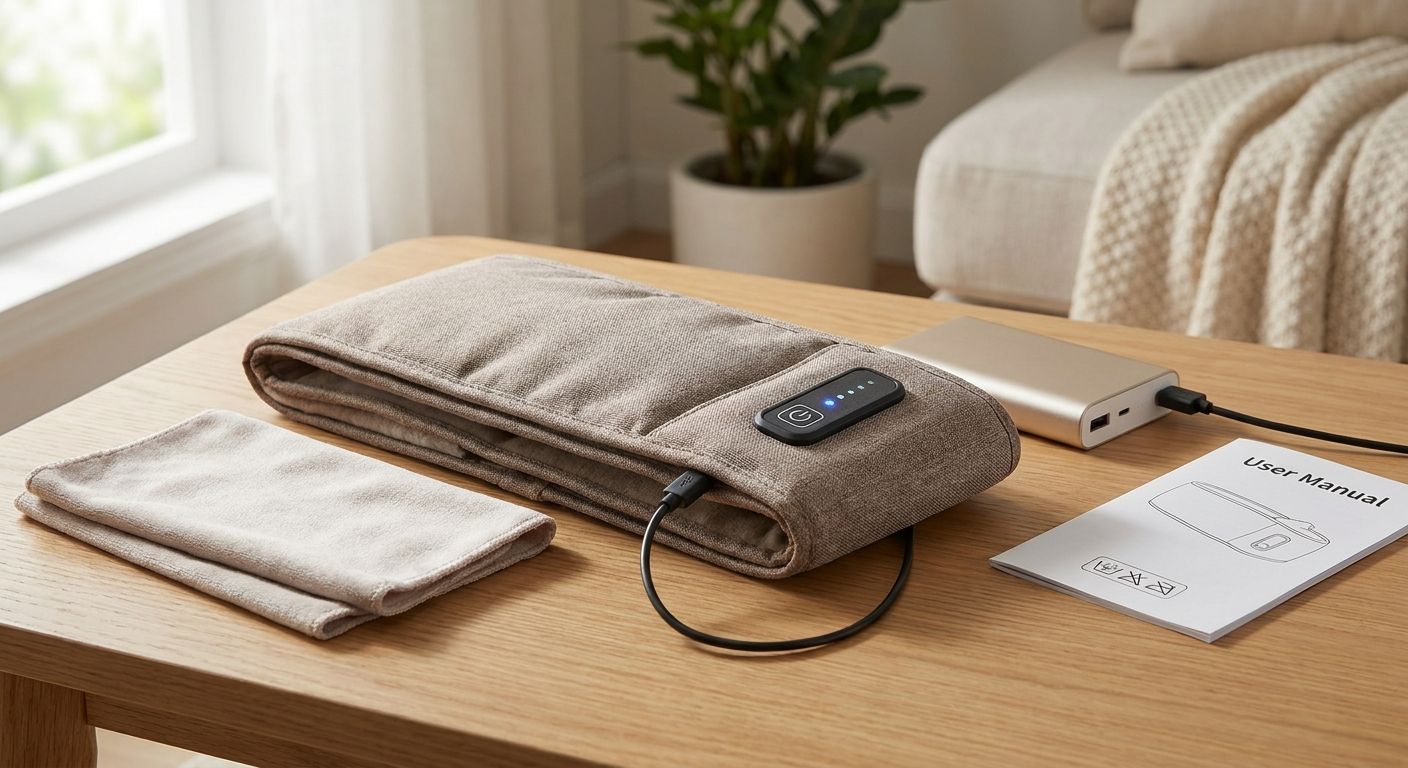
- The rechargeable heat belt and its original USB charging cable
- A wall adapter or powered USB port — avoid low-power laptop ports for full charges
- A soft, damp cloth for spot cleaning
- Mild soap or a fabric-safe cleaner, diluted
- A dry, room-temperature storage spot, away from direct sun or a hot car interior
- 15-20 minutes for each heat session, timed with a phone or the belt's built-in timer if it has one
If you're shopping for a unit built specifically for cramping rather than general aches, look at a heated belt for endometriosis pain designed around longer, consistent low-heat output.
The steps
1. Charge fully before the first use
A new lithium-ion pack needs a complete charge cycle before the internal circuit reads its true capacity. Plug the belt in on delivery and leave it until the indicator light shows full, typically a few hours depending on the model. Skipping this doesn't damage anything, but your first couple of sessions will run short and you'll wrongly blame the battery. Common mistake: using the belt straight out of the box on a partial factory charge.
2. Recharge before it hits empty, not after
Lithium-ion batteries last longest when you avoid running them to zero over and over. Plug the belt in once it drops toward 20% rather than waiting for a mid-session shutdown. This one habit adds real months to the usable life of the pack. Common mistake: letting the belt die every single time — repeated deep discharges are the fastest way to lose runtime.
3. Unplug once the indicator confirms full
Most rechargeable heat belts have charge-cutoff circuitry, so an extra hour on the cable won't cook the pack. Even so, unplugging promptly keeps the port and cable in better shape and avoids extra heat sitting next to a full battery. Common mistake: parking the belt on the charger for days between uses out of habit.
4. Run sessions at 15-20 minutes, not longer
Surface heat therapy for cramping and muscle tension works inside a short window — 15 to 20 minutes is the standard guidance before returns diminish and skin irritation risk climbs. An hour on the belt doesn't multiply relief; it drains the battery and reddens sensitive skin. For desk use, a portable heat therapy belt for period pain at work built for short repeatable sessions suits the routine better than an all-day wrap. Common mistake: falling asleep in the belt — check whether your model has auto-shut-off before relying on it.
5. Spot-clean the cover, never wash the unit
The fabric absorbs sweat and skin oil over weeks of use, but the heating wire and battery pack cannot get wet. Wipe the outer fabric with a damp cloth and a little diluted mild soap, then air dry fully before the next session. No submerging, no washing machine, no steam cleaner. Common mistake: throwing a cover in the wash without confirming the heating element actually detaches from it — on many belts it doesn't.
6. Store it dry, at partial charge, away from heat
If the belt sits unused for more than a few weeks — common when it's a menstrual heat belt for teens that only comes out monthly — store it at roughly 50-80% charge rather than full or flat. That's standard lithium-ion guidance: a battery held at 100% for long stretches ages faster than one parked mid-range. Keep it out of a hot glovebox or a sun-facing shelf. Common mistake: storing it fully charged for months, then finding half the old runtime.
7. Inspect the cable and port every few months
Fraying near the connector, a loose port, or a cable that only charges at one specific angle are early warnings worth catching before they strand you mid-cycle. The check takes seconds. Common mistake: tolerating a cable you have to wiggle — that's a connector on its way out, not a quirk.
Troubleshooting
- Belt won't turn on at all — Test the cable on a different port or wall adapter first; a dead cable is far more common than a dead unit. Still nothing after a full charge attempt means the battery has failed.
- Charges but heat fades fast — Classic battery degradation from repeated full discharges. Inside the first year, that points to a manufacturing fault rather than normal wear.
- Heats unevenly across the belt — Usually a weak spot in the internal heating wire, caused by folding or crushing the belt at the same crease. Store it flat or loosely rolled.
- Smells musty after use — Sweat soaked in without full drying. Spot-clean, air-dry completely, and never store it damp in a bag.
- Never reaches a full-charge indication — Swap the cable and outlet before blaming the battery; charging circuits and cables are the two most common failure points.
- Shuts off earlier than expected — Many units cut power once internal temperature climbs, especially in a warm room. Move somewhere cooler and see if session length recovers.
Tools and resources
- A powered USB wall adapter, not a weak daisy-chained hub
- A soft microfiber cloth for the fabric wrap
- A cool, dry drawer or shelf for storage between cycles
- For the wider routine heat therapy fits into, see how to relieve period pain without medication using heat
FAQ
How long does a rechargeable heat belt take to charge?
Most rechargeable heat belts take a few hours for a full charge over USB, depending on battery capacity and adapter output. A full-power wall adapter charges noticeably faster than a low-power laptop USB port.
Can you machine wash a rechargeable heat belt?
No. Never machine wash a rechargeable heat belt, because the heating element and battery pack cannot get wet. Spot-clean the outer fabric with a damp cloth and mild soap, then air dry fully before charging again.
How long should you use a heat belt per session?
Keep sessions to 15-20 minutes for surface heat therapy on cramps or muscle tension. Longer sessions add no extra relief and raise the chance of skin irritation and unnecessary battery drain.
Is it bad to leave a heat belt on the charger overnight?
Occasional overnight charging is fine because most units have charge-cutoff circuitry, but nightly habit adds heat stress to a full battery over time. Unplug once the indicator confirms a full charge when you can.
Why does my rechargeable heat belt not hold charge anymore?
Losing runtime usually means the lithium-ion battery has degraded from repeated full discharges or heat exposure in storage. If it happens within the first year of use, that points to a battery fault rather than normal wear.
How should you store a heat belt between uses?
Store it at roughly 50-80% charge in a cool, dry spot away from direct sun if it will sit unused for more than a few weeks. Holding a lithium-ion battery at full or flat for long stretches shortens its life.
Can a heat belt help with endometriosis pain?
Heat therapy is commonly used alongside other pain management for endometriosis-related cramping. A belt built for consistent low-heat output over longer sessions suits that use better than a general-purpose wrap.
What causes uneven heat in a heat belt?
Uneven heat almost always comes from a damaged spot in the internal heating wire, usually caused by folding the belt sharply at the same crease during storage. Store it flat or loosely rolled instead.
One last thing
The habit that actually extends a heat belt's life isn't the charging routine — it's the storage charge. A belt left at 100% in a drawer for weeks degrades faster than one parked at 50-80%, and that single difference is why some belts are still running strong into their second year in 2026 while others are dead by month four.