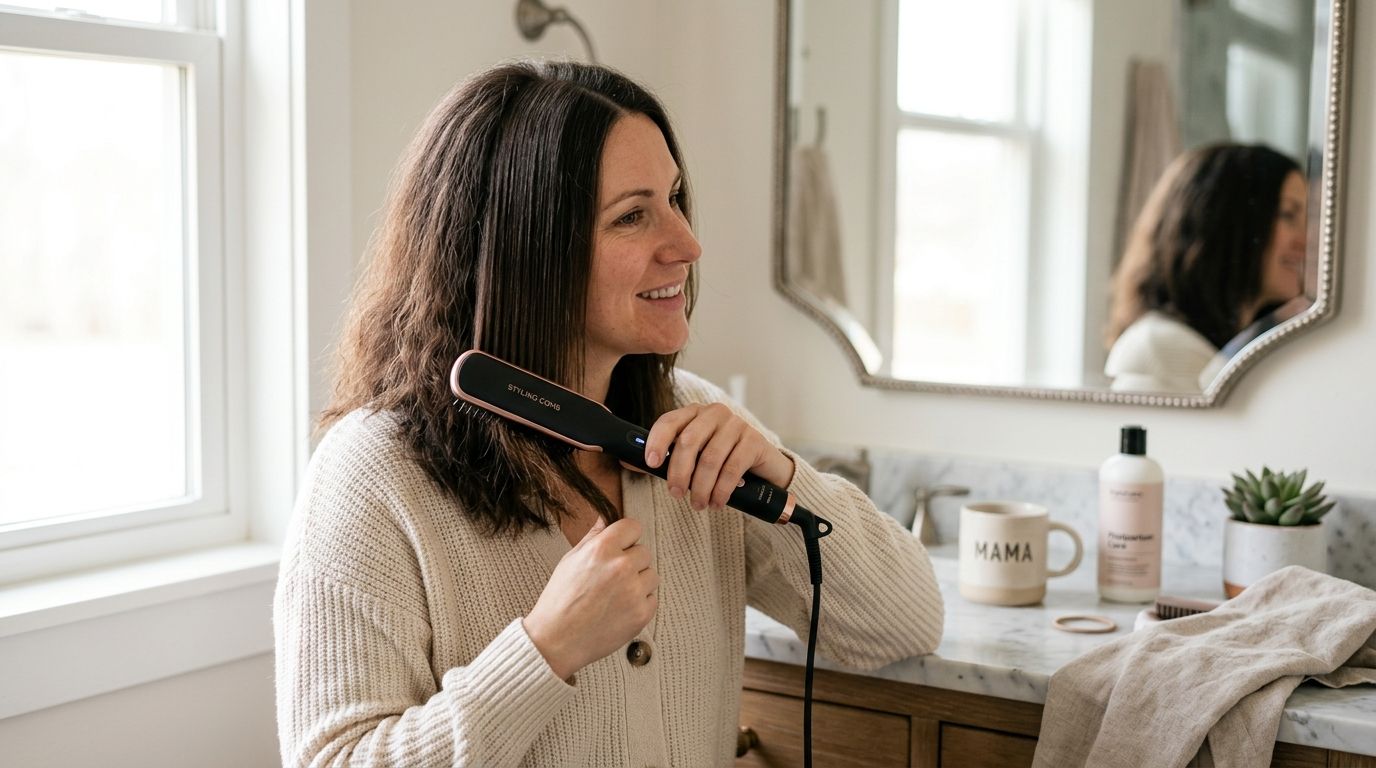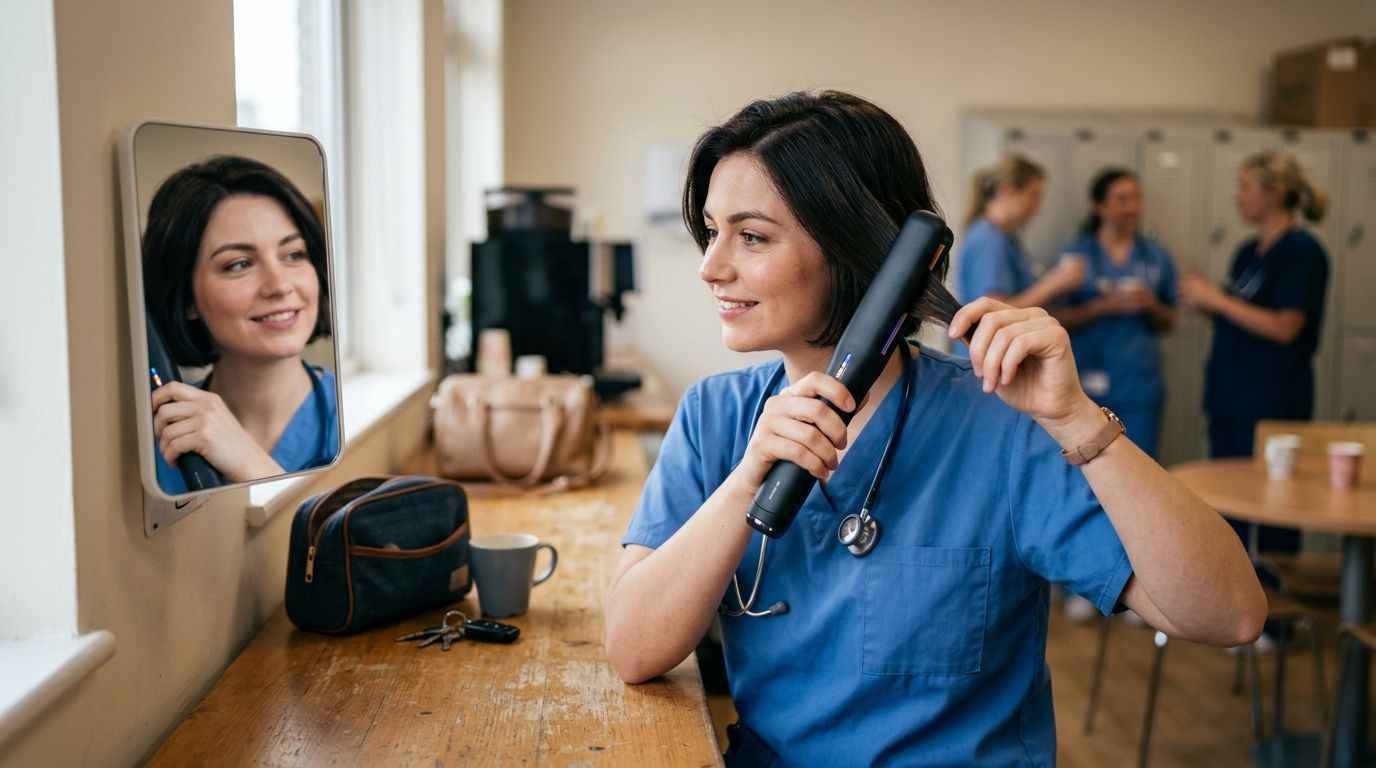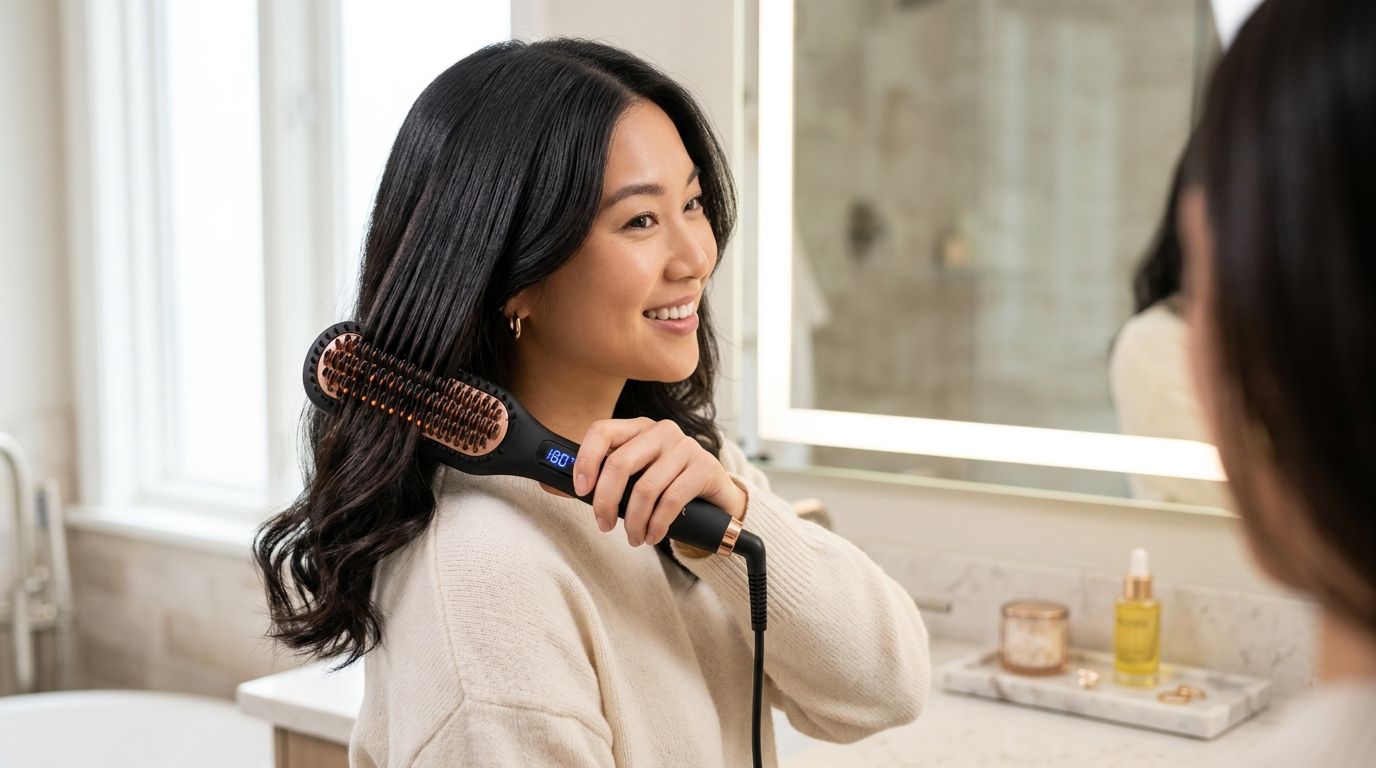
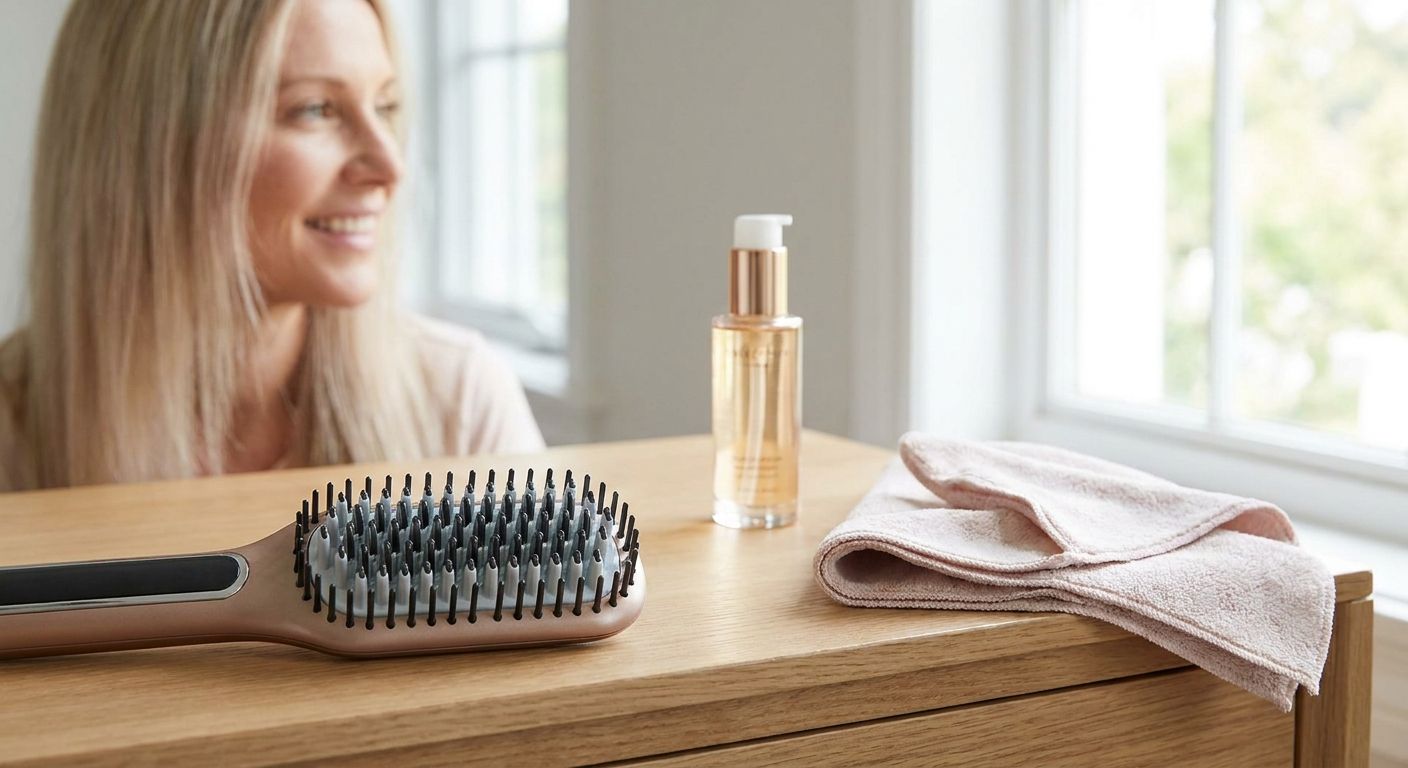
Fine, thin hair burns faster, tangles easier, and shows heat damage within a single pass. A straightening brush for fine hair needs lower heat ceilings, gentler bristles, and faster glide than anything built for thick or coarse strands.
- Fine hair needs a straightening brush that tops out around 150-180°C, not the 200°C+ dials on standard flat irons.
- The Napio electric hair straightening comb runs a controlled heat range and glides in one pass, making it the safe pick for thin, damage-prone hair in 2026.
- Skip anything with a single fixed heat setting above 200°C or metal bristles that snag fine strands.
- Ionic or tourmaline-coated plates cut static and frizz without adding extra heat exposure.
- A straightening brush under 300 grams reduces arm fatigue and scalp tension during daily use.
Why this matters
Fine hair has a smaller diameter than medium or thick hair, so it reaches its damage threshold faster under direct heat. Most straightener marketing targets thick, coarse hair types and dials heat up to 200°C or higher by default. Run that setting on fine strands and you're cooking the cuticle before you've finished one side of your head. The fix isn't avoiding heat tools entirely — it's picking a straightening brush for fine hair built with a lower ceiling, better distribution, and a bristle design that doesn't require repeated passes.
Who this is for
This guide is for women with fine or thin hair who want smooth, straight results without the frying, breakage, or flyaways that come from using a tool designed for thicker hair. If your hair takes heat damage after one or two passes, sheds noticeably after straightening, or goes staticky the moment you touch it, you're the audience here. It also applies if you're straightening fine hair daily and need something fast enough for a morning routine, not a 20-minute styling session.
The Napio electric hair straightening comb is built around exactly this problem — controlled heat and a one-pass glide instead of the high, fixed temperatures found on standard flat irons.
What to look for in a straightening brush for fine hair
Heat range and control
Fine hair styles best between 130°C and 180°C. Anything that only offers 200°C+ presets is built for coarse or curly hair, not thin strands. Look for a brush with at least 3-5 adjustable heat levels so you can start low and only increase if the first pass doesn't hold.
Plate or bristle material
Ceramic and tourmaline coatings distribute heat evenly across the surface, which matters more on fine hair because uneven hot spots scorch thin strands almost instantly. Metal-only bristles or bare aluminum plates heat unevenly and snag more, both of which are worse for fragile hair.
Ionic technology
Negative-ion output breaks down water molecules on the hair shaft faster, which cuts frizz and static without needing extra heat to compensate. Fine hair is more prone to static from friction, so this feature does real work here, not just marketing.
Weight and handle balance
A brush over 400 grams gets tiring fast when you're holding it at scalp height for 10-15 minutes. Fine hair also means a more sensitive scalp for a lot of people, so a lighter tool with a balanced handle reduces pulling and tension during use.
Heat-up time and auto shut-off
Fine hair routines tend to be quick — you want a tool ready in under 60 seconds, not one you have to plug in five minutes before you start getting dressed. Auto shut-off after 30-60 minutes of inactivity is a basic safety feature that matters more with daily use.
Glide and pass count
The best straightening brushes for fine hair finish a section in one pass. Multiple passes on the same strand is where most heat damage actually accumulates, even at a lower temperature setting.
Top picks
The safe pick: Napio Electric Hair Straightening Comb Runs on a controlled heat range built for daily use rather than salon-level extremes, and the comb-style bristles separate strands as they straighten so you're not dragging over tangled sections twice. One pass per section is the design goal, not an occasional result. Verdict: Buy.
The classic: Ceramic tourmaline flat iron Standard flat irons with ceramic tourmaline plates and adjustable heat down to 130°C work fine for fine hair if you're disciplined about staying on the low end of the dial. The catch is these tools are almost always marketed and calibrated for thicker hair, so the low settings are often an afterthought rather than the design center. Verdict: Consider, if you already own one and check the actual plate temperature with a separate thermometer.
The wide-tooth option: Ionic straightening brush with detangling bristles Wide-set bristles with ionic coating pull double duty as a detangler and a straightener, which suits fine hair that mats easily. These tend to run slightly hotter than comb-style tools because the bristle gaps let more heat escape, so you may need a slightly higher setting to get the same result. Verdict: Consider for hair that tangles more than it burns.
The wildcard: Ultra-compact travel straightening brush Small, lightweight, and easy to pack, but most travel-sized brushes cut corners on heat regulation to save on internal components. Fine hair is exactly the hair type that suffers most from an unregulated heat spike. Verdict: Skip unless the listing explicitly states a max temperature under 180°C.
What to avoid
- Single fixed-heat straighteners above 200°C — these are built for thick or coarse hair and have no low-heat mode at all, so there's no way to dial it back for fine strands.
- Bare metal bristle brushes — they heat unevenly and catch on fine hair, causing snapped strands rather than a clean glide.
- "Universal" wet-to-dry combs with no stated heat range — if a listing doesn't publish a maximum temperature, assume it runs hot, because that's the easiest spec to hide.
Verdict comparison
| Criteria | Napio Electric Straightening Comb | Ceramic Tourmaline Flat Iron | Ionic Detangling Brush | Travel Straightening Brush |
|---|---|---|---|---|
| Heat range for fine hair | Controlled, daily-use range | Adjustable, but calibrated for thick hair | Runs slightly hotter | Often unregulated |
| Passes needed | One pass | One to two passes | One to two passes | Two or more passes |
| Weight | Light | Moderate | Light to moderate | Very light |
| Verdict | Buy | Consider | Consider | Skip |
Once you've picked a tool, technique matters as much as the hardware. The how-to guide on using an electric hair straightening comb walks through section sizing and pass speed for fine hair specifically.
FAQ
What's the best straightening brush for fine hair in 2026?
A straightening brush with a controlled heat range under 180°C and a one-pass glide design works best for fine hair in 2026, since fine strands damage faster under high, fixed heat settings. Comb-style tools that separate strands as they straighten also reduce the need for repeated passes over the same section.
Is a straightening brush better than a flat iron for thin hair?
A straightening brush is generally gentler on thin hair because it distributes heat across bristles rather than clamping flat plates directly onto the strand. Flat irons can still work for fine hair if you keep the temperature under 180°C and limit yourself to one pass per section.
What temperature should I use to straighten fine hair?
Fine hair straightens best between 130°C and 180°C. Going above that range increases the risk of visible heat damage after just one or two styling sessions.
Can you use a straightening brush on fine hair every day?
Daily use is possible on fine hair if the tool runs at a low, controlled heat setting and you're not doing multiple passes per section. Tools with auto shut-off and a fast heat-up time under 60 seconds make daily routines easier without extending heat exposure.
Do straightening brushes cause less damage than flat irons?
Straightening brushes can cause less damage than flat irons when they're designed with a lower heat ceiling and even heat distribution, since fine hair needs both to avoid scorching. The tool matters less than the actual temperature setting and number of passes used.
How much does a good straightening brush for fine hair cost?
Prices vary by brand and feature set, so check current listings directly rather than relying on outdated figures. Focus on published heat range and material specs over price alone when comparing options.
What bristle material is best for fine, thin hair?
Ceramic or tourmaline-coated bristles work best for fine hair because they spread heat evenly and reduce hot spots that bare metal bristles create. Ionic coatings add the extra benefit of reducing static and frizz during the straightening pass.
Why does my fine hair frizz right after straightening?
Frizz after straightening on fine hair usually comes from static buildup caused by friction against non-ionic bristles or plates. Switching to a tool with ionic technology addresses the static at the source instead of just sealing it down temporarily with product.
One last thing
The number that matters most isn't the max temperature listed on the box — it's the lowest setting the tool can hold steady without fluctuating. A brush that claims a 130°C low setting but actually spikes to 160°C mid-session does more damage to fine hair than one with a higher but stable setting. Check for user reports on temperature consistency before you check the marketed range.