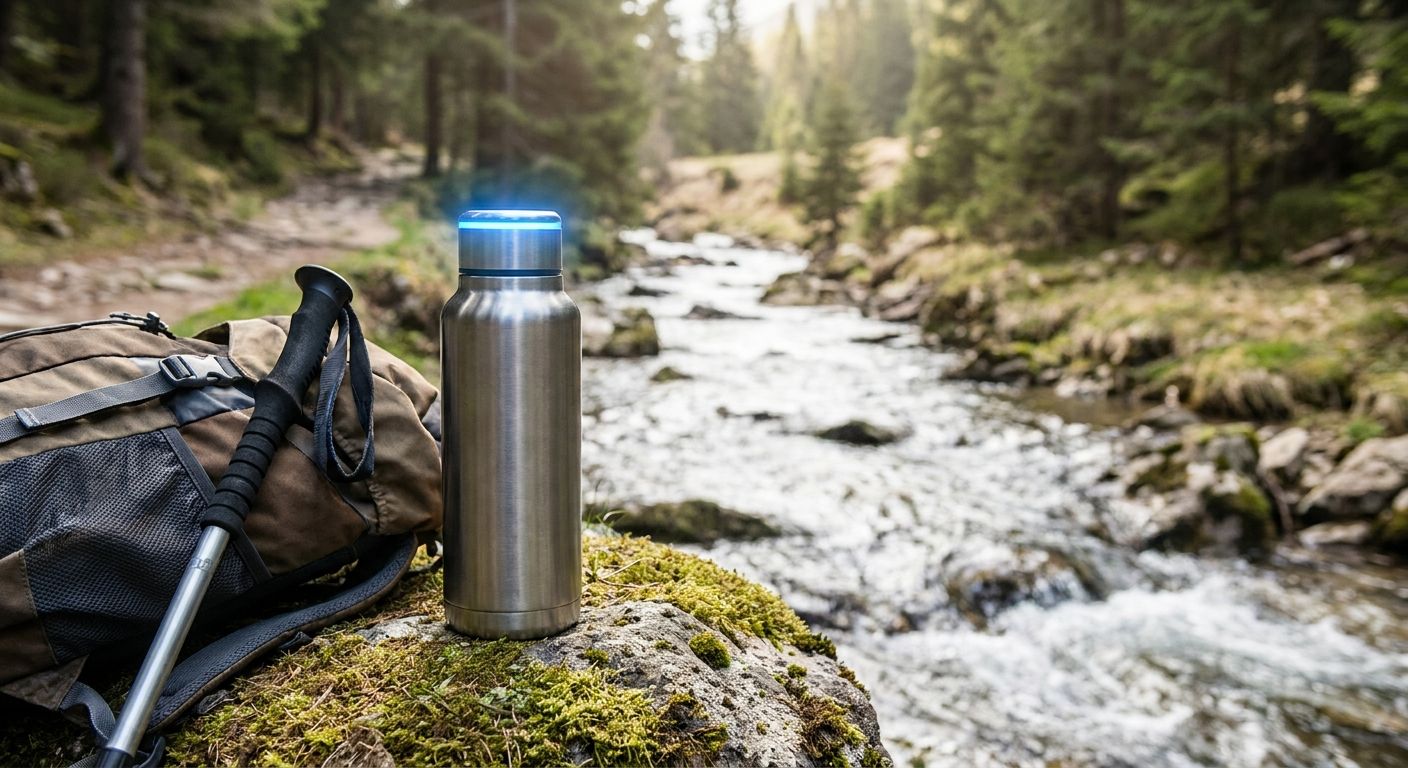
Hiking with a bottle that only holds water is fine until you're four days deep in a trail system with sketchy water sources and no time to boil anything. A UV-C water bottle for hiking adds purification on demand, and picking the right one comes down to battery life, cycle speed, and whether it survives being dropped on granite.
- Quartz-sleeve UV-C bottles kill up to 99.9% of bacteria and viruses in a 60-second cycle, ideal for backcountry refills in 2026.
- Cap-mounted UV-C units add the least bulk and suit day hikers who refill from clean-ish sources.
- Pump-style purifiers handle murky creek water better but weigh more and cost more to run.
- Skip bottles without USB-C charging in 2026 — proprietary cables fail first on multi-day trips.
Why this matters
Giardia and other waterborne parasites don't care how experienced you are. A UV-C water bottle for hiking gives you a chemical-free way to treat water at the source, without waiting 30+ minutes for tablets to dissolve or hauling a heavy gravity filter. For anyone doing overnight or multi-day trips in 2026, that's the difference between refilling at every creek crossing and rationing water because you're not sure it's safe.
Napio covers water purification gear alongside its wellness and travel picks, including a full breakdown in the UV water bottle for travel guide, which is worth reading before you commit to a specific bottle type.
Who this is for
This guide is for day hikers, backpackers, and trail runners who refill from streams, lakes, or questionable tap water and don't want to carry chlorine tablets or a pump filter. If you're doing multi-day trips where battery access is limited, pay close attention to the charging and cycle-count sections below — they matter more than the marketing copy on any product page.
What to look for in a UV-C water bottle for hiking
Purification cycle speed
Most UV-C bottles run a purification cycle of 60 to 80 seconds using a quartz-sleeve LED submerged in the water. Faster cycles matter on the trail because you're not standing at a creek bank for three minutes waiting to drink. A slow cycle also drains battery faster over a multi-day trip.
Battery life and charging
USB-C rechargeable batteries are the standard in 2026, and most run 2-4 weeks between charges depending on how many cycles you run per day. Anything still using a proprietary or micro-USB cable is a red flag — you won't find a replacement at a trailhead general store.
Water capacity
Hiking bottles typically range from 500ml to 750ml. Bigger capacity means fewer refills, but it also means more weight when you're already carrying a full pack. Match capacity to trip length, not to what looks impressive on a shelf.
Build durability
A bottle that cracks after one drop on rock is dead weight in your pack. Look for stainless steel or shatter-resistant Tritan construction, and check whether the UV-C cap and electronics are rated for the kind of knocks a trail actually delivers.
Water source compatibility
UV-C light purifies clear-to-moderately-turbid water well, but it doesn't filter out sediment or debris. If you're pulling from silty creeks or stagnant pools, you need a pre-filter or a pump-style unit, not a straight UV-C cap.
Weight
Every gram matters over a 20km day. Most UV-C bottles add 150-250 grams versus a standard bottle because of the battery and electronics. Decide if that trade-off is worth it against carrying purification tablets instead.
Top picks by bottle type
The reliable pick — quartz-sleeve UV-C bottles. These use a submerged LED and quartz sleeve to treat the full volume of water in one cycle, typically 60 seconds, and they're the most tested format on the market by 2026. Buy if you're doing regular overnight trips with access to relatively clear water sources.
The lightweight pick — cap-mounted UV-C units. These fit onto a standard wide-mouth bottle you already own, adding UV-C purification without a full bottle replacement. They add less weight than an all-in-one unit but usually need a longer cycle, often 90 seconds or more, to treat the same volume. Consider this if you already carry a bottle you like and just want to add purification.
The heavy-duty pick — pump-style UV-C purifiers. These combine a mechanical pre-filter with UV-C treatment, handling murkier water that a straight UV-C cap can't clear. They weigh more and cost more to maintain, but they're the safer call for backcountry trips where water sources are unpredictable. Buy for multi-day trips off well-marked trails.
The budget trap — no-name UV-C bottles without published cycle data. If a listing doesn't state cycle time, battery capacity, or replacement bulb life, that's a gap, not an oversight. Skip anything that won't tell you these numbers upfront.
The travel crossover pick — self-cleaning insulated bottles. These focus more on keeping the bottle itself sanitized between fills than on treating trail water, which makes them a better match for gym and commute use. Napio's self-cleaning water bottle for the gym guide covers this category if that's closer to your actual use case. Consider only if your main water source is tap water, not trail sources.
What to avoid
- Bottles with only a UV cap and no pre-filter, used on silty water. UV-C kills organisms but doesn't clear sediment, so you'll drink cloudy water that's technically safe but unpleasant.
- Units with sealed, non-replaceable batteries. Once the battery degrades after a season or two of regular use, the whole bottle is scrap.
- Anything claiming to purify in under 20 seconds without third-party testing data. Published, independently verified cycle times matter more than a marketing headline.
Verdict comparison
| Bottle type | Cycle time | Best for | Weight added | Verdict |
|---|---|---|---|---|
| Quartz-sleeve UV-C bottle | ~60 seconds | Overnight and multi-day trips, clear water | 150-250g | Buy |
| Cap-mounted UV-C unit | ~90 seconds | Day hikes, existing bottle owners | 100-150g | Consider |
| Pump-style UV-C purifier | 60-120 seconds | Backcountry, murky water sources | 250-400g | Buy for rough terrain |
| No-name bottle, no published specs | Unknown | Nobody | Unknown | Skip |
| Self-cleaning insulated bottle | N/A (sanitizes bottle, not trail water) | Gym, commute, tap water | Varies | Consider for non-trail use |
FAQ
What is a UV-C water bottle for hiking?
A UV-C water bottle for hiking uses a quartz-sleeve LED to purify water in the bottle, typically in a 60 to 80 second cycle, killing bacteria and viruses without chemicals or filters.
Does UV-C actually purify hiking water safely?
UV-C light kills up to 99.9% of bacteria and viruses in clear-to-moderately-turbid water, but it doesn't remove sediment or filter out debris, so a pre-filter is still needed for silty creek water.
How long does the battery last on a UV-C water bottle?
Most USB-C rechargeable UV-C bottles run 2-4 weeks between charges in 2026, depending on how many purification cycles you run per day on the trail.
Is a UV-C bottle better than a pump filter for hiking?
A UV-C bottle is faster and lighter for clear water sources, while a pump-style purifier handles murkier backcountry water better because it combines mechanical filtering with UV-C treatment.
How much does a UV-C water bottle weigh compared to a normal bottle?
UV-C bottles typically add 150 to 250 grams over a standard bottle of the same capacity, due to the battery and LED housing built into the cap or base.
Can I use a UV-C water bottle every day on a multi-day hike?
Yes, most quartz-sleeve UV-C bottles are rated for daily use across a multi-day trip, as long as the battery is charged before departure and cycle counts stay within the manufacturer's stated capacity.
What size UV-C bottle should I buy for hiking?
500ml to 750ml covers most day hikes and overnight trips; go larger only if you're comfortable carrying the extra 100-200 grams for fewer refill stops.
Do UV-C bottles work on cloudy or muddy water?
No — UV-C light treats pathogens but doesn't clear sediment, so cloudy or muddy water needs a mechanical pre-filter or a pump-style UV-C purifier instead of a cap-only unit.
One last thing
The number that trips people up isn't cycle time — it's cycle count per charge. A bottle rated for "weeks of battery life" on paper can burn through that in days if you're running 8-10 cycles a day on a group trip. Check the rated cycle count, not just the days-between-charges figure, before you head out in 2026.