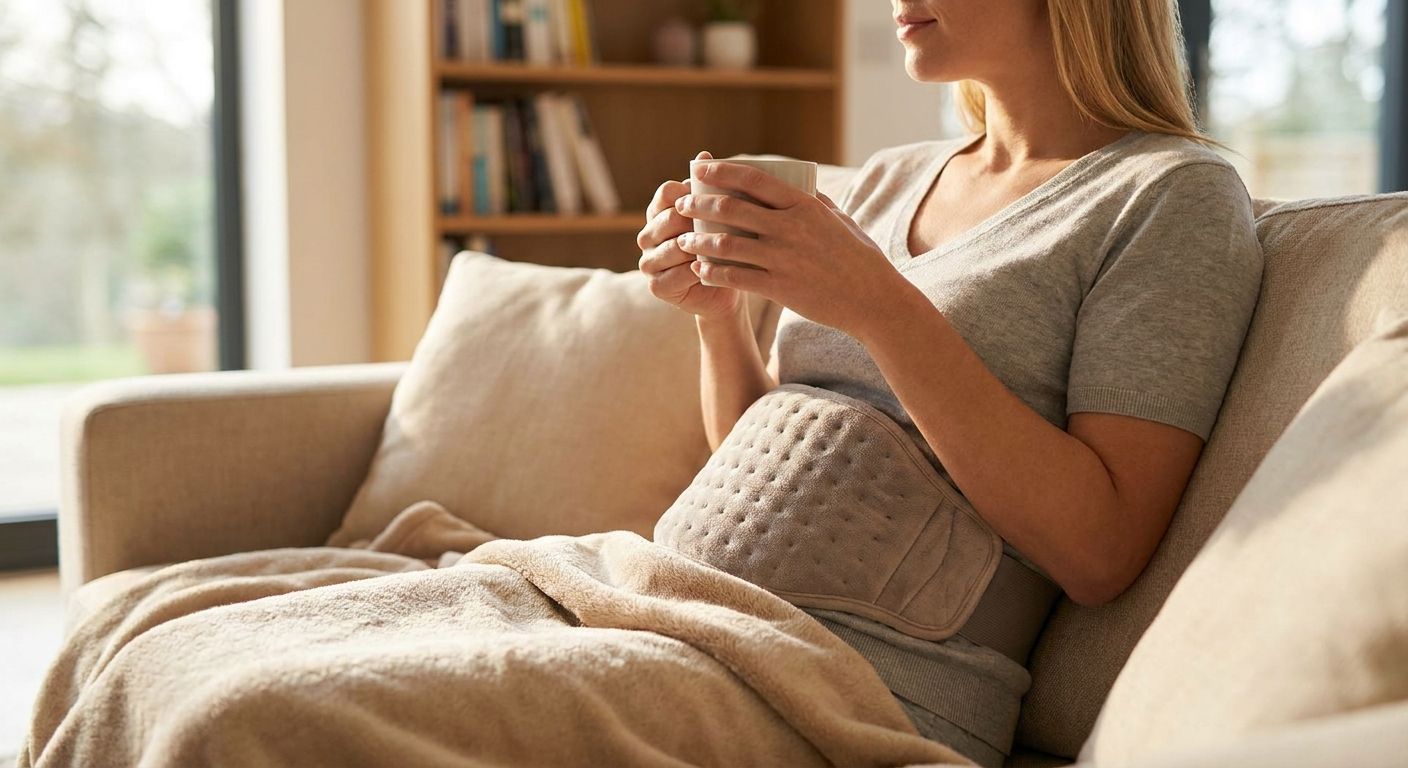
A heat therapy belt for PCOS pain is a wearable heating pad you strap across the lower abdomen or lower back to ease the cramping, bloating and dull pelvic ache that comes with polycystic ovary syndrome. Standard period-pain advice assumes a predictable 28-day cycle — PCOS rarely gives you that, so the belt needs to work on random, unscheduled pain days, not just week one of a period. This guide is written for the PCOS reader specifically, because insulin resistance, cyst pain and irregular cycles change how you use heat, not just when you reach for it.
- A heat therapy belt for PCOS pain eases cramping and pelvic ache on any day, not just during a period.
- Heat relaxes pelvic and lower-back muscle and boosts local blood flow — it doesn't treat the hormonal root of PCOS.
- PCOS affects an estimated 8-13% of women of reproductive age, per World Health Organization estimates.
- Cordless, rechargeable belts fit PCOS's unpredictable pain days better than corded pads tied to a wall outlet.
- Adjustable heat zones and settings matter more for PCOS than for standard period cramps, since pain sites vary.
Why heat therapy belts matter for PCOS pain
PCOS pain doesn't run on a calendar. Cycles stretch to 35, 60, sometimes 90 days between periods, and the ache shows up as ovarian cyst pressure, digestive bloating tied to insulin resistance, or lower-back tightness that has nothing to do with a period at all. A belt built around a monthly cramp schedule misses most of that, which is why generic period-pain advice underserves this reader.
The World Health Organization estimates PCOS affects 8-13% of women of reproductive age worldwide, which means a large share of the people searching for period pain relief in 2026 are actually managing a condition with no fixed timeline. Heat works the same way for PCOS as it does for a standard cramp — it relaxes tightened pelvic and lower-back muscle and increases local blood flow, easing the ache without touching the hormonal imbalance driving it. Napio's guide on the heat belt for menstrual back pain covers the mechanics of picking a belt; the difference for PCOS is timing and coverage, not the physics of the heat itself.
The practical takeaway: buy for the unpredictable flare day, not the predictable period day. A belt that only gets pulled out once a month isn't solving the actual PCOS problem.
How to use a heat therapy belt for PCOS pain
The steps below start with what you probably already own, then move to a dedicated belt once daily pain makes that worth it.
Match heat to where your PCOS pain actually sits
PCOS pain doesn't sit in one place, so the belt has to cover more than a single spot.
- Lower abdomen ache from cyst pressure or bloating needs a wide belt panel that sits below the navel, not a narrow strip.
- Lower back pain from referred pelvic tension needs a belt that wraps fully around, reaching the lumbar curve.
- Hip and groin tightness responds better to an adjustable strap than a fixed-size pad.
- Whole-torso bloating needs a belt wide enough to cover the full lower abdomen, not one narrow band.
Time heat sessions around symptoms, not a calendar
Waiting for "period week" is the single biggest reason heat therapy under-delivers for PCOS pain in practice.
- Apply heat at the first sign of cramping or pressure, whatever day of the cycle it happens to be.
- Keep each session to 15-20 minutes to avoid skin irritation from prolonged direct heat.
- Reapply through a flare day instead of saving the belt for period week only.
- Track which triggers — standing all day, sitting at a desk, exercise — bring pain on, so heat goes on before it peaks.
Start with the free, manual options first
Before buying anything, confirm heat actually helps your specific pain pattern using what's already in the house.
- A hot water bottle wrapped in a towel against the lower abdomen.
- A microwavable wheat or rice pack, heated in short bursts to avoid scorching.
- A warm bath or shower aimed at the lower back.
- Any heating pad already in the house, moved from the shoulders to the pelvis.
Move to a wearable belt once pain starts interrupting your day
Once heat becomes a daily habit rather than an occasional fix, a hot water bottle stops being practical — it leaks, cools within 30-45 minutes, and isn't something you can wear under clothes at a desk. A cordless, rechargeable belt solves that. Napio's guide on the heated belt for endometriosis pain covers a lot of the same ground for anyone managing overlapping conditions, since PCOS and endometriosis pain both respond to sustained, adjustable heat rather than a single blast.
- Pick a belt with at least two or three heat settings so intensity can drop on sensitive-skin days.
- Look for a hands-free strap that stays put whether you're sitting, walking or lying down.
- Confirm the belt covers both the lower abdomen and lower back if your pain moves between the two.
Layer heat with movement and food timing
Heat eases the ache; it doesn't touch the insulin resistance and inflammation driving a lot of PCOS pain, so pair it with a few other levers.
- Add 10-15 minutes of gentle walking after a heat session to keep blood moving through the pelvis.
- Cut back on high-sugar snacks on flare days — insulin spikes are a known driver of inflammation in PCOS.
- Hydrate through the day; dehydrated muscle stays tighter, which fights the relaxing effect of heat.
- Stretch the hip flexors and lower back before bed on high-pain days.
Charge and maintain a rechargeable belt properly
A dead battery on a bad pain day defeats the purpose of buying a cordless belt in the first place. Napio's guide on charging and caring for a rechargeable heat belt breaks down the charge-cycle basics that keep a belt reliable through 2026 and beyond.
- Fully charge before first use and after any multi-day flare, so it's ready before the next one.
- Wipe the fabric cover after each use — trapped moisture shortens battery life over time.
- Store the belt flat rather than folded at the heating element to avoid wire fatigue.
- Follow the charge-cycle guidance instead of leaving it plugged in every single night.
Know when heat isn't enough
Heat treats muscle tension, not every cause of pelvic pain, so a few symptoms need more than a belt.
- Sudden, severe one-sided pelvic pain that heat doesn't touch can signal an ovarian cyst rupture or torsion — get it checked.
- Fever alongside pelvic pain needs a doctor, not a heat session.
- Pain that keeps escalating past 20 minutes of heat and your usual pain relief.
- Bleeding heavy enough to soak through protection within an hour.
Heat options for PCOS pain, compared in 2026
| Option | Best for | Key limitation | Verdict |
|---|---|---|---|
| Hot water bottle | Occasional mild cramps at home | Cools within 30-45 minutes, needs refilling | Hold — fine as backup, not a daily fix |
| Microwavable wheat pack | Budget option, no charging needed | Heats unevenly, can scorch fabric if overheated | Hold |
| Corded electric heating pad | Consistent heat while stationary at home | Tethered to an outlet, unusable at work or in transit | Skip for unpredictable PCOS pain days |
| Cordless rechargeable heat belt | Daily, unscheduled PCOS pain on the move | Needs a charging routine to stay ready | Buy for regular flare days |
| Disposable adhesive heat patch | One-off travel days or emergencies | Single use, fixed low heat, no adjustable settings | Wait — use only when nothing else is on hand |
The cordless, rechargeable heat belt wins for PCOS specifically because pain doesn't announce itself on a schedule — it has to be ready on a random Tuesday, not just during a period.
Common mistakes women with PCOS make with heat therapy
These are the mistakes worth fixing before your next flare in 2026.
- Reaching for heat only during a defined "period week" and ignoring flare days that fall on an irregular 35-90 day cycle, which is exactly when PCOS pain tends to hit unannounced.
- Maxing out heat settings for inflammation-driven pain, risking skin irritation without any extra relief compared to a moderate setting held longer.
- Relying on heat alone and skipping the movement and food levers that ease insulin-resistance-driven cramping — the guide on how to relieve period pain without medication using heat covers the full list of non-medication options.
- Buying a corded pad for pain that hits mid-shift or on transit, then never using it because it's tethered to a wall outlet at home.
- Ignoring red-flag symptoms like fever or sudden one-sided pain because "heat usually works" for regular cramps, when those symptoms need a doctor instead.
FAQ
What's the best heat therapy belt for PCOS pain?
A cordless, rechargeable belt with at least two heat settings and full lower-abdomen coverage works best for PCOS pain because flares hit on unpredictable days, not just during a period. Corded pads and hot water bottles work fine at home but fall short the moment pain hits at work or in transit.
Is a heat belt better than a hot water bottle for PCOS cramps?
A wearable heat belt beats a hot water bottle for PCOS cramps because it stays hot longer, straps on under clothes, and doesn't need refilling every 30-45 minutes. A hot water bottle still works fine as a free backup for a single evening at home.
How long should you use a heat belt for PCOS pain?
Keep each heat session to 15-20 minutes at a time to avoid skin irritation from prolonged direct heat. Reapply through the day on flare days rather than running the belt continuously for hours.
Can heat therapy help with PCOS bloating?
Heat relaxes tightened abdominal muscle and increases local blood flow, which eases the pressure and discomfort of PCOS-related bloating. It doesn't reduce the bloating itself, since that's driven by hormonal and digestive factors heat doesn't touch.
Does a heat belt still help if your period is late or irregular?
Yes — heat therapy works on the muscle tension and pelvic ache causing the pain, not on the menstrual cycle itself, so it helps regardless of whether a period shows up on schedule. This matters for PCOS, where cycles can stretch past 35 or even 90 days.
Is it safe to use a heat belt every day for PCOS pain?
Daily use is generally fine at moderate heat settings and 15-20 minute sessions, with breaks between applications to protect the skin. Stop and check with a doctor if pain escalates despite regular heat use or if new symptoms like fever appear.
Can heat therapy replace PCOS pain medication?
Heat therapy eases muscle tension and pain signals but doesn't address the hormonal imbalance behind PCOS, so it works as a complement to medication, not a replacement. Anyone relying on heat alone for worsening pain should get it checked rather than increasing heat intensity.
One last thing
The belt only helps as much as your charging habit lets it. A rechargeable heat belt at 20% charge on your worst pain day is worse than no belt at all — set a fixed charging day each week instead of waiting until it dies mid-flare. That single habit change matters more in 2026 than any feature comparison on a spec sheet.