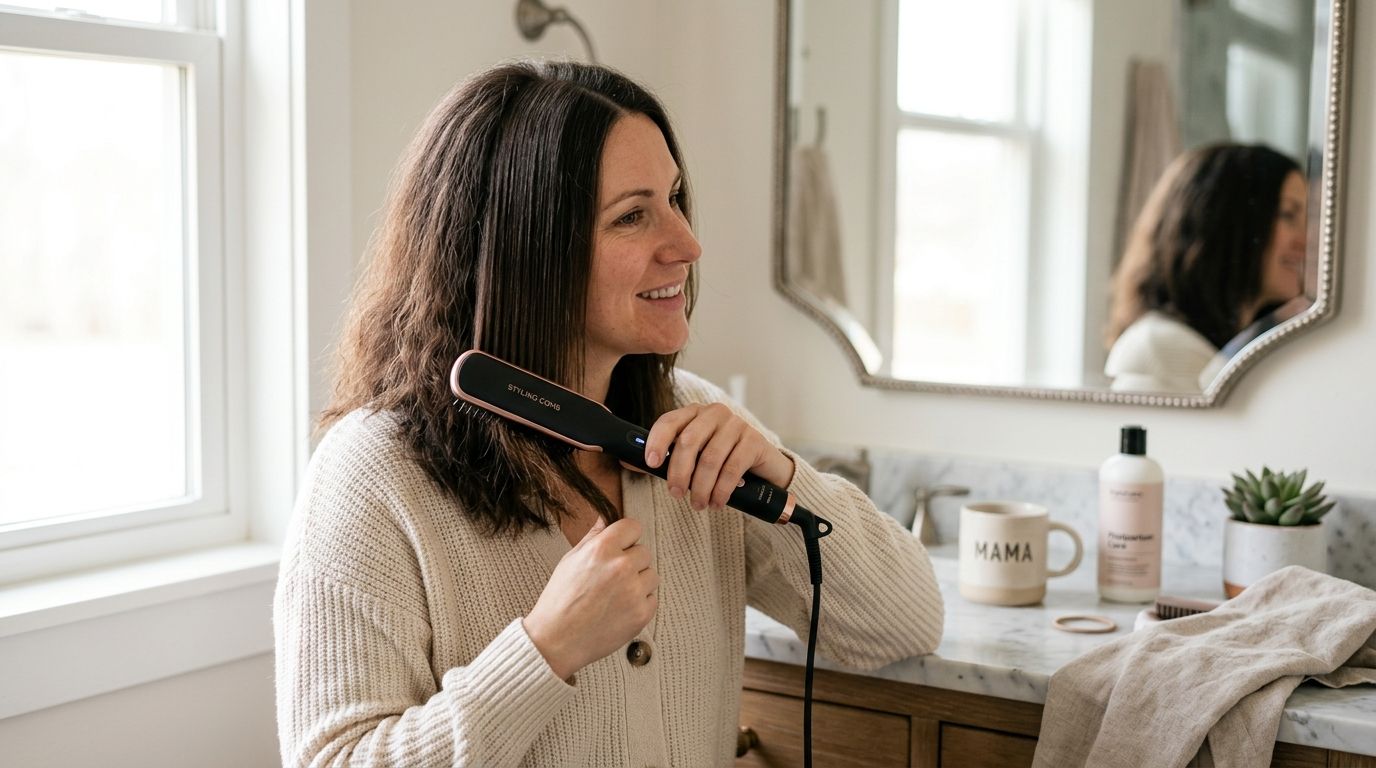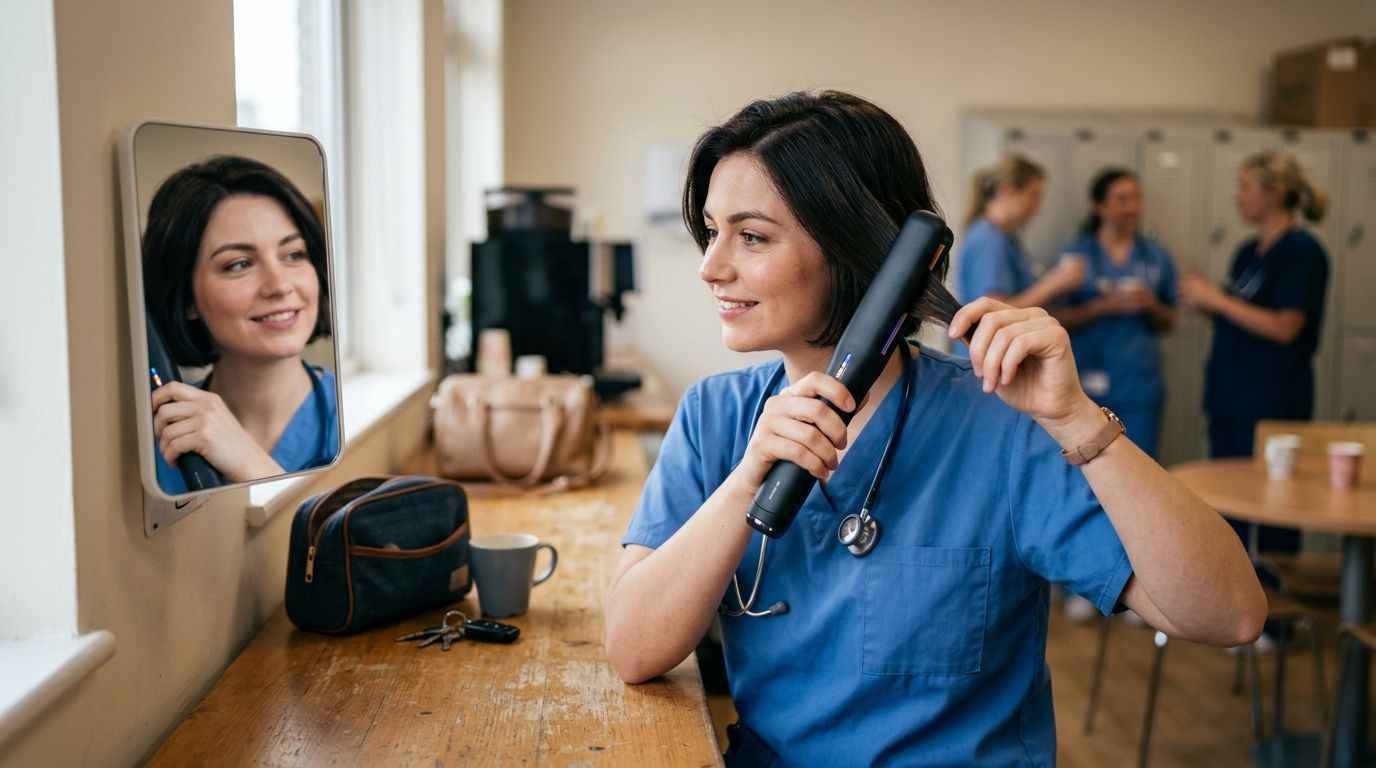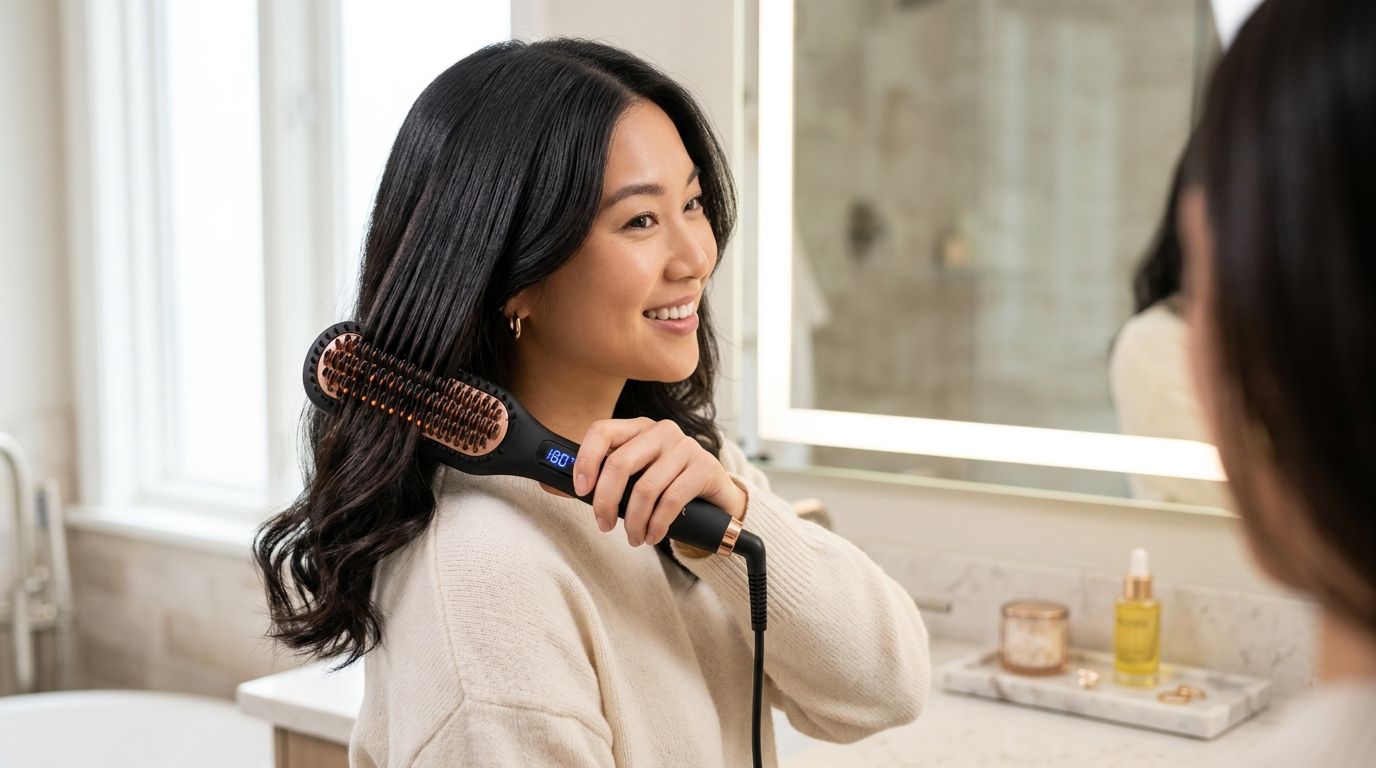
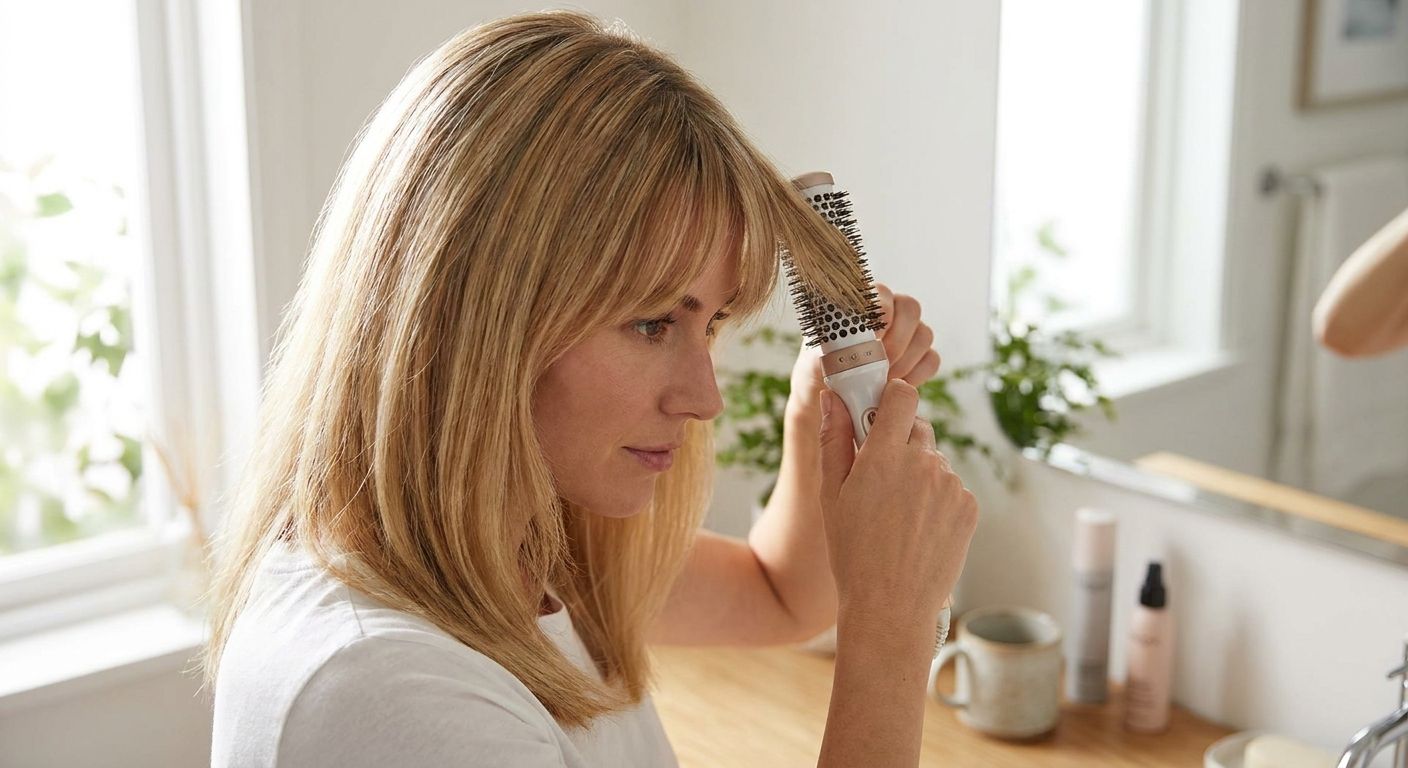
A heated hair brush for bangs and fringe is a compact hot-brush tool built to reshape one small section of hair fast, with the goal of salon-smooth face-framing pieces without dragging a full-size straightener through your whole head every morning. Fringe hair behaves differently from the rest of your style: it's shorter, sits closer to your face, and re-frizzes the second humidity or fringe-line sweat hits it, so the tool and the technique both need to be smaller and quicker than a standard styling routine.
- A heated hair brush for bangs and fringe works best with a slim barrel under 25mm and a 15-30 second glide, not a clamp-and-hold.
- Napio's heated hair brush line is built for fast, targeted sections like fringe and face-framing pieces rather than full-head restyles.
- Set 160-180°C for fine fringe hair and save higher heat for thick, coarse bang sections.
- Cool-setting the shape for 10 seconds before you release the section locks the bend better than heat alone.
Why heated hair brush for bangs and fringe matters for fringe wearers
Bangs sit directly on your forehead, which means oil, sweat, and hair-product residue hit that section faster than the rest of your head. A full-length flat iron is overkill for a strip of hair that's often 5-8cm long, and it's easy to scorch the fringe tips because the plates clamp the whole section at once.
A heated hair brush for bangs and fringe solves the sizing problem: the barrel is narrow enough to isolate just the fringe, and the bristles separate strands as you glide instead of pressing them flat between two plates. That's the difference between a crisp, bent fringe and one that looks pasted down.
Fringe also gets touched up far more often than the rest of a hairstyle, sometimes daily, which is why heat exposure adds up faster here than anywhere else on your head. Picking the right tool and temperature for this one section matters more than most people assume.
Section your fringe before you touch the heat
Uneven sectioning is the number one reason a fringe restyle looks patchy by lunchtime. Isolate the fringe cleanly from the rest of your part before any heat touches it.
- Clip back side pieces so only the fringe is loose
- Comb the fringe flat and check for tangles before heating
- Split thick fringes into two thinner sub-sections
- Work from roots to ends in one direction, never back and forth
- Keep the rest of your hair pinned away from the heat path
Pick the right barrel size for your bang length
Barrel diameter decides your curl or flick radius, and fringe length dictates which size actually works. A brush built for full-length styling with a wide barrel will overcurl a short fringe into a ringlet instead of a soft bend.
- Under 25mm barrel for short, blunt fringes
- 25-32mm for longer, side-swept fringes that need a soft flick
- Round-brush style heads for volume at the root
- Flat, paddle-style heated brushes for a sleeker, ironed-out fringe
- A heated hair brush built for short hairstyles is the faster route if you're restyling a fringe daily and don't want to guess at barrel size
Set the right temperature for face-framing hair
Fringe hair is usually finer than the rest of your head because it's newer growth and gets more heat exposure over time. Running the same temperature you use on your lengths will fry it faster.
- 140-160°C for fine or previously bleached fringes
- 160-180°C for normal-density fringe hair
- 180-200°C only for thick, coarse, or resistant bang sections
- Always start at the lowest setting that still holds a bend, then increase only if needed
- Let the tool reach full temperature before the first pass — a half-heated brush means more passes, which means more damage
Brush and glide instead of clamping
The biggest technique mistake with any heated hair brush for bangs and fringe is treating it like a flat iron and clamping down. The bristles are there to detangle and smooth as you move, not to crush the section flat.
- Glide in one continuous motion, root to tip
- Rotate the brush slightly inward or outward at the ends for a flick
- One or two passes maximum on the fringe — more passes means more heat damage on a section that's already thinner than the rest of your hair
- Keep tension light; pulling too hard stretches fine fringe hair past its elastic limit
Cool-set the shape before you move on
Heat bends the hair shaft, but the bend doesn't lock in until the hair cools in that shape. Rushing straight into brushing or touching the fringe undoes the work you just did.
- Hold the shape with your fingers for 5-10 seconds after the brush passes through
- Avoid touching or restyling the fringe until it's fully cool
- Use a cool-air blast from a hair dryer if you need to speed up the set
- Spray a light finishing mist only after the cool-down, never before
Protect fine baby hairs at the hairline
The hairline directly under a fringe is often the thinnest, most heat-sensitive hair on your head. It's also the first place damage shows up as breakage or flyaways.
- Keep the brush moving; never let it rest on the hairline
- Use the lowest workable temperature specifically for this strip
- A straightening brush built for fine or thin hair runs cooler settings that suit hairline hair better than a general-purpose iron
- Apply a heat-protectant to this section separately since it often gets missed during a full-head spray
Maintain the shape between wash days
Fringe re-frizzes faster than the rest of your style because it sits against your forehead and picks up oil first. You don't need a full reheat every day to fix this.
- A quick 10-15 second re-glide on just the front section refreshes the shape
- Dry shampoo at the roots of the fringe extends the style by a day or two
- A silk or satin pillowcase reduces overnight frizz on face-framing pieces
- Avoid touching the fringe with your hands throughout the day; oil transfer speeds up the re-frizz
Comparison: tools for styling bangs and fringe
| Option | Best for | Key limitation | Verdict |
|---|---|---|---|
| Slim heated hair brush | Daily fringe touch-ups, beginners | Less effective on very coarse hair without extra passes | Buy for most fringe wearers |
| Full-size flat iron | Full-head straightening sessions | Too wide to isolate a small fringe section cleanly | Hold for fringe-only use |
| Round hot brush | Adding volume at the fringe root | Slower to use than a straightening-style brush | Buy if you want lift, not just a flat bend |
| Curling wand | Side-swept, soft-flick fringes | Steep learning curve for a section this small | Wait until you've mastered a brush first |
A heated hair brush for bangs and fringe is the best pick for anyone restyling their fringe daily, since it's faster and gentler on a small section than a full-size iron.
“Fringe hair takes more heat passes over a year than any other section on your head, so the tool you use on it matters more than the one you use on your lengths.”
Common mistakes with heated hair brush for bangs and fringe
- Using the same temperature as the rest of your hair. Fringe is usually finer and gets restyled more often, so it needs a lower setting, not the same one.
- Clamping instead of gliding. Bristled heated brushes are designed for a moving pass, and clamping crushes the section instead of smoothing it.
- Skipping the cool-set step. Restyling or touching the fringe before it cools undoes the bend almost immediately.
- Choosing a barrel that's too wide. A large barrel curls a short fringe into a ringlet instead of the soft flick most people want.
- Reheating daily instead of spot-touching. Full reheats every single morning add up to far more heat exposure across 2026 than a quick 10-15 second refresh.
If you're just starting out with heated brushes altogether, a straightening brush guide built for beginners walks through the basics before you specialize in fringe technique, and a guide on straightening short hair with a heated brush covers the technique overlap between short styles and fringe sections.
FAQ
What's the best heated hair brush for bangs and fringe in 2026?
A slim-barrel heated hair brush under 25mm works best for bangs and fringe in 2026 because it isolates the section without overcurling short hair. Look for adjustable heat settings so you can run it cooler than the rest of your styling routine.
Is a heated hair brush better than a flat iron for fringe?
Yes, for fringe specifically, since a heated brush's bristles separate and smooth a small section in one glide, while a flat iron's wide plates are built for full-length hair. Flat irons risk clamping too much of the face-framing area at once.
How hot should a heated brush be for fine fringe hair?
Fine fringe hair holds a shape at 140-160°C, well below the 180-200°C range needed for thick or coarse sections. Starting low and increasing only if the bend doesn't hold protects the finer hair at your hairline.
How often should you heat-style your fringe?
Daily full reheats aren't necessary; a 10-15 second touch-up on just the front section refreshes the shape between full restyles. Reserving full heat sessions for every 2-3 days reduces cumulative heat exposure.
Can a heated brush cause fringe breakage?
Yes, if the temperature is too high or the brush is passed over the same section repeatedly, since fringe hair is often finer than the rest of your head. Limiting passes to one or two and matching heat to hair thickness prevents most breakage.
Does a heated brush work on short, blunt fringes?
Yes, a narrow-barrel heated brush under 25mm handles short, blunt fringes better than wider barrels, which tend to overcurl short lengths. A round hot brush adds root lift if the fringe also needs volume.
What barrel size is best for a side-swept fringe?
A 25-32mm barrel gives side-swept fringes enough room for a soft outward or inward flick without curling the whole section into a ringlet. Shorter, blunt fringes do better with a barrel under 25mm.
One last thing
The fringe section takes more heat passes over a year than any other part of your head, simply because it's the piece most people touch up between full washes. Matching barrel size and temperature to that one section in 2026, instead of treating it like the rest of your hair, is the single change that cuts visible fringe damage the fastest. Napio's heated hair brush range is built around exactly that: smaller sections, lower heat where it counts, and a faster daily routine than a full-size iron.