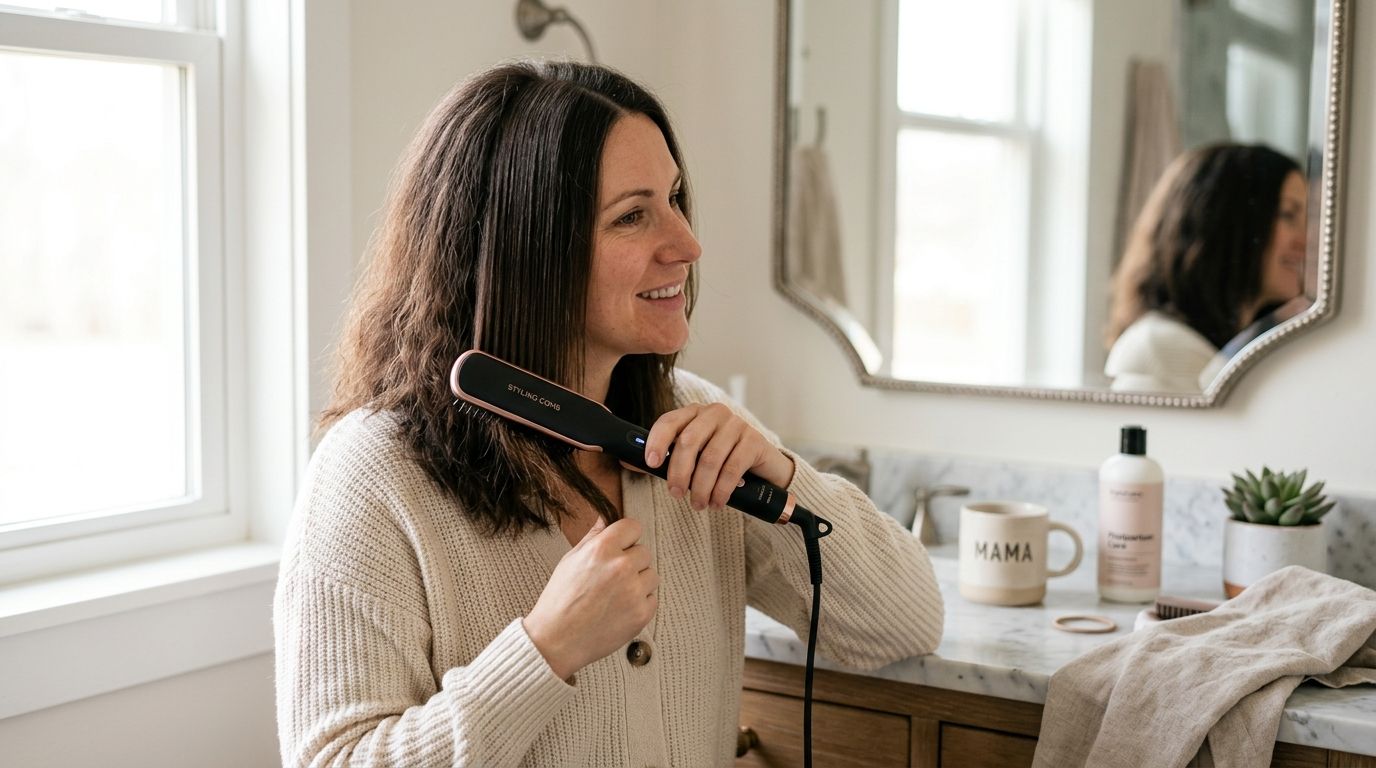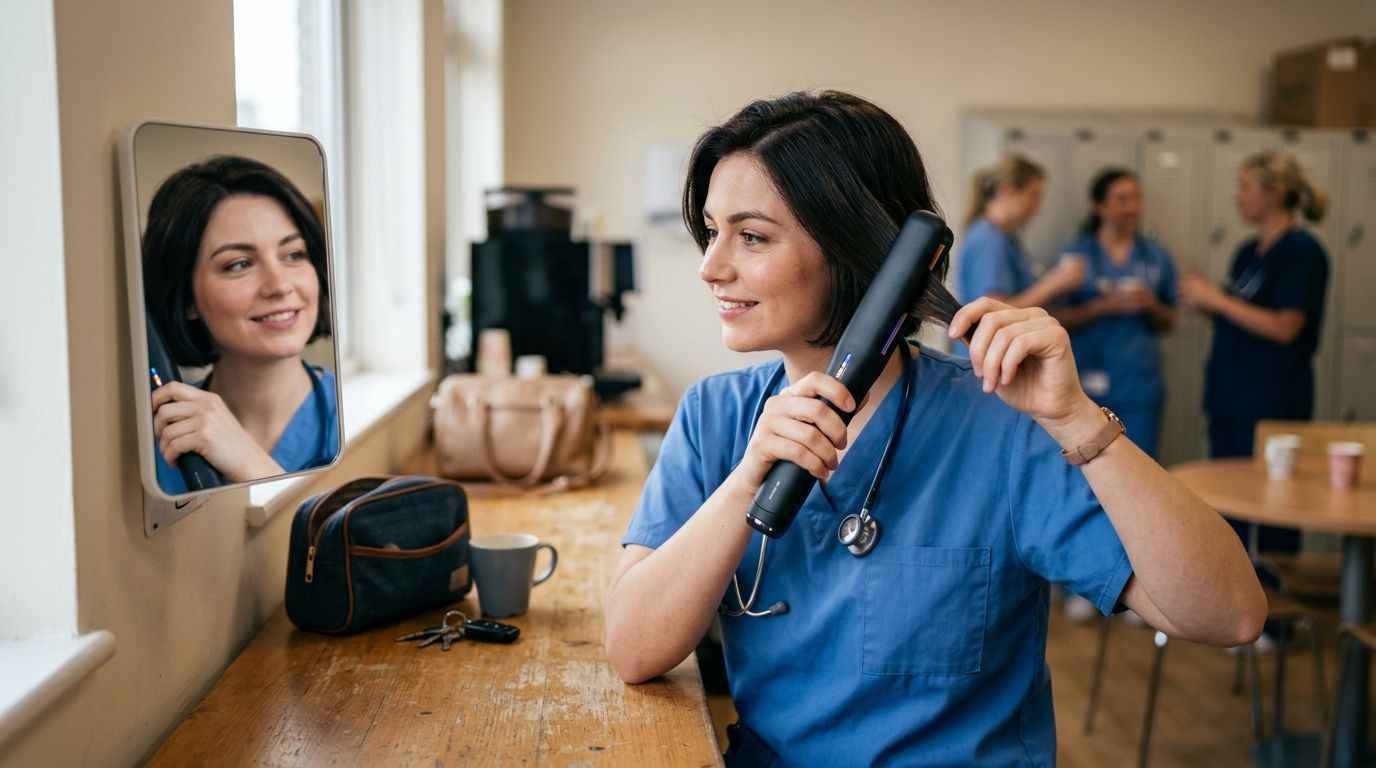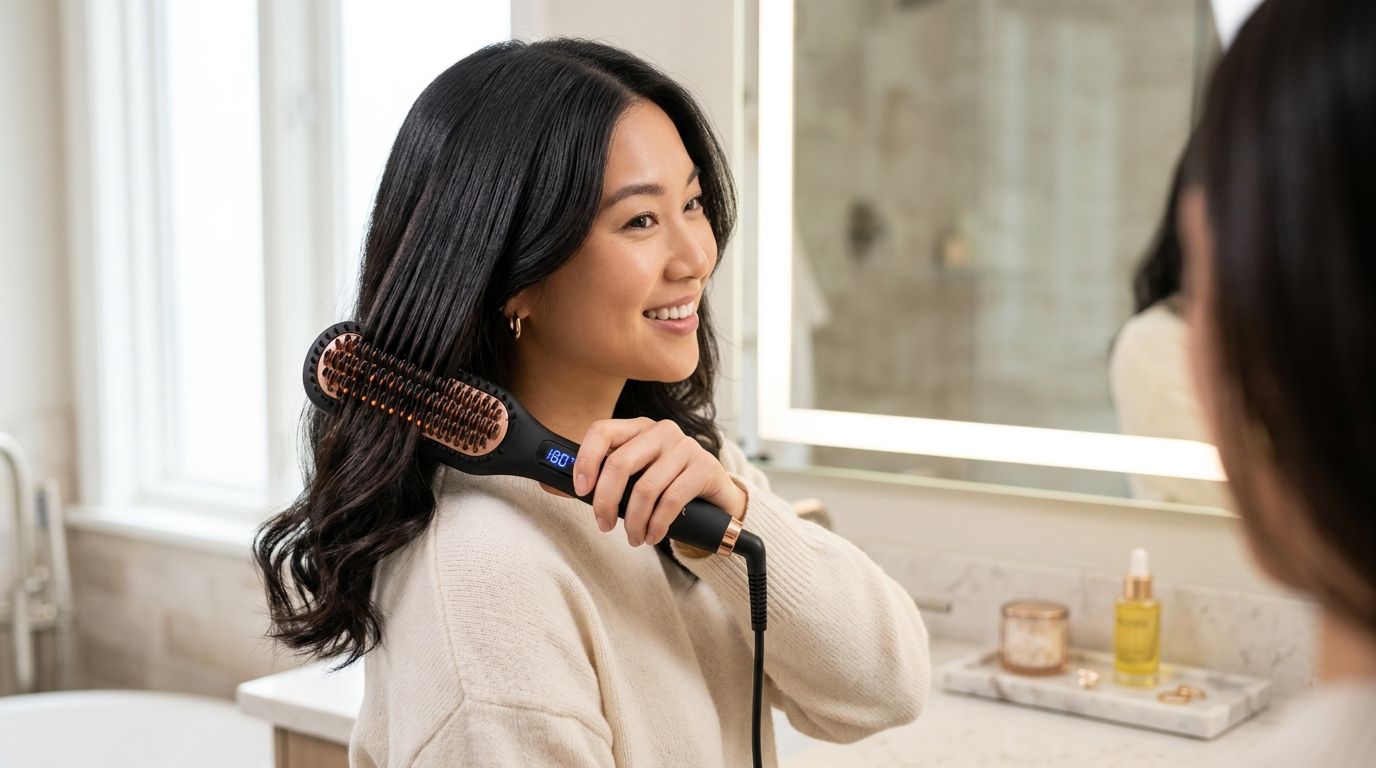
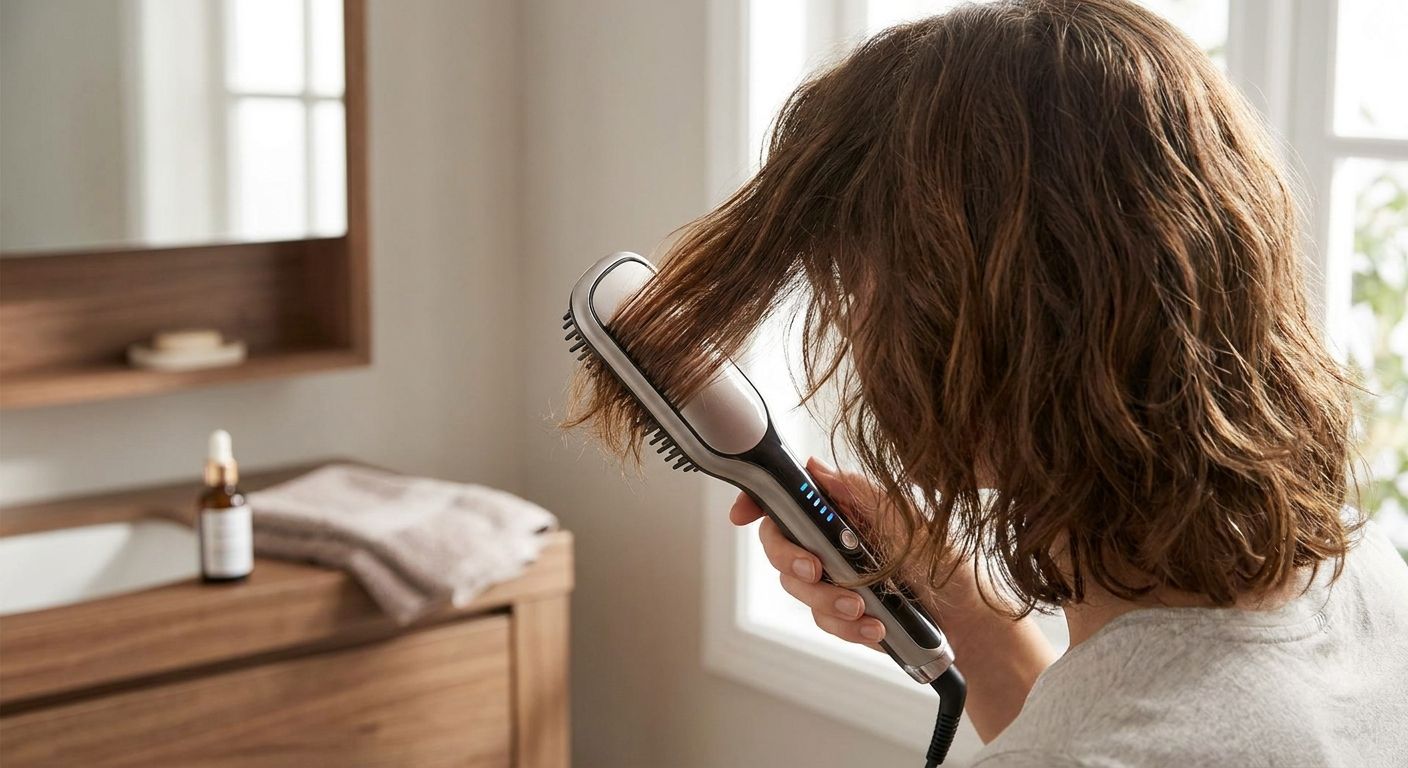
Short hair takes less time under heat than long hair, but a heated brush punishes bad technique fast. Get the angle wrong on a bob or a pixie cut and you end up with a flat crown, frizzy nape, or heat marks near the ears. This guide walks through the exact routine for straightening short hair with a heated brush in 2026, plus the fixes for the problems that actually happen on short cuts.
- Straighten short hair with a heated brush by working in 1-inch sections from root to tip, not scalp to ends in one pass.
- Fine or fragile short hair needs 150-180°C; coarse or curly short hair needs closer to 200-230°C.
- A heated hair brush for short hairstyles with a narrow barrel gets closer to the roots without scalp contact.
- Cool the section before you move on — heat sets the style, not the brush itself.
- Skip heated brushes wider than 32mm on hair shorter than shoulder length; they can't grip a small section.
Why this matters
Short hair behaves differently under heat than long hair. There's less weight to pull the cuticle flat, the roots sit closer to the heat source, and a single pass covers a much shorter length — so mistakes compound faster because you're doing more passes per section, not fewer.
A heated brush built for long hair usually has a wide barrel and loose bristles designed to glide down 12+ inches. On a pixie cut or a short bob, that same brush can't find purchase on a 3-inch section, so you end up re-running the same spot and doubling the heat exposure. That's the single biggest reason short-hair straightening with a heated brush goes wrong in 2026 — the wrong tool, not the wrong technique.
What you'll need
- A heated hair brush for short hairstyles with a narrow barrel (under 32mm) and adjustable heat
- A heat protectant spray applied to damp or dry hair before styling
- Fine-tooth sectioning clips — short hair needs smaller sections than long hair
- A wide-tooth comb or detangling brush for pre-styling prep
- 10-15 minutes, depending on how many sections your cut needs
Skip the flat iron for this routine. A heated brush is the right call for short hair because it rounds the ends instead of creasing them flat, which matters more on a bob than on hair long enough to hide a crease.
The steps
1. Start on fully dry hair
Wet or even slightly damp hair steams under heat, and steam is what causes frizz and mid-shaft breakage. Dry your hair completely first, using a blow-dryer on low heat if you're in a hurry, and run a wide-tooth comb through to remove tangles before the brush touches it.
Common mistake: rushing this step and running the heated brush over 80% dry hair. That's the fastest way to fry short strands, since there's less length to absorb the damage.
2. Section the hair into 1-inch pieces
Long hair can tolerate 2-inch sections. Short hair can't — the brush needs to grip a small, even piece to straighten it in one pass. Clip the crown up first, then work through the sides and back in sections no wider than an inch.
This matters because uneven sections mean uneven heat exposure: the parts of a section closest to the brush's core get more heat than the edges, and on short hair that difference shows immediately.
3. Set the heat to match your hair type
Fine or colour-treated short hair takes 150-180°C. Coarse, curly, or thick short hair needs 200-230°C to actually change the hair's shape rather than just warm it. Guessing wrong in either direction either does nothing or overcooks the section.
Expected outcome: the brush should glide through the section with light resistance, not drag, and you shouldn't smell heat on the hair.
4. Glide root to tip in one motion
Start as close to the root as you can without touching the scalp, then pull the brush straight down and slightly out at the ends for a rounded finish. One slow pass beats three fast ones — repeated passes are what cause heat damage on short hair, since there's less untouched length to compensate.
Common mistake: stopping halfway through the pass to check progress. That leaves a crease at the stop point that's hard to fix without starting the section over.
5. Hold the section for 2-3 seconds at the ends
The ends of short hair curl under or flip out more easily than long hair because there's less weight pulling them straight. Pause the brush for a beat at the tip of each section to lock the direction you want before releasing.
6. Let each section cool before moving to the next
Hair sets its new shape as it cools, not while it's hot. Straightening the next section immediately, before the last one drops in temperature, means the previous section can still shift back toward its natural texture.
7. Finish the crown and fringe last
Save the top sections for last since they're the most visible and the most prone to flattening if you handle them too early and then keep touching your head while styling the rest.
Common mistake: styling the crown first, then flattening it with your hands while sectioning everything else.
Troubleshooting
- Flat, lifeless crown after styling — you're brushing straight down at the root instead of lifting slightly before pulling through. Angle the brush up 30 degrees at the root for half a second before gliding down.
- Frizz at the nape by midday — the nape often gets the least attention because it's hard to see. Go over it with a smaller, more deliberate section and slightly higher heat if hair there is thicker than the rest.
- Brush won't grip short layers — layers shorter than 2 inches slip out of wide-barrel brushes. A straightening brush for fine thin hair with a narrower barrel and tighter bristle spacing holds short layers better.
- Heat marks near the ears or hairline — you're holding the brush too close to skin on short sections. Keep at least half an inch of clearance and reduce heat by 20°C in that zone.
- Style drops within an hour — the section wasn't cooled before you moved on, or the heat setting was too low to actually reshape the hair. Check heat matches hair type from step 3.
- Static after straightening frizzy short hair — dry air plus a fully straightened cut generates static easily. A heated hair brush for frizzy hair with ceramic-coated bristles reduces friction that causes static buildup.
Tools and resources
- Heated brush with adjustable heat settings and a narrow barrel for short sections
- Heat protectant spray, applied before every session in 2026 regardless of how often you style
- Fine sectioning clips (short hair needs more, smaller clips than long hair)
- A mirror positioned to check the back and nape, the two zones people skip
If you're new to heated tools generally, the mechanics carry over from any electric straightening comb — heat, section, glide, cool.
What to do next
Once the basic routine is solid, the technique for holding and angling the tool matters as much as the settings. The full walkthrough on how to use an electric hair straightening comb covers grip, angle, and pass speed in more depth than a short-hair-specific routine needs to.
FAQ
What heat setting is best for straightening short hair with a heated brush?
Fine or colour-treated short hair straightens best at 150-180°C, while coarse or curly short hair needs 200-230°C. Starting low and increasing only if the brush drags through the section is the safer approach for 2026's thinner, more damage-prone styling tools.
Is a heated brush better than a flat iron for short hair?
A heated brush is generally better for short hair because it rounds the ends instead of creasing them flat. A flat iron can leave a visible crease on hair short enough that the crease can't be hidden under length.
How long does it take to straighten short hair with a heated brush?
Most short cuts take 10-15 minutes with a heated brush, depending on section count and hair thickness. Thicker or curlier short hair adds a few extra minutes since each section needs a slower, more deliberate pass.
Can a heated brush damage short hair faster than long hair?
Yes, because short hair has less untouched length to absorb repeated heat exposure from re-passing the same section. One slow, correct pass per section causes far less damage than three quick passes.
What size heated brush works best for a pixie cut or short bob?
A barrel under 32mm works best for pixie cuts and short bobs since it can grip a 1-inch section without slipping off the ends. Wider barrels built for long hair often can't find purchase on short layers.
Do I need heat protectant for a heated brush?
Yes, heat protectant spray should go on before every heated brush session regardless of hair length. It reduces moisture loss at the cuticle, which matters more on short hair since there's less length to hide dryness.
Why does my short hair frizz up after straightening?
Frizz after straightening short hair usually comes from styling on damp hair or skipping heat protectant. Humidity also affects short hair fast since there's less weight to hold the straightened shape down.
Can a heated brush give short hair volume as well as straighten it?
Yes, angling the brush up slightly at the root before pulling through adds lift at the crown while straightening the length. This is the main advantage a heated brush has over a flat iron for short styles.
One last thing
The nape is the section people skip because it's the hardest to see, and it's also the section that frizzes first on short hair. Style it with a hand mirror before you touch the crown, not after — by the time most people get to it, they've already run out of patience and rushed the pass.