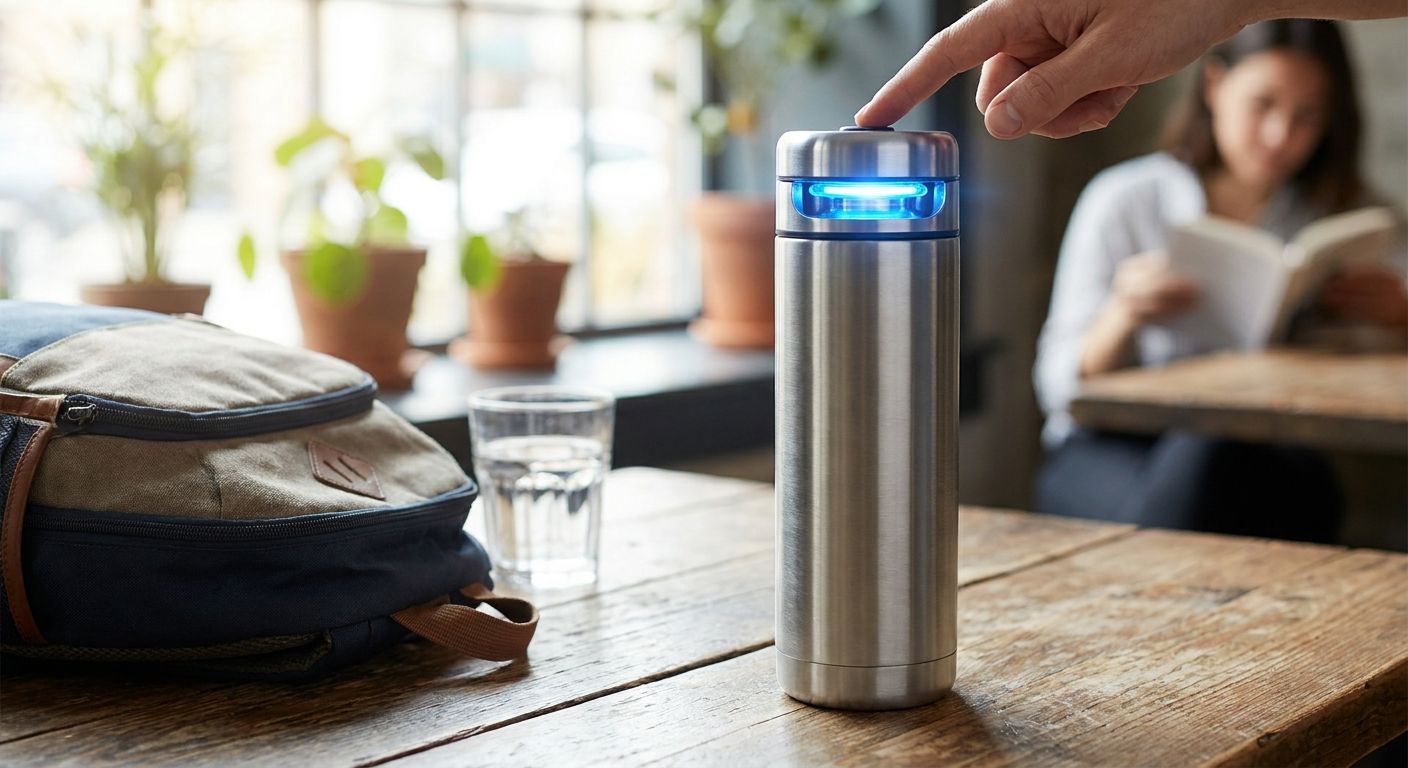
A UV self-cleaning water bottle uses a built-in UV-C light to disinfect the water and the inside of the cap without scrubbing, chemicals, or a dishwasher cycle. Get the setup and daily routine right and the bottle does the hygiene work for you every time you refill it in 2026.
- Charge fully before first use and run one empty cycle to clear factory residue before drinking from it.
- Trigger the UV-C cycle after every refill, not just once a day, to actually control bacteria buildup.
- Air-dry with the cap off between uses; sealing a damp bottle undoes the disinfection cycle within hours.
- A UV self-cleaning water bottle for travel earns its keep on flights and gym trips where tap access is unreliable.
Why this matters
A reusable bottle that never gets properly cleaned turns into a bacteria incubator faster than most people expect, especially once you're refilling from gym fountains or hotel taps. Standard bottle brushes miss the threads under the cap and the seal where most buildup actually forms. UV-C light at roughly 200-280 nanometers disrupts bacterial DNA on contact, which is why the technology shows up in hospital sterilisation equipment as well as personal water bottles. Using the cycle correctly, and often enough, is the entire value proposition — skip steps and you're carrying an expensive bottle that does nothing extra.
What you'll need
- A UV self-cleaning water bottle, charged before first use
- The included USB-C charging cable
- Filtered or tap water (either works; the UV cycle doesn't purify heavy metals or chemicals, only microorganisms)
- A soft cloth for the exterior and cap threads
- Five minutes at the start and end of each day
If you're shopping before you start, look at a UV water bottle for travel built with a sealed cap and a battery that survives a full day of flights and layovers without a charger nearby.
The steps
1. Charge it fully before the first use
Run the battery to 100% before you drink from the bottle at all. A partial charge often means a shortened or interrupted UV-C cycle, and you want full cycles from day one. Plug in the USB-C cable overnight so it's ready by morning. Common mistake: using the bottle straight out of the box on a half-charge, then blaming the technology when the water still tastes off.
2. Run an empty cycle before drinking from it
Fill with plain water, seal the cap, and trigger the UV-C cycle once before your first sip. This clears any manufacturing residue and confirms the light and battery are working. You'll usually see an indicator light change colour or blink when the cycle starts and again when it finishes. Common mistake: skipping this test run and only discovering a faulty unit after a week of regular use.
3. Fill and seal properly every time
Water needs to sit inside a fully sealed chamber for the UV-C light to disinfect it evenly. A cap that's not clicked fully into place lets light escape and leaves parts of the water untreated. Check the seal by twisting until you feel or hear the lock engage. Common mistake: rushing the seal at the gym or in the car, then wondering why the cycle indicator won't activate.
4. Trigger the cycle after every refill
This is the step people skip once the novelty wears off in 2026, and it's the one that matters most. Press the activation button after each refill, not just once in the morning. Bacteria reintroduce themselves every time you add new water, especially from a shared fountain or a tap of unknown quality. Common mistake: running one cycle at 7am and assuming it covers every top-up for the rest of the day.
5. Let it finish without opening the cap
Opening the bottle mid-cycle interrupts the UV-C exposure and restarts the clock on disinfection. Wait for the indicator light to signal completion before you drink. Most cycles are quick enough to run while you're still packing your bag or tying your shoes. Common mistake: cracking the lid to check on it, which resets progress and wastes battery.
6. Air-dry with the cap off between uses
At the end of the day, empty the bottle and leave the cap off overnight rather than sealing a damp interior. Trapped moisture creates the exact environment the UV-C cycle is designed to prevent. A bottle you clean well but store wet undoes most of the benefit. Common mistake: tossing the sealed bottle straight into a gym bag while it's still wet inside.
For gym-specific use, a self-cleaning water bottle for the gym needs to handle several refills a day without the cycle time cutting into your workout, so check how quickly the indicator clears before you buy.
7. Wipe the exterior and cap threads weekly
UV-C light disinfects the water and the interior chamber, but it doesn't clean grime or oils that build up on the cap threads and mouthpiece. Wipe those with a damp cloth and mild soap once a week. Skipping this step is the top reason people think their bottle smells stale even though the water itself is clean. Common mistake: assuming UV-C covers 100% of the bottle instead of just the sealed chamber.
Troubleshooting
The cycle won't start. Check the charge level first — most units lock out the UV-C function below a minimum battery threshold to protect the light's lifespan. Confirm the cap is fully sealed; an unsealed lid often prevents activation entirely.
Water still tastes or smells off after cycling. UV-C kills microorganisms but doesn't remove existing odours from mineral buildup or old residue. Run a manual wash with soap and water, then resume the normal UV cycle routine.
The indicator light doesn't change colour. This usually points to a battery issue or a sensor misread from a partially sealed cap. Re-seat the cap and retry before assuming a hardware fault.
Battery drains faster than expected. Cycling after every refill uses more power than once-a-day use, which is expected and worth the tradeoff for actual hygiene. If drain feels excessive within weeks, check that the cap isn't accidentally triggering partial cycles in your bag.
Bottle smells musty despite regular cycles. This is almost always a drying problem, not a disinfection problem — go back to leaving the cap off overnight and check the seal gasket for trapped moisture.
Tools and resources
- USB-C cable (included with most models, but any compatible cable works as a backup)
- Mild dish soap and a soft cloth for weekly exterior cleaning
- A drying rack or upright spot with the cap removed
- If you're building a low-maintenance wellness kit around other devices, the cleaning guide for a heated hair straightening comb applies the same care-first routine to a different category
What to do next
Once the daily routine is automatic, the bottle becomes a background habit rather than a chore. If travel is the main use case, pair it with a packing routine that keeps the charging cable and cap protected in transit so a knock in your bag never interrupts a cycle mid-flight in 2026.
FAQ
How do you use a UV self-cleaning water bottle?
Charge it fully, fill with water, seal the cap completely, then press the activation button to run a UV-C cycle. Run the cycle after every refill in 2026, not just once a day, since bacteria reintroduce themselves each time you add water.
How often should you run the UV cycle?
Run it after every refill, not once daily. A single morning cycle doesn't cover water added later in the day, which is the most common reason people feel the bottle isn't working.
Does UV-C light purify tap water of chemicals?
No. UV-C disrupts bacteria and other microorganisms, not heavy metals, chlorine or dissolved chemicals. Pair it with filtered water if you're concerned about anything beyond microbial contamination.
Why does my UV bottle still smell after cleaning?
Trapped moisture from sealing a damp bottle is the usual cause, not a failure of the UV cycle. Leave the cap off to fully air-dry between uses and wipe the cap threads weekly with soap.
Can you open the bottle during the UV cycle?
No. Opening the cap mid-cycle interrupts light exposure and resets the disinfection process. Wait for the indicator light to confirm completion before drinking.
Is a UV self-cleaning bottle worth it for travel in 2026?
Yes, for anyone refilling from uncertain sources like flights, hotels or long drives. The value comes from consistent use, so the routine matters as much as the hardware.
How long does the battery last between charges?
Battery life depends on how often you trigger cycles, since running one after every refill draws more power than a single daily cycle. Charge overnight via USB-C if you're using it heavily at the gym or while travelling.
Do UV bottles need soap and water too?
Yes, weekly. The UV-C cycle disinfects the sealed water chamber but not external grime on the cap threads or mouthpiece, so a manual wipe-down once a week keeps the whole bottle clean.
One last thing
The single habit that separates people who love their UV bottle from people who abandon it after a month: trigger the cycle every time you refill, not on a schedule you set in advance. The bottle doesn't know what time it is — it only disinfects what's inside it right now, and the next fill needs its own cycle regardless of how recently the last one ran.