A heated hair straightening comb builds up oil, product residue, and burnt hair debris on its plates fast, and that buildup is what causes uneven heat, snagging, and a shorter lifespan for the device.
- Unplug and let the comb cool 10-15 minutes before cleaning it — never wipe hot plates.
- A damp microfibre cloth with a drop of dish soap removes 90% of daily residue in under 2 minutes.
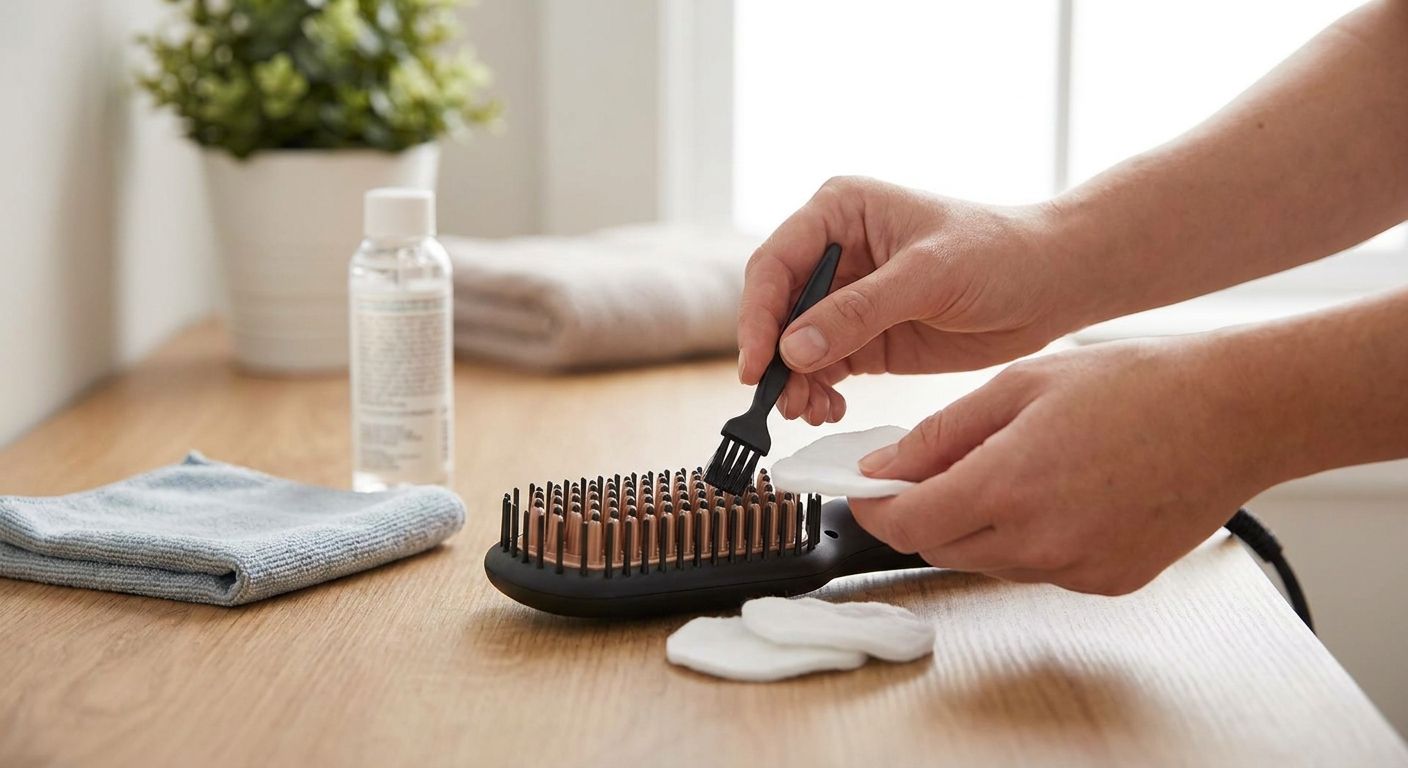
- Isopropyl alcohol (70%) on a cotton pad lifts baked-on product buildup without damaging ceramic or titanium plates.
- Clean a hair straightening comb after every 5-8 uses to keep heat distribution even and protect the coating.
- Never submerge the comb or spray cleaner directly onto it — moisture near the internal heating element is the top cause of early failure.
Why this matters
A straightening comb with dirty plates has to work harder to reach the same temperature, which means more passes through your hair and more heat exposure per session. That's the opposite of what a heated tool is supposed to do.
Buildup also insulates the plates unevenly. One section glides, another drags, and you end up with a straightened result that looks patchy by the end of the day. Cleaning a hair straightening comb properly, on a schedule, is the cheapest thing you can do to extend how long it performs like new.
What you'll need
- A microfibre cloth (dry and a second one damp)
- Mild dish soap or a dedicated electronics-safe cleaner
- 70% isopropyl alcohol and cotton pads or swabs
- A soft-bristled toothbrush (for teeth/bristle sections on comb-style tools)
- 10-15 minutes of cooldown time before you start
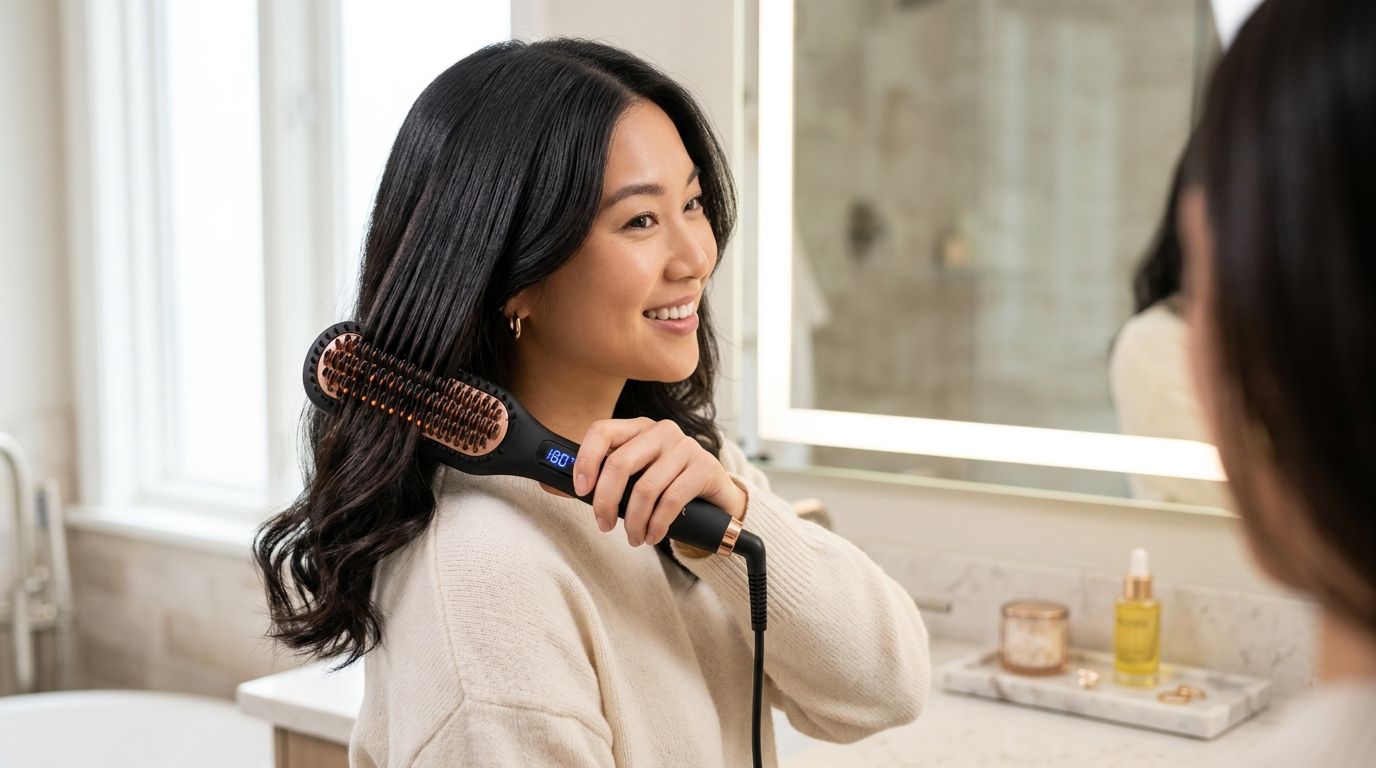
If you're new to the device itself, the guide to using an electric hair straightening comb covers heat settings and pass technique, which affects how much residue builds up in the first place.
The steps
1. Unplug it and wait for full cooldown
Switch off and unplug the comb the moment you finish styling, then leave it on a heat-safe surface for 10-15 minutes. Ceramic and titanium plates can hold heat well past the point where they look cool, and wiping a warm plate smears product residue instead of lifting it. Skipping this step is the single most common mistake people make, and it's how cloths and fingers get burned.
2. Wipe the plates with a dry microfibre cloth first
Run a dry cloth over the plates and between the teeth to remove loose hair, dust, and dry flakes before introducing any liquid. This dry pass takes about 30 seconds and prevents you from grinding grit into the coating once it's damp. Expect the cloth to pick up visible hair strands and light dust on almost every clean.
3. Damp-clean with mild soap for daily residue
Mix a drop of dish soap into a small bowl of warm water, dampen a microfibre cloth (not soaking wet, just damp), and wipe the plates in one direction. This step handles hairspray film, dry shampoo residue, and light oil buildup that accumulates after 5-8 uses. Wring the cloth out hard first — excess moisture is what travels into the hinge and heating element.
4. Use isopropyl alcohol on stubborn, baked-on spots
For buildup that soap won't shift — usually a shiny, slightly sticky patch where product has been heat-set onto the plate repeatedly — dip a cotton pad in 70% isopropyl alcohol and rub the spot in small circles. Alcohol evaporates fast and cuts through baked-on silicone from serums and heat-protectant sprays. Don't use alcohol on decorative or coated housing sections; keep it to the metal plate surface only.
5. Clean between the teeth and around the hinge
Comb-style straighteners trap hair and product between the teeth and around the pivot point, which is easy to miss if you only wipe the flat plate surface. Use a soft toothbrush dipped in the soapy water to work along the base of each tooth, then dry with a cloth corner. A build-up of lint here is what causes the comb to snag hair mid-pass rather than glide.
6. Dry completely before storing
Leave the comb open and unplugged for a few minutes until every surface is fully dry to the touch, including between the teeth. Storing a damp tool in a drawer or heat-resistant pouch traps moisture against the plates and invites corrosion on the coating over time. If you're travelling, this matters even more — a cordless hair straightener for travel sits in a bag for hours after use, so dry time before packing isn't optional.
7. Check the cord and vents monthly
Once a month, wipe down the cord near the base and check any vent openings for dust. A dust-clogged vent traps heat inside the housing, which can make the unit run hotter than the display setting suggests. This is a 60-second check that catches problems before they show up as inconsistent heat.
Troubleshooting
- Plates look clean but hair still snags — the teeth base likely has trapped lint; go back to step 5 with the toothbrush and check both sides of each tooth.
- A white or grey film won't come off with soap — that's usually mineral buildup from hairspray; switch to the isopropyl alcohol pass and let it sit 10 seconds before wiping.
- The comb smells burnt after cleaning — residual alcohol or soap left on the plate burns off on first heat-up; run it once on a low setting away from your hair to clear the smell before styling.
- Uneven heat after months of use — this is often product buildup insulating one section of the plate rather than a fault; a thorough alcohol clean resolves it in most cases.
- Cloth keeps snagging on the teeth — the cloth is too thick for a fine-tooth comb design; switch to cotton swabs for tight gaps instead of a full cloth.
- Residue reappears within a day or two of cleaning — you're likely applying heat-protectant or serum directly before styling; apply product a few minutes earlier so it partially absorbs before the plates make contact.
Tools and resources
- Microfibre cloths (2, one dry and one damp)
- 70% isopropyl alcohol and cotton pads
- Soft-bristled toothbrush
- Mild dish soap
If your current tool is showing wear no cleaning routine fixes — dragging, cold spots, a coating that's flaking rather than staining — it's worth comparing options built for your hair type rather than pushing an ageing comb further. Napio's hair straightening comb for curly hair and hot comb for natural and afro hair are built with plate spacing suited to denser textures, which also means less product gets trapped between passes in the first place.
What to do next
Once cleaning is part of your routine, the next thing that affects plate life and styling results is technique — how many passes you make per section and what heat setting you're actually using. The guide to using an electric hair straightening comb breaks down heat settings by hair type, which reduces the product buildup you're cleaning off in the first place.
FAQ
How often should you clean a hair straightening comb?
Clean a hair straightening comb every 5-8 uses for light daily wipe-downs, and do a deeper isopropyl alcohol clean once a month. Heavy hairspray or serum users should clean after every use.
Can you use water to clean a heated straightening comb?
Use a damp cloth, never running water or a spray directly on the device. Water near the heating element or internal wiring is the leading cause of early tool failure.
What's the best cleaner for ceramic straightener plates?
A damp microfibre cloth with mild dish soap handles daily residue, while 70% isopropyl alcohol on a cotton pad removes baked-on buildup. Both are safe on ceramic and titanium plates in 2026.
Why does my hair straightening comb smell burnt?
A burnt smell usually means leftover product or cleaning residue is heating up on first use. Run the comb once on low heat away from your hair before styling to clear it.
Is isopropyl alcohol safe on hair straightener plates?
Yes, 70% isopropyl alcohol is safe on ceramic and titanium plates and is the standard fix for baked-on product buildup that soap can't remove. Avoid using it on plastic housing or decorative coatings.
How do you clean between the teeth of a hot comb?
Dip a soft-bristled toothbrush in warm soapy water and work along the base of each tooth, then dry with a cloth corner. Trapped lint at the tooth base is the main cause of snagging.
Does dirty buildup affect how hot a straightener gets?
Buildup insulates the plate surface unevenly, so one section can run cooler than the display setting suggests. This shows up as patchy results even when the temperature reading looks normal.
Can you clean a cordless straightening comb the same way?
Yes, the cooldown, dry-wipe, damp-clean sequence applies to cordless models the same as corded ones. Just confirm it's fully powered off, not just in standby, before you start.
One last thing
The teeth base is the part almost everyone skips, and it's the part that fails first — a comb that glides fine on the flat plate but drags at the roots is telling you the buildup is hiding where your dry cloth never reaches.