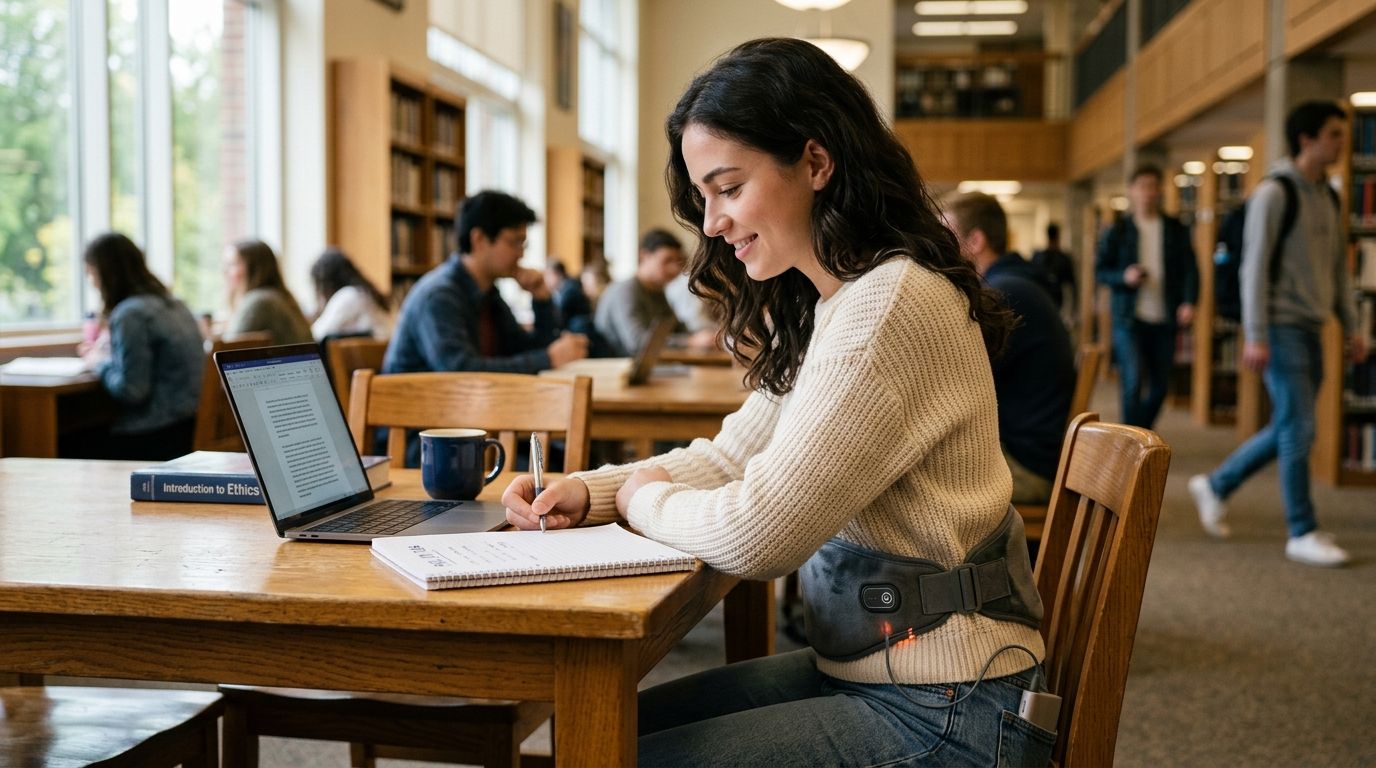
A portable heat belt for university students is a rechargeable, cordless heating device worn around the lower abdomen or lower back to ease period cramps, PCOS pain and lower-back tension between lectures, labs and library shifts in 2026. Unlike a hot water bottle, it doesn't leak in a backpack and doesn't need a kettle you don't have in a lecture hall.
- A portable heat belt for university students beats a hot water bottle for lecture halls: no leaks, no kettle queue.
- Rechargeable heat belts fit under jeans or leggings so heat therapy stays private during seminars.
- Best for period cramps, PCOS pain, and the lower-back ache from all-day library sitting.
- Disposable heat patches work as a backup for exam days when overnight charging didn't happen.
Why heat belts matter for university students
Campus life doesn't pause for a flare-up. A 9am lecture, a three-hour lab and a group project meeting don't leave room for lying down with a hot water bottle, and most lecture buildings in 2026 still don't have a microwave for wheat packs. A heat belt for teens and older students alike solves the same problem: heat that travels with you instead of heat that ties you to a couch.
The other university-specific constraint is privacy. Shared dorm bathrooms, group study rooms and open-plan libraries mean a lot of students want pain relief that doesn't announce itself. A belt worn under clothing does that; a hot water bottle clutched against your stomach in a seminar does not.
Building a heat therapy routine that survives a semester
Map your cycle against your class timetable
Before the semester locks in, cross-check your cycle against your heaviest teaching days. A flare-up on a day with three back-to-back classes is a different problem than one on a reading day.
- Note predicted flare days in your calendar app alongside assignment deadlines
- Flag the classes with no easy bathroom break (labs, tutorials with attendance marks)
- Build in a 15-20 minute buffer before high-attendance classes for a heat session
- Tell one trusted friend in each core unit so you have a cover if you need to step out
Test heat therapy before the first flare hits campus
Don't trial a new pain-relief method for the first time on exam day. Test it at home first.
- Try a hot water bottle or rice sock for a baseline of what heat intensity actually helps
- Time how long relief lasts so you know if you need a mid-lecture top-up
- Check how heat interacts with any medication you already take for cramps
- Note whether heat alone is enough or whether you also need movement or paracetamol
Pick a heat belt that stays hidden under lecture-hall clothing
A belt that bulges under a t-shirt gets left in the dorm room. Fit under normal clothing is the actual selection criteria, not the marketing photos.
- Look for a low-profile strap width that sits flat under jeans or leggings Secure the closure so it doesn't slip during a bike ride or a stair climb between buildings
- Confirm it's washable or wipeable, given how much a belt gets worn in a semester
- Read the how-to guide for heated period belts before your first use so you're not guessing at settings mid-class
Build a charging routine around your class block
A heat belt with no charge is a strap. Charging has to fit around your day, not the other way round.
- Charge overnight alongside your phone so it's habit, not an extra task
- Keep a portable charger in your bag for a top-up between back-to-back classes
- Learn your device's charging and care routine so a full charge actually lasts through a lecture block
- Set a recurring reminder the night before a predicted flare day
Pack for shared spaces: dorms, libraries, group rooms
Communal living changes what's practical. A device you can't charge discreetly or store easily gets left behind.
- Store it somewhere it won't get borrowed or misplaced in a shared room
- Carry a small pouch so it doesn't rattle loose in a backpack with textbooks
- Avoid leaving it plugged in unattended in a shared kitchen or common room
- Have a quiet-mode plan for group study rooms where a beeping charger isn't welcome
Layer heat with movement and hydration
Heat alone rarely does all the work. Combine it with the basics you can actually do between classes.
- Take the stairs instead of the lift on flare days; gentle movement helps circulation
- Keep water on hand; dehydration makes cramping worse for a lot of students
- Stretch during a break between lectures rather than sitting through the full gap
- Use heat as the anchor, not the entire pain-management plan
Know your backup options for exam day
Exam rooms don't allow you to step out easily, so the backup plan matters as much as the primary device.
- Keep a disposable adhesive heat patch in your exam bag in case the belt isn't charged
- Check exam-room rules in advance; some invigilators won't allow electronic devices at all
- Talk to student services ahead of time if period pain has affected exam performance before
- Have a non-heat backup (medication, a stretch routine) for when heat isn't an option
Comparing heat options for university life
| Option | Best for | Key limitation |
|---|---|---|
| Hot water bottle | Dorm room evenings, no time pressure | Not portable, risk of leaks in a bag |
| Rice or wheat heat pack | Budget-conscious, low-tech comfort | Needs a microwave you may not have on campus |
| Disposable adhesive heat patch | Exam day, no-charge situations | Single use, less control over heat intensity |
| Rechargeable portable heat belt | Lectures, labs, all-day timetables | Needs regular charging between uses |
| Corded electric heating pad | Dorm room only, longer sessions | Not usable outside a power outlet |
The verdict for most timetables: a rechargeable portable heat belt covers the widest range of university situations, with disposable patches as the sensible no-charge backup.
Common mistakes university students make with heat belts
- Leaving it uncharged the night before an exam — the one day it actually matters
- Running it on the highest setting under thin fabric for a full lecture, risking skin irritation over a long session
- Treating heat as the only pain-management tool, skipping hydration and movement entirely
- Sharing a communal microwave heat pack in a dorm kitchen without checking hygiene practices
- Packing it loose in a backpack where the strap gets caught on textbooks and frays early
FAQ
What is a portable heat belt for university students?
It's a rechargeable, cordless heating device worn around the lower abdomen or back to relieve period cramps and lower-back pain during classes in 2026. It replaces a hot water bottle for anyone who can't carry one between lectures.
Is a heat belt better than a hot water bottle for campus use?
For portability, yes: a heat belt straps on under clothing and carries no spill risk in a backpack. A hot water bottle still works fine for dorm-room evenings with no time pressure.
Can you wear a heat belt during a lecture?
Most low-profile belts fit under jeans or leggings and stay silent, so they work fine in a seminar. Check your building's device policy if you're in an exam room rather than a regular lecture.
How long should a heat therapy session last?
15-20 minute sessions are the commonly recommended window for cramp relief before reassessing intensity. Longer continuous sessions on high heat raise the risk of skin irritation.
What's a good backup if the heat belt isn't charged?
A disposable adhesive heat patch is the standard backup for no-charge days, especially before exams. Keep one in your exam bag alongside any approved pain medication.
Do heat belts help with PCOS or endometriosis pain, not just periods?
Heat therapy is commonly used as a general pain-management tool for pelvic pain from PCOS and endometriosis, not only period cramps. It's a complement to medical treatment, not a replacement for it.
How do you charge a heat belt around a class schedule?
Charge it overnight like a phone so it's ready before your heaviest teaching day. Keep a portable charger in your bag for a mid-day top-up if your device runs low.
Can men use a heat belt for back pain from studying?
Yes, heat belts marketed for period pain work the same way for general lower-back tension from long library sessions. The heating mechanism doesn't distinguish between the two uses.
One last thing
The detail most students skip: test your heat belt at home during week one, not during your first flare-up of the semester. A device you've never used under time pressure is a device you'll fumble with in a lecture hallway in 2026, right when you need it to just work.