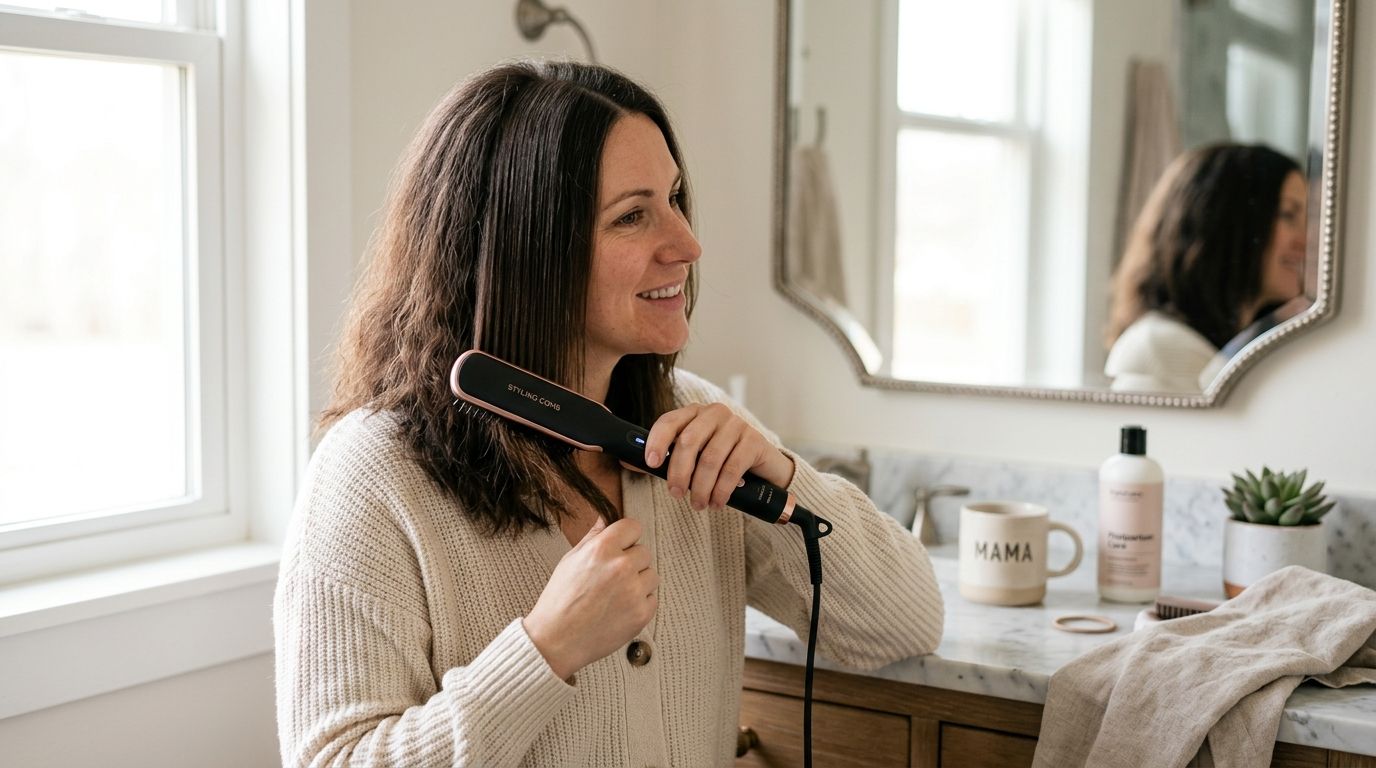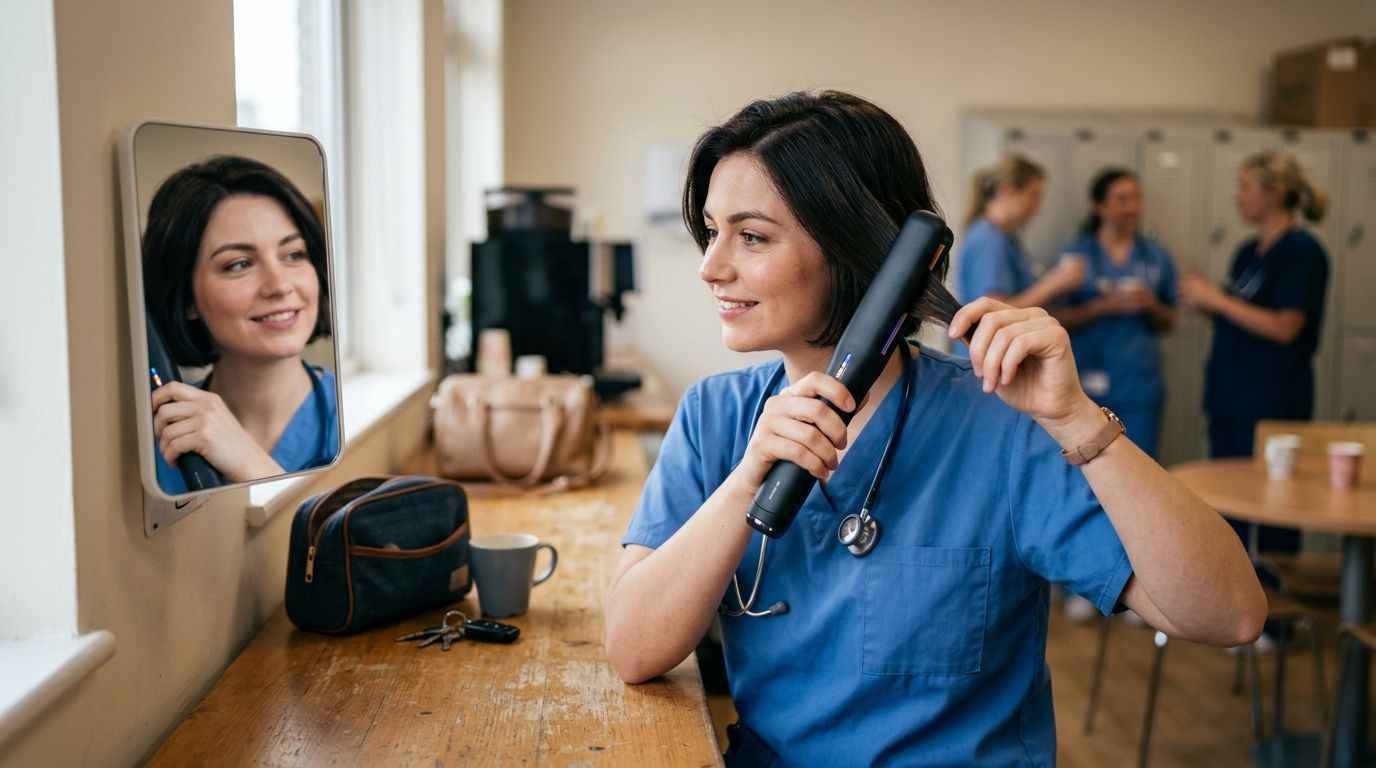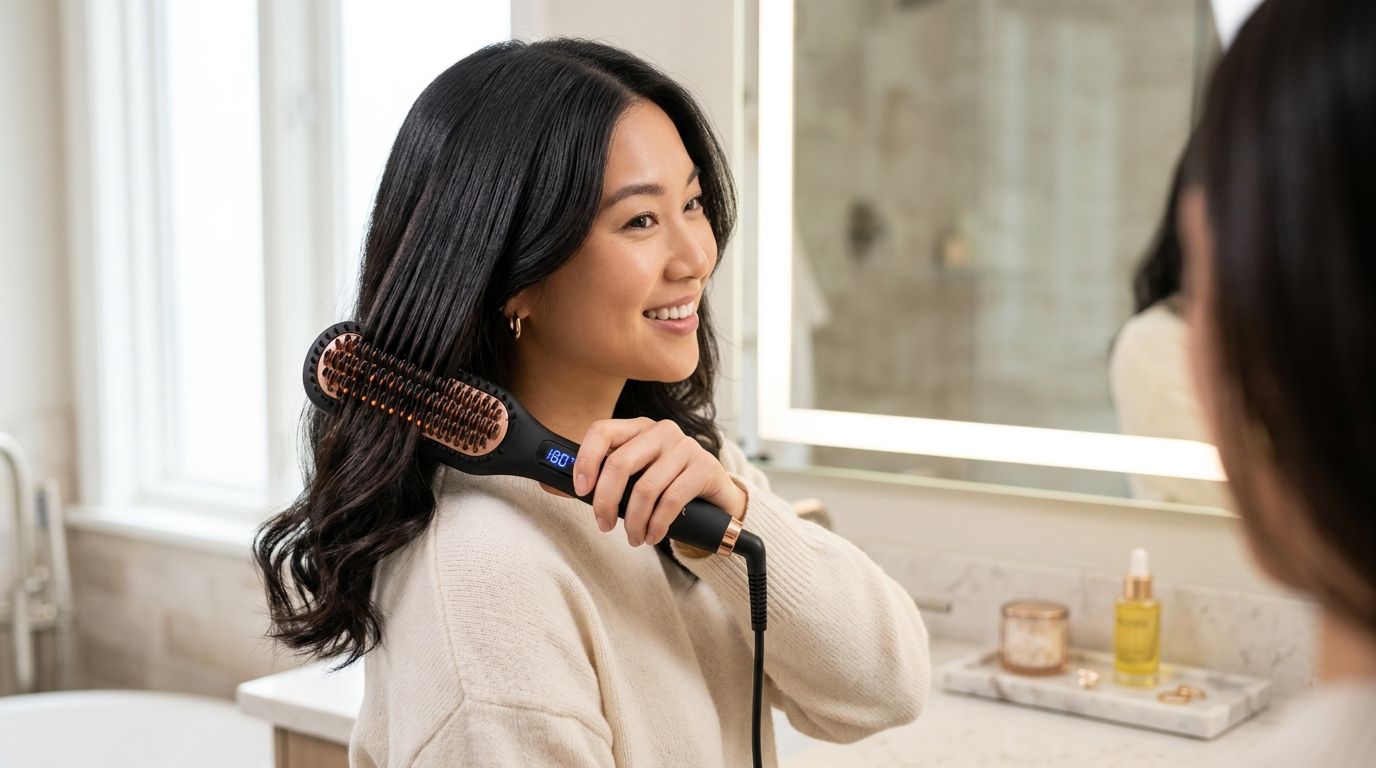
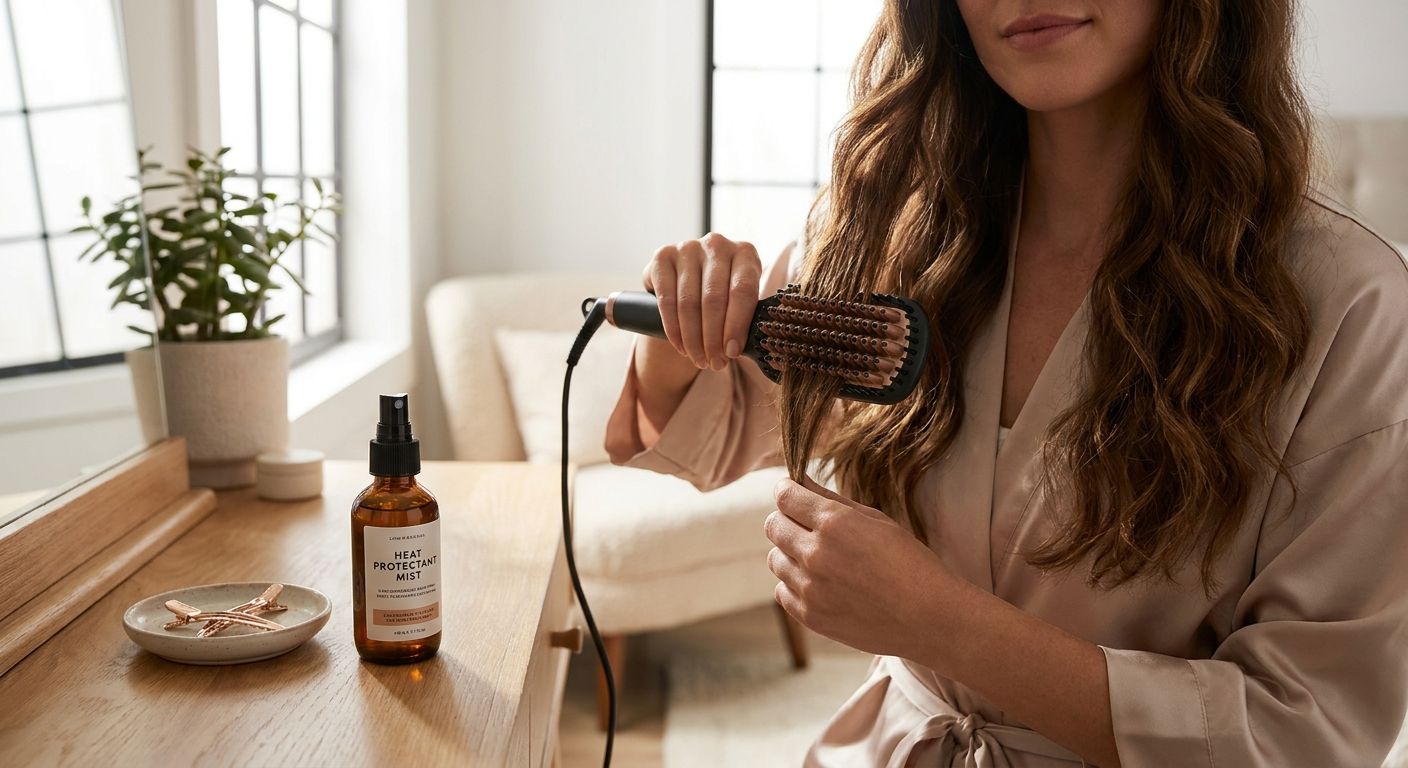
A heated straightening brush damages hair the exact same way a flat iron does — the difference is entirely in how you use it, not which tool you bought.
- Preventing heat damage with a straightening brush means capping heat near 180°C and never running it over dry, unprotected hair.
- Napio's straightening brush for fine or thin hair uses lower heat bands that cut breakage risk on fragile strands.
- One slow pass per section beats five rushed passes — repeated strokes at high heat compound damage silently.
- Heat protectant isn't optional in 2026 — skipping it doubles the chance of visible split ends within weeks.
Why this matters
Hair protein starts breaking down once styling heat climbs past roughly 180-200°C, and a straightening brush held against the same section for too long pushes past that line fast. The damage isn't dramatic at first — it's a slow loss of shine, a rougher cuticle, ends that snap instead of bend.
By the time you notice brittle ends or a matte, straw-like texture, the damage has already been building for weeks. A heated straightening brush from Napio is built to smooth hair with less direct contact than a flat iron, but the brush still needs the right heat setting and technique behind it — the device does not do the protecting for you.
Getting this right in 2026 means treating heat setting, hair prep, and stroke speed as one system, not three separate habits.
What you'll need
- A heated straightening brush with adjustable temperature settings — a straightening brush for fine or thin hair from Napio runs cooler bands better suited to delicate strands
- A heat protectant spray or serum rated for high-heat tools
- A wide-tooth comb or detangling brush
- A blow-dryer (hair should be fully dry before any hot tool touches it)
- Sectioning clips, 4 to 6 depending on hair thickness
- 10 to 15 minutes, depending on hair length and density
The steps
1. Dry hair completely before you start
Running a heated brush over damp hair is the single fastest way to fry it — trapped moisture flash-boils at the cuticle and blisters the hair shaft. Blow-dry on medium heat until hair is 100% dry to the touch, not just "mostly dry." Expect this to take 5 to 10 minutes for shoulder-length hair. The common mistake here: rushing the blow-dry and switching to the straightening brush while roots are still cool but ends are still damp.
2. Apply heat protectant to every section
Section hair into 4 to 6 parts and mist or smooth protectant through each one before any heat touches it, not just the top layer. Focus product on the last 3 to 4 inches, since ends have the least natural oil and the most cumulative damage. This step matters because protectant forms a barrier that slows heat transfer into the cuticle, buying you a margin of safety even at higher settings. Skipping it on "just a quick touch-up" day is the mistake that adds up over a year of styling.
3. Set the temperature to match your hair type
Fine or color-treated hair should sit around 160-180°C; medium to thick hair can handle 180-200°C; only very coarse or resistant hair needs anything above that. Higher heat does not mean faster or straighter results — it means more damage for a marginal time saving. A straightening brush for fine or thin hair typically caps out lower for exactly this reason, so check your model's range before assuming max heat is the default. The common mistake: using the highest setting out of habit, even on hair that's naturally soft or already color-treated.
4. Work in small sections, not big grabs
Take sections no wider than 2 to 3 centimeters — grabbing a fistful of hair means the brush can't apply even heat, so you compensate with repeated passes, which is worse than one clean pass on a thin section. Smaller sections straighten in a single stroke at lower effective heat exposure per strand. This is the difference between one controlled pass and five frustrated ones that fry the same spot.
5. Glide slowly, once, per section
Move the brush from root to tip in one continuous motion, roughly 3 to 5 seconds per pass — not a quick flick, not a lingering hold. A single unhurried pass distributes heat evenly; a fast pass leaves kinks that tempt you into a second and third pass on the same section, which is where cumulative damage actually happens. If a section needs more than two passes, your heat setting is too low, not your technique.
6. Let hair cool before touching or brushing it
Hair is at its most fragile in the 30 to 60 seconds right after heat styling, while the protein structure is still setting into its new shape. Brushing or tying hair up immediately undoes the smoothing and stresses strands that are already softened by heat. Give it a minute before running fingers or a brush back through.
7. Space out full sessions
Styling with a heated straightening brush every single day compounds damage faster than skin or scalp issues ever show up — aim for 3 to 4 sessions a week if hair is fine or previously color-treated. On off days, dry styling or a low-heat touch-up on just the front sections keeps you polished without repeating full heat exposure.
Troubleshooting
Hair feels dry and straw-like within a week of regular use. Drop the temperature by 20°C and confirm protectant is reaching the ends, not just the roots — dryness this fast almost always means heat is too high for the hair type.
Straightened sections revert to wavy within an hour. This usually means the pass was too fast — go back to a 3 to 5 second glide per section rather than a quick flick, and check the section width isn't too wide for the brush's plate size.
Ends look frizzy even after straightening. Ends have the least moisture and the most existing damage, so they need an extra pump of protectant and a slightly slower final pass. A straightening brush built for frizzy hair, like Napio's model for frizzy textures, is designed with plates that close tighter around the cuticle for exactly this problem.
Hair snaps or breaks near the ends. Stop using heat on that section for 1 to 2 weeks and trim visibly split ends — breakage means protein damage has already happened, and no setting adjustment fixes hair that's already compromised.
Curls fall flat instead of smoothing evenly. Curly and coily textures often need a slower pass and a slightly higher starting temperature to fully release the curl pattern in one go — a straightening comb built for curly hair is shaped with wider spacing to grip thicker curl clusters without multiple passes.
Brush glides unevenly or catches on knots. Detangle fully with a wide-tooth comb before any heat touches the section — a brush dragging through knots at temperature is a direct path to breakage.
Tools and resources
- A straightening brush matched to your hair type — fine, thick, curly, or coily hair all need different heat bands and plate spacing
- Heat protectant spray, applied before every session, not just special occasions
- A wide-tooth comb for pre-styling detangling
- A thermometer-equipped brush display, so you're setting an actual temperature instead of guessing at "low, medium, high"
What to do next
Once heat management is second nature, technique is the next lever — grip angle, section direction, and root lift all change the result without changing the temperature. Napio's full guide to using an electric hair straightening comb walks through the technique side step by step.
FAQ
What temperature prevents heat damage on a straightening brush?
Keep fine or color-treated hair between 160-180°C and medium to thick hair between 180-200°C. Going above 200°C rarely straightens faster and raises the risk of visible dryness within weeks.
Is a straightening brush better for hair than a flat iron?
A heated straightening brush generally applies gentler, more even contact than a flat iron's flat plates, but only if used at the right temperature. Neither tool is safe at high heat with no protectant.
How often can you use a heated straightening brush without damage?
3 to 4 sessions a week is a reasonable ceiling for most hair types in 2026, with lighter touch-ups on off days. Daily full sessions on fine or previously color-treated hair speed up dryness and breakage.
Do you need heat protectant with a straightening brush?
Yes, every session, applied through mid-lengths and ends before any heat touches the hair. Protectant slows heat transfer into the cuticle and is the single easiest damage-prevention step to skip accidentally.
Why does my hair feel dry after using a straightening brush?
Dryness after regular use usually means the heat setting is too high for your hair type or protectant isn't reaching the ends. Drop the temperature by 20°C and check application before assuming the tool itself is the problem.
Can a straightening brush damage curly hair?
Curly and coily hair can handle slightly higher heat than fine hair but needs slower, single passes to avoid repeated heat exposure on the same section. A brush shaped for curl patterns reduces the number of passes needed.
What's the best straightening brush for fine or thin hair?
Look for a model with a lower maximum temperature band, typically capping near 180°C, since fine hair damages faster than medium or thick strands at the same setting.
One last thing
The single change that prevents the most damage isn't a better brush or a pricier protectant — it's slowing the pass down to 3 to 5 seconds per section instead of rushing through in half that time. Speed is what pushes people into repeated passes at high heat, and repeated passes are where damage actually compounds in 2026 styling routines, not the first pass itself.