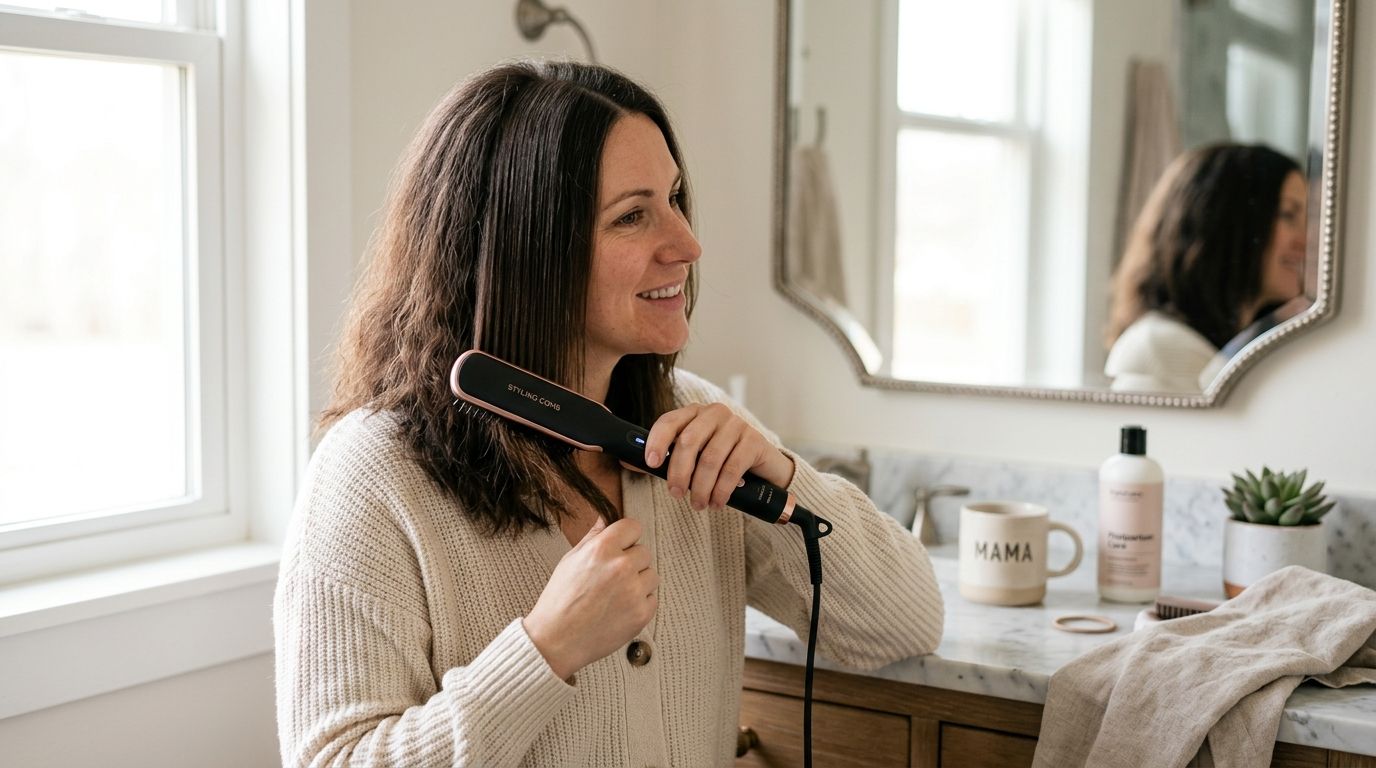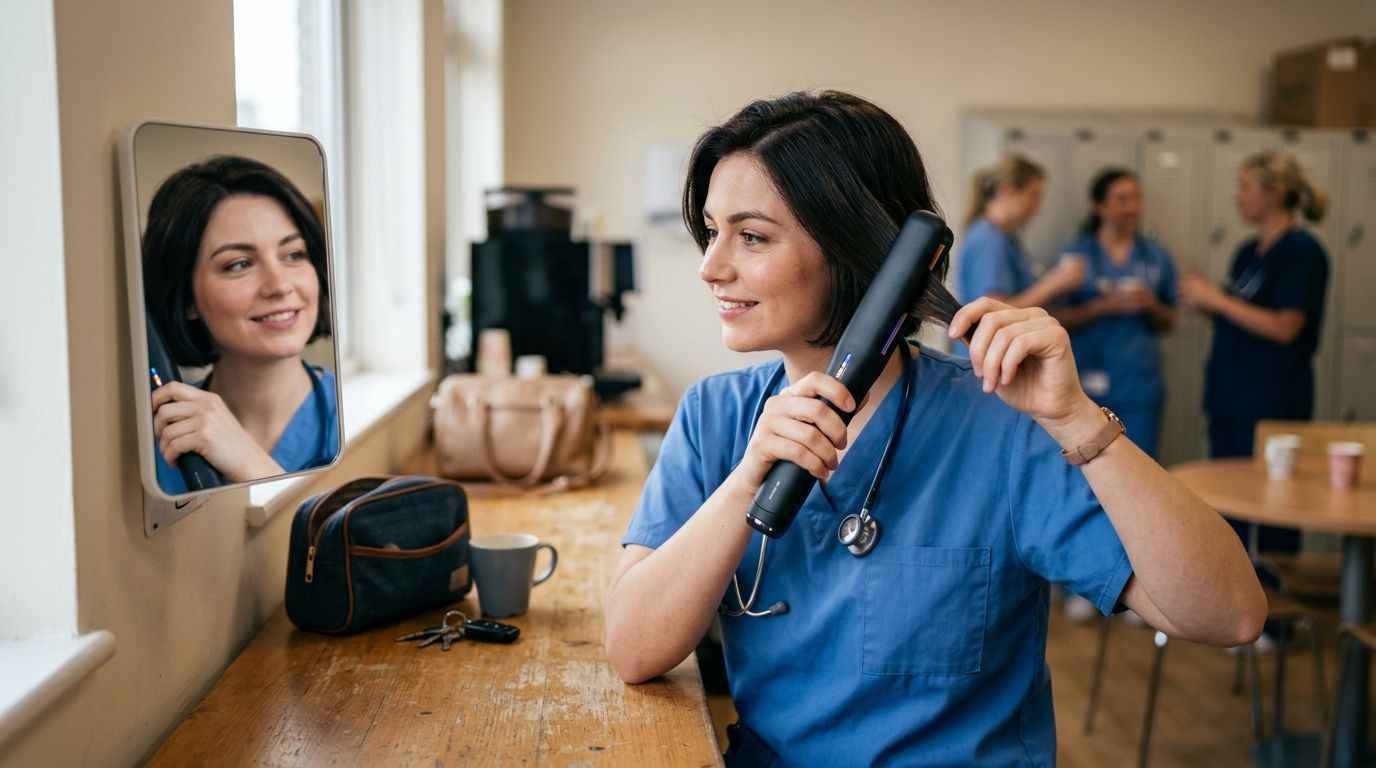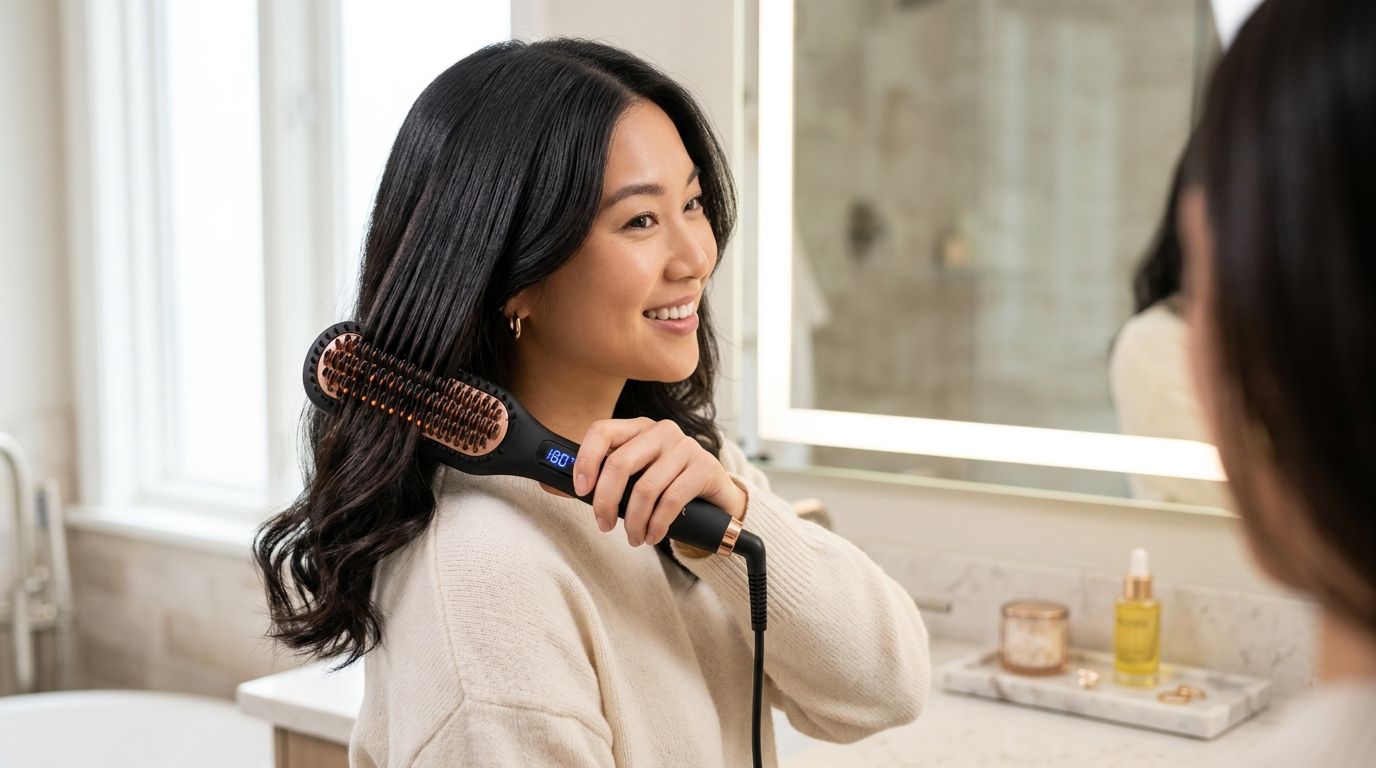
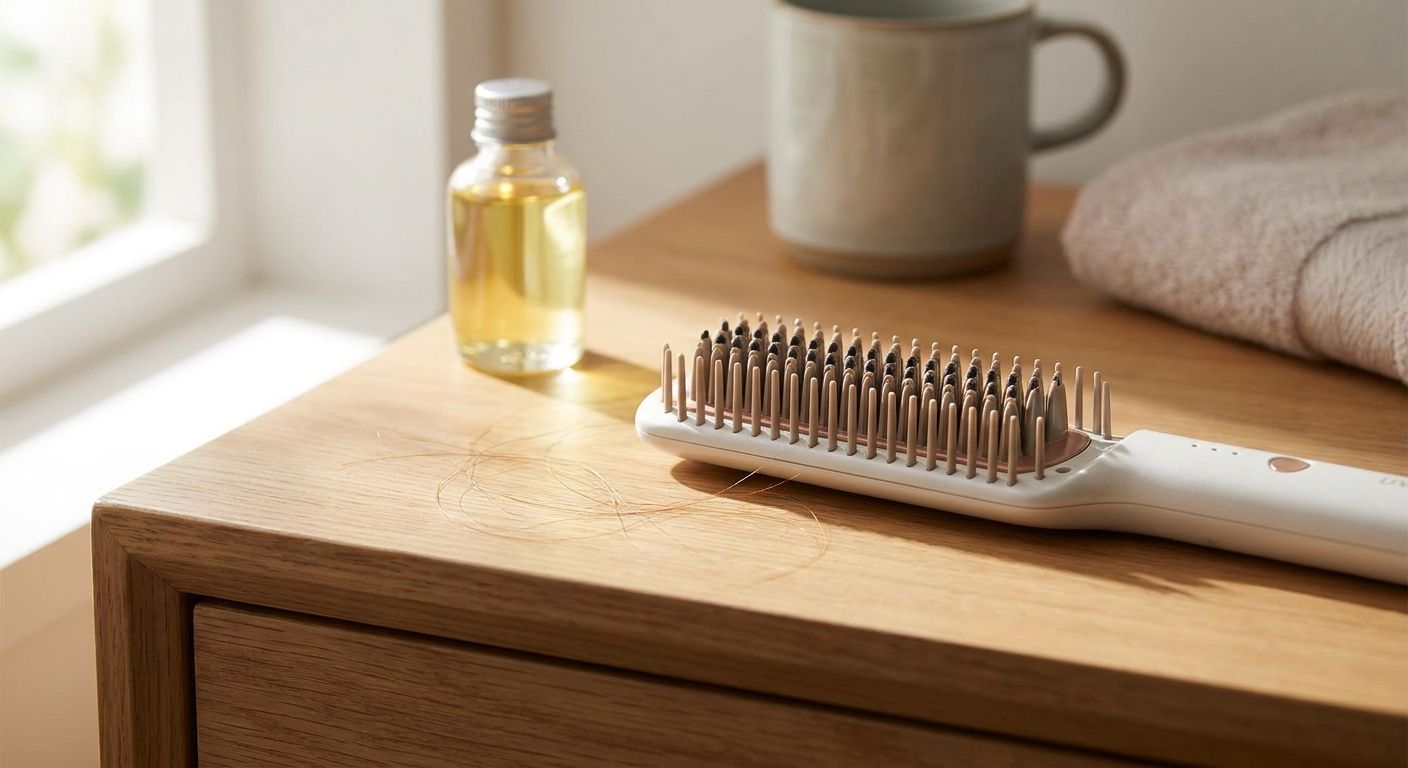
A hair straightening comb for thinning hair is a heated styling tool with wide-set teeth and lower, more controlled heat settings, built to smooth strands without adding tension at the root. Thinning hair snaps and sheds more easily under high heat and pulling, so the segment needs slower glide speeds, ceramic or tourmaline plates, and a comb that never forces the hair to stretch before it's smoothed.
- A hair straightening comb for thinning hair works best under 180C with wide, rounded teeth that reduce root tension.
- Vital by Napio's electric comb is built for scalp comfort and low-heat glide, not maximum temperature.
- Detangle before heat, section hair, and never pass the comb over the same strand twice in one pass.
- Two to three sessions a week, not daily, keeps thinning strands from added breakage in 2026.
Why hair straightening comb for thinning hair matters
Thinning hair behaves differently under heat than thick hair. The follicle is weaker, the shaft is often finer in diameter, and repeated tension styling accelerates breakage at the part line and temples.
A hair straightening comb built for this segment solves two problems at once: it smooths frizz and flyaways without a second pass, and its wide teeth distribute heat instead of concentrating it on one strand cluster. That is different from a standard flat iron, which clamps and drags.
Women searching for a hair straightening comb for thinning hair are usually past the trial-and-error stage in 2026. They have already tried a flat iron that left flyaways at the crown or a heated brush that felt too hot near the scalp. The comb category exists specifically to fix that gap.
Detangle before you touch heat
Thinning hair snarls easily because there is less density to hold each strand in place. Running a hot comb through knots forces extra passes, and extra passes mean extra heat exposure at the same spot.
- Work through hair with a wide-tooth comb, dry, before switching on any heated tool
- Start detangling at the ends and move up toward the roots in short strokes
- Skip a brush with tight bristles; it pulls more strands than it separates
- Apply a lightweight leave-in if hair is dry and prone to static
- Never detangle wet hair aggressively, since strands are weakest when saturated
Section your hair before styling
Running a comb through your whole head in one pass overheats the crown and undertreats the ends. Sectioning is the single habit that separates a smooth result from a patchy one.
- Clip hair into four quadrants: two front, two back
- Work in sub-sections no wider than 2-3cm for fine or thinning hair
- Start at the nape, where hair is often coarser, and move upward
- Leave the crown and part line for last, since that is where thinning is usually visible
- Re-clip finished sections so you do not restyle hair that is already smooth
Set the right heat for your hair, not the highest setting
More heat does not mean more smoothing. It means more damage, faster. Thinning hair with a finer shaft styles at lower temperatures than thick, coarse hair.
- Fine or thinning hair: 140-170C is generally enough for a smooth finish
- Colour-treated or previously damaged thinning hair: stay under 160C
- Never start at the highest setting to test the tool; start low and increase only if strands resist
- Let the tool fully heat up before the first pass, since a half-warm plate means more passes at the same spot
- Check the manufacturer heat guide before every new tool, because settings differ across brands
If you are shopping specifically for a tool built around lower, gentler heat, the straightening brush for fine, thin hair covers what to look for in plate spacing and temperature range.
Protect the scalp, not just the strand
Thinning hair often means more visible scalp, and a hot comb held too close for too long can irritate skin that is already sensitive from shedding or previous heat damage.
- Keep the comb teeth 1-2cm off the scalp on the first pass near the roots
- Use a rounded-tooth comb, not a flat-plate iron, anywhere near the part line
- Apply a heat protectant before every session, not just on high-heat days
- Watch for redness or tightness after styling; that is a signal to lower the heat setting next time
- For sensitive scalps specifically, the sensitive scalp comb picks narrow down tools designed around that constraint
Move the comb slowly, one pass per section
Speed matters more than most people think. A comb dragged too fast does not smooth the cuticle; it skims the surface and leaves you doing three or four passes to fix what one slow pass should have handled.
- Move the comb through each section at a steady pace, roughly 3-5 seconds per pass
- Never pass over the same section more than twice before moving on
- If a section still looks frizzy after two passes, the heat setting is too low, not the technique
- Let each section cool for a few seconds before touching it again to check the result
The faster path is an electric hair straightening comb that heats evenly across the full tooth span, so one slow pass does the work three manual passes would otherwise need. Vital by Napio's electric comb is built around that wide, even-heat design rather than a single hot point. Setup and pass technique are covered in how to use an electric hair straightening comb.
Build in recovery time between heat sessions
Thinning hair needs longer to recover between heat exposures than thick hair does. Daily straightening compounds damage that a weekly routine avoids entirely.
- Cap heated styling at 2-3 times per week for thinning or fine hair
- Alternate with heatless methods such as buns, braids or rollers on off days
- Use a bond-repair or protein treatment after any week with three or more heat sessions
- Track breakage at the part line; more short broken hairs there is your signal to cut back frequency
For a longer breakdown of what actually accelerates damage versus what is just marketing language, see preventing heat damage with a straightening brush.
Comparing your options for thinning hair
| Option | Best for | Key limitation |
|---|---|---|
| Manual flat iron, low heat | Occasional smoothing on a budget | Clamps and drags; harder to control tension near thinning areas |
| Wide-tooth detangling comb, no heat | Daily detangling and pre-heat prep | Does not smooth frizz or add sleekness on its own |
| Heated styling brush | Volume plus smoothing in one pass | Bristles near the scalp can feel hot on sensitive skin |
| Electric hair straightening comb, Vital by Napio | Even heat across wide teeth, less scalp contact | Not built for aggressive curl-to-poker-straight transformations in one pass |
Verdict: for thinning hair, a wide-tooth electric hair straightening comb run at 140-170C beats a standard flat iron on scalp comfort and even heat distribution.
Common mistakes women with thinning hair make
- Styling damp hair — heat on wet strands causes more shaft damage than the same heat on fully dry hair
- Using the same heat setting year-round — hair is drier in low-humidity months, so a setting that worked in an Australian summer over-dries strands in winter 2026
- Skipping heat protectant because it is only a comb — any heated tool needs the same protective layer a flat iron does
- Restyling the same section repeatedly to fix frizz — the fix is a slower single pass, not five fast ones
- Ignoring tool cleaning — buildup on the comb teeth reduces glide and forces extra passes; see how to clean a heated hair straightening comb for a maintenance routine
“If you are doing more than two passes per section, the problem is your heat setting, not your technique.”
Want the full picture before picking a tool? The Vital by Napio store lists the current range of personal care devices built around lower-heat, scalp-conscious styling.
FAQ
What is the best hair straightening comb for thinning hair?
A wide-tooth electric hair straightening comb with even heat distribution and a range of 140-170C works best for thinning hair. It reduces both root tension and scalp heat exposure compared with a flat iron.
Is a straightening comb better than a flat iron for thinning hair?
Yes, for thinning hair specifically. A comb spreads heat across more surface area instead of clamping one section between two hot plates, which lowers the risk of localised breakage.
How often should you use a heated comb on thinning hair?
Two to three times per week is the general ceiling for thinning or fine hair. Daily heat styling does not give the hair shaft time to recover between sessions.
Does heat make hair thinning worse?
Heat does not cause hair loss at the follicle, but excessive heat combined with tension styling snaps already-weakened strands. That reads as worsening thinning even though it is breakage.
What temperature should I use on thinning hair?
Start at 140C and increase only if the hair resists smoothing. Most thinning or fine hair styles fully at or below 170C, well under the 200C-plus settings made for thick, coarse hair.
Can you use a straightening comb on a sensitive scalp?
Yes, as long as the comb stays 1-2cm off the scalp on the first pass and the heat setting stays under 170C near the part line and temples.
Do I need heat protectant with a hair straightening comb?
Yes. Any tool that applies direct heat to the hair shaft needs a heat protectant first, whether it is a comb, a brush or a flat iron.
One last thing
The detail most people skip: the direction of your pass matters as much as the heat setting. Combing from root to tip, following the direction the cuticle already lies flat, creates a smoother result at a lower temperature than working against the grain at a higher one. If you have been cranking the heat to fight frizz, drop 10-15C and fix your pass direction first — that alone resolves most frizz complaints in 2026.