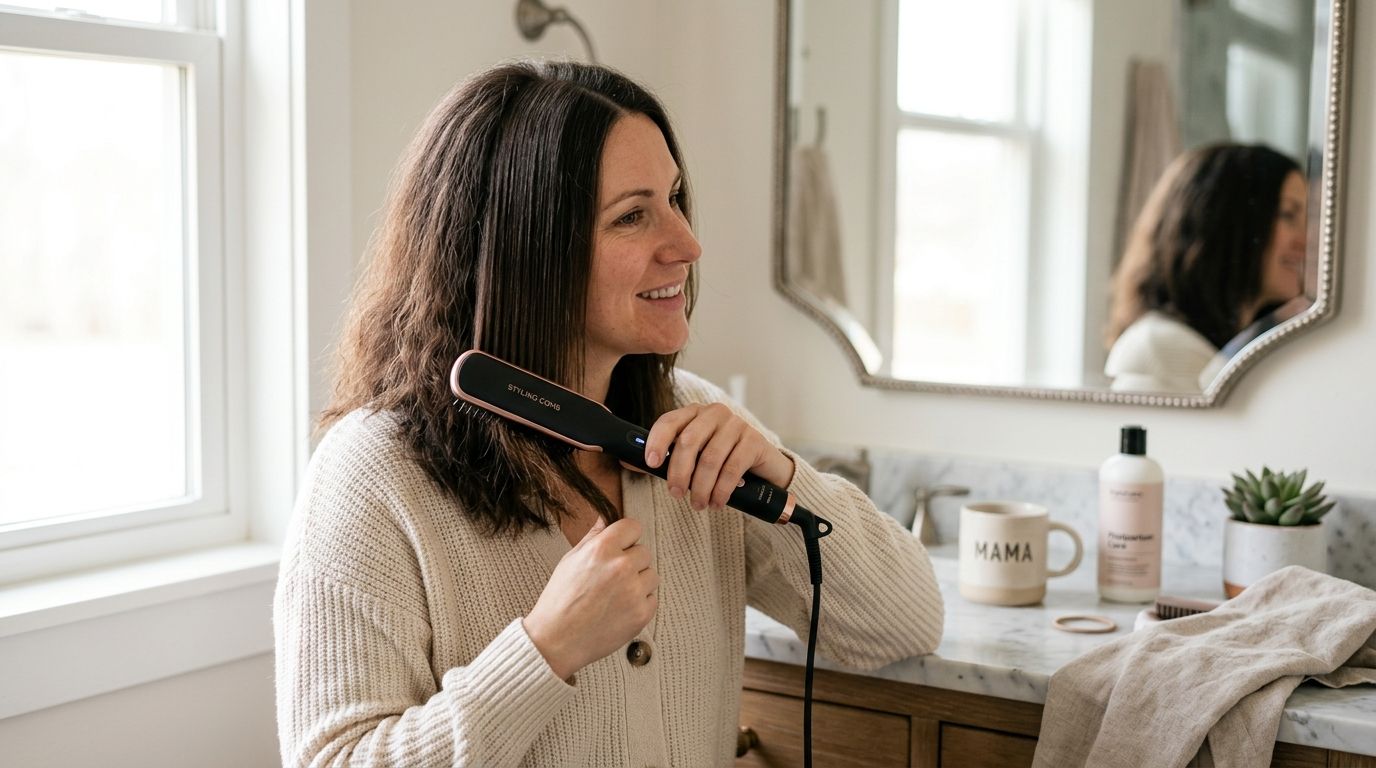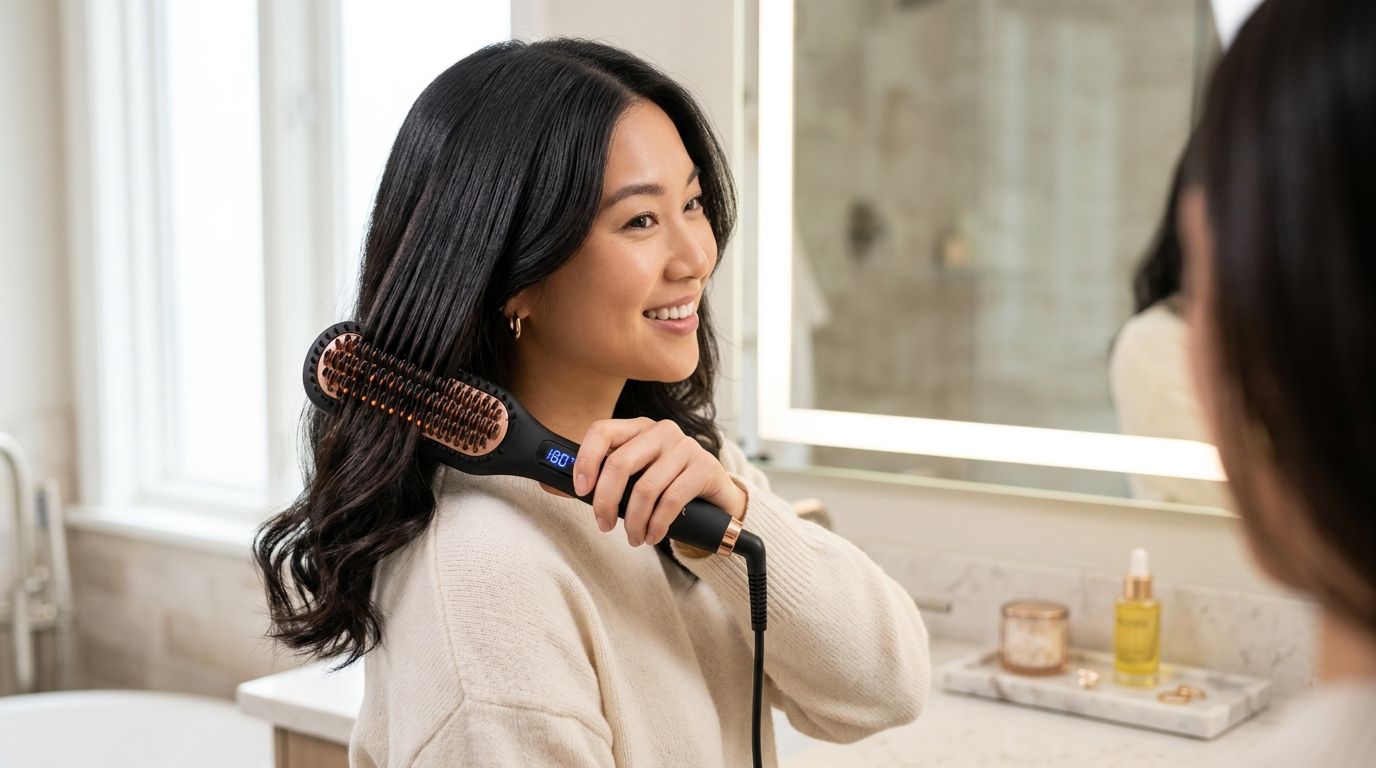
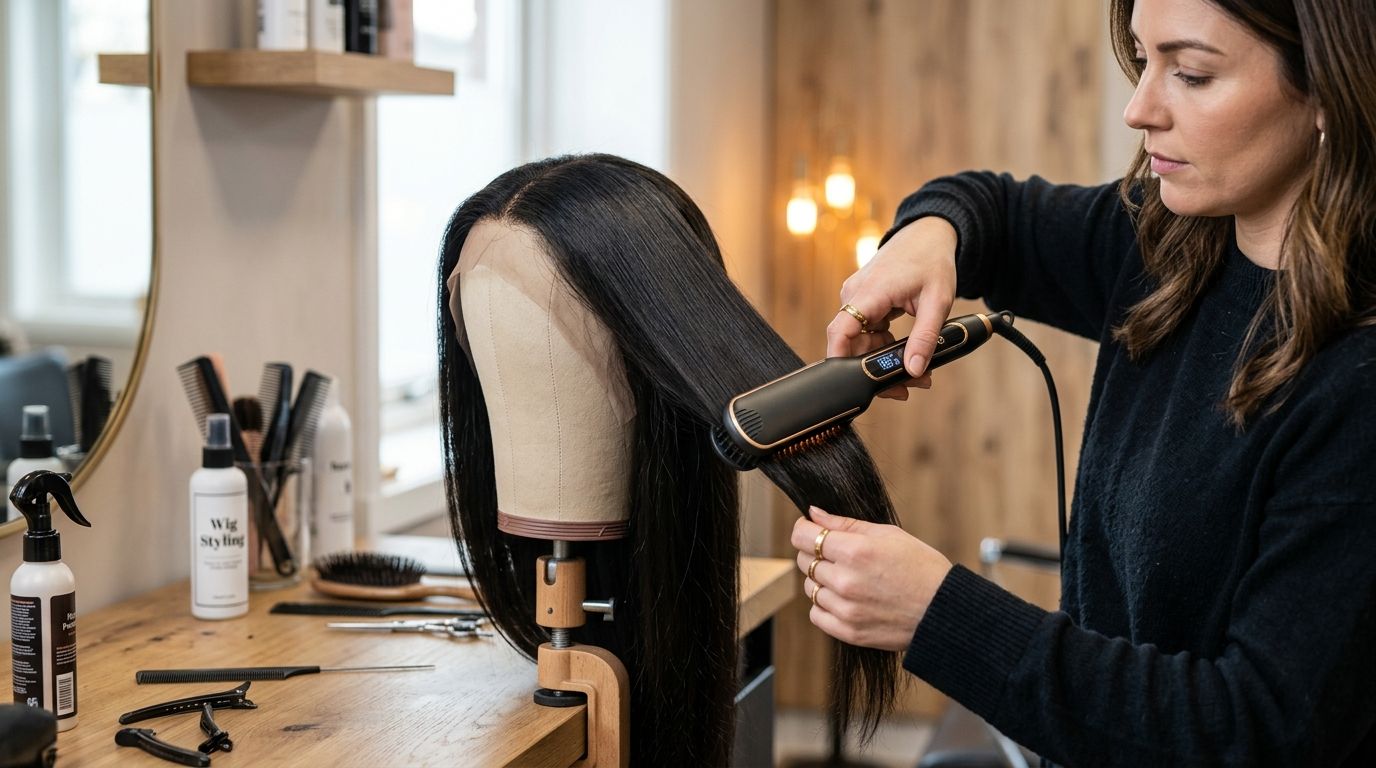
A hair straightening comb for wigs is a heated, tooth-comb styling tool used to smooth frizz, reset a part, and touch up curl pattern on human hair or heat-friendly synthetic wigs without pulling the unit off your head. Wig fiber behaves differently from hair growing out of a scalp — it has no natural oil, it's fixed to a cap or lace base, and the wrong heat setting can melt it in seconds instead of just drying it out.
- A hair straightening comb for wigs only works safely on human hair wigs and heat-friendly synthetic fiber, never standard synthetic.
- Heat-friendly synthetic fiber typically tolerates styling tools up to around 180°C (350°F); regular synthetic melts on contact.
- Napio's hair straightening comb suits quick touch-ups on human hair and heat-friendly wigs, not a full synthetic-fiber restyle.
- Section the wig, test a hidden strand first, and work on the lowest heat that removes the frizz.
- Cool the fiber before brushing or storing — heat-set wig hair holds its shape wrong if handled while hot.
Why a hair straightening comb matters for wig wearers
Wig wearers can't just towel-dry and go — a wig that's been sitting folded in a box for a week comes out with flat crown fibers, a crushed part, and static frizz along the hairline. A hair straightening comb resets all three in one pass, without the scalp-protection concerns that come with using a hot tool on real hair.
The risk profile flips, though. You're not worried about burning skin — you're worried about melting fiber that can't be replaced by regrowth. That's the entire reason a generic "best hair straightener" guide doesn't cut it for this audience: the fiber type decides the heat setting, not your hair type.
Wig stylists and everyday wearers search for this tool specifically because standard flat irons clamp too hard on wefts and can pull them loose from the cap. A comb's rounded teeth glide through without grabbing the base — that's the functional difference that matters here, not just convenience.
How to straighten a wig with a hair straightening comb
Check the fiber type before you plug anything in
This step isn't optional — it's the difference between a touch-up and a ruined wig.
- Check the wig packaging or product listing for "heat-friendly," "heat-resistant," or "synthetic — no heat."
- Human hair wigs behave like natural hair and tolerate heat similar to a standard straightener.
- Heat-friendly synthetic fiber typically handles tools up to roughly 180°C (350°F) before it starts to singe.
- Standard (non-heat-friendly) synthetic fiber melts on contact with any heated comb — skip it entirely.
- If there's no label and you're unsure, test on a single strand from the wefted underside first.
Section the wig like a stylist would
Working the whole wig at once is how you end up with missed frizz and overheated sections near the crown.
- Place the wig on a stand or mannequin head so it holds shape while you work.
- Clip the top half up and start at the nape.
- Work in 2-3cm sections — thinner sections need fewer passes and less heat.
- Keep the comb moving; don't hold it still on one spot of fiber or weft.
Start on the lowest heat setting that does the job
More heat doesn't mean smoother results on wig fiber — it means a higher chance of dulling the shine or melting a section you can't fix.
- Start low and only increase if the first pass leaves visible frizz.
- Human hair wigs can generally take a higher setting than synthetic pieces.
- A guide to picking the right heat setting for your hair type applies the same logic to wig fiber — lower for fine or fragile strands, higher only for coarser, more heat-tolerant hair.
- Re-test a hidden section any time you bump the temperature up.
Work the comb through small sections, root to tip
- Hold the section taut with your free hand so the comb glides instead of catching.
- Move the comb slowly enough to smooth frizz, fast enough that no single spot gets repeated heat.
- Do one pass per section before deciding if it needs a second.
- Avoid resting the comb directly on the wefts or the lace — that's where fiber is most likely to shift or melt.
Reset the hairline and part last
The front hairline and part are what everyone sees first, so save your steadiest passes for last when your hand isn't tired from the rest of the wig.
- Use shorter, lighter strokes near the lace to avoid pulling knots loose.
- Comb the part in the direction you'll actually wear it.
- Check both sides in a mirror for symmetry before moving on.
Cool and set before touching the style
Wig fiber holds its new shape as it cools, not while it's hot — brushing or clipping it too soon undoes the work.
- Let each section cool for a few seconds before moving to the next.
- Avoid clipping the freshly styled sections up while still warm.
- Give the full wig a couple of minutes flat before putting it back on a stand or head.
Store it properly so you don't have to repeat the whole process
- Store on a wig stand, not folded flat, to keep the reset shape.
- Keep it away from direct heat sources like car windows or heaters.
- A comb that's kept clean glides better next time — buildup on the plates drags on fiber and adds friction exactly where you don't want it.
Comparing wig-styling tools for wig wearers
| Option | Best for | Key limitation |
|---|---|---|
| Hair straightening comb | Quick touch-ups on human hair and heat-friendly synthetic wigs | Not safe on standard synthetic fiber |
| Flat iron | Full restyles on human hair wigs | Clamps can pull wefts loose from the cap |
| Wig-safe brush + detangling spray | Daily refresh with zero heat risk | Won't fix flattened crown fiber or reset a part |
| Professional wig re-styling | Full colour-matched restyle or repair | Not practical for a between-wear touch-up |
Verdict: for wig wearers who need a fast reset between full washes, a straightening comb wins on control and speed — a flat iron is better saved for full human-hair restyles where clamp pressure is less of a risk.
Common mistakes wig wearers make with a straightening comb
- Guessing the fiber type. Running a hot comb over an unlabeled synthetic wig without a strand test is the single most common way wigs get ruined.
- Using the same heat setting as their real hair. Wig fiber, especially synthetic, tolerates less heat than a scalp does — matching your usual straightener setting is too aggressive.
- Styling with the wig off the stand. Working a wig flat on a table or in your lap makes it impossible to section evenly, so you end up over-styling some spots and missing others.
- Skipping the cool-down step. Handling the fiber while it's still warm undoes the set and means restyling the same section twice.
- Ignoring buildup on the comb plates. Product residue and old fiber coating drag on the wig and can transfer discoloration onto lighter wigs.
Wig fiber holds a straightened style when it cools untouched — brush it while it's still warm and you've just reheated the frizz back in.
FAQ
Can you use a hair straightening comb on a wig?
Yes, on human hair wigs and heat-friendly synthetic wigs. Standard synthetic fiber melts at low heat, so check the label before using any heated tool.
What temperature is safe for synthetic wig fiber?
Heat-friendly synthetic fiber typically tolerates tools up to around 180°C (350°F). Standard synthetic wigs aren't rated for heat at all and should never touch a hot comb.
Is a straightening comb better than a flat iron for wigs?
A straightening comb is gentler on wefts and lace because its rounded teeth glide through fiber instead of clamping it. A flat iron works for full restyles on human hair wigs but carries a higher risk of pulling wefts loose.
How often can you straighten a wig without damaging it?
Human hair wigs handle repeated heat styling similarly to natural hair, so occasional touch-ups are fine. Heat-friendly synthetic wigs should get heat exposure less often since the fiber doesn't regenerate like human hair.
Can you straighten a wig while it's on your head?
It's possible for quick touch-ups near the hairline, but full styling is safer and more even with the wig on a stand where you can section it properly.
Does heat styling ruin synthetic wigs?
Only if the fiber isn't rated as heat-friendly. Standard synthetic fiber will singe or melt on contact with a heated comb, while heat-friendly synthetic tolerates moderate, lower-heat styling.
How do you fix a flattened wig crown without heat?
Steaming or a wig-safe detangling brush can lift some flatness without heat, but a heated straightening comb resets the fiber shape more completely and faster.
What's the best way to store a wig after straightening it?
Store it on a wig stand, not folded, so the reset shape holds. Keep it away from car windows, heaters, and other direct heat sources between wears.
One last thing
The fiber test matters more than the tool itself — a five-second strand test on a hidden weft tells you more about what a wig can handle than any label ever will, since heat tolerance varies between batches of the same synthetic fiber. Skip that test in 2026 and you're gambling a whole wig on a guess.