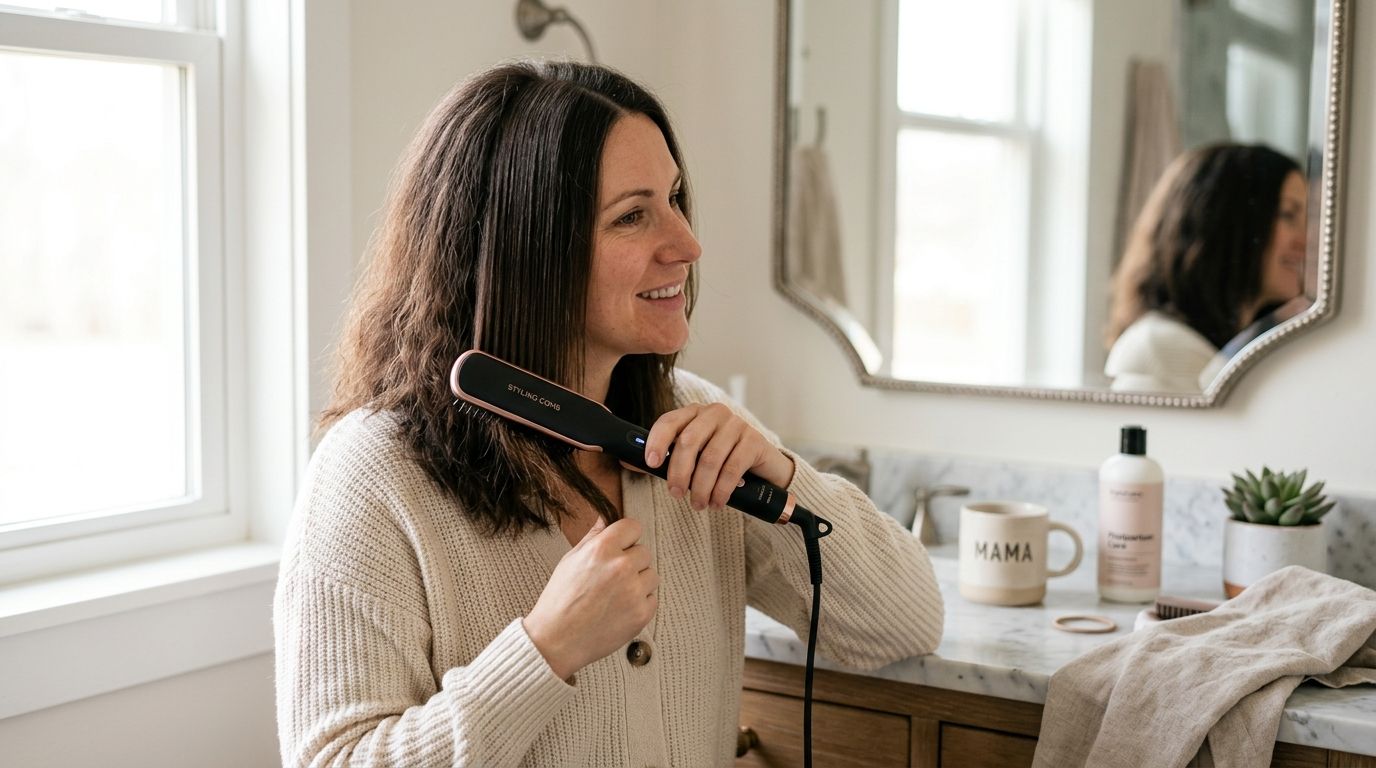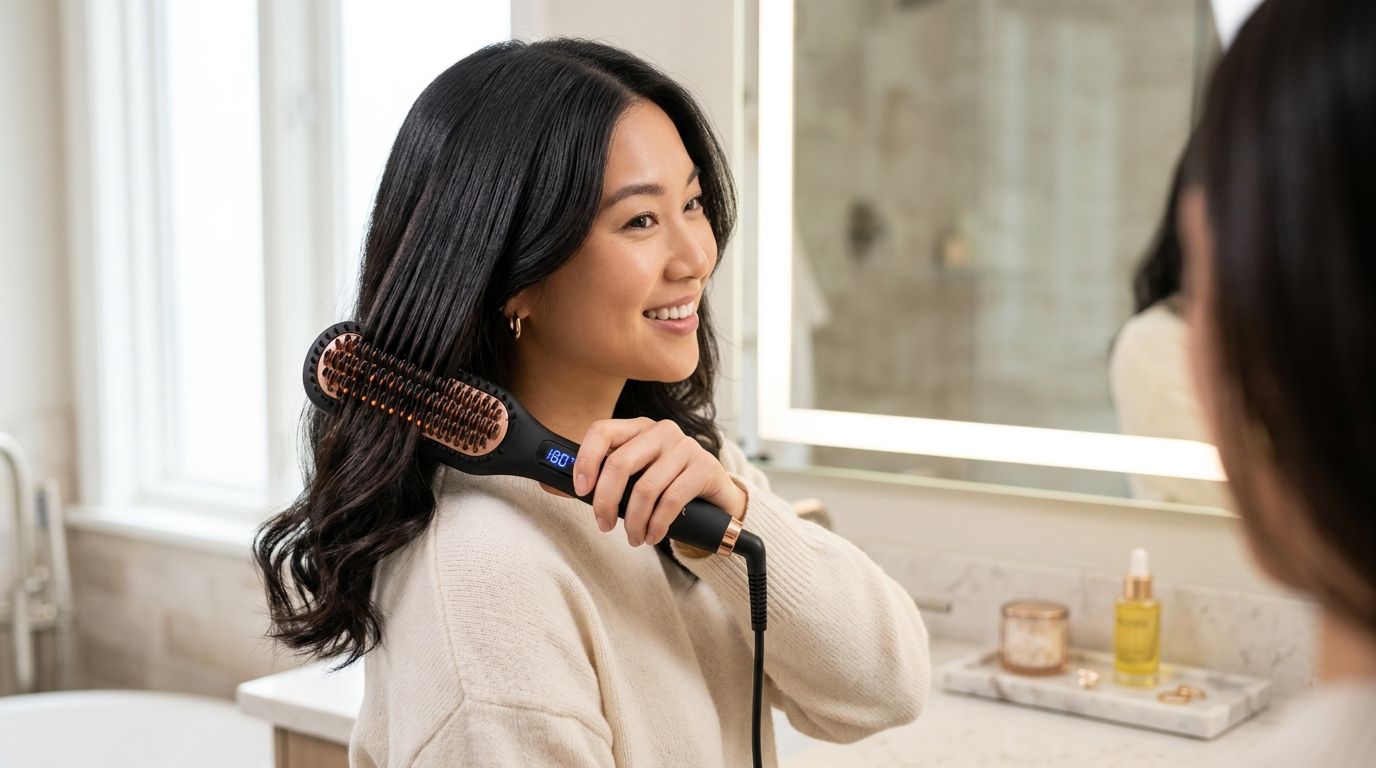
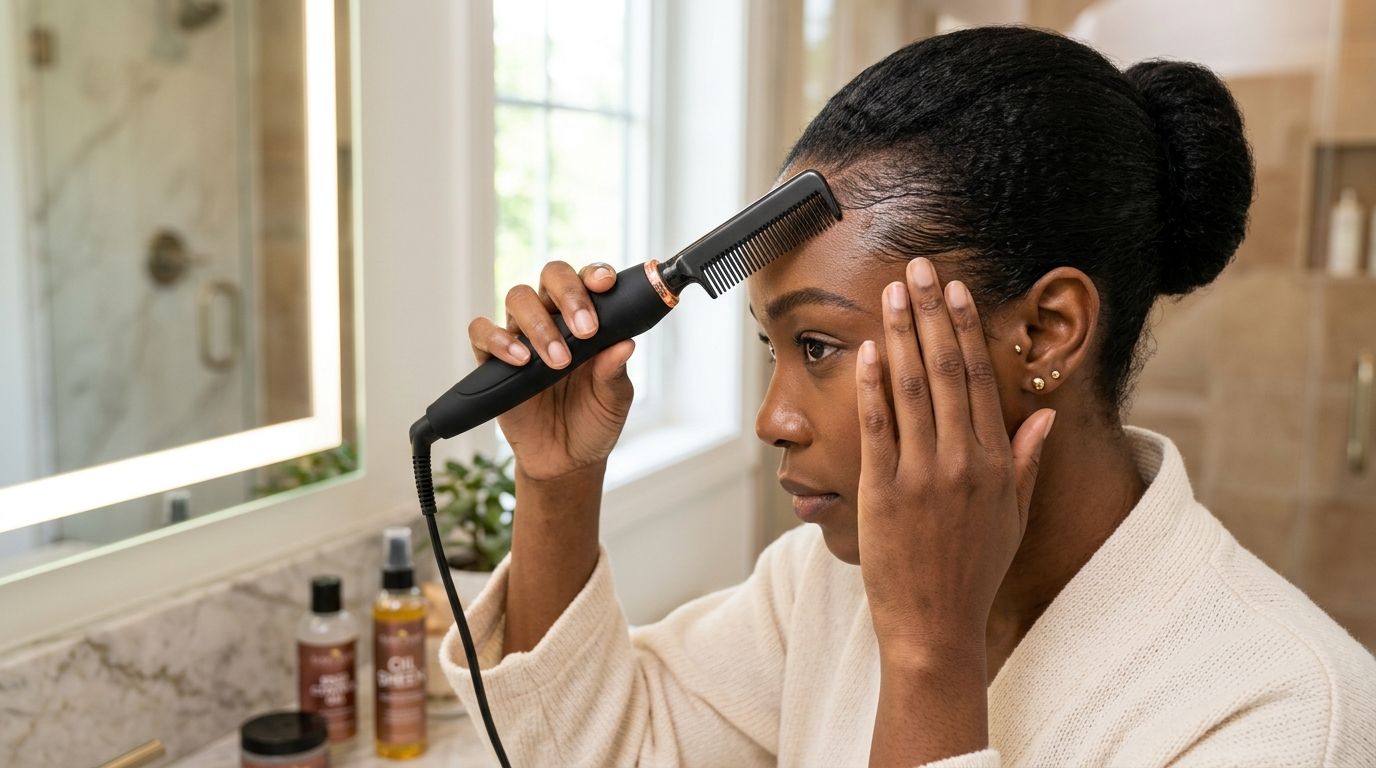
Hot comb for edges means a narrow, heated comb used to smooth the hairline, define baby hairs, and lay flyaways flat without reworking your entire style. Edge control is a different job than a full silk press: you're working a strip of hair 1-2cm wide, often finer and more heat-sensitive than the rest of your head, and you need the result to survive humidity, sweat and a satin scarf overnight.
- A hot comb for edges works best at 150-180°C — hotter settings scorch the fine hairline hair edge stylists protect most.
- Baby hairs need short, single passes of 2-3 seconds, not the slow drag used on the rest of the head.
- Vital by Napio's hot comb for natural and afro hair suits fine edge work because the barrel width matches the hairline, not the crown.
- Gel and a toothbrush alone hold edges for a few hours; heat styling holds through a full day if the section is dry first.
- Skipping the heat-protectant step is the single most common reason edges thin out by 2026 standards of at-home hair health.
Why this matters for edge control and baby hairs
Edges are the most fragile hair on your head — finer strand diameter, closer to the follicle, and styled daily in most routines. Repeated tension from brushes, gel, and scarves already stresses this area before heat gets involved, so how you apply a hot comb here matters more than it does anywhere else on the head.
Most damage complaints from at-home styling trace back to using a full-size flat iron or a hot comb built for length, not precision. A hot comb for natural and afro hair with a narrow barrel gives you the control a wide iron can't, because you're touching one small section instead of dragging heat across hair that's already styled.
The edges you smooth in the morning need to survive gym sweat, humidity, and a pillow — that's the real test, not how sleek they look in the mirror at 7am.
Update your prep routine before you touch heat
Dry, product-free hair takes heat better and holds the style longer. Wet or half-dry edges steam under heat, which is what causes the frizz to return within an hour.
- Wash and fully dry the hairline section, or spot-dry with a blow dryer on low
- Apply a lightweight heat protectant spray to the front hairline only
- Detangle with a fine-tooth comb before any heat touches the strand
- Section off the rest of your hair with a clip so it doesn't interfere
- Skip leave-in conditioner on the edges themselves — it can bubble under heat
Choose the right heat setting for your hair type
Fine or color-treated edges scorch faster than coarser hair further back on the head. Coarser, coily edge hair needs more heat to hold a style, but the margin for error is still small.
- Fine or damaged edges: start around 150-160°C
- Medium-texture, unprocessed edges: 160-175°C is a reasonable working range
- Coarse or tightly coiled edge hair: up to 180-190°C, never higher on this section
- Test on a small hidden section first if you're unsure of your hair's tolerance
- Drop 10-15°C from whatever setting you use on the rest of your head
For a longer breakdown of heat ranges by hair type, the guide on choosing the right hot comb temperature for your hair type walks through settings section by section.
Section and comb in small, controlled strokes
Edges respond to short, deliberate passes — not the slow drag technique used for a full silk press. Speed protects the hairline more than a lower heat setting does.
- Take sections no wider than 1cm at the hairline
- Pass the comb through in 2-3 second strokes, never longer
- Comb in the direction you want the final lay, not against the grain
- Repeat a maximum of two passes per section before moving on
- Let the section cool for a few seconds before touching it with product
Use an electric hot comb built for precision work
This is where the tool matters more than technique. A hot comb sized for full sections will always struggle with a hairline this narrow, because the barrel makes contact with hair you're not trying to style.
Vital by Napio's hot comb for natural and afro hair is built with a barrel width suited to smaller sections, which makes it easier to isolate baby hairs without catching the hair behind them. It's still a manual skill first — the tool just removes the guesswork of matching barrel size to section size.
- Hold the comb at a slight downward angle to follow the hairline curve
- Keep the non-heated hand flat against the scalp to guide direction
- Never rest the comb on one spot — keep it moving through the stroke
- Use the comb's edge, not the flat face, for the tightest baby hair curls
- Let the comb reach full temperature before the first pass — inconsistent heat is what causes uneven results
Lock the style with the right finishing products
Heat sets the shape; product keeps it there through the day. Skipping this step is why edges that looked perfect at 8am are frizzed by lunch.
- A small amount of edge control gel or wax, applied while the hair is still warm
- A soft-bristle toothbrush or edge brush to smooth the gel into the hairline
- A silk or satin scarf tied for 5-10 minutes to set the shape as it cools
- Light-hold hairspray only if you're not planning to touch the edges again that day
- Avoid heavy pomades — they weigh down fine baby hairs and flatten the curl pattern
Maintain baby hairs between wash days
Edges don't need a full re-style every morning if the base work was done properly. Overworking the section daily with fresh heat is what thins hair out over months, not one styling session.
- Re-wet the edges lightly with water or a setting spray before reapplying gel
- Use a toothbrush to redefine the curl pattern without new heat
- Sleep with a silk or satin bonnet to protect the style overnight
- Reserve the hot comb for every 2-3 days rather than daily touch-ups
- Rotate which side you part on to reduce repeated tension on one section
Clean and store your hot comb properly
Product buildup on the barrel transfers to hair on the next use and can cause uneven heat distribution. A comb that heats unevenly is what leads to hot spots on delicate edge hair.
- Wipe the barrel down after every use once it's fully cooled
- Use a damp cloth, never submerge the heated element in water
- Check the barrel for gel or wax residue before each session
- Store the comb in a heat-safe pouch to protect the barrel surface
Full cleaning steps are covered in the guide on cleaning a heated hair straightening comb if buildup has already set in.
Comparing your options for edge control in 2026
| Option | Best for | Key limitation |
|---|---|---|
| Edge control gel + toothbrush | Quick daily touch-ups, no heat tolerance | Holds a few hours, breaks down with sweat or humidity |
| Full-size flat iron on edges | People who already own one tool | Barrel too wide, high risk of scorching fine hairline hair |
| Electric hot comb (edge-suited barrel) | Daily wearers who want an all-day hold | Requires a heat-protectant step and correct temperature |
| Full silk press, edges included | A complete style refresh, not daily maintenance | Overkill for a five-minute morning touch-up |
Verdict: a narrow-barrel electric hot comb is the only option built specifically for this section — gel alone doesn't survive the day, and a full-size iron risks the hair you're trying to protect.
Common mistakes with edge control and baby hairs
- Using the same heat setting as the rest of the head — edges are thinner and burn faster at the same temperature.
- Skipping heat protectant on "just the edges" — this section takes damage faster than any other, not slower.
- Restyling with fresh heat every single morning — daily heat on the same strands is the fastest route to thinning by mid-2026 if it's not rotated with heatless days.
- Choosing a comb sized for full sections — a wide barrel forces you to catch hair you didn't intend to style.
- Applying heavy pomade instead of lightweight gel — it weighs down fine baby hairs and flattens the curl definition within an hour.
FAQ
What's the best hot comb for edges and baby hairs?
A narrow-barrel electric hot comb built for smaller sections works best for edges, since it isolates the hairline without catching hair behind it. Vital by Napio's hot comb for natural and afro hair uses a barrel width suited to this kind of precision work.
Is a hot comb better than edge control gel alone for baby hairs?
Gel alone holds for a few hours before humidity or sweat breaks it down, while heat-set edges from a hot comb typically hold through a full day. Combining both — heat first, then gel to lock it — gives the longest-lasting result.
What temperature should I use for edges with a hot comb?
Fine or color-treated edges do well around 150-160°C, medium texture around 160-175°C, and coarse or coily edges up to 180-190°C. Drop the setting 10-15°C lower than what you'd use on the rest of your head.
How often can I use a hot comb on my edges without damage?
Every 2-3 days is a reasonable routine for most hair types, refreshing the style between sessions with a toothbrush and water instead of fresh heat. Daily heat on the same narrow section is what causes thinning over time.
Can a hot comb be used on baby hairs without frying them?
Yes, if the pass is short (2-3 seconds) and the temperature is dropped below what you'd use elsewhere on the head. Long, slow passes at high heat are what damage this section, not the tool itself.
Does a hot comb work on both natural and relaxed edges?
Yes, though relaxed edges usually need a lower heat setting since chemical processing already thins the strand. Natural and coily edges can typically tolerate the higher end of the temperature range.
Should I dry my edges before using a hot comb?
Yes, edges should be fully dry or spot-dried before heat is applied. Styling damp hair with a hot comb causes steam damage and the frizz returns faster than if you'd started dry.
One last thing
The fastest way to spot whether your edges are being over-processed isn't touch or shine — it's how quickly the baby hairs curl back up after a shower. If they bounce back within a day or two, the hair's still healthy; if they stay limp for a week, that's the section to give a heatless break, not more product. Vital by Napio's approach to a hot comb for edges is built around that rotation: heat when you need the hold, gel and a toothbrush on the days you don't.