A silk press starts with tension and heat control, and the right hot comb decides whether you get a salon-smooth finish or frizz by lunchtime. This guide breaks down what actually matters when you're doing it yourself at home in 2026, not in a salon chair.
- A hot comb for silk press work needs adjustable heat and ceramic or tourmaline plates - Vital by Napio's comb covers both. Buy for coarse or afro-textured hair, Consider for fine hair at lower settings.
- Silk press temperatures typically run 150-220C depending on texture; going hotter doesn't finish faster, it just damages the cuticle.
- Skip any comb without a cool-tip handle if you're doing your own roots and edges - control matters more than speed.
- Cordless models add convenience for travel but usually run shorter heat-up cycles, so weigh that against daily use.
Why this matters
Most people doing a silk press at home either under-heat and get a half-finished result, or crank the dial to max and cook their ends by the third pass. Neither is a comb problem on its own - it's a mismatch between the tool's settings and your hair's actual needs.
The Vital by Napio hot comb is built for exactly this gap: home styling that needs to behave like a professional pass without a professional standing over your shoulder. Getting the settings and technique right the first time is what separates a silk press that lasts two weeks from one that reverts by dinner.
Who this is for
This guide is for women with natural, textured, or coarse hair who want a straight, silky finish at home instead of booking a salon appointment every few weeks. If you're working with fine or already-damaged hair, some of the calls below skew more cautious - read the verdicts, not just the picks.
What to look for in a hot comb for silk press
Ceramic or tourmaline plates
Uneven heat is the number one reason silk presses come out patchy. Ceramic and tourmaline plating spreads heat across the full comb surface instead of concentrating it at one hot spot, which matters most on thick, coarse sections where you only get one clean pass before the hair cools and reverts.
Adjustable heat settings
Fine hair scorches well under 200C; coarse, high-porosity hair often needs closer to 220C to lay flat and stay that way. A comb locked to one temperature forces you to either overheat fine strands or under-treat coarse ones - neither works for a full head with mixed texture, which is normal, not rare.
Rotating or dual-tension design
The comb teeth need to hold tension on the section while the heated plate does the smoothing pass. Weak tension means you re-run the same section two or three times, which is where most heat damage actually happens - not from the temperature itself, but from repeated passes at that temperature.
Cool-tip handle
You're working close to your scalp and hairline when you do your own edges. A handle that stays cool to the touch means you can control the angle right up against the root without pulling back early and leaving a kink at the base.
Cord length or cordless runtime
A short cord forces awkward angles at the back of your head; a cordless model with a short runtime forces you to rush the back half before it dies mid-section. Check which trade-off fits your bathroom setup and how long a full head actually takes you.
Ease of cleaning
Product buildup on the plate transfers heat unevenly and can scorch hair on the next use. A comb that wipes down in under a minute stays performing consistently longer than one you have to disassemble.
Top picks by hair type
The safe pick - coarse or afro-textured hair. This is the texture the Vital by Napio hot comb for natural and afro-textured hair is built around: higher heat tolerance, strong tension on the teeth, and a plate wide enough to cover thick sections in one pass. Run it closer to 210-220C and section hair no wider than an inch for a clean result. Buy.
The cautious pick - fine or thin hair. Fine strands don't need 220C to go straight; they need even heat at a lower setting and fewer passes. Start at the low end of the adjustable range, work in smaller sections, and resist the urge to bump the heat up just because the first pass looks slightly wavy - a second slow pass at the same low setting beats a hotter single pass. Consider.
The wildcard - sensitive scalp. If your scalp reacts to heat near the roots, the cool-tip handle and slower approach near the hairline matter more than raw temperature. Keep the comb moving and never park it on one section near the scalp for more than a second or two. Consider, and go in expecting a slightly longer session, not a shorter one.
The one to skip for daily touch-ups - max heat, every session. Running the comb at its highest setting on hair that's already had a silk press in the last two weeks is where breakage starts. If you're refreshing roots between full presses, drop the temperature and reduce it to root-only sections. Skip the full-head high-heat pass; it's not needed and it's not free.
“Running a comb at maximum heat through the same section three times doesn't finish the job faster - it just fries the cuticle.”
What to avoid
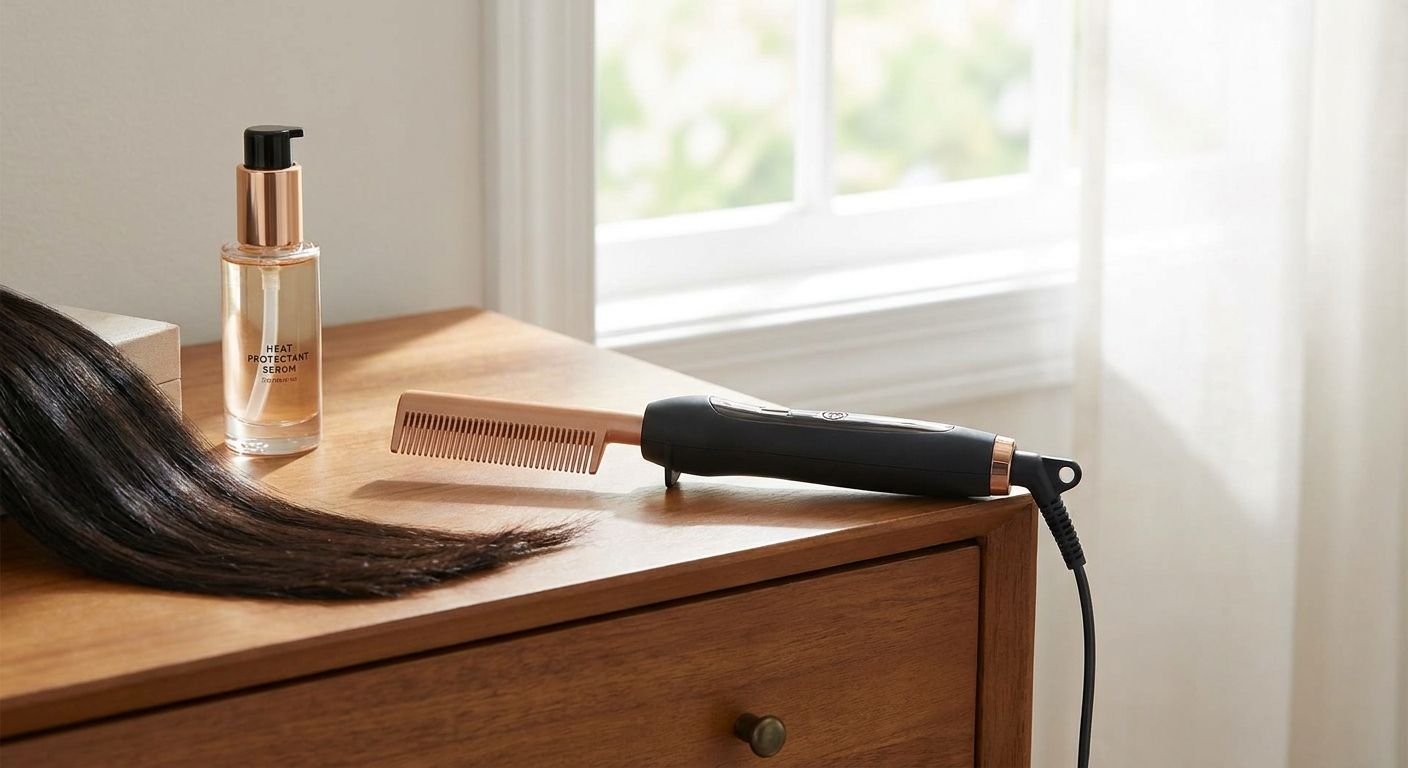
- Skipping heat protectant. A silk press without protectant applied first means the comb's heat hits raw strands directly, and that's where split ends start within a session or two, not months later.
- Straightening damp hair. Any moisture left in the hair turns to steam under the plate, which causes the frizz and reversion you were trying to avoid in the first place. Hair needs to be fully dry before the comb touches it.
- Ignoring heat damage warning signs. If you're seeing more breakage than usual, the guide on preventing heat damage covers the settings and frequency adjustments that actually fix it, rather than just switching products.
Verdict comparison
| Hair type / scenario | Heat range | Passes needed | Verdict |
|---|---|---|---|
| Coarse / afro-textured | 210-220C | 1 per section | Buy |
| Fine / thin | 150-180C | 1-2, slow | Consider |
| Sensitive scalp | 180-200C near roots | 1-2, brief contact | Consider |
| Root touch-up between presses | Lower than full-head setting | Root sections only | Consider |
| Full-head max heat, weekly | 220C+ | 3+ | Skip |
FAQ
What's the best hot comb for silk press styling at home?
A ceramic or tourmaline-plated comb with adjustable heat between roughly 150C and 220C works best for silk press styling, since it lets you match temperature to texture instead of using one setting for everything. The Vital by Napio hot comb covers this range with a cool-tip handle for close root work.
Is a hot comb better than a flat iron for silk press?
A hot comb gives more control at the root and along the hairline because the teeth section hair as they smooth it, which a flat iron's flat plates can't do. Most people doing silk press at home use a hot comb for roots and edges and a flat iron, if needed, for length.
How hot should a hot comb be for silk press?
Silk press heat generally runs 150C to 220C depending on hair texture and porosity, with coarser hair needing the higher end and fine hair needing the lower end. Starting low and increasing only if the first pass doesn't fully straighten protects against heat damage.
How often can you use a hot comb without damaging your hair?
Most people space full silk presses 4 to 8 weeks apart, using root touch-ups at lower heat in between rather than repeating a full-head high-heat pass every week. Repeated high-heat passes on the same hair are the main driver of breakage, not the comb itself.
Do you need heat protectant with a hot comb?
Yes - heat protectant should go on before every hot comb pass, silk press or not, because it's what stands between the plate's heat and the hair's cuticle. Skipping it is one of the fastest ways to see split ends after just a few sessions.
Can you use a hot comb on wet hair?
No, hair needs to be fully dry before a hot comb touches it. Any leftover moisture turns to steam under the heated plate, which causes frizz and makes the straightening result revert faster.
Is a cordless hot comb good for silk press at home?
A cordless comb works fine for touch-ups and travel but usually runs a shorter heat cycle than a corded model, which matters on a full head. If you're doing complete silk press sessions regularly in 2026, a corded comb with steady heat is the more reliable daily pick.
What causes a silk press to revert quickly?
Reversion usually comes from humidity, incomplete drying before straightening, or uneven heat that left some sections not fully smoothed. A comb with even ceramic or tourmaline heating reduces the second cause significantly.
One last thing
The detail most people skip is section size, not temperature. A silk press done in one-inch sections at a moderate heat almost always outlasts one done in three-inch sections at maximum heat, because the comb actually reaches every strand instead of skimming the surface of a chunk that's too thick to fully heat through.