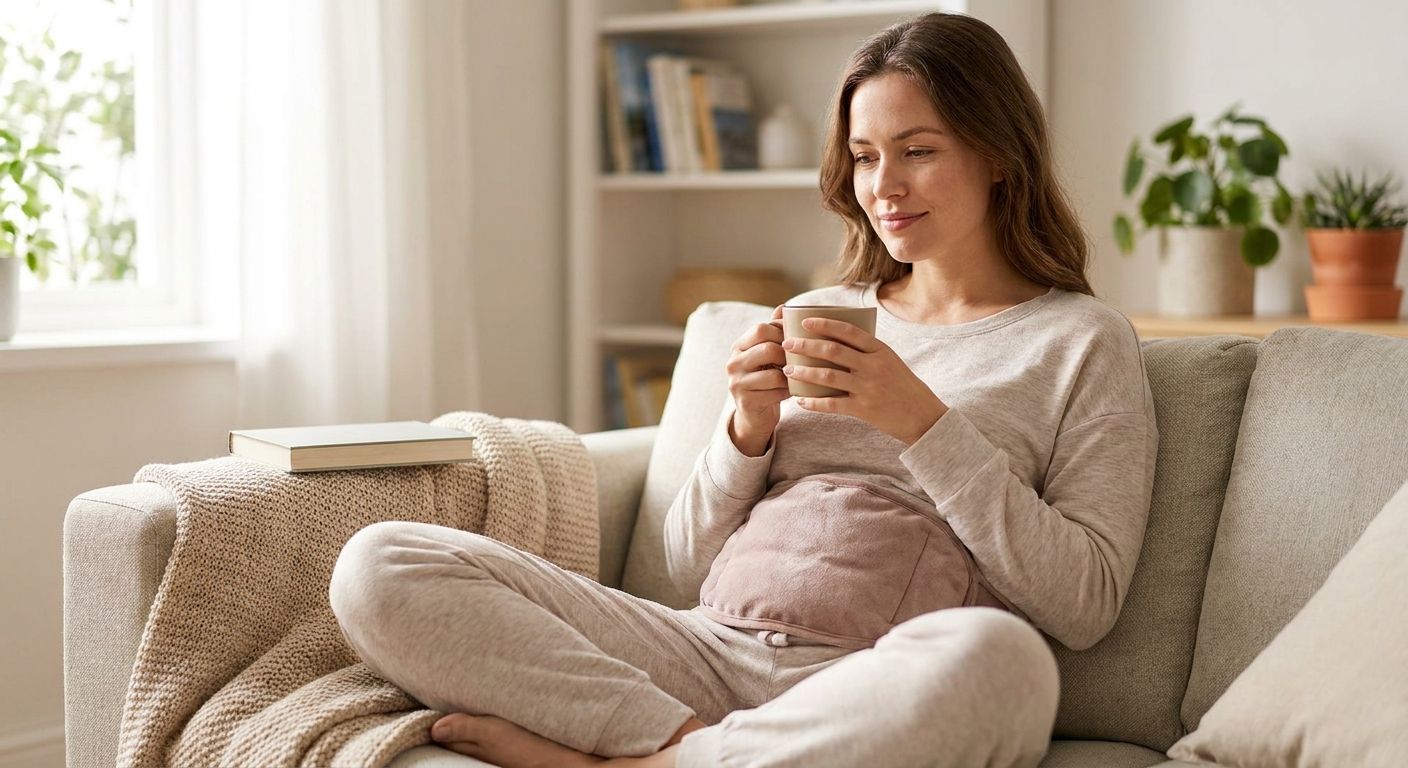
Postpartum afterpains hit like period cramps turned up a notch, and a menstrual heat belt built for period pain works on that same uterine cramping in the weeks after birth. New mothers deal with a sharper, more concentrated cramp than a typical period because the uterus is contracting fast to shrink back down, so the heat needs to be steady and hands-free rather than a bottle you have to keep repositioning.
- A menstrual heat belt for postpartum cramps targets uterine afterpains the same way it targets period cramps, with shorter, gentler sessions.
- Breastfeeding triggers extra cramping from oxytocin release, so timing heat sessions around feeds cuts the sharpest afterpains.
- Never place a heat belt directly over a C-section incision until it is healed and cleared by a doctor.
- Run the lowest heat setting for the first 10-14 days; postpartum tissue is more sensitive than during a normal cycle.
- A rechargeable belt beats a hot water bottle postpartum because it stays hands-free during feeds and night wakings.
Why heat therapy matters for postpartum recovery
Afterpains are the uterus doing its job: contracting back down to pre-pregnancy size over roughly the first one to two weeks after birth. Breastfeeding mothers feel this more intensely because nursing releases oxytocin, the same hormone that drives labour contractions, so cramps can spike mid-feed with no warning.
This is a different physical state to a regular period. Postpartum bodies are healing tissue, managing bleeding, and running on broken sleep, so a hands-free, low-maintenance heat source matters more here than during a normal cycle. A best heat belt for period cramps is built for continuous, low-effort heat, which is why it transfers well to postpartum use once a doctor or midwife gives the go-ahead.
Medication options also narrow while breastfeeding. Some pain relievers get flagged by pharmacists during lactation, which pushes more new mothers toward heat as a non-drug first option in 2026 postpartum care plans.
Time heat sessions around feeding and sleep
Afterpains cluster around breastfeeding sessions in the first week, so build the heat routine into the feeding routine instead of treating it as a separate task.
- Start a 15-20 minute session as a feed begins, since that is when oxytocin-triggered cramping peaks
- Keep the belt charged and within reach of the nursing chair or bed, not in a drawer across the room
- Use lower settings overnight so a half-asleep adjustment does not leave it too hot for too long
- Pair heat with a change of nursing position if cramping is sharp on one side
Choose the right heat setting for postpartum sensitivity
Postpartum skin and abdominal tissue are more sensitive than usual, especially in the first 10-14 days.
- Start on the lowest available setting for the first week regardless of how the cramps feel
- Increase gradually only if the low setting is not touching the pain after several sessions
- Avoid sleeping with the belt on its highest setting; long and low beats short and hot
- Stop and reassess if skin looks red or feels irritated after removing the belt
Position the belt correctly over the lower abdomen
Afterpains sit lower and more central than typical period cramps, closer to the pelvic floor than the upper abdomen.
- Centre the belt just below the navel, over the site of uterine contraction
- Keep it snug but not compressive, since postpartum swelling changes what counts as too tight
- After a vaginal birth with no abdominal incision, standard placement works once a midwife or GP clears it
- After a C-section, keep heat off the incision line entirely until a doctor confirms it is safe
Combine heat with rest, hydration and gentle movement
Heat alone will not out-work exhaustion and dehydration, both of which make cramping feel worse.
- Drink water before and after each session, since dehydration tightens muscle tension generally
- Rest reclined during the session rather than standing or bouncing a baby
- Add short, gentle walks once mobile again to help the uterus contract down
- Track cramping day to day, not session to session, since the goal is a gradual decline across the first two weeks
Learn how the belt works before postpartum use
The tolerances for heat and timing are tighter here than during a normal period. The how-to guide for using a heated period belt for cramps covers charge cycles, heat zones and session length, and all of it carries over postpartum with the caveat that week-one sessions should run shorter and cooler.
Charge and maintain the belt for overnight use
A dead battery at 2am during a feed defeats the entire point of a hands-free heat belt.
- Charge fully before it goes into a hospital bag or bassinet-side bag
- Keep the cable with the nursing supplies so it is never misplaced
- Wipe the belt down between uses, since postpartum sweating is heavier in the first weeks
- Check the battery indicator before each overnight session instead of assuming there is charge left
Know when heat is not enough and escalate
Heat manages normal afterpain, not infection or complications.
- Fever, foul-smelling discharge, or pain that sharpens instead of easing means calling a midwife or GP, not adding more heat
- Pain that spikes at a C-section incision site needs medical review before any heat goes near it
- Cramping that has not eased at all by the two-week mark is worth flagging at a postpartum check
- Heavy bleeding alongside cramping is always a reason to contact a provider
Comparing heat options for postpartum cramps
| Option | Best for | Key limitation |
|---|---|---|
| Rechargeable heat belt | Hands-free use during feeds and overnight | Needs charging ahead of time; useless if the battery dies |
| Hot water bottle | Quick daytime relief with no charging | Refilling and repositioning constantly, riskier around a baby |
| Corded electric heating pad | Longer continuous sessions at home | Tethered to a wall outlet, impractical for night feeds |
| Disposable heat patches | Discreet heat under clothing during the day | Single-use, less adjustable, ongoing replacement cost |
| Provider-cleared pain relief | Breaks in cramping between heat sessions | Requires a pharmacist or doctor check while breastfeeding |
A rechargeable menstrual heat belt wins for postpartum cramps because it is the only option here that stays on hands-free through a full overnight feed with no refilling and no power cord.
Common mistakes new mothers make with heat therapy
- Applying heat directly over a healing C-section incision before a doctor has cleared it, which risks irritating the wound
- Cranking the highest setting to chase faster relief instead of running a longer session on low, which is gentler on healing tissue
- Treating red flags as ordinary afterpain and adding more heat when fever or worsening pain calls for a provider
- Ignoring hydration and rest and expecting heat to fix cramping that exhaustion is making worse
- Leaving the belt uncharged and finding it dead mid-feed, exactly when hands-free relief matters most
FAQ
What causes cramps after having a baby?
Postpartum cramps, called afterpains, come from the uterus contracting back down to its pre-pregnancy size over roughly the first one to two weeks. Breastfeeding intensifies them because nursing releases oxytocin, the same hormone that drives labour contractions.
Is it safe to use a heat belt after a C-section?
Heat is safe on the lower abdomen away from the incision once a doctor confirms the wound is healing normally, but it should never sit directly over a recent incision. Get medical clearance before resuming heat therapy after a C-section.
How soon after birth can you use a heating belt for cramps?
After an uncomplicated vaginal birth, low-heat therapy is generally fine from day one once a midwife or GP confirms there is nothing unusual to watch. After a C-section, wait for specific clearance on timing and placement.
Can heat make postpartum bleeding worse?
Heat therapy targets muscle cramping and should not meaningfully change postpartum bleeding on its own. Any sudden increase in bleeding alongside heat use is a reason to stop and contact a provider.
How long do postpartum afterpains last?
Afterpains typically ease over the first one to two weeks after birth as the uterus finishes contracting down. Cramping that has not improved at all by the two-week mark is worth raising at a postpartum check.
Is a menstrual heat belt better than a hot water bottle for postpartum cramps?
A rechargeable menstrual heat belt beats a hot water bottle postpartum because it stays on hands-free through feeds and overnight with no refilling. A hot water bottle still works for quick daytime relief when your hands are free.
How often should you use a heat belt postpartum?
Sessions of 15-20 minutes timed around feeds work well in the first two weeks, on the lowest heat setting rather than the highest. Space sessions out instead of leaving the belt on continuously for hours.
What should you look for in a heat belt that works both for periods and postpartum?
Look for a rechargeable belt with multiple heat settings including a genuine low option, because postpartum tissue needs gentler heat than a regular period. Adjustable settings matter more than raw heat output.
One last thing
The detail most new mothers miss in 2026: afterpains often feel worse with a second or third baby than with the first, because the uterus has contracted down before and does it more forcefully each time. Sharper cramping after a later pregnancy is a known pattern rather than a sign something has gone wrong, but it still belongs on the list at your postpartum check if it does not ease on schedule.