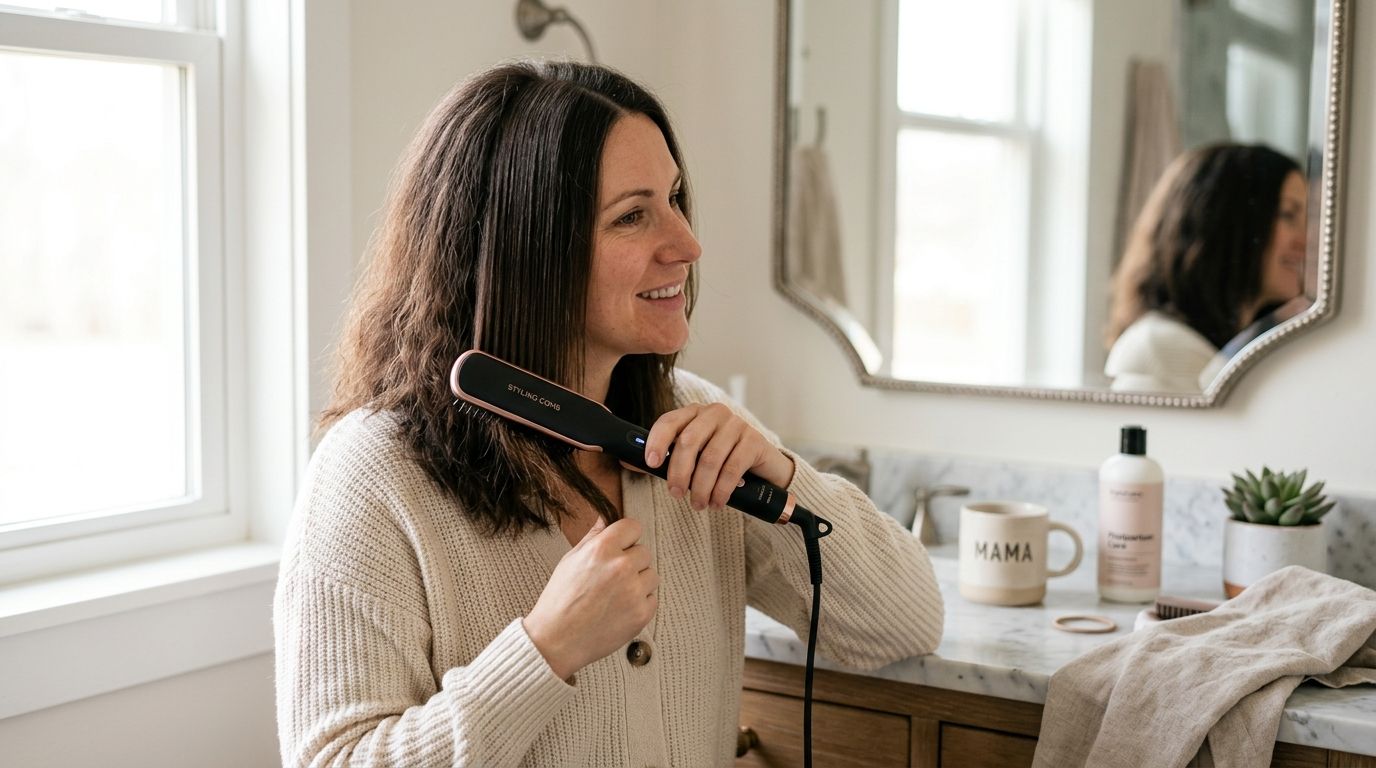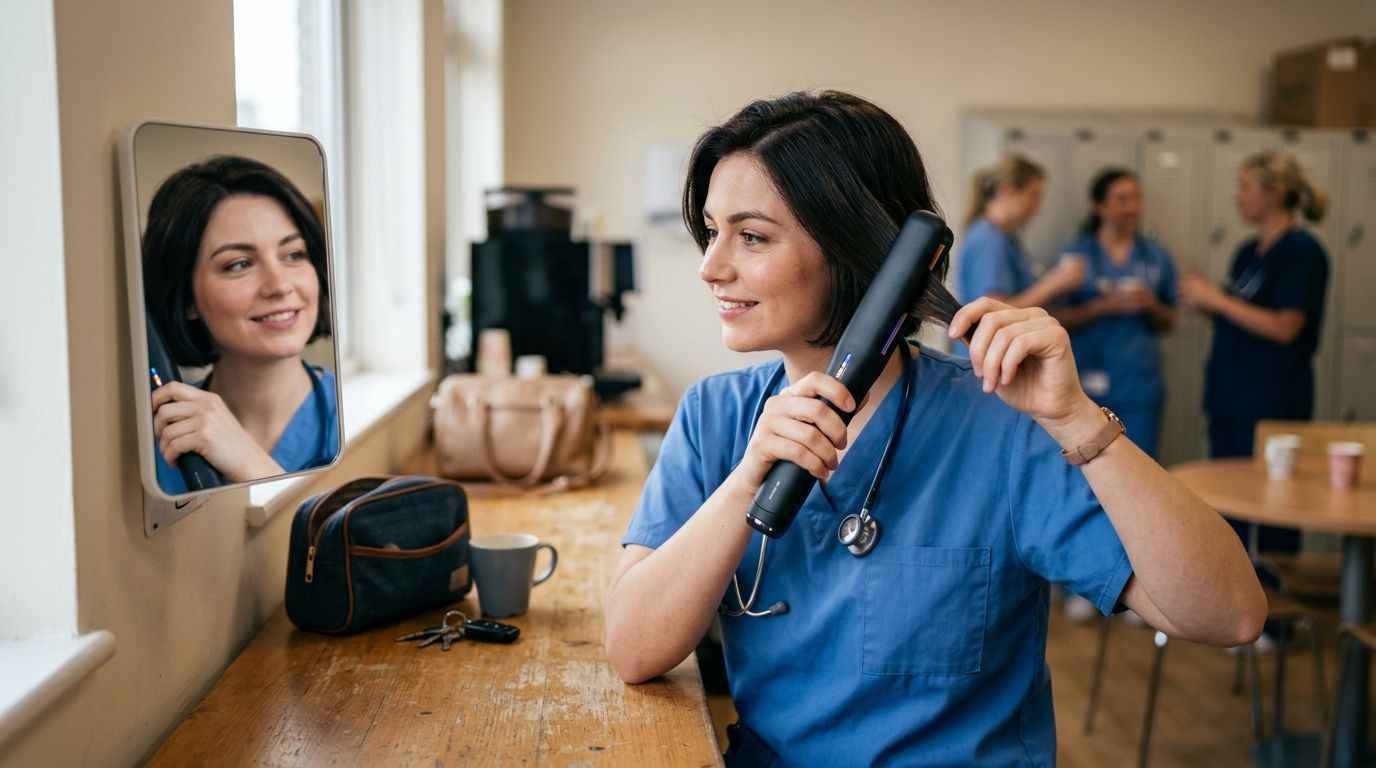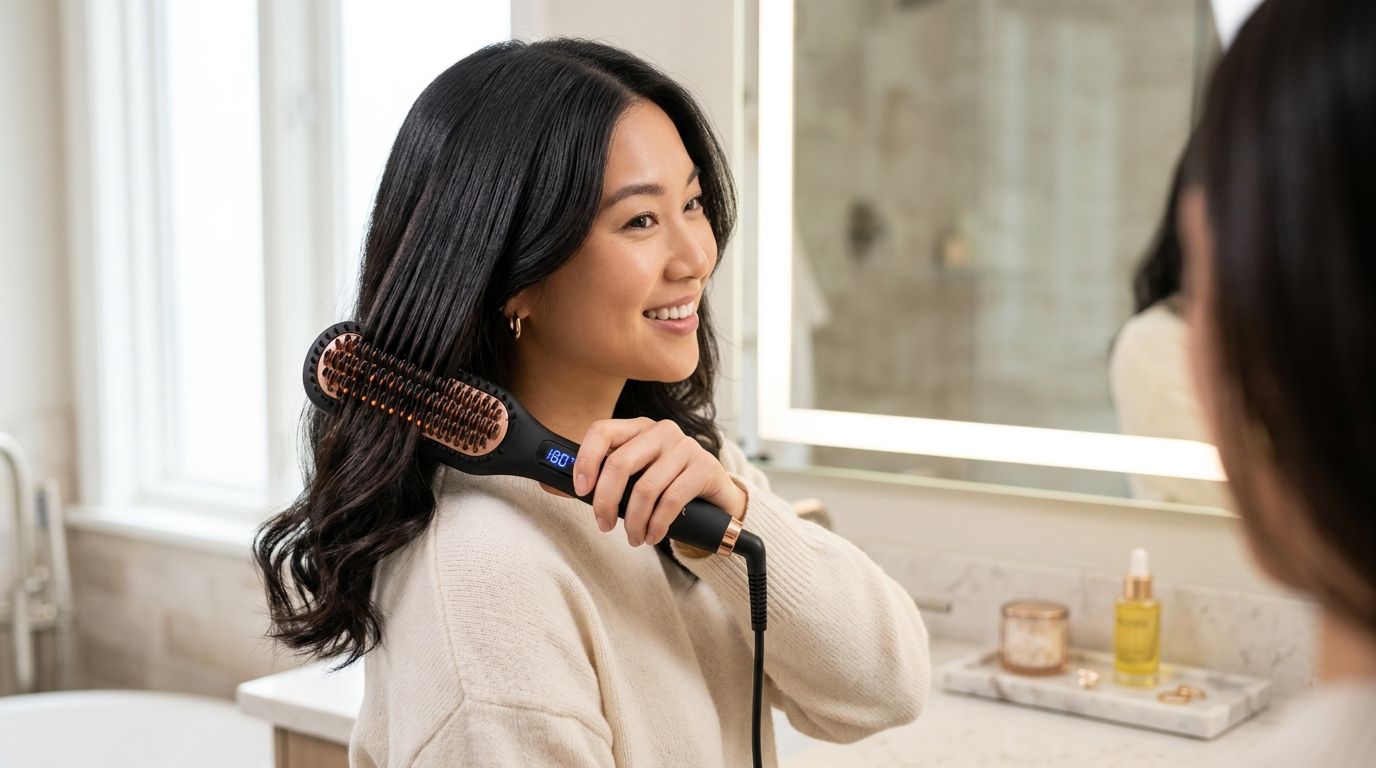
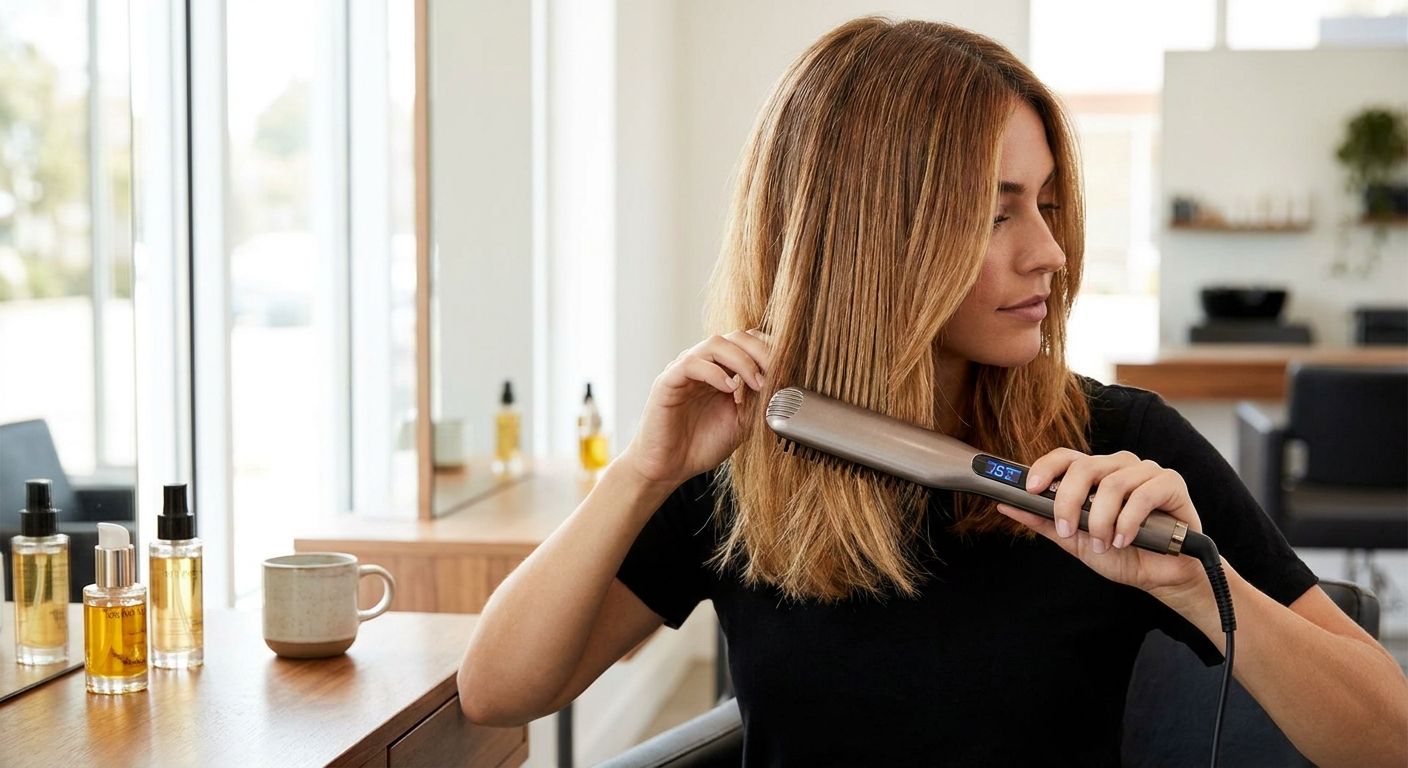
A straightening brush for color-treated hair is a heated styling tool built to smooth strands without stripping dye or drying out hair that's already been through chemical processing. Color-treated strands lose cuticle integrity during lightening or tinting, so they need lower heat, slower passes, and more protection than virgin hair ever will.
- Color-treated hair needs a straightening brush that runs cooler (around 160-190°C) to protect dye vibrancy in 2026.
- Ceramic or tourmaline plates cause less friction on chemically processed cuticles than metal plates.
- Heat protectant before every pass is non-negotiable for color-treated hair, not optional.
- Napio's electric hair straightening comb suits color-treated hair when paired with lower settings and slower styling speed.
- Styling more than 3-4 times a week on color-treated hair accelerates fade and breakage.
Why a straightening brush matters for color-treated hair
Color-treated hair is more porous than untreated hair. The lightening or dyeing process opens the cuticle layer, and once it's open, moisture escapes faster and heat penetrates deeper with less resistance. That's why the same straightening session that leaves virgin hair fine can leave color-treated hair frizzy, brassy, or brittle within weeks.
A flat iron clamps hair between two plates and concentrates heat in one pass, which is exactly the wrong move for porous, color-treated strands. A straightening brush distributes heat across bristles and plate simultaneously, so the hair sees less direct, sustained contact per pass. That difference matters more for color-treated hair than for any other hair type, because color-treated cuticles have less natural defense left to absorb heat damage.
Searches for hair tools built specifically for treated or damaged hair have grown alongside at-home color kits and salon color maintenance routines through 2026, as more people stretch salon visits and manage upkeep themselves.
Update your heat settings
Most straightening brushes on the market default to 200°C or higher, a setting built for virgin or coarse hair. Color-treated hair rarely needs that much heat to look smooth.
- Start at the lowest setting your brush offers and only increase if hair resists after two passes
- Keep sessions between 160-190°C for fine to medium color-treated hair
- Reserve anything above 190°C for thick, resistant color-treated hair only, and even then, limit it to root sections
- Never style on the highest setting "to save time" — it costs you color vibrancy within a month
- Check your brush's temperature display before every session, not just the first time you used it
Apply a heat protectant every time
Skipping heat protectant on color-treated hair is the single fastest way to turn a semi-permanent dye job into a faded, uneven mess.
- Use a leave-in heat protectant spray rated for temperatures up to at least 200°C
- Apply to damp or fully dry hair, never to soaking wet strands
- Focus extra product on ends and previously bleached sections, where porosity is highest
- Reapply if you're re-styling later the same day
- Skip protectants with high alcohol content — they dry color-treated hair further
Section hair before you style
Working through hair in large chunks forces you to pass the brush over the same section multiple times, which multiplies heat exposure on color-treated strands.
- Divide hair into four to six sections using clips
- Start at the nape and work upward
- Keep each section no wider than one inch for even heat distribution
- Never re-pass a section more than twice per styling session
- Let the brush glide, don't press it into the scalp or hairline
Space out your styling sessions
Color fades every time hair is exposed to heat, water, or UV — that's basic chemistry, not marketing. Color-treated hair holds vibrancy longer with fewer heat sessions per week.
- Limit heat styling to three to four times a week for color-treated hair
- Use no-heat methods (braids, rollers, buns) on off days
- Wash less frequently with a color-safe, sulfate-free shampoo to stretch time between styles
- Track how your color looks two weeks after a color service — that's your real fade baseline, not day one
When a lower-heat routine and a protectant aren't enough on their own, an electric hair straightening comb from Napio is built around slower, more even heat transfer than a traditional flat iron, which gives color-treated hair one less point of stress in the routine. The brush format doesn't replace good heat discipline — it works alongside it.
Clean the plates regularly
Product buildup on plates transfers oils and old protectant residue back into hair on every pass, which can dull color and cause uneven heat spots.
- Wipe plates down with a damp microfiber cloth after each use, once cool
- Deep clean weekly with a drop of gentle cleanser on a cloth, never submerging the tool
- Check bristles for trapped product before you style, not after
- Avoid alcohol-based cleaners on ceramic or tourmaline coatings — they wear the coating down over time
A full walkthrough on plate care lives in this guide to cleaning a heated hair straightening comb, which applies whether you're using a comb or a brush.
Protect against cumulative heat damage
Damage from heat styling compounds silently — you don't see it until split ends and breakage show up weeks later, and by then the color has usually already gone patchy too.
- Do a strand test on a hidden section before trying a new heat setting
- Deep condition weekly with a color-safe mask, not just after wash day
- Trim split ends every eight to ten weeks so damage doesn't travel up the shaft
- Track how your hair feels 24 hours after styling — tight, dry strands mean the heat was too high
A more detailed breakdown of damage prevention specific to straightening brushes sits in this guide on preventing heat damage with a straightening brush.
Comparison: styling options for color-treated hair
| Option | Best for | Key limitation |
|---|---|---|
| Straightening brush (ceramic/tourmaline) | Color-treated hair needing daily-ish smoothing with lower heat exposure | Slower per-section than a flat iron on very thick hair |
| Traditional flat iron | Fast, sleek results on resistant or coarse hair | Concentrated heat on clamped strands accelerates color fade |
| Keratin/smoothing treatment | Long-lasting frizz control between heat styling | Chemical process itself can strip fresh color if done too soon after dyeing |
| No-heat rollers or braid-outs | Color-treated hair on rest days from heat | Results are less sleek and take longer to set |
A straightening brush at a lower heat setting is the safest daily option for color-treated hair among these four — a flat iron on high heat is the option to skip.
Common mistakes with color-treated hair
- Styling right after a color service. Freshly treated hair is at its most porous in the first 48-72 hours; heat styling this early strips vibrancy fast.
- Using the same heat setting as before the color change. Hair that tolerated 210°C pre-color often can't handle it post-color without breaking.
- Ignoring purple or blue shampoo build-up on the brush. Toning shampoo residue on plates transfers unevenly and can cause color banding.
- Skipping protectant on "quick touch-ups." A five-minute fix does the same cuticle damage as a full styling session.
- Washing hair the day of a heat styling session. Damp roots and dry ends heat unevenly, stressing the most fragile, color-treated sections hardest.
FAQ
What temperature should I use on a straightening brush for color-treated hair?
Keep color-treated hair between 160-190°C on a straightening brush. Fine or previously bleached hair should stay at the lower end, closer to 160°C, while thicker color-treated hair can tolerate up to 190°C.
Is a straightening brush better than a flat iron for color-treated hair?
Yes, for color-treated hair a straightening brush is generally gentler because it spreads heat across bristles instead of clamping strands directly between two hot plates. A flat iron on high heat concentrates damage faster on already porous, color-treated cuticles.
How often can I use a straightening brush on color-treated hair?
Three to four times a week is a reasonable ceiling for color-treated hair in 2026. Styling daily on heat accelerates color fade and increases breakage risk over a matter of weeks.
Does a straightening brush damage dyed hair?
Any heat tool can damage dyed hair if the setting is too high or protectant is skipped, but a straightening brush used at 160-190°C with a heat protectant causes less cumulative damage than a high-heat flat iron pass.
Can I use a straightening brush right after coloring my hair?
Wait at least 48-72 hours after a color service before heat styling. Freshly treated hair is at its most porous and heat styling too soon accelerates fade.
What plate material is best for color-treated hair?
Ceramic and tourmaline plates cause less friction and more even heat distribution than bare metal plates, which matters most on already-porous, color-treated hair.
Should I use a heat protectant with a straightening brush?
Yes, always, and this matters more for color-treated hair than any other hair type. A leave-in heat protectant rated for at least 200°C should go on before every single styling session.
How do I clean a straightening brush used on color-treated hair?
Wipe plates and bristles with a damp microfiber cloth after each use once the tool has cooled, and do a deeper weekly clean with a gentle cleanser. Buildup from toning shampoos and heat protectants can transfer unevenly onto hair on the next pass.
One last thing
The detail most people miss on color-treated hair isn't the heat setting — it's the 48-72 hour window right after a color service. Hair is at peak porosity in that window, and a single high-heat pass during it does more visible fade damage than a full week of properly-tempered daily styling afterward. Wait it out, then style at 160-190°C with protectant, and the color holds noticeably longer through 2026's drier winter months when hair already loses moisture faster.