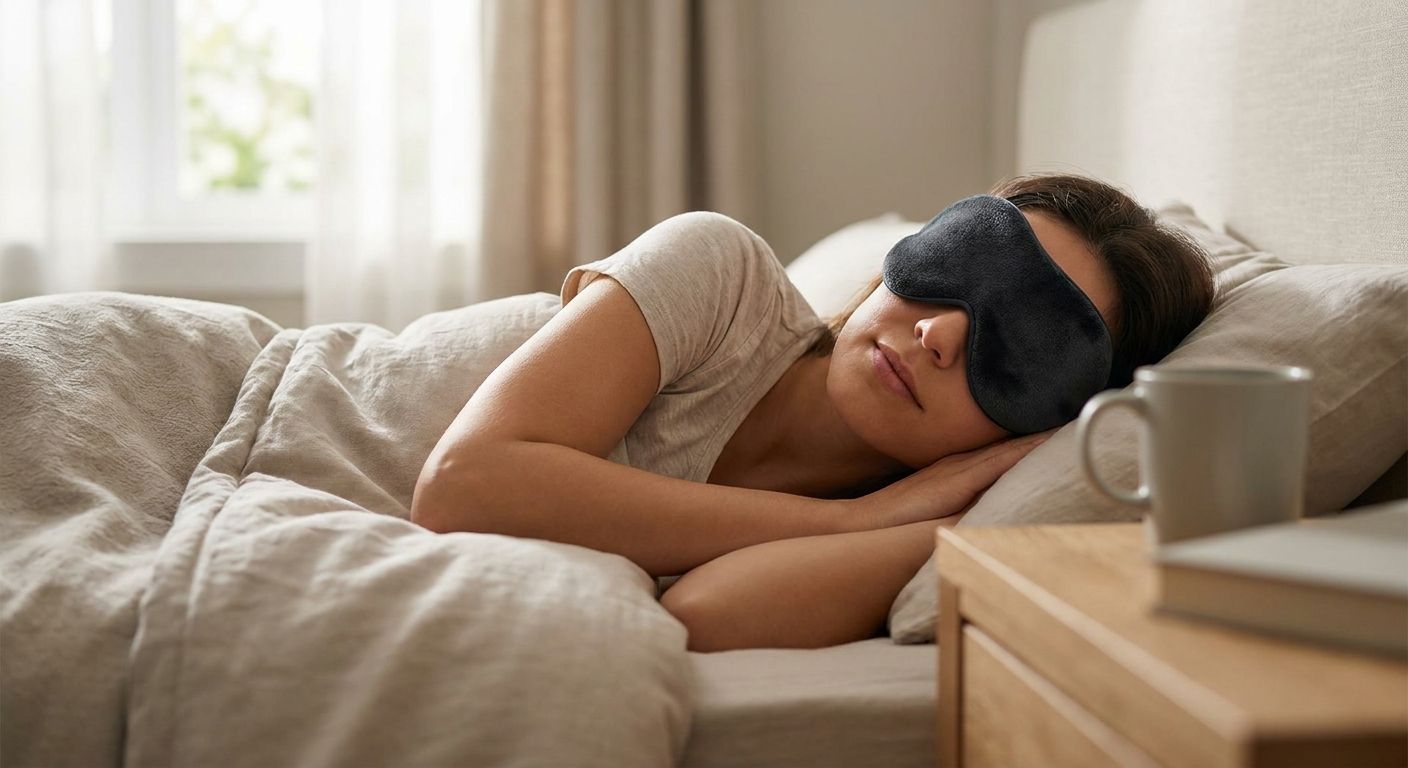
If light gets through around your nose or temples, no amount of "100% blackout" marketing on the box matters — the mask has already failed its one job. The best blackout eye mask for light sleepers in 2026 seals against your face at the bridge, temples and cheekbones while staying comfortable enough to survive eight hours without you tearing it off at 3am.
- Contoured full-blackout designs win overall for light sleepers who need zero photon leakage at the nose and temples.
- Weighted eye masks add gentle pressure that helps migraine-prone and chronic insomnia sleepers specifically, not just block light.
- Compact flat masks travel best but let in more light than molded-cup designs — a real trade-off, not a flaw to ignore.
- Basic silk masks are the budget pick, but expect visible light leak compared to a proper blackout eye mask for light sleepers.
Why this matters
Light sensitivity during sleep isn't a personality quirk — it's a measurable disruption to how fast you fall asleep and how many times you wake overnight. Shift workers sleeping through daylight hours and anyone with a partner who reads on their phone at midnight know the problem intimately: a few stray lumens through a gap at the nose bridge is enough to pull you out of deep sleep.
Napio builds several of its sleep and recovery products around this exact gap between "looks opaque" and "actually blocks light," and the eye mask category is where that gap shows up most. A flat piece of fabric held on with elastic rarely seals against a real human face — cheekbones, nose shapes and eyelash length all vary, and most masks are built to one average shape.
What makes the best blackout eye mask
Before ranking anything, here's what actually separates a mask that works from one that just photographs well:
- Full peripheral seal — no gap at the nose bridge, temples or under the eyes when you turn your head
- Contoured eye space — cups or molded panels keep fabric off your eyelids so you can blink and REM-sleep normally
- Adjustable strap system — a single elastic band fits nobody consistently; look for split straps or velcro adjustment
- Breathable material — synthetic blends that trap heat wake hot sleepers just as fast as light does
- Washability — a mask against your face nightly needs to survive a wash cycle without losing its shape
- Weight, if it applies — weighted masks add pressure for a reason beyond blackout; that reason should match your actual problem (migraine vs. general insomnia)
At a glance
| Item | Best for | Standout feature | Key limitation |
|---|---|---|---|
| Contoured full-blackout mask | Total light blockage | Molded cups seal at nose and temples | Bulkier profile, tighter fit on smaller faces |
| Weighted sleep mask (migraine-focused) | Migraine-prone sleepers | Even pressure across the orbital bone | Added weight feels warm to some sleepers |
| Weighted eye mask (insomnia-focused) | Chronic insomnia | Deep, consistent pressure for nightly wear | Not a substitute for treating the underlying insomnia |
| Compact travel eye mask | Frequent travelers | Packs flat, lightweight in a carry-on | Thinner padding lets in more light than contoured cups |
| Basic silk sleep mask | Budget buyers | Cheap, breathable against skin | Minimal blackout performance, straps slip overnight |
Best overall: the contoured full-blackout mask. Best for migraine-prone sleepers: the weighted sleep mask. Best for chronic insomnia: the weighted eye mask built for nightly wear. Best for travel: the compact flat mask. Best budget option: a basic silk mask, with the caveat that light leak is the trade-off.
1. Contoured blackout mask: best blackout eye mask for total light blockage
This is the design Napio's blackout eye mask for shift workers page is built around, and it's the right starting point for anyone whose main complaint is light, full stop — not headaches, not travel convenience, just light getting in.
The mask uses molded eye cups instead of flat fabric, so the material never touches your eyelids and the seal sits against bone rather than skin. That's what keeps light from creeping in at the nose bridge, which is where almost every cheap mask fails.
Contoured blackout mask pros:
- Seals at the nose bridge and temples where flat masks gap
- Cups stay off the eyelids, so you can blink and move your eyes during REM sleep
- Works for shift workers sleeping through full daylight hours
Contoured blackout mask cons:
- Bulkier than a flat silk mask, less packable
- Molded cups can feel tight if your face is on the smaller side
Best for: light sleepers who need total blackout, especially daytime sleepers and shift workers. Verdict: Buy.
2. Weighted sleep mask: best blackout eye mask for migraine-prone sleepers
Napio's weighted sleep mask for migraines page targets a narrower problem than pure light blockage: gentle, even pressure across the eyes and forehead, the kind some migraine sufferers find calming during an episode or as a wind-down routine before sleep.
The weight itself — usually distributed glass beads or microbeads sewn into the fabric — is what separates this from a standard mask. It's not there for blackout performance; it's there for the pressure.
Weighted sleep mask pros:
- Even pressure distribution across the orbital bone, not just the eyes
- Doubles as a wind-down tool before sleep, not only a blackout device
- Contoured versions still block light effectively
Weighted sleep mask cons:
- The added weight isn't comfortable for every sleeper
- Can feel warm for anyone who runs hot at night
Best for: sleepers who deal with migraines or tension headaches alongside light sensitivity. Verdict: Buy.
3. Weighted eye mask for insomnia: best blackout eye mask for nightly, long-term wear
Napio's weighted eye mask for insomnia page frames the same weighted design around a different problem: consistency. If you're wearing a mask every single night as part of an insomnia routine, durability and washability matter more than they do for occasional use.
This pick prioritizes strap adjustability and a washable cover over the migraine-specific pressure angle above — the goal is a mask you can wear nightly for months without the elastic stretching out or the fabric matting.
Weighted eye mask (insomnia) pros:
- Built for nightly rotation, not occasional use
- Adjustable strap holds fit over months of wear
- Weighted design supports a wind-down routine, not just blackout
Weighted eye mask (insomnia) cons:
- Won't fix insomnia on its own — it's one part of a routine, not a treatment
- Same warmth trade-off as any weighted design
Best for: anyone managing chronic insomnia who wears a mask as part of a nightly routine. Verdict: Buy.
4. Compact travel eye mask: best blackout eye mask for frequent flyers
Napio's eye mask for travel sleep design trades some blackout performance for packability. It folds flat into a carry-on pocket and weighs next to nothing, which matters when you're trying to sleep upright on a red-eye with cabin lighting that never fully dims.
It's a deliberately thinner build than the contoured mask above, and that's the honest trade-off: less bulk, slightly more light leak at the edges.
Compact travel mask pros:
- Packs flat, barely noticeable in a bag
- Lightweight enough for hours of continuous wear on a flight
- Good backup mask for a hotel room with poor blackout curtains
Compact travel mask cons:
- Thinner padding lets in more light than a contoured cup design
- Less effective as your only mask if you're a genuinely light-sensitive sleeper at home
Best for: frequent travelers who need something packable more than they need full blackout. Verdict: Buy for travel, skip as your everyday mask.
5. Basic silk sleep mask: best blackout eye mask on a budget
A flat silk mask with a single elastic band is the cheapest way into this category, and it's fine for someone who wants softness against the skin more than they need engineered light blockage.
It won't seal at the nose bridge the way a contoured mask does, and the single elastic strap tends to slip during the night, especially for side sleepers.
Basic silk mask pros:
- Cheapest entry point in the category
- Breathable and gentle against skin
- Lightweight for short naps or light-sensitivity that's mild, not severe
Basic silk mask cons:
- Minimal blackout performance compared to contoured or weighted designs
- Straps slip overnight, especially for side sleepers
- No contouring around the eyes
Best for: occasional use or mild light sensitivity, not chronic light-sleeping problems. Verdict: Hold — fine as a spare, not your primary mask.
“If light gets through around your nose, the mask is the wrong size, not the wrong brand.”
How we ranked these
Each pick above was measured against the six criteria from the top of this guide: peripheral seal, eye contouring, strap adjustability, breathability, washability and — where relevant — whether the weight actually serves a purpose beyond blackout. The contoured mask ranks highest because it's the only design solving the actual problem in "best blackout eye mask for light sleepers" — total light blockage — without a trade-off elsewhere.
Which blackout eye mask should you choose?
If you're a light sleeper with no other complaint, the contoured full-blackout mask is the default choice for 2026 — it seals where flat masks gap and doesn't ask you to trade comfort for blackout performance. If migraines or chronic insomnia are part of the picture, move to a weighted design matched to that specific need. Travelers should keep a compact mask as a second option, not a replacement. Skip the basic silk mask unless budget is the only variable that matters.
FAQ
What is the best blackout eye mask for light sleepers in 2026?
A contoured mask with molded eye cups that seals at the nose bridge and temples is the best blackout eye mask for light sleepers in 2026, because flat fabric masks almost always gap at the nose. Weighted versions add value only if migraines or insomnia are also a factor.
Are weighted eye masks better than regular blackout masks?
Weighted eye masks aren't better at blocking light — they're built for a different problem, adding gentle pressure that can help migraine-prone or chronic insomnia sleepers. For pure light blockage, a contoured non-weighted mask is usually the better fit.
How much light leak is normal with a cheap sleep mask?
Basic flat masks with a single elastic band typically leak light at the nose bridge and cheekbones because they aren't contoured to a face shape. A quick test is holding a phone flashlight near your closed eyes in a dark room while wearing the mask.
Do blackout eye masks work for shift workers sleeping during the day?
Yes, a full-blackout contoured mask is one of the most effective tools for shift workers because daytime sleep already fights against natural light cycles. The seal at the temples and nose bridge matters more for daytime sleepers than for anyone sleeping at night with curtains drawn.
What's the difference between an eye mask for travel and an everyday sleep mask?
Travel eye masks are built thinner and more packable, which trades off some blackout performance for portability. An everyday mask for a light-sensitive sleeper should prioritize the seal over how flat it folds.
Can a weighted eye mask help with insomnia?
A weighted eye mask doesn't treat insomnia directly, but the even pressure across the eyes can support a wind-down routine as part of managing it. It works best as one piece of a nightly routine, not a standalone fix.
How do I know if my eye mask fits properly?
A properly fitted mask shows no light leak at the nose bridge, temples or under the eyes when tested with a flashlight in a dark room. If the strap needs constant readjusting through the night, the fit is wrong regardless of the mask's blackout rating.
One last thing
Run the flashlight test before trusting any "100% blackout" label: sit in a dark room, put the mask on, and have someone shine a phone flashlight at your nose bridge and temples from a few inches away. If you can see any light through your closed eyelids, the mask's design has already failed the one job it's meant to do — no amount of fabric density fixes a bad seal.