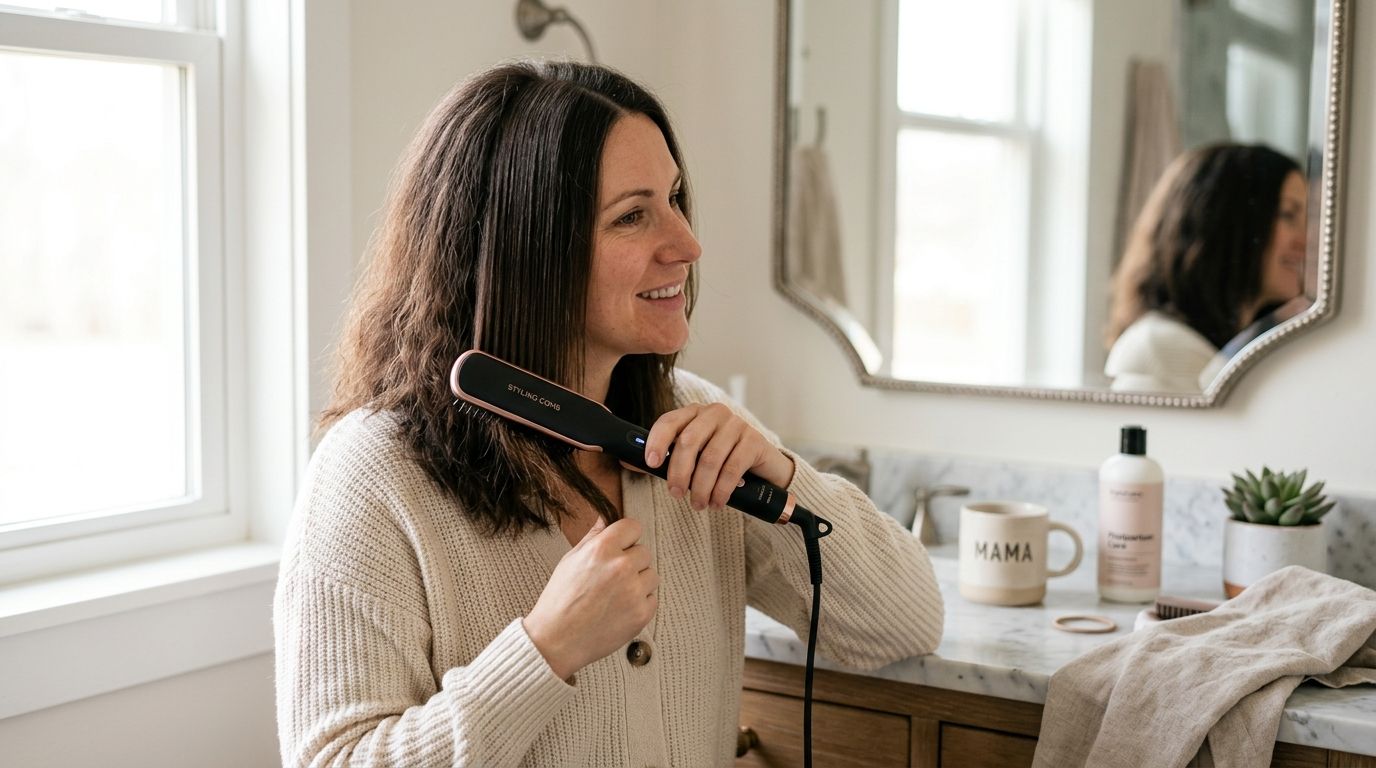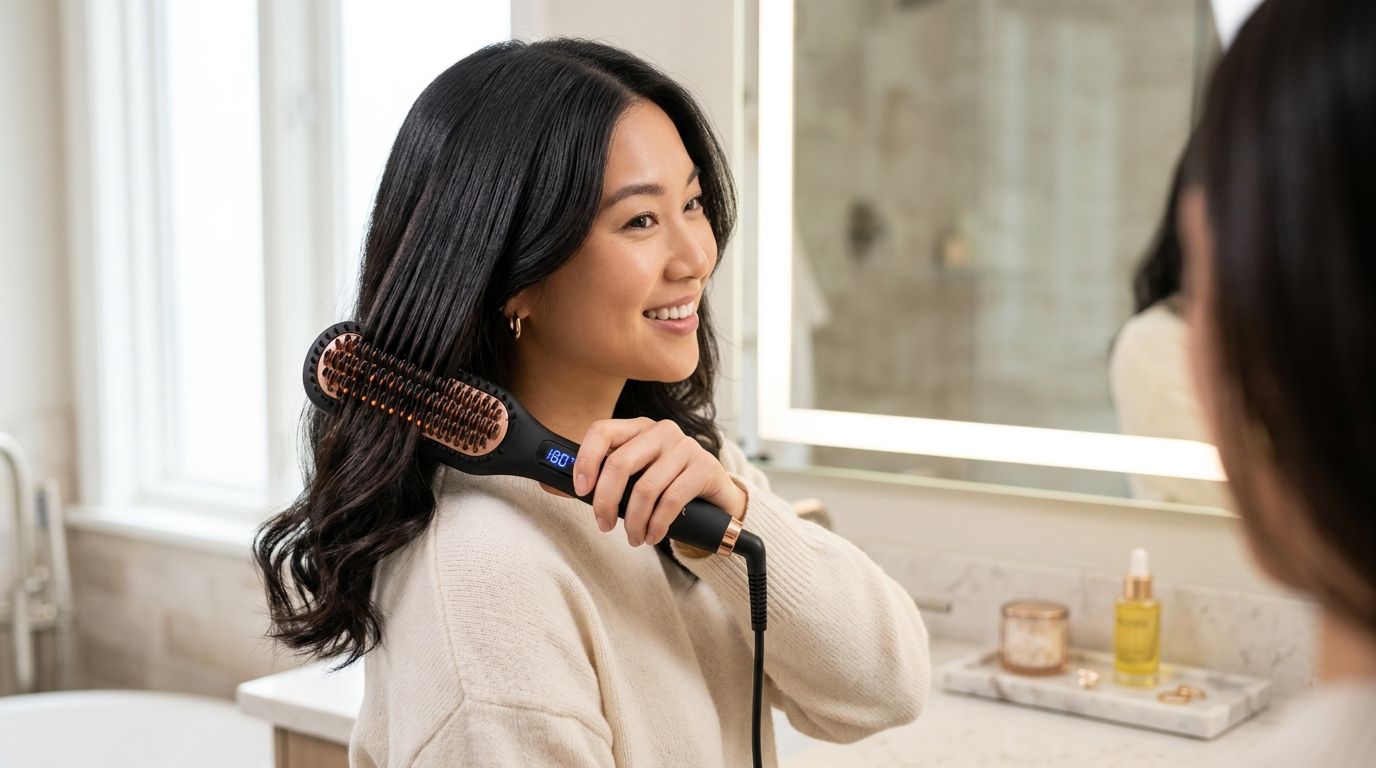
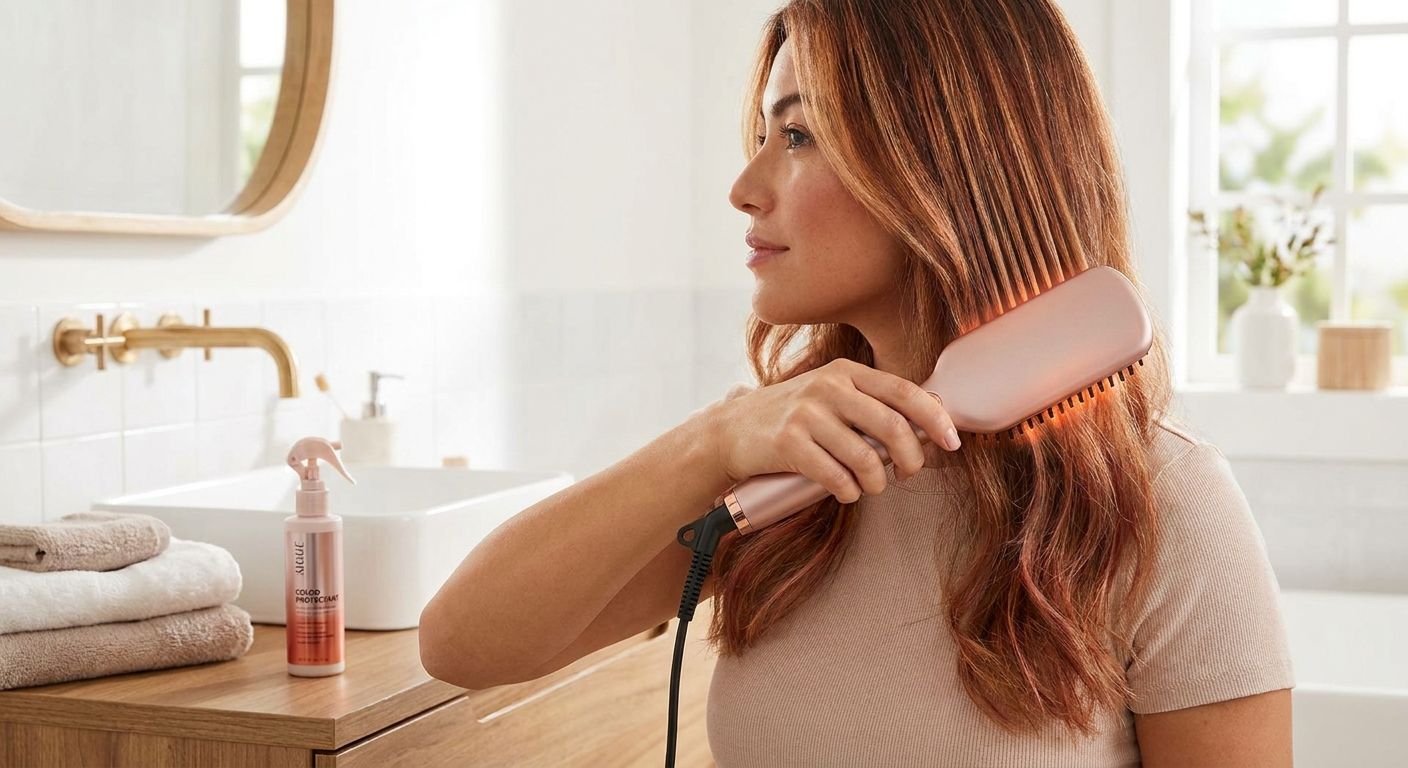
A heated hair brush for color-treated hair works best when it runs on adjustable, lower-heat settings (330F or below) and uses ceramic or tourmaline plates that spread heat evenly instead of scorching one section. Colour-treated strands have already lost cuticle integrity from bleach or dye, so the tool has to smooth hair without stripping more moisture or fading pigment.
- A heated hair brush for color-treated hair should run at 330F or lower to protect pigment and moisture.
- Ceramic or tourmaline plates spread heat evenly and reduce the hot spots that fade colour faster.
- Heat protectant plus a weekly deep conditioner matters more in 2026 than the brush model itself.
- Napio builds its straightening comb line with adjustable heat for colour-treated and fine hair.
- Skip daily use on bleached hair. Two to three sessions a week limits cumulative damage.
Why this matters
Colour-treated hair is chemically altered hair. Bleach and dye open the cuticle to lift or deposit pigment, and that process leaves the shaft more porous and more prone to protein loss than virgin hair. Run a 450F flat iron over that structure daily in 2026 and you are not styling. You are accelerating fade and breakage at the same time.
The fix is not avoiding heat tools. It is picking one built for lower, controlled temperatures and using it with a routine that protects what your colourist already did.
Why heated brushes matter for colour-treated hair
Colour-treated hair behaves differently under heat. Porosity is higher, so it absorbs heat faster and hits damage-threshold temperatures sooner than most people expect. A straightening brush for color-treated hair with a genuine low-heat setting, not just a low label on a tool that still runs hot, gives you a wider margin before dullness and split ends show up.
Styling frequency is the second factor. Anyone maintaining fresh colour is also stretching time between salon visits, which means the same brush gets used several times a week. A tool gentle enough for that cadence, paired with a plan to prevent heat damage with a straightening brush, keeps colour looking salon-fresh instead of washing out inside six weeks.
Verdict: an adjustable low-heat brush with ceramic plates is the safest regular-use option for colour-treated hair in 2026. A fixed high-heat flat iron is not.
Set the right temperature for your colour type
Not every colour-treated head needs the same ceiling. Bleached and highlighted hair is the most porous and needs the lowest settings. Single-process colour has more room.
- Bleached or highlighted hair: 300-330F maximum
- Single-process permanent colour: up to 350F
- Semi-permanent or gloss only: 330-350F is plenty
- Fine colour-treated hair: stay under 320F regardless of colour type
- Test one back section first if you are unsure how your hair responds
Apply heat protectant every single time
Skipping this is the most common way colour-treated hair gets fried. Protectant creates a barrier that slows moisture loss and cuts direct thermal contact with the cuticle.
- Pick a polymer or silicone-based heat shield, not just an oil
- Apply to damp or dry hair according to the product label
- Concentrate on mid-lengths and ends, where colour fades first
- Reapply if you restyle later the same day
- Go easy on protein-heavy sprays if your hair already feels stiff
Choose a brush with real adjustable heat
A dial that only says low, medium and high tells you nothing useful. Look for a brush that states its range in degrees.
- Confirm the lowest setting sits genuinely under 330F
- Ceramic or tourmaline plates over bare metal, which runs hotter and less evenly
- Ionic output helps cut frizz without adding heat
- Check that heat is consistent across the whole plate, not just the centre
- Look for a tool that also suits frizzy hair, since even heat distribution solves both problems
Time each pass instead of repeating it
How long the brush sits on a section matters as much as the temperature.
- Glide through each section once, not four times
- Two to three seconds of contact per section is enough on low heat
- Section hair into 2-3 cm pieces so you are not forcing passes through thick chunks
- Slow your hand speed rather than raising the temperature
Space out your styling days
Daily heat compounds damage on colour-treated hair faster than on virgin hair.
- Cap heat styling at 2-3 sessions a week
- Use heatless methods such as braids or rollers on off days
- Run a hydrating mask the night before a styling day
- Track fade speed. If colour looks dull inside three weeks, cut back further
Clean the plates on a schedule
Product buildup transfers residue back into hair and forces the brush to work harder, which means more heat per pass.
- Wipe the plates with a soft dry cloth after every use
- Deep-clean weekly using the steps for cleaning a heated hair straightening comb
- Never bring water near a hot or plugged-in device
- Check the bristle base for buildup, not only the plate surface
Deep condition on a fixed cadence
Heat and colour both pull moisture out. Replacing it has to be scheduled, not occasional.
- Deep condition weekly if you heat-style 2-3 times a week
- Choose bond-building or protein-balanced formulas, not just slip
- Apply from mid-length to ends and skip the roots if you get oily fast
- Leave on for the stated time only. Overdoing protein masks leaves hair stiff
Comparison table: heat tools for colour-treated hair
| Option | Best for | Key limitation |
|---|---|---|
| Heated straightening brush, adjustable heat | Regular smoothing on colour-treated or fine hair | Slower than a flat iron on very thick sections |
| Standard ceramic flat iron | Fast, sleek finish on thick hair | Fixed high-heat models exceed the safe range for bleached hair |
| Hot comb | Root smoothing and silk press styles | Not built for full-length everyday straightening |
| Cordless straightener | Travel and touch-ups | Battery life limits full-head sessions |
| Ionic round brush | Blow-dry styling with one tool instead of two | Takes more coordination for beginners |
Verdict: the adjustable-heat straightening brush is the safest regular pick for colour-treated hair in 2026. A flat iron is fine occasionally, but riskier as a weekly habit on bleached or highlighted colour.
“If your brush only lists low, medium and high without actual degrees, you do not know what you are putting on your hair.”
Common mistakes colour-treated clients make
- Using pre-colour settings. Hair that tolerated 400F before bleaching often cannot handle it after. Porosity changes the maths.
- Skipping protectant on quick touch-ups. A five-minute pass still needs the barrier. Damage does not care how short the session was.
- Styling damp hair. Water inside the shaft flash-boils under heat and causes visible breakage, worst of all on fragile colour-treated ends.
- Ignoring plate buildup. Residue means more passes for the same result, which means more total heat exposure than the dial suggests.
- Chasing daily sleekness. Straightening every day speeds up fade. Heat-free styles between sessions stretch the time to your next appointment.
Napio builds its heated straightening comb range with adjustable low-heat settings for exactly this reason: colour-treated and fine hair need a lower ceiling than a standard flat iron offers, and the tool should not be run at silk-press temperatures on bleached ends.
FAQ
What is the best heated hair brush for color-treated hair in 2026?
The best pick for 2026 is an adjustable-heat straightening brush that drops to 300-330F with ceramic or tourmaline plates. That range protects porous colour-treated hair far better than a fixed high-heat flat iron.
Is a heated brush better than a flat iron for colour-treated hair?
A heated brush is generally gentler because it spreads heat across a wider surface and usually offers lower adjustable temperatures. A flat iron works too, but only if it has a genuine low-heat setting.
How often can you use a heated brush on colour-treated hair?
Two to three times a week is a sensible ceiling. Daily use accelerates fade and dryness, especially on bleached or highlighted sections.
Does heat styling fade hair colour faster?
Yes. Repeated heat opens the cuticle further and speeds pigment loss, particularly on bleach, balayage and vivid shades. Lower settings and heat protectant slow it down.
What temperature is safe for bleached or highlighted hair?
Stay at or below 330F on bleached or highlighted hair. Higher settings increase breakage risk and visible dullness within a few weeks.
Do I need a heat protectant with a heated brush?
Yes, every time. Protectant creates a barrier that reduces direct thermal contact and slows moisture loss, which matters more on already-porous colour-treated hair.
Can a heated brush damage hair more than a straightener?
Not inherently. Risk comes from temperature and technique rather than the shape of the tool. A brush run at a controlled low setting is typically gentler than a fixed high-heat iron.
How do I know if my heated brush is too hot?
If hair feels brittle or looks duller within a few weeks of regular use, the setting is too high. Drop one temperature level and reassess after two weeks.
One last thing
The detail almost everyone skips: plate cleanliness changes the effective temperature your hair actually feels. A residue-coated plate transfers heat unevenly and forces extra passes for the same smoothness, so colour-treated strands take more cumulative heat than the dial implies. Wipe the plates after every single use in 2026, not just when they look dirty. It is the cheapest damage-prevention step in this guide.