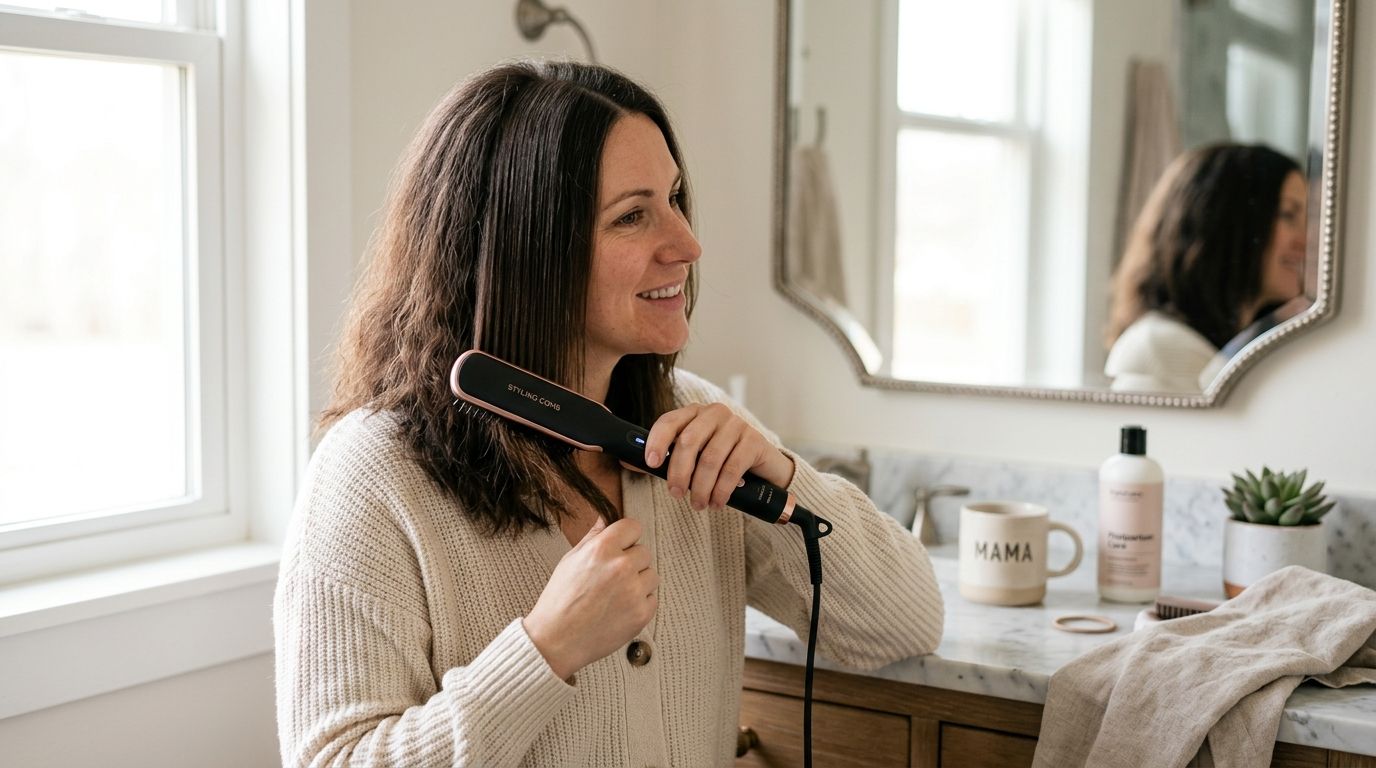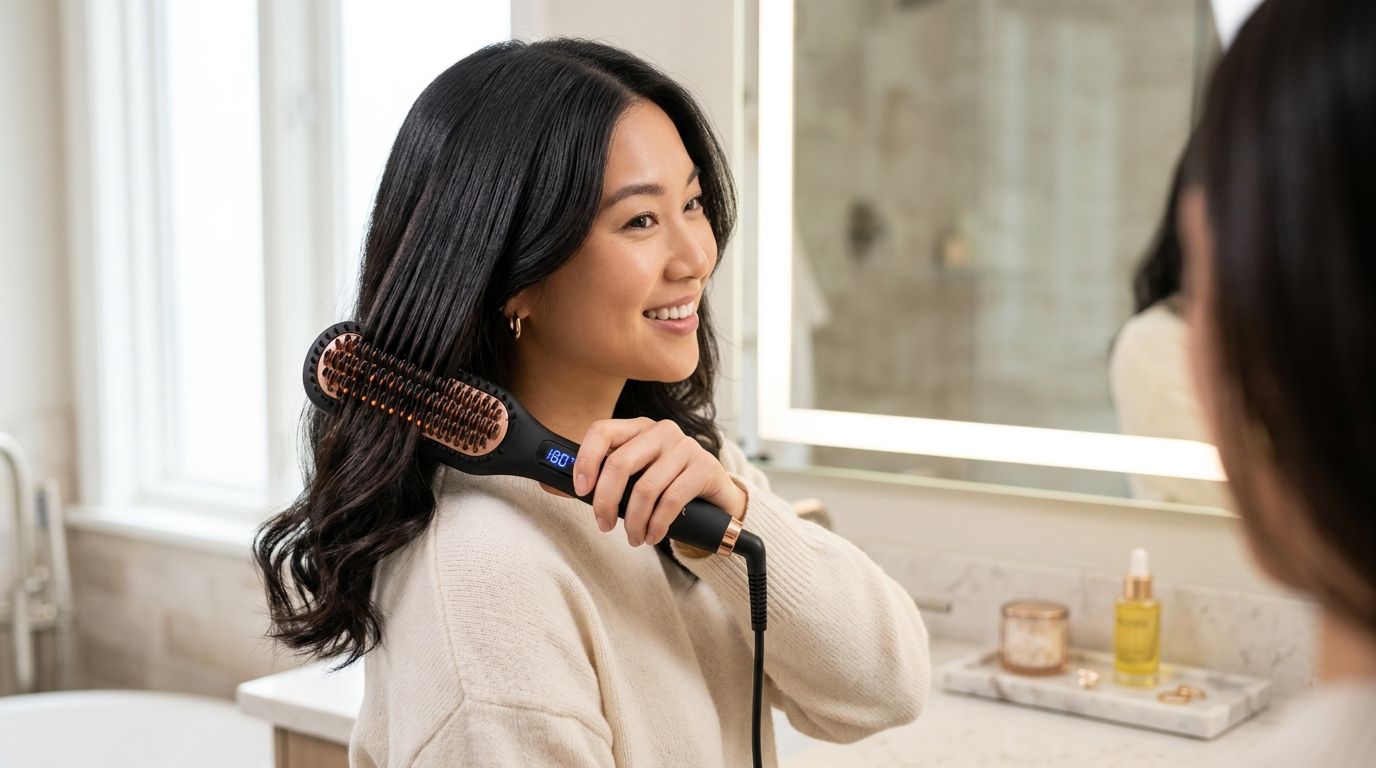
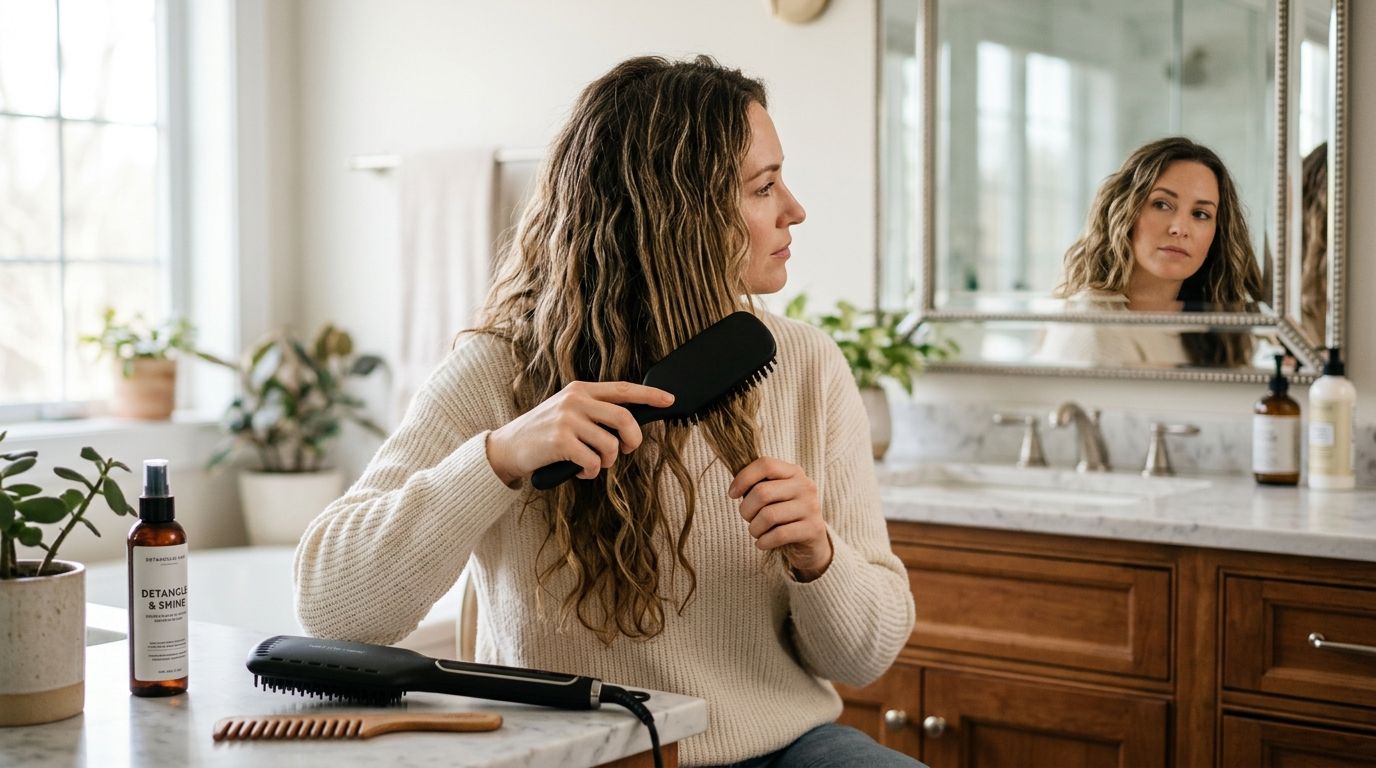
Detangling hair before a straightening brush pass means working out every knot with a wide-tooth comb or your fingers, section by section, starting at the ends and working up to the roots, until the plates can glide through without catching. Skip this step and you snag hair on hot ceramic plates, which means uneven heat exposure, weak spots, and breakage that shows up weeks later, not on the spot.
- Detangle hair before using a straightening brush by working from ends to roots with a wide-tooth comb, section by section.
- Tangled hair snags on hot plates and causes breakage — the Napio hair straightening comb still needs this prep step.
- Wet detangling before a blow-dry cuts resistance more than dry detangling right before heat styling.
- Fine hair needs light sectioning; curly and coily hair needs more time and a leave-in slip product.
- Rushing detangling is the top cause of uneven results and split ends reported after heated brush use.
Why this matters
A straightening brush works by dragging heated bristles through hair in one motion, not by clamping and releasing like a flat iron. That means any knot in the path doesn't just slow you down — it forces the plates to push through resistance, which stresses the hair shaft right at the point of contact.
In 2026, most heated brushes on the market run between 130°C and 230°C. At those temperatures, a snagged section gets more direct heat exposure than smooth hair moving past the plates cleanly, because you end up going over the same spot two or three times to work through the knot. That repetition is where damage compounds.
How do you detangle hair before using a straightening brush?
Detangle hair before using a straightening brush by starting at the ends, working in small sections, and moving up toward the scalp only once each section runs smooth. Doing this in the wrong order — starting at the roots — just pushes tangles further down and tightens them.
- Divide hair into 4-6 sections using clips. Smaller sections mean less resistance per pass.
- Start at the ends with a wide-tooth comb or detangling brush, holding the section above where you're combing to protect the scalp from pulling.
- Work upward in short strokes rather than one long pull from root to tip.
- Apply a leave-in conditioner or detangling spray to sections that resist, especially if hair is dry or color-treated.
- Check each section runs smooth before releasing the clip and moving to the next.
- Do a final pass with a fine-tooth comb only on hair that's already smooth — this catches any missed knots without re-tangling finished sections.
| Detangling method | Best for | Verdict |
|---|---|---|
| Wide-tooth comb | Wet or damp hair, thick or curly textures | Buy — gentlest option, least breakage risk |
| Detangling brush (flexible bristles) | Fine to medium hair, quick daily use | Buy — fast, works well pre-blow-dry |
| Fingers only | Very fine or fragile hair | Hold — safe but slow, use for final check only |
| Fine-tooth comb straight into knots | Any texture | Skip — snaps hair, forces knots tighter |
A smooth section is the goal before any heat touches it. If you're using an electric hair straightening comb, the same rule applies — the comb's teeth are built to style, not to fight through knots.
Detangling for fine or thin hair
Fine hair tangles less by volume but snaps more easily under tension. Use a soft detangling brush rather than a fine-tooth comb, and keep sections thin — no wider than two fingers — so the brush moves through with almost no pulling. Rushing a wide section on fine hair is the fastest way to see extra shedding in the sink.
Detangling for curly or coily hair
Curly and coily textures hold more knots per section and dry out faster, so detangling works best on damp hair with a leave-in conditioner or slip serum applied first. Finger-detangle the roughest knots before switching to a wide-tooth comb, and never detangle bone-dry curly hair right before heat styling — it multiplies breakage risk.
Detangling for thick hair
Thick hair needs more sections, not more force. Split it into 6-8 sections instead of 4, and work through each one fully before moving on. Trying to detangle thick hair in two or three large sections is how people end up forcing a straightening brush through resistance it wasn't built to handle.
Why detangling before heat styling varies by hair type
- Hair porosity — high-porosity hair tangles faster and needs more slip product.
- Curl pattern — tighter curls and coils hold more knots per section than straight or wavy hair.
- Hair length — longer hair accumulates more tangles at the ends from friction with clothing.
- Product buildup — dry, product-heavy hair resists a comb more than freshly washed hair.
- Time since last wash — day-two or day-three hair tangles more than freshly conditioned hair.
- Tool choice — a wide-tooth comb clears knots with less tension than a fine-tooth comb or brush with rigid bristles.
“A straightening brush styles hair — it isn't built to detangle it, and asking it to do both jobs at once is where the damage starts.”
Can you use a straightening brush on tangled hair?
No — running a straightening brush over tangled hair forces the heated bristles to push through resistance instead of gliding, which concentrates heat on the snagged section and increases breakage. Detangle first with a wide-tooth comb, then style once every section moves freely.
Do you need to blow-dry hair before using a straightening brush?
Mostly yes — a straightening brush works best on hair that's dry or close to dry, since damp hair steams under heat and can leave frizz instead of smoothing it. Detangle while hair is damp, then blow-dry roughly 80-90% before switching to the heated brush.
How long should you wait between detangling and straightening?
No fixed wait time is needed as long as hair is dry before the brush touches it — detangle, blow-dry, then style in one session. Letting hair re-tangle between steps (by leaving it loose for hours) just means repeating the comb-through before you style.
Once sections run smooth, a heated brush should move through in one pass. If you're deciding which one suits your routine, the guide on choosing a straightening brush for beginners covers what to look for beyond the detangling step. And if heat damage from past styling is part of why you're detangling more than usual in 2026, the piece on preventing heat damage with a straightening brush walks through the settings and habits that cause it.
FAQ
How do you detangle hair before using a straightening brush?
Start at the ends with a wide-tooth comb, work in small sections, and move upward only once each section is smooth. This prevents tangles from tightening near the scalp and stops hair from snagging on the hot plates.
Can you skip detangling and go straight to a straightening brush?
Skipping detangling means the brush forces its way through knots, which concentrates heat on those spots and increases breakage. It also produces uneven results because the plates can't maintain full contact through a snag.
Should hair be wet or dry when you detangle before straightening?
Detangle damp hair first, since wet hair has more slip and resists breakage better under a comb. Finish detangling, blow-dry fully, then use the straightening brush on dry hair.
Does a detangling spray help before using a heated brush?
Yes, a leave-in conditioner or detangling spray reduces friction on dry or color-treated hair, making the comb move through with less pulling. It's especially useful on curly or thick textures that hold more knots.
How many sections should you use to detangle before straightening?
Four to six sections works for most hair types, but thick or curly hair often needs six to eight for even results. Smaller sections mean less resistance and fewer missed knots.
Is a wide-tooth comb better than a brush for detangling?
A wide-tooth comb is gentler on wet or thick hair because it separates strands without gripping too many at once. A flexible detangling brush works well on fine or dry hair for quicker daily use.
Why does hair still tangle after using a straightening brush?
Hair re-tangles after styling mostly from friction against clothing or bedding, not from the brush itself. Sealing the cuticle with a cool-shot pass at the end reduces this.
One last thing
The order matters more than the tool. Detangling top-down instead of ends-first is the single most common mistake people make before reaching for a straightening brush in 2026, and it's the reason the same hair type can look smooth for one person and frizzed for another using the identical device. Get the section order right and the brush does the rest.