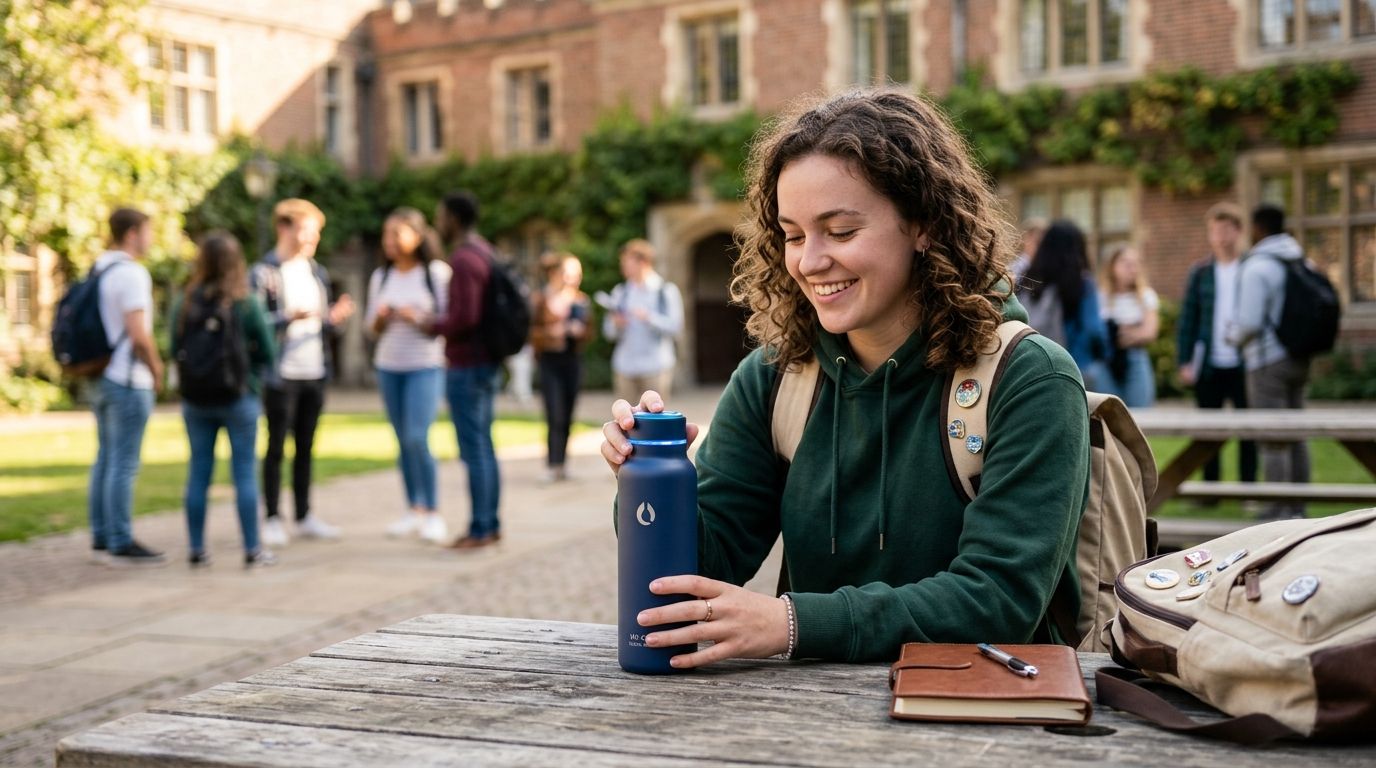
A UV-C water bottle for school and university is a reusable bottle with a built-in ultraviolet-C light that runs a short self-clean cycle to reduce bacteria buildup between refills, aimed at students who reuse the same bottle for 8-plus hours a day across lectures, labs and the gym. Students have different needs than office workers or hikers: bottles get shoved into overloaded backpacks, left in lockers over a long weekend, and refilled from shared fountains between classes, so the cleaning cycle has to survive that routine, not a curated desk setup.
- A UV-C water bottle for school and university works best when the self-clean cycle is timed to your timetable, not left random.
- Bottles under 600ml suit backpack side pockets; anything larger belongs in a bag with a dedicated bottle sleeve.
- Napio's UV-C self-cleaning bottles pair with charging habits students already have, like topping up overnight.
- The mouthpiece, not the bottle interior, is where bacteria builds fastest during a full semester of daily use.
- Skip bottles with fiddly multi-button UV cycles for lecture-hall use — one-press activation matters more than extra modes.
Why UV-C water bottles matter for students
A university day rarely allows time to scrub a bottle between classes. Students refill from the same fountain or tap multiple times a day, then leave the bottle capped in a bag for hours in warm conditions — exactly the environment where bacteria multiplies. A UV-C self-cleaning water bottle runs a short light-based cycle instead of requiring a brush, soap and a sink you don't have access to in a lecture hall.
The appeal for this segment is speed and portability, not novelty. A bottle that needs a full wash cycle daily doesn't survive a 9am-to-6pm timetable with back-to-back classes. The right UV-C bottle for school and university is judged on how well it fits a backpack and a class schedule, not on how many settings it has.
How to choose and use a UV-C water bottle for school and university
Size the bottle to your backpack and desk space
Most student backpacks have a side pocket sized for a standard bottle, and most lecture desks give you barely enough room for a laptop and a bottle side by side. Oversized bottles end up rolling off desks or getting left behind.
- Measure your backpack's side pocket before buying — most fit bottles up to roughly 7-8cm in diameter
- Pick a shorter, wider bottle if you sit at shared lab benches with limited surface space
- Avoid bottles with wide bases that don't fit standard cup holders on public transport
- Check the bottle stands upright without tipping when nudged — a common desk hazard in packed lecture rooms
Time the self-clean cycle around your timetable
Running the UV-C cycle at the wrong moment means either waiting around for it to finish or forgetting to run it at all. Building it into a routine you already have removes the decision entirely.
- Run the cycle overnight while the bottle charges, so it's ready before you leave
- Trigger a second cycle straight after a gym session or long outdoor block between classes
- Avoid running the cycle mid-lecture if the light needs the lid off — it interrupts note-taking
- Set a reminder for after lunch if your mornings involve labs, sports, or food halls
Charge on a schedule, not just when it dies
A bottle with a dead UV-C battery is just a normal bottle for the rest of the day. Students who charge reactively end up skipping cleaning cycles for days at a time.
- Charge overnight alongside your phone, not as an afterthought before bed
- Keep a spare charging cable in your dorm or share-house kitchen, not just your bedroom
- Check battery indicator lights before you leave, the same way you check your phone percentage
- Build in a mid-week top-up charge if you're using the cycle twice a day
Handle the mouthpiece like a bacteria hotspot
The UV-C light cleans the interior chamber, but the mouthpiece and threading are where lips, hands and bag lint make contact most often. This is the part students forget.
- Wipe the mouthpiece with a damp cloth or alcohol wipe once or twice a week, separate from the UV cycle
- Avoid sharing bottles at parties or study groups — no UV cycle runs fast enough to offset that
- Check the threading for grime after a week in a gym bag; this area is easy to miss visually
- Replace or clean any silicone seal that starts smelling off, even if the interior looks fine
Choose the sipping style for lecture halls vs libraries
A loud flip-top lid is fine in a lecture hall but disruptive in a silent library reading room. Matching the lid style to where you'll actually drink from it saves social friction.
- Pick a straw or spout lid for quiet library and exam-hall settings
- Choose a wide-mouth flip lid for gym and outdoor use where speed matters more than quiet
- Avoid screw-cap-only designs if you refill often between short back-to-back classes
- Test one-handed operation before buying — you'll be opening it while carrying books or a laptop
Budget for replacement parts, not just the bottle
Seals, straws and charging cables wear out faster under daily student use than under occasional home use. Planning for this avoids a bottle going unused after six months.
- Check whether replacement seals or straws are sold separately before buying
- Keep the original charging cable stored in a fixed spot — lost cables are the most common reason a UV-C bottle stops getting used
- Inspect the lid seal each semester for cracking or discolouration
- Retire the bottle from daily carry once the UV cycle stops completing normally, rather than pushing it further
Comparison: UV-C water bottle options for students
| Option | Best for | Key limitation |
|---|---|---|
| Compact UV-C self-cleaning bottle | Daily lecture and library carry | Smaller capacity means more refills during long days |
| Larger UV-C bottle with insulation | Gym sessions and full-day field trips | Bulkier fit in standard backpack side pockets |
| Standard reusable bottle, no UV-C | Budget-first students, occasional use | Needs manual washing with soap and a sink, not always available on campus |
| Bottle with straw-lid UV-C design | Quiet study spaces, exam halls | Straws need separate cleaning attention beyond the UV cycle |
A UV-C self-cleaning bottle sized for backpack side pockets, with an overnight charge routine, is the best fit for most school and university schedules in 2026. Students who barely have five minutes between classes gain the most from skipping a sink-and-soap wash.
Common mistakes students make with UV-C water bottles
- Buying oversized capacity for backpack convenience. A 1L-plus bottle looks efficient but often gets left home because it doesn't fit the bag.
- Ignoring the charge cycle until the battery is flat. This is the single fastest way a UV-C bottle turns back into an ordinary bottle.
- Skipping mouthpiece cleaning because the UV cycle "handles it." The UV-C light treats the interior chamber, not external contact points.
- Sharing the bottle during group study or parties. No self-clean cycle offsets direct mouth-to-mouth contact.
- Leaving the bottle in a gym bag over a long weekend. Damp, sealed conditions for days undo whatever the last UV cycle achieved.
“The mouthpiece, not the bottle interior, is where bacteria builds fastest during a full semester of daily use.”
For a broader look at how the light-based cycle works, see how UV-C self-cleaning bottles kill bacteria before deciding which model fits a student routine.
FAQ
What's the best UV-C water bottle for school and university?
A compact UV-C self-cleaning bottle under 600ml that fits a backpack side pocket suits most school and university schedules in 2026. Larger insulated versions work better for gym sessions or full-day field trips but crowd out backpack space.
Is a UV-C water bottle better than a normal reusable bottle for students?
A UV-C water bottle reduces the need for daily soap-and-sink washing, which matters when students don't have consistent kitchen access on campus. A normal reusable bottle still works but needs manual cleaning to stay hygienic across a full semester.
How often should a student run the UV-C self-clean cycle?
Running the cycle once overnight during charging, plus a second cycle after gym or outdoor activity, covers most daily use. Skipping cycles for multiple days lets bacteria build up the same way it would in an untreated bottle.
Does a UV-C water bottle clean the mouthpiece?
No, the UV-C light treats the interior water chamber, not the external mouthpiece or threading. That area needs a separate wipe-down once or twice a week regardless of how often the UV cycle runs.
Can students share a UV-C self-cleaning water bottle?
Sharing is not recommended even with a UV-C bottle, since the self-clean cycle doesn't run fast enough to offset direct mouth contact between uses. Each student is better off with their own bottle.
What size UV-C bottle fits a school backpack best?
Bottles roughly 7-8cm in diameter fit most standard backpack side pockets without forcing the bag closed. Measuring the pocket before buying avoids ending up with a bottle that gets left at home.
How long does a UV-C water bottle battery last for daily student use?
Battery life depends on the model and how many cycles run per day, so checking the specific product listing before buying is the reliable way to plan a charging routine. Charging overnight alongside a phone covers most single or double daily cycle use.
Do UV-C water bottles work with tap or fountain water?
Yes, UV-C self-cleaning bottles are designed to reduce bacteria buildup from repeated refills at fountains or taps, which is the exact refill pattern most students follow. The cycle addresses bottle hygiene, not water source treatment.
One last thing
The part of a UV-C water bottle that fails first under student use isn't the light — it's the charging cable, because it gets left in a different bag or room every other day. Keep a spare cable in the fixed spot you charge from, whether that's a dorm desk or a share-house kitchen, and the bottle stays in daily rotation through 2026 instead of sitting unused in a drawer by week six of semester.