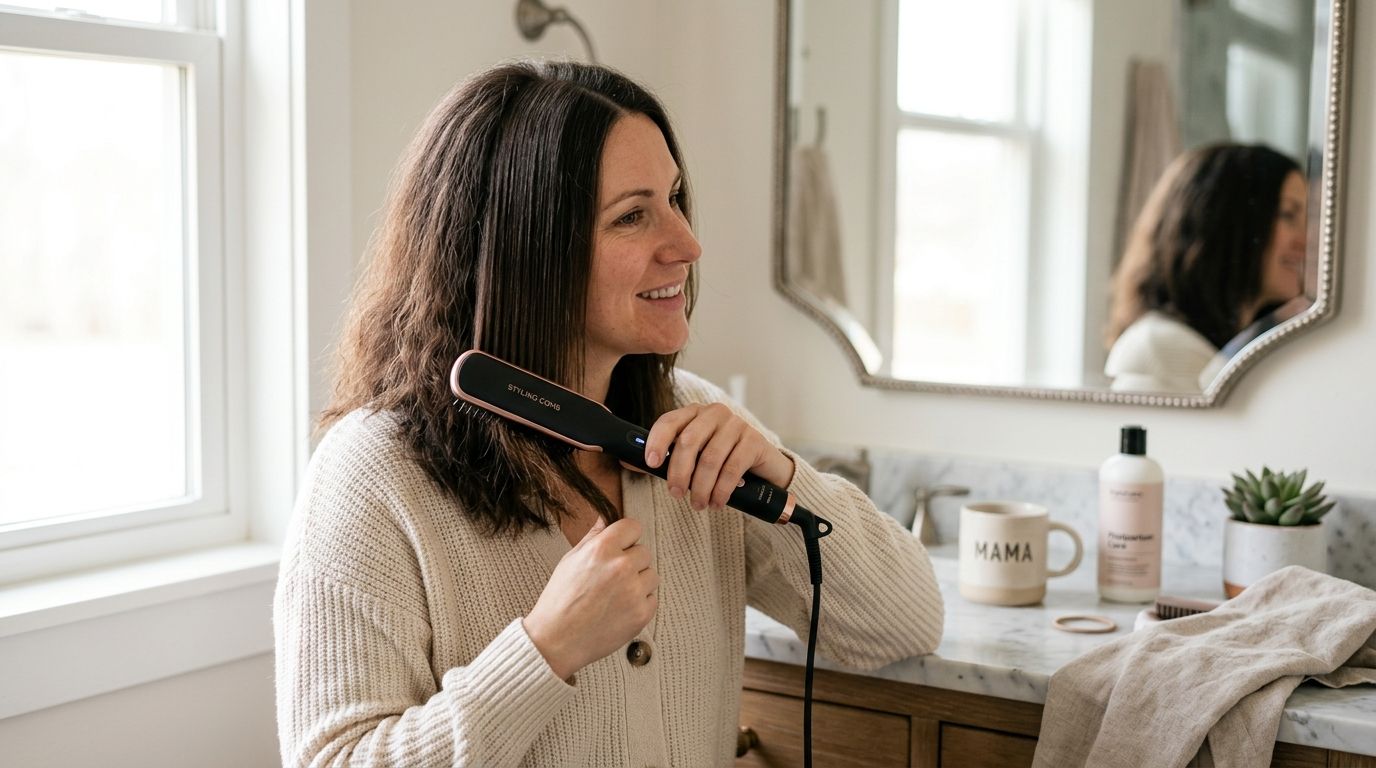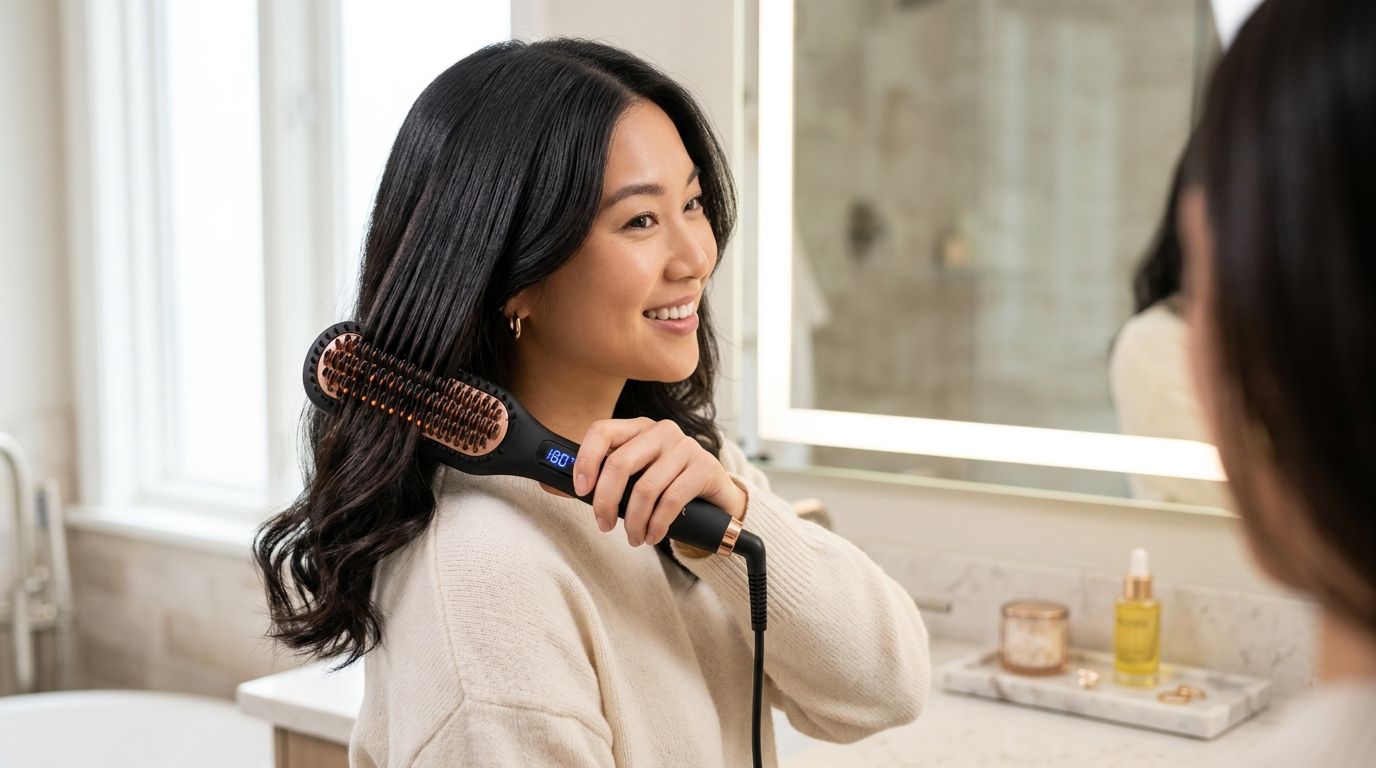
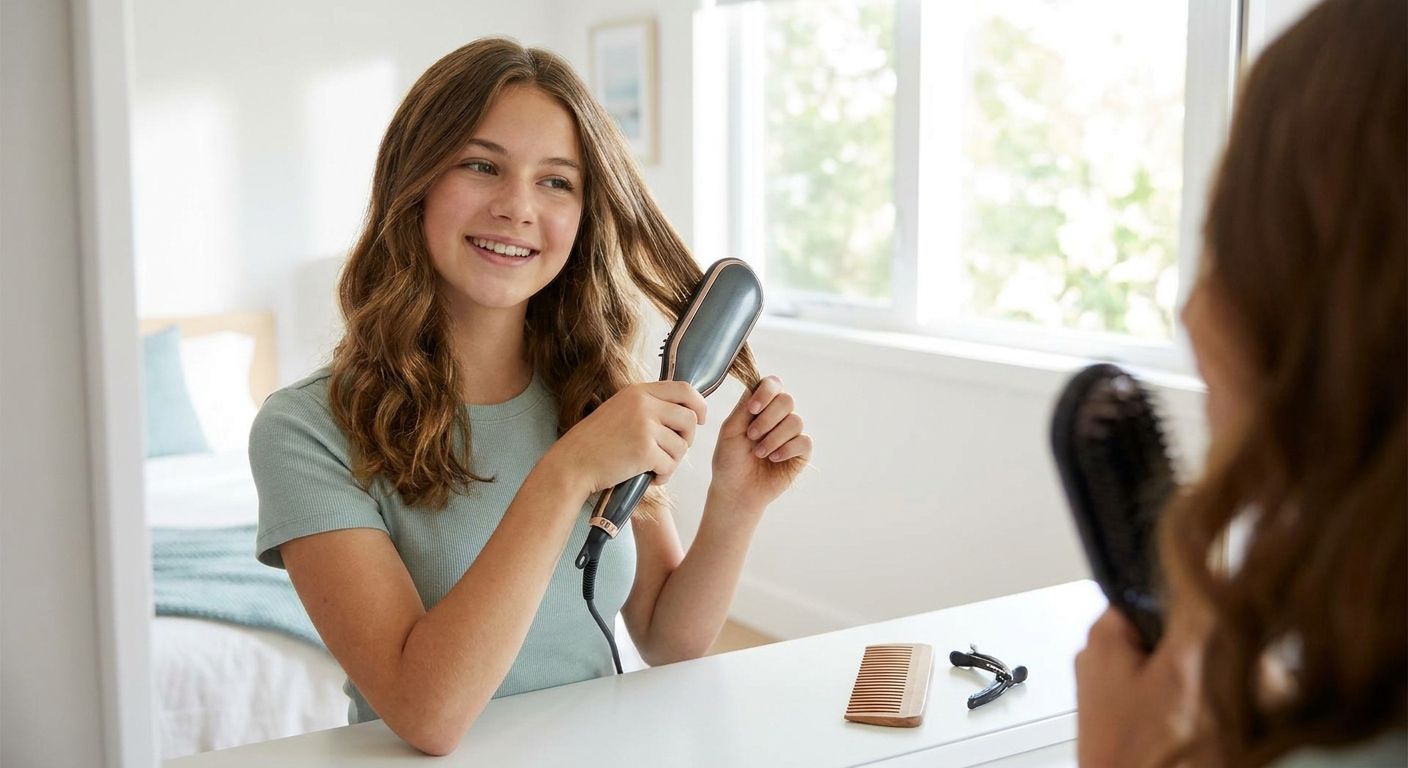
A straightening brush for teens is a heated styling tool built for first-time users who want smooth, frizz-free hair without the learning curve of a flat iron, and it matters because teen hair is usually finer and less heat-conditioned than adult hair that's been through years of coloring or blow-drying. The bristles guide hair as the plates heat it, so there's no pinching, no burnt fingers, and far less risk of an uneven scorch mark than a traditional flat iron delivers on a first attempt.
- A straightening brush for teens should run under 180°C — most teen hair hasn't been chemically treated and burns faster than adult hair.
- Brush-style tools beat flat irons for first-time users because bristles prevent pinching and uneven pressure.
- Heat damage in teens shows up as split ends and dullness within weeks, not months, if temperature isn't controlled.
- Cordless models solve the bathroom-outlet problem most teens actually face at home or at a friend's house.
- Clean the plates weekly — product buildup on a straightening brush is the top cause of reduced glide and patchy results.
Why straightening brush matters for teens
Teen hair is going through more heat and chemical exposure earlier than it used to, between straighteners, curling wands, and first color jobs at 15 or 16. That hair hasn't built up the cuticle toughness adult hair develops over a decade of styling, so it shows heat damage faster and more visibly — split ends, dullness, breakage at the crown.
A straightening brush for teens solves two problems at once: it's harder to use wrong than a flat iron, and most models run cooler temperature ranges suited to finer, untreated hair. The brush format matters more for teens than adults because a first-time user without technique is far less likely to hold a flat iron on one section too long with a brush's continuous-glide design.
The core steps for teens getting started
Wash and dry hair fully before any heat
Wet or damp hair styled with heat is the single fastest way to fry teen hair, since water inside the shaft boils and weakens the cuticle from the inside out.
- Air-dry or blow-dry to 100% dry, not "almost dry"
- Apply a heat protectant spray before any brush touches the hair
- Detangle with a wide-tooth comb first — heat locks in knots permanently
- Skip conditioner-heavy days right before straightening; product residue burns unevenly
Section the hair before you start
Teens rushing through a full head in one pass end up re-running the same sections at higher heat to fix missed spots, which doubles the damage.
- Split hair into four quadrants with clips: top-left, top-right, bottom-left, bottom-right
- Work bottom sections first, top last
- Keep sections under 2cm wide for even heat contact
- Never re-pass a section more than twice per session
Set the temperature for teen hair type
This is the step most teens skip, defaulting to the highest setting because it feels faster. It isn't — it's the reason for burnt ends by month three.
- Fine or color-treated teen hair: keep it toward the low end of the device's range
- Thick or coarse teen hair: mid-range settings work without extra passes
- Never start on the highest setting to "test" the tool
- If hair sizzles or you smell burning, the temperature is too high — stop and lower it
Learn the single-pass technique
Multiple passes at lower heat cause more cumulative damage than one clean pass at the correct heat, a common misconception among first-time users.
- Glide the brush from root to tip in one smooth motion, roughly 3-5 seconds per section
- Don't pause mid-section — pausing concentrates heat in one spot
- If a section isn't straight after one pass, wait until the next wash rather than repeating same-day
- Use the electric hair straightening comb guide for the exact motion if switching from a comb-style tool
Protect the hair before and after styling
Heat protectant isn't optional for teens — it's the difference between hair that tolerates weekly styling and hair that needs a trim every six weeks.
- Apply protectant spray to damp hair, not after it's dry
- Use a leave-in treatment on ends 2-3 times a week
- Avoid daily straightening; 2-3 times a week limits cumulative heat exposure
- Sleep with hair loosely braided to extend the style and reduce next-day heat use
Clean the tool after every few uses
Buildup on plates or bristles from product residue reduces glide and forces teens to compensate with more passes or higher heat — read the full how to clean a heated hair straightening comb breakdown before the first buildup shows up.
- Wipe plates with a damp microfiber cloth after each full cool-down
- Deep clean weekly with isopropyl alcohol on a cotton pad for stubborn residue
- Never spray product directly onto the heated tool
- Check bristles for trapped hair and remove with a fine comb
Choose a cordless option if the bathroom is the only outlet
A lot of teens style hair in shared bathrooms without a nearby outlet, or want to use the tool at a friend's house or before school sports. A cordless hair straightener for travel removes that constraint entirely and charges like a phone.
- Look for a charge time under two hours for daily reliability
- Confirm the device holds heat for at least one full styling session before needing a recharge
- Cordless models are heavier on average — factor in arm fatigue for longer hair
- Corded models still win on sustained heat if styling thick or long hair daily
Comparing straightening tool types for teens
| Tool type | Best for | Key limitation |
|---|---|---|
| Straightening brush | First-time users, everyday quick styling | Slower on very thick, coarse sections |
| Flat iron | Sleek, pin-straight finish for events | Steep learning curve, higher burn risk for beginners |
| Straightening comb | Curly or coily hair needing more control | Requires more technique to avoid missed sections |
| Heated blow-dry brush | Volume plus light smoothing in one step | Not a true straightening result on very frizzy hair |
Verdict: a straightening brush is the safest entry point for a teen's first heated styling tool because bristle guides limit the pinch-and-burn mistakes flat irons punish beginners for.
Common mistakes teens make with a straightening brush
- Styling wet hair to save time before school. Damp hair styled with heat causes far more shaft damage than dry hair at the same temperature.
- Sharing a device with siblings without cleaning between uses. Product buildup from someone else's hair spray or gel transfers and burns unevenly on the next use.
- Skipping heat protectant because it "takes too long." This is the single fastest route to split ends within a school term.
- Cranking heat to max because the style didn't hold. The style not holding is usually a technique or section-size problem, not a heat problem.
- Leaving the tool plugged in and unattended. Beyond the safety issue, prolonged idle heat degrades plate coatings faster over the device's lifespan.
FAQ
What's the best straightening brush for teens in 2026?
The best straightening brush for teens in 2026 is one with adjustable, lower-range heat settings and a brush-guide design rather than flat plates, since it reduces pinch and burn risk for first-time users. Look for options that support cool bottom temperatures for fine or color-treated teen hair.
Is a straightening brush better than a flat iron for teens?
Yes, a straightening brush is generally better for teens because the bristle design prevents the pinching and uneven pressure that causes burns and breakage on a first attempt. Flat irons deliver a sleeker finish once technique improves, but they punish beginner mistakes harder.
What temperature should teens use on a straightening brush?
Teens with fine or untreated hair should stay toward the lower end of the device's temperature range, since hair that hasn't been chemically processed burns faster than color-treated adult hair. If hair sizzles or smells during styling, the setting is too high.
How often can a teen safely use a straightening brush?
Two to three times a week is a reasonable cap for most teen hair types to limit cumulative heat exposure. Daily use without a break accelerates dryness and split ends within a few weeks.
Does a straightening brush damage teen hair?
Any heat tool can damage hair if used too hot, too often, or on wet hair, but a straightening brush at a controlled low-to-mid temperature with heat protectant causes noticeably less damage than a flat iron in untrained hands. Damage risk comes down to temperature and frequency, not the tool category alone.
Can a straightening brush be used on short teen hairstyles?
Yes, smaller-plate straightening brushes work well on short hair, though the technique shifts slightly since there's less length to guide the tool through in one pass. Check a dedicated guide on straightening short hair with a heated brush for the adjusted motion.
Is a cordless straightening brush good for teens?
A cordless straightening brush suits teens who style in shared bathrooms without a nearby outlet or who want the tool for sleepovers and sports mornings. The tradeoff is battery life, so confirm it holds heat for a full styling session before needing a recharge.
What's the biggest mistake teens make with a straightening brush?
Styling damp hair to save time before school is the most common and most damaging mistake, since heat on wet hair boils moisture inside the shaft and weakens it from within. Fully drying hair first, even with a quick blow-dry, prevents the majority of avoidable damage.
One last thing
The detail most teens and parents miss: the biggest damage driver isn't the device, it's the wet-hair habit before school, styling hair that's "almost dry" because there's no time for a full blow-dry. A straightening brush at a sensible temperature on fully dry hair does less cumulative damage over a school year than a flat iron used correctly but on damp hair twice a week.