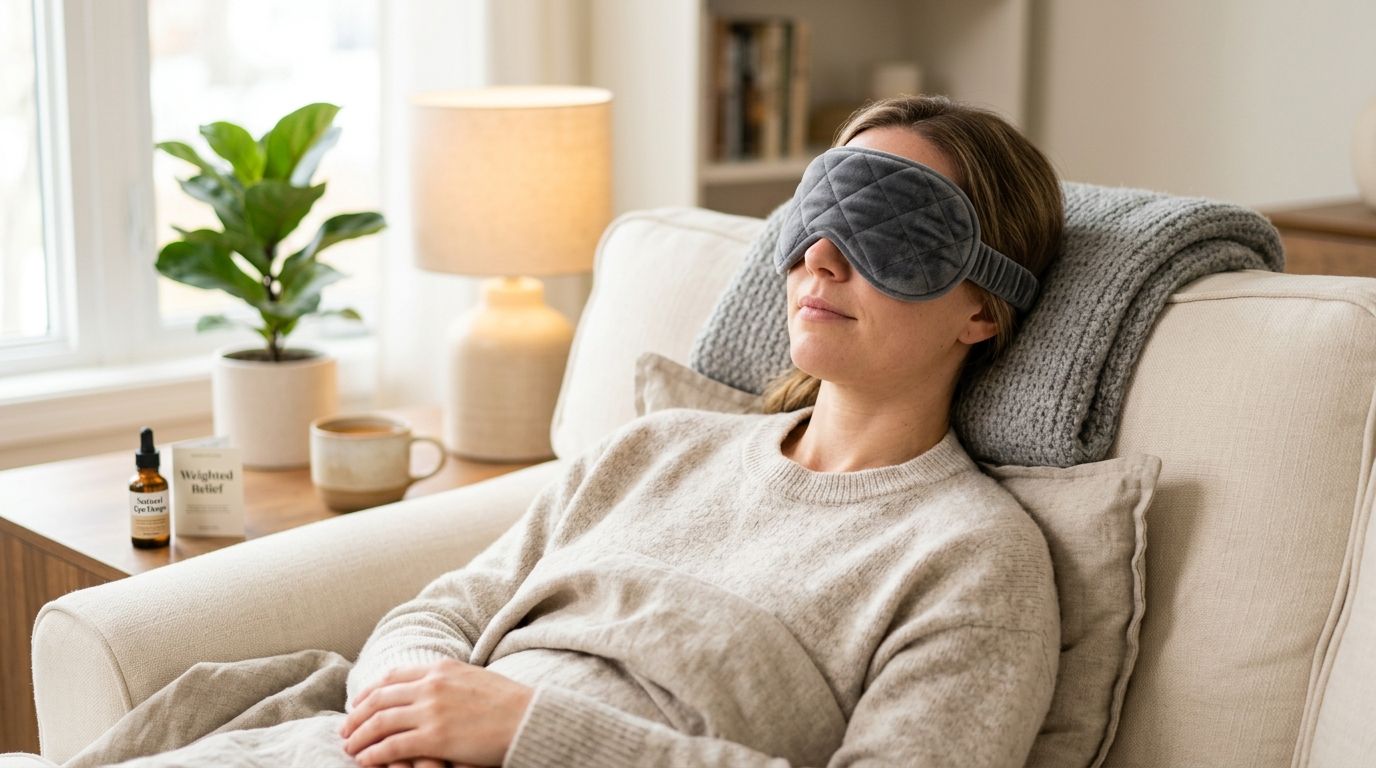
Weighted eye mask for dry eyes users is a sleep and comfort tool designed to add gentle, even pressure across the eyelids while blocking light, with the goal of reducing the eye-strain triggers that make dry eye symptoms worse overnight. Dry eye sufferers need something different from a standard sleep mask: they need material that doesn't trap heat against already-inflamed lids, a strap that doesn't compress the tear ducts, and a weight that calms blinking without adding pressure to sensitive eyes.
- A weighted eye mask for dry eyes should sit between 100g and 300g in 2026 - heavier masks add pressure, not comfort.
- Warm compress therapy, not weight alone, is what optometrists commonly recommend for dry eye linked to meibomian gland dysfunction.
- Silk or cotton-lined masks outperform synthetic ones for dry eye sufferers because they don't trap heat against the lid.
- Wearing a weighted mask longer than 20-30 minutes at a stretch can dry the eyelid skin further - timing matters as much as weight.
Why this matters
Dry eyes don't just sting during the day. They get worse overnight when you're not blinking to redistribute tears, and a mask that traps heat or presses too hard turns a sleep aid into an irritant. Most weighted masks on sale in 2026 are designed for anxiety and deep-pressure sleep, not for eyelids that are already inflamed.
Why a weighted eye mask matters for dry eyes
The weight itself isn't therapeutic. What helps is full lid closure and the blackout effect that stops you squinting or partially opening your eyes mid-sleep, which is one of the quieter causes of morning dryness.
Search behaviour around weighted eye mask for insomnia and dry eye overlaps heavily, because both audiences chase the same outcome: uninterrupted, fully-closed-eye sleep. The difference is that dry eye sufferers have to weigh material and heat, not just darkness.
That one distinction changes the whole shopping list. A 400g velvet mask that a light sleeper loves can leave a dry eye sufferer worse off by morning.
Set the right weight range
Start lighter than you think you need. Dry, irritated eyelids react to pressure faster than healthy ones, so a mask built for a general sleep audience feels heavier once your eyes are already inflamed.
- Look for masks in the 100g-200g range if you're new to weighted masks
- Avoid anything marketed as deep pressure therapy above 300g for nightly dry eye use
- Test the mask sitting upright before bed: if it presses on the eyeball rather than resting on the socket, it's too heavy
- Reassess after two weeks - if morning dryness hasn't improved, weight isn't the fix
Choose a material that doesn't trap heat
Synthetics hold heat against the lid, and heat inside a sealed mask can dry the tear film faster rather than slower.
- Prioritise silk or cotton linings over polyester or velvet
- Look for a contoured eye cup that doesn't press flat against the lashes
- Avoid any mask with a rigid plastic inner shell against skin
- Wash removable covers weekly - oil and product buildup against dry lids is a common irritant
- Skip scented or treated fabrics entirely
Time your usage instead of wearing it all night
Most people assume a weighted mask needs to stay on for eight hours. For dry eyes, shorter targeted sessions usually beat an all-night seal.
- Use the mask for the first 20-30 minutes of sleep to block light while you fall asleep, then let it slip naturally
- If you wake dry, try a 10-15 minute daytime reset instead of adding overnight hours
- Pair evening use with a warm compress first - warmth loosens the glands before the mask goes on
- Track symptoms for one week, then halve the wear time if dryness spikes
Pair it with warm compress therapy
Weight and blackout handle the light and blinking side. They do nothing for the oil-gland side, which is where most chronic dry eye actually starts.
- Apply a warm compress for 5-10 minutes before the mask goes on, a routine optometrists commonly recommend for meibomian gland dysfunction
- Choose a mask with a removable insert if you want heat and weight from one product
- Never stack an already-heated compress under a heavy weighted mask in the same session
- If dryness persists past a few weeks of combined use, book an eye exam rather than buying a heavier mask
Check the strap and fit before you buy
A strap that's too tight compresses the tear duct area and can worsen morning dryness no matter how good the fabric is.
- Choose adjustable Velcro or elastic over fixed-size bands
- Confirm the nose bridge has a soft cutout, not a rigid seal
- Test it lying on your side if that's your sleep position - poor fit shows up fastest for side-sleepers
- Swap sizes in week one; an uncomfortable mask never breaks in
Clean and rotate your mask
Dry eyes are more prone to irritation from residue and bacteria than healthy eyes, so hygiene matters more for this segment than for general sleep shoppers.
- Wash the removable cover at least once a week
- Air-dry rather than machine-dry to protect the weighted insert
- Keep a second cover in rotation so the mask is never worn damp
- Replace the mask once the lining flattens - a compressed insert stops distributing weight evenly
Comparison: eye mask options for dry eyes
| Option | Best for | Key limitation |
|---|---|---|
| Weighted mask, silk or cotton lined | Dry eye sufferers who wake with light-triggered dryness | Needs the right weight range; too heavy adds pressure |
| Warm compress mask | Meibomian gland dysfunction and morning crustiness | Not built for all-night wear; heat can dry lid skin if overused |
| Cooling gel mask | Daytime puffiness and irritation | Doesn't address light blocking or overnight lid closure |
| Non-weighted blackout mask | Light sensitivity with low pressure tolerance | No weight benefit for calming overnight eye movement |
A silk-lined weighted mask under 200g, worn for the first 20-30 minutes of sleep and preceded by a warm compress, is the combination most dry eye sufferers should try before anything heavier in 2026.
“If the mask presses on the eyeball instead of resting on the socket, it is too heavy for dry eyes.”
Common mistakes dry eye sufferers make
- Buying the heaviest mask available on the assumption that more weight means better sleep - for inflamed lids it usually means more discomfort
- Wearing it all night, every night without checking whether morning symptoms are improving or quietly getting worse
- Skipping the warm compress and expecting a mask to fix an oil-gland problem it was never designed to solve
- Ignoring hygiene while dealing with eyelids that are already more irritation-prone
- Confusing a cooling gel mask with a weighted one - they solve different problems, and the wrong pick delays real relief
If sleep depth rather than dryness is your bigger issue, the best weighted eye mask for deep sleep breakdown covers the heavier end of the range and who it suits.
FAQ
Is a weighted eye mask good for dry eyes?
Yes, if it stays under about 200g and uses a breathable lining like silk or cotton. The benefit comes from full lid closure and blocked light rather than the weight itself, so heavier masks add pressure without extra relief.
What is the best weighted eye mask for dry eyes in 2026?
A lighter silk or cotton-lined mask in the 100g-200g range, worn 20-30 minutes at bedtime, suits most dry eye sufferers. Masks marketed for deep pressure therapy are built for anxiety sleep, not sensitive lids.
How long should I wear a weighted eye mask if I have dry eyes?
Start with 20-30 minutes at the beginning of sleep rather than all night. All-night wear can trap heat against inflamed eyelids and worsen morning dryness for some people.
Can a weighted eye mask make dry eyes worse?
It can if the mask is too heavy, made from synthetic fabric that traps heat, or worn for too many consecutive hours. Switching to a lighter breathable mask and shorter sessions usually fixes it.
Should I use a warm compress or a weighted eye mask for dry eyes?
Use both, in that order. A warm compress for 5-10 minutes loosens the meibomian glands, then the weighted mask blocks light while you fall asleep.
What material is best for a weighted eye mask with dry eyes?
Silk or cotton linings are best because they do not trap heat against the eyelid the way polyester and velvet can. Removable washable covers matter more for this group because of the higher irritation risk.
Do weighted eye masks help dry eye caused by screen use?
They help indirectly by improving sleep quality and stopping the partial eye opening that light exposure causes overnight. They do not treat the reduced blink rate that drives daytime screen dryness.
How often should I wash a weighted eye mask?
At least once a week, more often if you sleep with skincare products on. Oil and residue buildup against dry, inflamed eyelids is a common source of added irritation.
One last thing
Most people shopping a weighted eye mask for dry eyes fixate on the weight number and never check the lining. A 150g silk-lined mask worn for half an hour will out-perform a 400g polyester one worn for eight hours, and the label tells you everything you need before you buy rather than after.