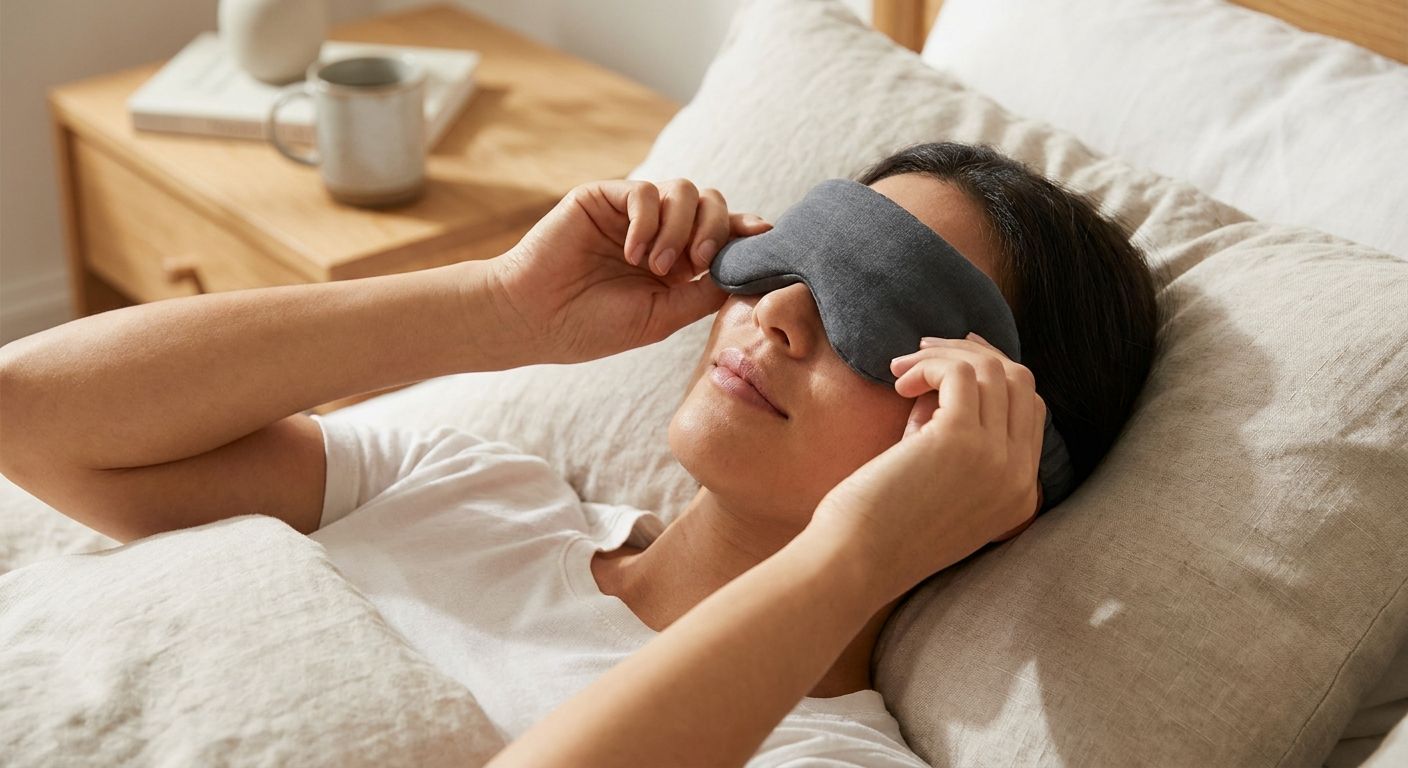
A weighted eye mask only works if the weight sits on your brow and cheekbones instead of your eyeballs, and most people skip that step, then blame the product. Get the placement and session length right and it delivers even pressure within minutes; get it wrong and it just slides around and wakes you up.
Place the mask over closed eyes with the weighted panel resting across your brow, temples, and cheekbones, tighten the strap until it's snug but not tight, then wear it for a full night's sleep or a 20-30 minute wind-down before bed. The pressure is the whole mechanism — it mimics deep pressure stimulation, the same idea behind weighted blankets, and it's meant to calm your nervous system fast rather than build up over weeks. Side sleepers need a contoured shape, not a flat one, or the fill bunches against one eye and does the opposite of settling you.
- Fit across the brow bone, not the eyeball, or a weighted eye mask does nothing for sleep.
- Wear it a full night or for a 20-30 minute wind-down before bed for the pressure effect to register.
- Side sleepers need a contoured weighted eye mask; a flat one bunches and wakes you.
- Skip it with glaucoma, a recent eye injury, or if you wear contacts to bed.
- A weighted eye mask for insomnia and one for migraines use the same mechanism, different session length.
Why this matters
Most weighted eye mask complaints trace back to fit, not the fill inside the mask. A strap that's too loose lets the weight slide off-center the second you turn over, and a mask with no contour presses straight onto the eyeball, which is uncomfortable and can blur vision temporarily. The fix isn't a different product every time — it's knowing what correct placement and session length actually look like, which is what most product pages never explain.
How do you use a weighted eye mask for sleep?
Follow this order every night rather than winging it:
- Wash your face and remove heavy moisturizer or eye makeup — residue transfers to the mask fabric and shortens how often you can wear it between washes.
- Lie down first, then position the mask so the weighted center rests across your brow bone and cheekbones, not directly on your eyelids.
- Adjust the strap behind your head until it feels snug without pinching your ears or leaving a mark on your temples.
- Choose your session: a full night for weighted eye mask for insomnia use, or 20-30 minutes as a wind-down if you're using it before falling asleep unaided.
- Remove it gently in the morning, pulling the strap forward rather than lifting the panel off your eyes.
- Air it out during the day and wash it per the care label — fill materials like glass beads or plastic microbeads don't tolerate a hot dryer.
Weighted eye mask vs standard blackout eye mask
| Weighted eye mask | Standard blackout mask | |
|---|---|---|
| Main mechanism | Even pressure (deep pressure stimulation) plus blackout | Blackout only, no pressure |
| Best for | Anxiety, insomnia, migraine tension | Shift workers needing pure light blockage |
| Sleep position fit | Needs a contoured shape for side sleeping | Flat designs usually fine for back sleepers |
| Feel | Heavier, calming pressure | Lightweight, barely noticeable |
Verdict: a weighted eye mask is the better pick if you're using it for stress or sleep onset, not just to block light — for that, a plain blackout eye mask for shift workers does the job with less weight on your face.
Using a weighted eye mask for anxiety, migraines, and insomnia
The technique doesn't change much between these three uses — only the timing does.
For anxiety and stress
Put the mask on 20-30 minutes before you intend to sleep, breathe slowly, and let the pressure do the calming work rather than trying to force sleep immediately. A weighted eye mask for anxiety relief is generally used as a short pre-sleep ritual, not an all-night tool, since the goal is winding the nervous system down, not sedation.
For migraines
During an active migraine, keep the room dark, lie flat, and use the mask cold if your version tolerates a brief chill — the combination of blackout and gentle pressure across the temples is why a weighted sleep mask for migraines gets recommended over a standard eye pillow. Stop immediately if pressure worsens head pain instead of easing it.
For insomnia
Wear it for the full night rather than removing it once you fall asleep — consistency is what trains your body to associate the mask with sleep onset over repeated nights in 2026, not a single session.
“If the mask presses on your eyeball instead of your brow bone, you have the wrong fit, not the wrong mask.”
Why comfort varies so much between weighted eye masks
- Fill material — glass beads sit closer to the face and distribute weight more evenly than coarser plastic pellets.
- Strap design — a wide elastic strap spreads tension across the back of the head; a thin one digs in after an hour.
- Weight distribution — masks that concentrate weight at the bridge of the nose feel heavier than ones that spread it across the whole panel.
- Fabric breathability — cotton or bamboo blends won't trap heat the way synthetic satin can over a full night.
- Contour shape — a curved eye cup design keeps pressure off eyelashes and lets you blink; flat designs don't.
- Washability — machine-washable covers matter if you're wearing the mask nightly rather than occasionally.
Can you sleep on your side with a weighted eye mask?
Yes, but only with a contoured design — a flat weighted eye mask shifts and concentrates all its weight on one eye the moment you roll onto your side. Look for a mask with an eye-cup shape or nose bridge cutout if side sleeping is your default position.
How often should you use a weighted eye mask?
Nightly use is standard for people using it for sleep onset or insomnia, since the benefit comes from routine and association, not from a single wear. For anxiety or migraine relief, use it as needed during flare-ups rather than as a fixed schedule.
Is a weighted eye mask bad for your eyes?
No, as long as the weight rests on the brow and cheekbones rather than directly on the eyelids or eyeball — direct pressure on the eye itself is what causes discomfort or temporary blurred vision. Anyone with glaucoma, a recent eye surgery, or an existing eye condition should check with a doctor before using one.
If you're comparing options rather than technique, Napio's best weighted eye mask for deep sleep breakdown covers fit and fill differences side by side — worth a look once you know how you'll actually use one.
FAQ
What's the best way to use a weighted eye mask for the first time?
Wear a weighted eye mask for a short 20-30 minute session the first few nights before committing to a full night, so you can adjust strap tension and check the fit doesn't press on your eyeballs. Most discomfort in the first week comes from an over-tightened strap, not the weight itself.
Is a weighted eye mask better than a regular blackout eye mask?
A weighted eye mask is better if you want the added pressure effect for anxiety, migraines, or insomnia; a regular blackout mask is better if you only need to block light without any weight on your face. Shift workers who just need darkness during the day often prefer the lighter, unweighted option.
How much weight should be in an eye mask?
There's no single standard weight across brands, so the fit and distribution across the panel matter more than the number on the label. A mask that spreads its weight evenly across the brow and cheekbones feels lighter than a heavier mask that concentrates weight at the bridge of the nose.
Can a weighted eye mask help with migraines?
Yes, the combination of blackout and gentle even pressure across the temples is why weighted sleep masks are recommended during migraine episodes over a plain eye pillow. Stop use immediately if the pressure increases head pain instead of easing it.
How long should you wear a weighted eye mask?
Wear it for a full night if you're using it for sleep onset or insomnia, or for a 20-30 minute wind-down session if you're using it purely to relax before bed. There's no fixed maximum, but remove it if you feel any numbness or increased pressure.
Are weighted eye masks safe for contact lens wearers?
Contact lens wearers should remove lenses before using a weighted eye mask, since prolonged pressure on closed eyes with lenses in can cause discomfort or dryness. Anyone with an existing eye condition should check with a doctor first.
Can weighted eye masks help with anxiety?
Yes, the even pressure across the brow and cheekbones is a form of deep pressure stimulation, the same mechanism behind weighted blankets, and it's commonly used as a short pre-sleep ritual to calm the nervous system. It works best as a 20-30 minute wind-down rather than an all-night tool for this use.
How often should you wash a weighted eye mask?
Wash the cover weekly if you're wearing it nightly, since oils and makeup residue transfer to the fabric and can irritate skin over time. Check the care label first, since some fill materials like glass beads don't tolerate a hot dryer.
One last thing
The detail almost nobody mentions: a weighted eye mask doubles as a puffiness tool if you chill it briefly in the fridge before a short daytime session, since most fabric covers and fill materials tolerate cold far better than heat. Don't put it in the freezer for sleep sessions though — cold against closed eyes for hours is uncomfortable, not calming, and defeats the point of using it in 2026 for actual rest rather than a five-minute de-puff.